How do the horns of a mature yak bull compare to those of a cow?
Answer
Bull horns are thick, heavy, and impressive, while cow horns are much thinner and shorter
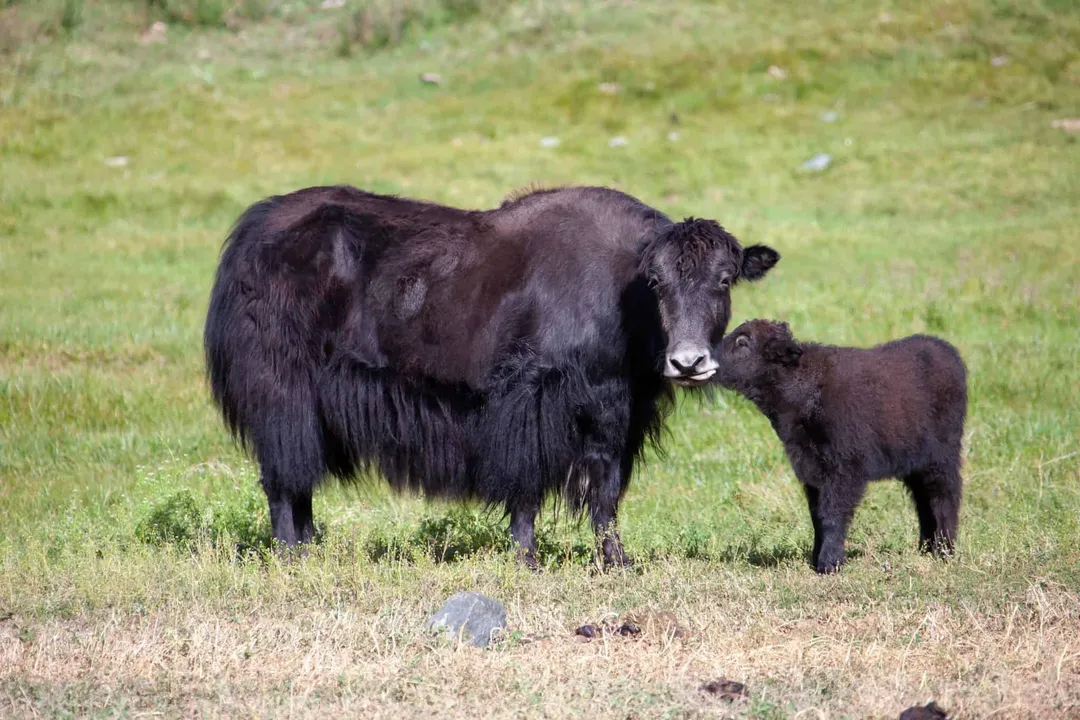
There is a clear sexual dimorphism evident in the horn structure of yaks. Mature male yaks, or bulls, develop horns that are robust, thick, and heavy, contributing significantly to their imposing physical silhouette. These horns grow outward and then curve gracefully upward and slightly inward toward the tips. Conversely, female yaks, or cows, also possess horns, but they are substantially less formidable, being generally much thinner, shorter, and lacking the substantial mass found on the males. These horns, like human fingernails, grow from permanent bony cores on the skull and are composed of keratin.
Related Questions
What is the typical weight range for a female yak cow?What two layers comprise the yak's thick, shaggy insulating coat?How do the horns of a mature yak bull compare to those of a cow?What feature of the yak's leg structure aids in maintaining balance on treacherous mountain paths?How does the yak's thoracic cavity assist in high-altitude survival?What property do the yak's broad, tough hooves provide on mountain surfaces?For domestic yaks, what is the primary value of the insulating fiber?What is the approximate shoulder height range for a mature male yak bull?Besides the most frequent deep black or dark brown, what other colorations might yaks exhibit?Where is the yak's powerful musculature concentrated, aiding in hauling loads?