What evolutionary status defines the whale shark within Family Rhincodontidae, according to its current classification?
Answer
It is the only extant member
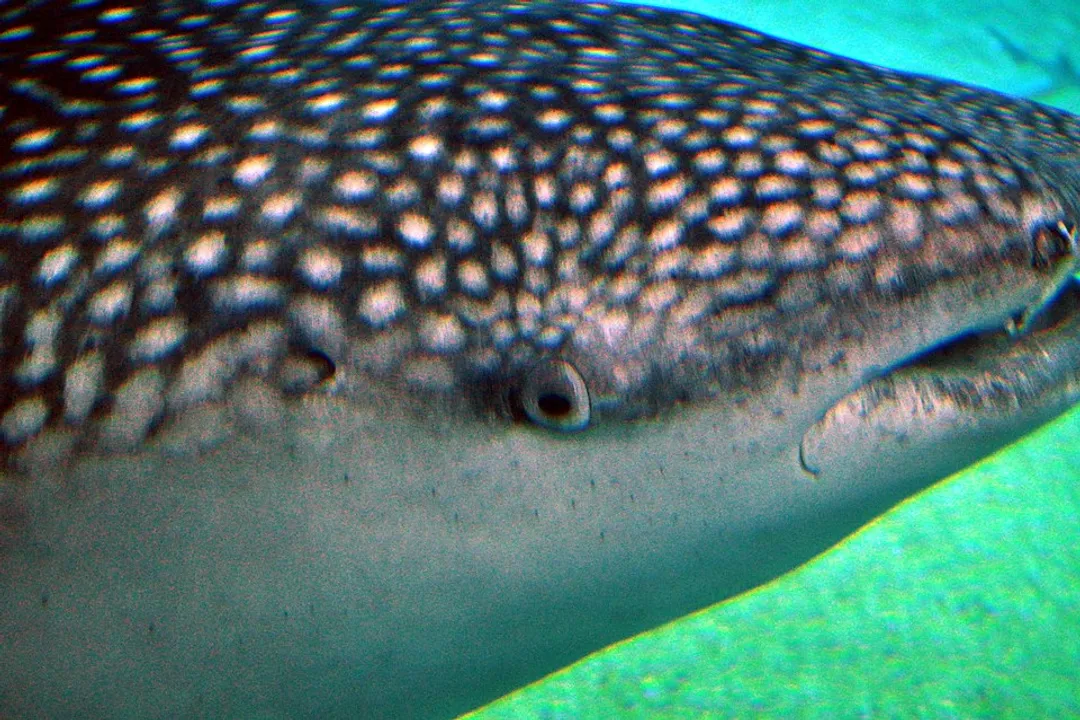
The whale shark holds a uniquely solitary position within its formal taxonomic grouping at the family level, specifically Family Rhincodontidae. This family currently contains only one extant, or living, species: *Rhincodon typus*. This means that all other members of this ancient family line are now extinct. The supporting evidence for this ancient lineage is often found in the fossil record, including fossil teeth, which suggest the evolutionary history of this family stretches back significantly in geological time, specifically tracing back to the Late Oligocene period, approximately 28 million years ago. Its closest relatives exist only as fossils, such as *Rhincodon ferriolensis* found in Europe.
Related Questions
What specific skeletal material defines Class Chondrichthyes, to which the whale shark belongs?What is the primary function of the sieve-like structures derived from modified gill rakers in *Rhincodon typus*?What specific light frequency has the whale shark's rhodopsin pigment been found to be unusually sensitive to in the deep ocean environment?Which individual is credited with assigning the binomial name *Rhincodon typus* to the whale shark species?What evolutionary status defines the whale shark within Family Rhincodontidae, according to its current classification?What is the specific meaning derived from the Greek roots of the genus name *Rhincodon*?What anatomical feature related to feeding position distinguishes the whale shark's mouth compared to many other sharks?What classification process was officially suppressed in 1984 concerning the whale shark's naming?How do researchers use the unique coat pattern of *Rhincodon typus* for population studies?What is the common name associated with Order Orectolobiformes, which includes the whale shark?