What is the classification of a hammerhead shark?
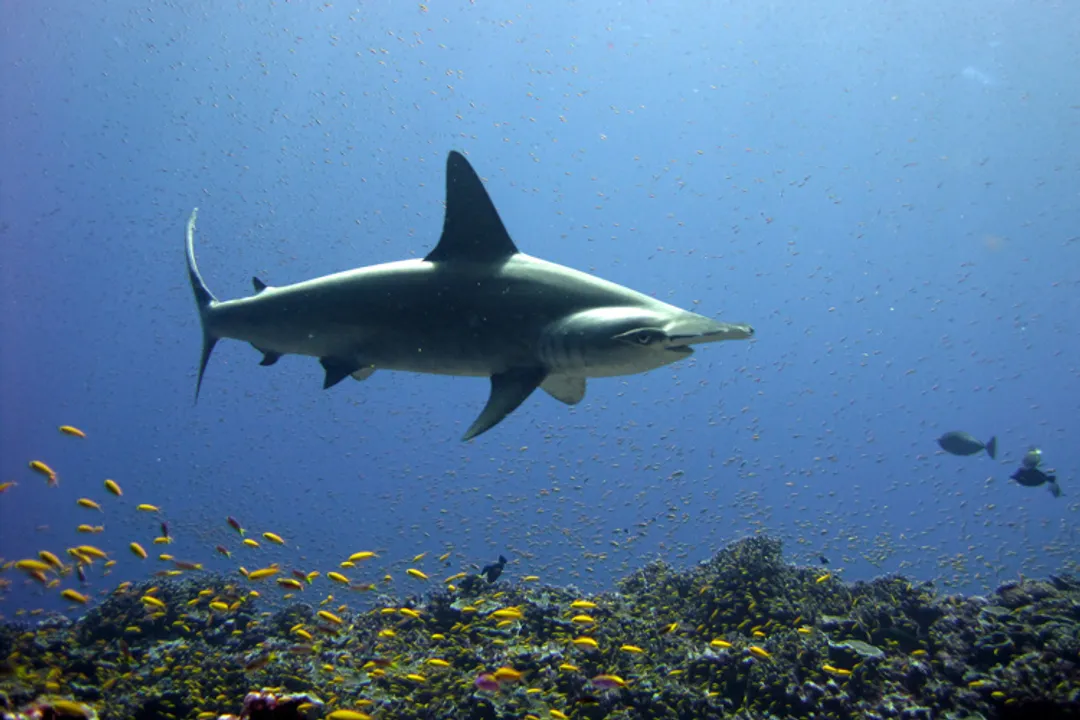
The classification of a hammerhead shark is a fascinating dive into the system biologists use to organize the sheer variety of life on our planet, beginning with its distinctive head shape that sets it apart from nearly every other fish in the ocean. These sharks are not a single species but represent a diverse group united by the unique, flattened, hammer-shaped extension of their heads, known scientifically as the cephalofoil. [5][8] To understand where they fit in the grand scheme of life, we trace their lineage from the broadest categories down to the specific species level, recognizing that this framework helps scientists and conservationists manage and study them. [5]
# Kingdom Phylum Class
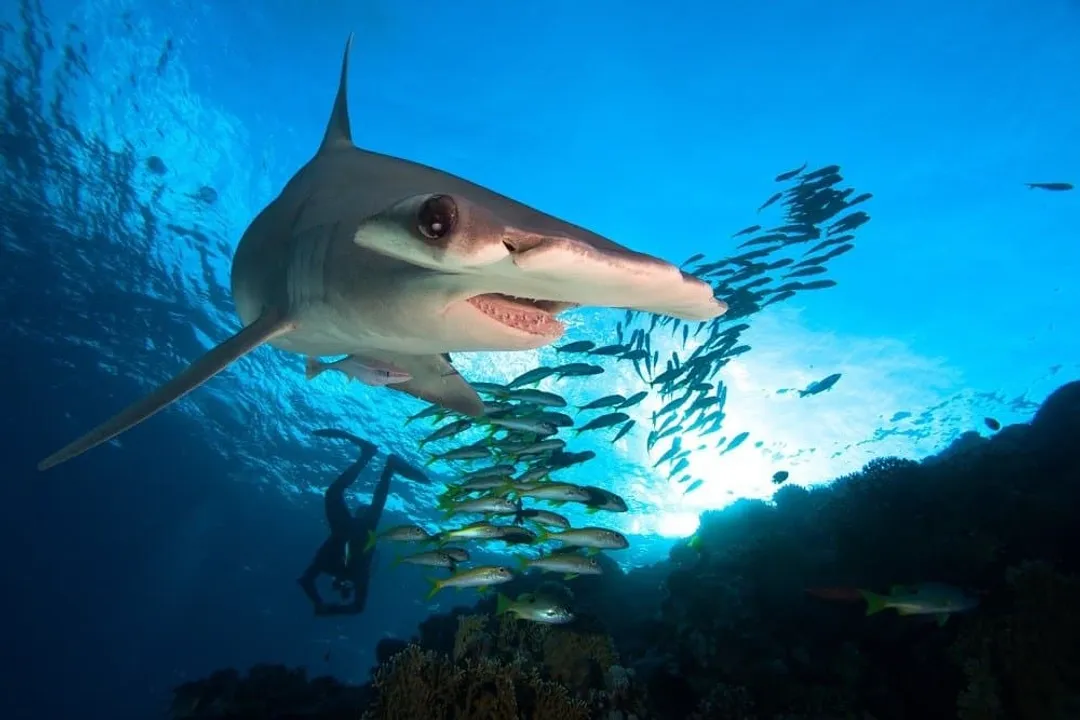
Like all other animals, hammerheads begin their taxonomic placement in the Kingdom Animalia, reflecting their multicellular, eukaryotic nature. [8] Moving down the hierarchy, they belong to the Phylum Chordata, signifying they possess a notochord at some point in their development, which, in sharks, is eventually replaced by a vertebral column, placing them in the Subphylum Vertebrata. [8] The next significant grouping is the Class Chondrichthyes, the cartilaginous fishes. [8] This class is crucial because it separates sharks, rays, and skates from the bony fishes (Osteichthyes). [8] Cartilaginous skeletons offer flexibility and lighter weight, though the hammerheads share other characteristics with their cartilaginous relatives, such as multiple gill slits and placoid scales. [8]
# Order and Family

Within the cartilaginous fishes, hammerheads belong to the Order Carcharhiniformes, often referred to as the ground sharks. [8] This order is a large and varied group, but the hammerheads are distinctly set apart by their unique head morphology, leading to their specific classification into the Family Sphyrnidae. [8][5] This family name, Sphyrnidae, is derived from the Greek word sphýra, meaning "hammer". [8]
The Sphyrnidae family encapsulates all sharks possessing the cephalofoil, and while external characteristics are key, internal structures and genetic analysis confirm this placement. [8] Members of this family are characterized by this broad, flattened, laterally extended head, which is distinct from the more streamlined snouts of other ground sharks. [5] This structure supports their sensory organs, potentially enhancing their ability to detect electrical fields using the ampullae of Lorenzini, which are spread out across the extended surface. [1][5] The combination of the cephalofoil and other shared traits solidifies their position within this specialized family. [8]
# The Genera Structure
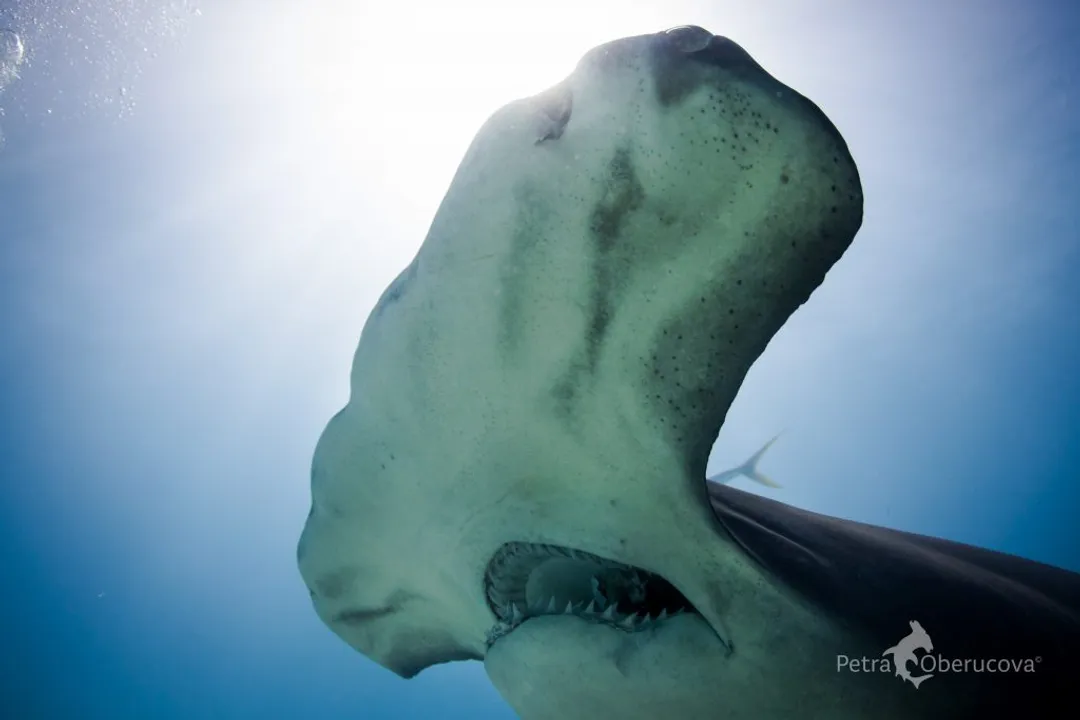
The family Sphyrnidae is currently divided into two recognized genera: Sphyrna and Eusphyra. [8] The vast majority of commonly recognized hammerhead species fall under the genus Sphyrna. [8]
The genus Sphyrna contains the species that most people picture when they hear "hammerhead," including the great, scalloped, and bonnethead sharks. [8] These sharks are generally characterized by a head structure where the eyes are located near the ends of the lateral extensions. [8]
The second genus, Eusphyra, is represented by only one recognized species: the Winghead Shark (Eusphyra blochii). [8] This shark exhibits an extreme version of the cephalofoil; its hammer is far wider relative to its body size compared to species in the Sphyrna genus. [8] The sheer width of the Eusphyra head—sometimes measuring up to half the total body length—sets it distinctly apart from its Sphyrna cousins, justifying its placement in a separate genus. [8] This structural variation within the family highlights how classification groups organisms based on significant evolutionary divergences, even among closely related forms. [5]
It is worth noting that while some older sources or less current databases might reference different numbers of genera or species, the prevailing modern understanding recognizes these two genera, accounting for the full known spectrum of hammerhead diversity. [8]
# Species Count and Common Types
Within the Sphyrnidae family, approximately ten known species of hammerhead sharks exist. [7] The precise number can occasionally shift with ongoing research and taxonomic revisions, but ten is the generally accepted count across the genera. [7][8] These species display a considerable range in size, habitat preference, and head shape. [7]
While we focus on classification, understanding the main representatives helps put the taxonomy into context. The species are differentiated by finer details of their head shape, the arrangement of their fins, and their tooth morphology. [8] For example, the shape of the front margin of the cephalofoil is a key differentiator: some are nearly straight, while others are deeply notched. [8]
To illustrate the variation within the most common genus, Sphyrna, consider a comparison of the three most famous types:
| Feature | Great Hammerhead (S. mokarran) | Scalloped Hammerhead (S. lewini) | Bonnethead Shark (S. tiburo) |
|---|---|---|---|
| Cephalofoil Margin | Highly arched center, almost straight sides [8] | Distinctive scallops on the front edge [8] | Uniformly rounded, shovel-like [8] |
| Size Potential | Largest species, potentially over 20 ft [3][6] | Medium to large, usually under 14 ft [2] | Smallest, typically under 5 ft [7] |
| Conservation Status | Critically Endangered (IUCN) [3] | Endangered (IUCN) [2] | Least Concern (IUCN) [7] |
This table showcases that classification differences extend right down to the species level, where even minor visual cues—like the scalloped edge versus the rounded shovel—are sufficient to separate distinct biological entities. [8] A practical observation for those examining underwater footage or museum specimens is that the Great Hammerhead's profile appears much more like a classic, high-arched Roman helmet, whereas the Bonnethead truly resembles a smooth spade. [6][8]
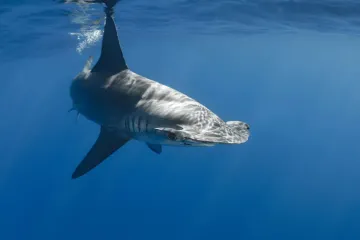
# Great Hammerhead Classification Details
The Great Hammerhead (Sphyrna mokarran) serves as an excellent case study for detailed species classification within the Sphyrna genus. [3][4] It is classified as the largest of all hammerheads, capable of reaching lengths exceeding 20 feet, though specimens around 11 to 14 feet are more commonly encountered. [3][6] Its broad, nearly straight-edged, high-arched head is a defining characteristic that distinguishes it from the Scalloped Hammerhead. [8]
In terms of habitat and preference, the Great Hammerhead is often associated with coastal and offshore continental and insular shelves. [4] Its diet leans heavily towards larger prey than many of its smaller relatives, notably including rays, which it is particularly adapted to hunting by pinning them to the seafloor with its cephalofoil. [4] This predatory specialization, combined with its size, means that understanding its specific ecological niche is intrinsically linked to its species-level identification, separate from other Sphyrna members. [4] While the Sphyrna genus shares the general hammer shape, the sheer scale and specific head contour of S. mokarran place it at the apex of that group. [3]
# Scalloped Shark Placement
The Scalloped Hammerhead (Sphyrna lewini) is another key member of the Sphyrna genus, distinguished by the unique indentations or "scallops" along the front edge of its hammer-like head. [2][8] This species is widely distributed across tropical and warm-temperate waters globally. [2]
The NOAA Fisheries notes that the scalloped hammerhead is a highly migratory species, often forming large schools, particularly around oceanic islands and offshore features. [2] This behavioral trait—schooling—is a significant ecological difference from the Great Hammerhead, which tends to be more solitary outside of mating or migratory congregations. [4][2] Though closely related, these behavioral patterns and slight morphological distinctions are what secure their status as separate species within the same genus, Sphyrna. [8] The scientific classification system must account for both the structural similarities (placing them in the same genus) and the distinct evolutionary paths evidenced by their physical and behavioral divergences (placing them in different species). [2]
# Insight into Cephalofoil Functionality
The consistent presence of the cephalofoil across the Sphyrnidae family suggests a strong selective pressure favored this structure. While general knowledge points to sensory enhancement, considering the physics involved offers an interesting perspective. If we assume an average adult Great Hammerhead is about 16 feet long and weighs roughly 500 pounds, the wider surface area provided by the 6-foot-wide head might distribute the electrical field detection across a volume significantly greater than a similarly sized shark with a pointed snout. [4] This wider array likely acts like a vastly superior radar system, allowing it to sweep a broader area for prey buried beneath the sand more efficiently than a narrow-headed counterpart. This efficiency gain, even if slight per sweep, compounds over a feeding period, making the cephalofoil a crucial adaptation for their lifestyle, differentiating them ecologically even before we look at genetic sequencing. [5]
# Management Implications of Classification
The precise classification of a hammerhead shark has direct, real-world consequences, especially concerning fisheries management and conservation efforts. [2][3] Different species face different levels of threat, and management bodies like NOAA Fisheries must treat them separately based on their species-level classification. [2][3]
For instance, the Great Hammerhead (S. mokarran) is currently listed as Critically Endangered by the IUCN Red List, facing extremely high risk of extinction in the wild. [3] In stark contrast, the Bonnethead Shark (S. tiburo), despite its shared family classification, is listed as Least Concern. [7] This difference in status is likely attributable to their size—larger sharks are often more targeted by commercial fisheries—and their different life histories, such as maturity rates and reproductive output. [3][7]
This divergence in conservation status within the same family illustrates why taxonomy is more than just an academic exercise; it dictates regulatory action. If a fisherman encounters a hammerhead, correctly identifying it as a Great Hammerhead versus a Bonnethead immediately places the catch under vastly different regulations, if any catch is permitted at all. [3][2]
# Global Distribution and Taxonomic Challenges
The ten species of hammerheads are distributed across various marine environments worldwide, a fact that complicates international conservation efforts. [7] The vast, interconnected nature of the oceans means that a single species, like the Scalloped Hammerhead, can move across the exclusive economic zones (EEZs) of numerous nations. [2]
Here lies a subtle challenge in relying solely on the Linnaean system for practical protection: while classification clearly separates S. lewini from S. mokarran, the migratory patterns of these two species might overlap significantly in international waters or across multiple national jurisdictions. [2] For example, a scalloped hammerhead might be protected in the coastal waters of one country but vulnerable to unregulated fishing just outside that boundary before entering another country's waters. [2]
This necessitates that international bodies work to align their conservation frameworks based on the established species classification. [3] The fact that the Sphyrna genus spans the tropics means that management strategies must be internationally coordinated to effectively protect these species, particularly the endangered ones, whose populations are already stressed by overfishing and habitat degradation. [2][3] The classification provides the what—the distinct biological unit—but the how of protection requires cooperation across political lines, a reality that supersedes the neat boundaries of a taxonomic tree. [7] The reliance on precise visual identification, especially in the field where subtle head margin differences are hard to confirm quickly, highlights the trust placed in experienced observers and fisheries scientists to apply the correct protective measures derived from this classification work. [8]
Related Questions
#Citations
Hammerhead shark
Scalloped Hammerhead Shark
Great hammerhead shark (Sphyrna mokarran) - SPAW-RAC
Sphyrna mokarran (Great Hammerhead) | INFORMATION
Hammerhead shark | Diet, Size, & Facts
Hammerhead Shark Fish Facts
Great Hammerhead - Florida Museum of Natural History
The 10 Known Species of Hammerhead Sharks: A Guide ...
Hammerhead Taxonomy