What dual foraging strategy allows the colony to exploit both floral nectar and insect biomass simultaneously?
Answer
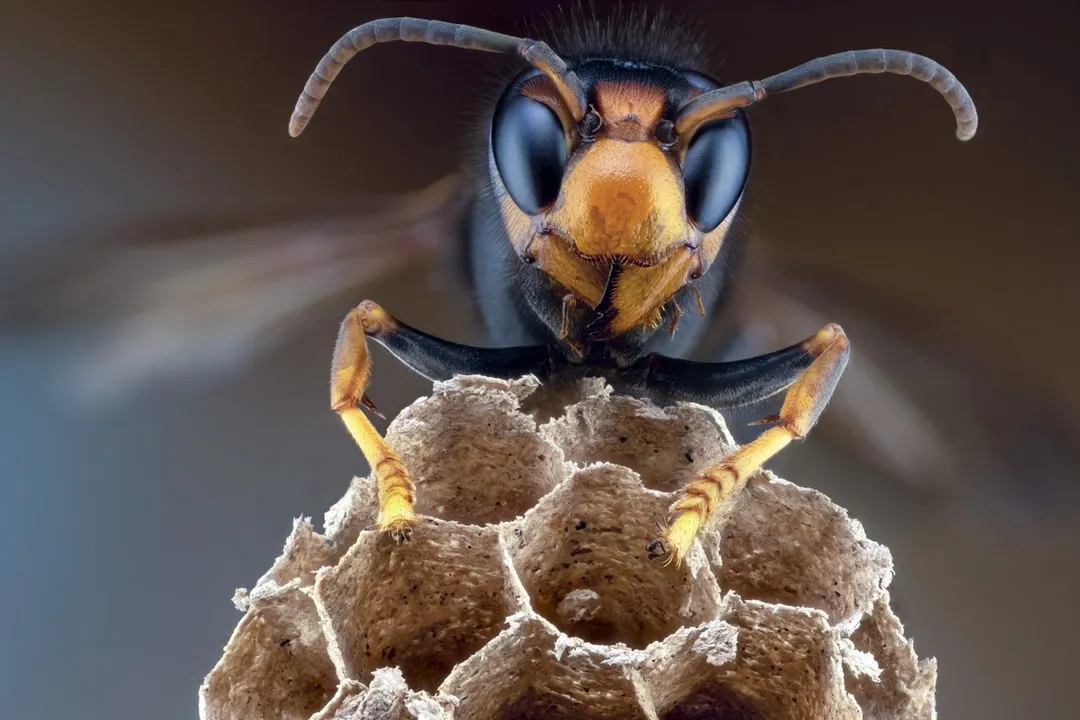
Adults specialize in energy collection (sugars), and larvae handle the complex task of breaking down animal tissue.
The division of labor is based on specialization: adults focus on energy collection (sugars), while the larvae function as the digestive system, processing complex animal tissue into usable components.
Related Questions
What is the primary nutritional difference between adult giant Asian hornets and their larvae?What substance primarily fuels the adult giant Asian hornet's high metabolic rate required for flight?What limitation prevents adult hornets from consuming solid prey directly?How do adult workers prepare captured prey before feeding it to the developing brood?Which of these insects is specifically documented as a prey item for the larvae?What is the primary reason adult hornets show a preference for damaged fruit over intact fruit?When hunting honey bees near their hive, what systematic action does the hornet often take immediately after capture?What dual foraging strategy allows the colony to exploit both floral nectar and insect biomass simultaneously?What is the potential indirect consequence of severely limiting easy-sugar sources for foraging workers?How does the biological processing of raw prey for larvae contrast with the preparation of hornets for human consumption in native regions?