What should I do if I see a giant Asian hornet?

The sight of an insect that appears unusually large buzzing near your porch or garden can trigger an immediate sense of alarm, especially when that insect is the Giant Asian Hornet (Vespa mandarinia). [2] Knowing exactly what to do in that moment—whether you spot a lone flyer or suspect a hidden nest—is critical for both your personal safety and for public health efforts to track and manage this species in regions where it is considered invasive. [4][9] The primary directive, regardless of the situation, centers on safety first, followed immediately by accurate reporting to the proper authorities. [3][6]
# What They Look Like
Accurate identification is the first step, as confusing the Giant Asian Hornet with native species can lead to unnecessary panic or, worse, an inadequate response to a genuine sighting. [3] These hornets are the largest in the world, easily standing out due to their sheer size. [2]
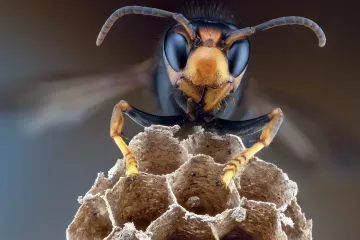
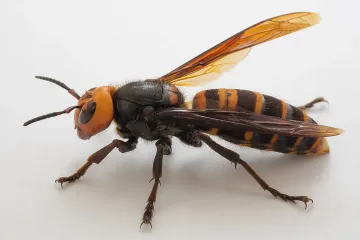
Workers can reach lengths up to about 1.5 inches, while queens might exceed that, growing up to 2 inches long. [2][3] Their color pattern is distinct: they possess a large, predominantly orange or yellowish-orange head and thorax. [2][3] The abdomen features dark bands interspersed with lighter stripes. [2] A key distinguishing feature, often cited, is the broad, distinct orange-yellow band present on the final abdominal segment. [3]
It is important to differentiate them from other large stinging insects you might encounter. The native European Hornet (Vespa crabro), for example, has a more reddish-brown head and thorax, unlike the GAH's bright orange. [3] Similarly, while the Bald-faced Hornet is large and black and white, it is actually a type of yellowjacket, not a true hornet, and lacks the GAH’s immense size and distinctive head coloring. [3] If you are in an area where GAHs are known to be established, such as parts of the Pacific Northwest of the US, reporting any large hornet sighting is prudent until you can confirm its identity. [4] If you only see a single insect and are unsure, documentation is key before reporting. [6]
# Retreat Quietly
The most dangerous encounters usually happen when a hornet perceives a threat to its colony. If you encounter a single hornet, you should maintain distance. [3] If you suspect you have found a nest—perhaps through observing a sustained pattern of incoming and outgoing traffic—your response must be immediate withdrawal. [3][6]
Never approach, attempt to poke, swat at, or try to remove the nest yourself. [3][6] These hornets possess an intimidating sting, often described by those who have experienced it as feeling like a hot nail being driven into the skin. [1][5] Unlike honey bees, they can sting multiple times because their stinger is not barbed. [5] Disturbing a nest can provoke a mass defensive attack, which is where the greatest risk lies. [3]
When retreating from a potential nest site, do so slowly and calmly. [6] Avoid sudden movements or swatting, as erratic behavior is more likely to trigger an aggressive response from the insects. [6] If you are near an area where they are actively hunting honey bees, observe quietly from a safe distance—perhaps 20 to 30 feet away—before moving away entirely. [2]
# Contact Agencies Now
Once you are at a safe distance, the single most important action you can take is reporting the sighting to the relevant state or local agricultural department or pest management agency. [2][4][5][9] This step transforms a personal observation into valuable data for coordinated eradication or tracking efforts. [4]
The necessity of official reporting changes depending on the region. In areas where the GAH is considered an invasive species, such as Washington State, official notification is mandatory for tracking and containment programs. [4][9] In regions where they are native, like parts of Asia, the concern might shift more toward localized nest management, but authorities should still be notified, especially if the insect is found outside its usual established range. [6]
When you report, you should aim to provide as much detail as possible. A good report includes:
- Location: The exact location of the sighting. If possible, use GPS coordinates or pinpoint the location on a map provided by the reporting system. [6]
- Date and Time: When you observed the insect or nest. [6]
- Behavior: What the hornet was doing (e.g., hovering near a bee box, flying toward a specific tree, etc.). [6]
- Visual Confirmation: If you managed to take a photo or video safely, this is invaluable for official confirmation. [6]
Many states and territories have dedicated online portals or hotlines specifically for reporting these hornets; for example, some US states direct these reports to their Department of Agriculture. [5][9] Look up the specific protocol for your local government entity that handles agricultural pests or invasive species management. [4]
A Note on Expert Response: Unlike typical pest control calls, GAH nest removal is often handled exclusively by trained professionals from state departments or USDA agencies due to the extreme danger involved. [3][6] This is because the venom load in an entire colony presents a significant public safety hazard that a standard exterminator may not be equipped or authorized to handle. [5]
# Nest Proximity Dangers
While a single hornet might be alarming, a nest represents a massive escalation in risk. Giant Asian Hornets build their nests underground, often in abandoned rodent burrows, or sometimes in hollow logs or under sheds, especially during their initial establishment phase. [6] This contrasts with many common wasps that prefer hanging nests made of paper. [6]
The size and defensiveness of a colony cannot be overstated. If an established nest is disturbed, the hornets will aggressively defend it, potentially attacking anything within a significant radius. [3] This defense mechanism is primarily directed at protecting the larvae inside. [3]
If you suspect a nest, your follow-up action is slightly different from simply spotting a lone insect. First, mark the general area from a distance so you can describe it later. Second, retreat without hesitation. [6] The actual removal process must be left to the experts, as confirmed by multiple regional agricultural bodies. [3][5] Trying to destroy a GAH nest yourself is profoundly dangerous, as multiple stings can be life-threatening even to healthy adults. [5]
# Sting Effects
Understanding the potential impact of a sting helps reinforce the need for caution and prompt reporting. While a single sting is intensely painful, the real danger comes from the volume and toxicity of the venom delivered during multiple attacks. [5] The venom is potent, and repeated stinging can lead to severe illness or death, particularly for individuals who may be sensitive or have underlying conditions. [5]
If you or someone near you is stung, the immediate concern should be moving away from the area to prevent further stings. [1] As with any severe insect sting, monitor for signs of anaphylaxis, such as difficulty breathing, swelling of the throat or face, or dizziness. [1][5] If these symptoms occur, emergency medical attention is required immediately. [5]
# Invasive Status Impact
When observing this insect, it is helpful to consider why the reaction to a sighting is so urgent in North America compared to areas where it is native. In places like Japan or parts of China, the hornet is a known element of the ecosystem, and local populations have natural predators and established management practices. [6] However, when an invasive species like Vespa mandarinia becomes established in new territories, such as the Pacific Northwest of the United States, it poses a severe threat to native ecology, most notably to managed honey bee populations. [4] This hornet is a hyper-predator of honey bees, capable of wiping out entire colonies quickly by decapitating workers to feed its larvae. [2][4] Therefore, reporting a sighting is not merely about personal safety; it is about providing biological surveillance data that supports immediate, coordinated government action aimed at containing or eradicating a known threat to agricultural resources and native pollinators. [4] The speed of reporting directly correlates with the success rate of early detection efforts, making an accurate, quick report an act of environmental stewardship. [9]
# Documentation Tips
While you must never linger near a suspected nest, if you see a single, isolated insect and are safely away from it, spend a brief moment focusing on documentation before you retreat to report. Many people may hesitate to report a sighting because they lack a clear photograph, but providing descriptive details from memory is far better than saying nothing. [6] If safe to do so, use your phone to capture a picture or short video, paying special attention to the head color and the final abdominal band, as these are the easiest ways for an expert to confirm the species remotely. [6] However, if the insect is acting agitated or you are close to a potential entrance, prioritize your exit. If you cannot get a photo, make a mental note of the size relative to something common—say, a quarter or a standard house key—and the precise time of day, as hornet activity can vary. This level of detail aids experts who might later survey the area, allowing them to predict where the insect might have nested or foraged based on its movement patterns. [6] For instance, hornets often forage heavily during daylight hours, meaning a sighting an hour before sunset might indicate a nest site is nearby, needing investigation the following morning by professionals.
Related Questions
#Citations
What action should we take with an Asian hornet? Currently, I have ...
Asian Giant Hornet - Amdro
What is an Asian Hornet, what does it look like & what should I do if I ...
First-Ever U.S. Sightings of Asian Giant Hornet - USDA
Asian Giant Hornet - Missouri Department of Agriculture - MO.gov
What do I need to do when I find a Japanese hornet in my garden?
Northern giant hornet and human health
[PDF] What should you do if you discover an Asian hornet nest?
[PDF] Asian giant hornet | NC Department of Agriculture
What the fuck do I do with hornets? : r/japanlife - Reddit