What kills Asian giant hornet?
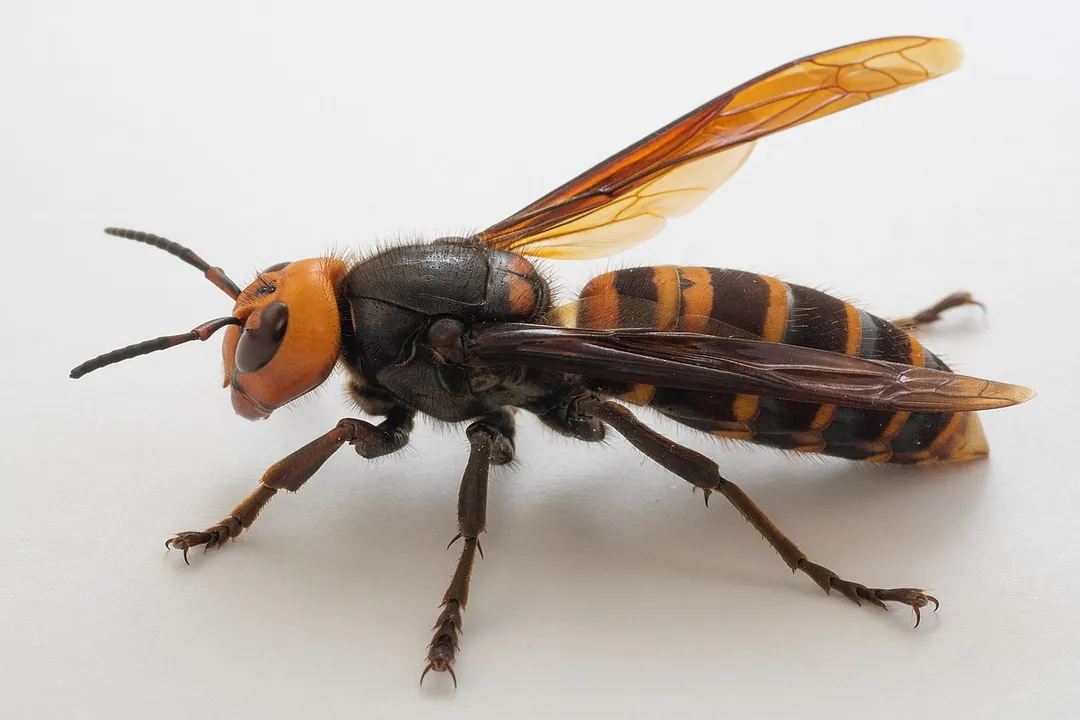
The death of an Asian giant hornet, Vespa mandarinia, can result from a variety of pressures, ranging from sophisticated government eradication efforts to the surprisingly effective, organized defense of its prey. While this species is known for its size, potent venom, and dominance over other wasps, it is not immune to elimination through natural, mechanical, or chemical means.
# Natural Enemies
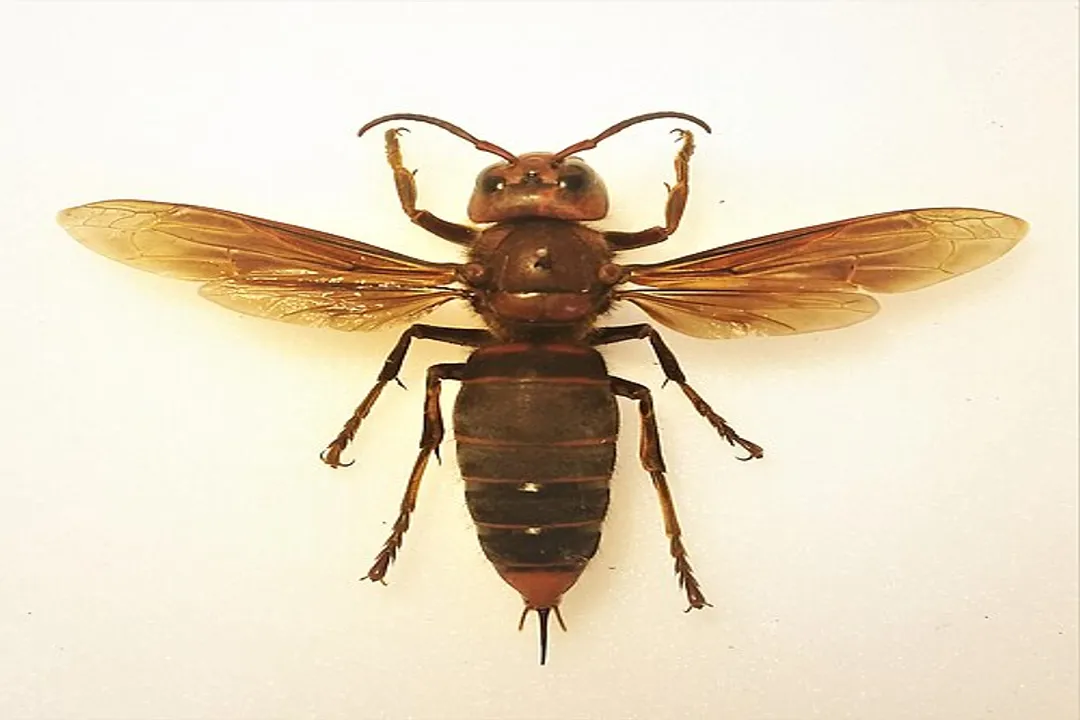
In their native range across temperate and tropical East Asia, these hornets face natural challenges to their survival, though they are considered the most dominant species among several Vespa species observed in feeding contests.
The most significant known natural predators include other insects and birds. Crested honey buzzards are reported to prey on the Asian giant hornet. Furthermore, other large insects, such as mantises, are documented as killing them, particularly in late summer and fall when the hornets are targeting large insects as a key protein source for their growing larvae. Even conspecific colonies—other colonies of the same species—will attack and destroy nests.
Perhaps the most elegant natural defense mechanism comes from native honey bees. The Japanese honey bee, Apis cerana japonica, employs a specific, coordinated defense against scouting hornets. When a scout is detected, approximately one hundred bees will swarm the intruder, engulfing it in a tight ball. Within this ball, the bees simultaneously vibrate their thoracic muscles and raise the surrounding temperature to a critical point, often reaching (), while also increasing the carbon dioxide () concentration. The Asian giant hornet cannot survive this combination of heat and elevated , leading to its death, even though some bees may perish in the process. For the introduced Apis mellifera (Western honey bee), which lacks this innate defense, a handful of hornets can quickly wipe out a colony of tens of thousands because their individual stings are ineffective against the hornet’s armor and size.
Beyond direct predation, internal threats exist. Parasitism by the strepsipteran Xenos moutoni is noted, affecting about $4.3%$ of female hornets in one study. A parasitized female cannot reproduce; she follows the same life path as an unfertilized queen, feeding on sap until she disappears in early July.
# Physical Resistance
When encountering an individual hornet, the instinct for many might be to eliminate it instantly. However, the Asian giant hornet possesses considerable physical resilience.
The sheer size and armor of the hornet mean that casual attempts to kill it are often ineffective. The stinger itself is long—around ( inch)—and capable of piercing protective gear, including some components of a standard beekeeper suit, indicating that direct physical confrontation is dangerous. While one method mentioned for killing them involves crushing them with wooden sticks with flat heads, this process is noted as being very time-consuming and inefficient.
A more targeted mechanical approach focuses on eliminating the reproductive success of queens or workers. For queens emerging from hibernation, or for queens associated with the very first, small nest they establish, the recommended method is physical removal and freezing. An inseminated queen searches for a nesting site in late April, creates a small nest to raise the first batch of workers, and only then do workers begin foraging outside the nest around July. If the queen and this initial, small colony can be isolated—for instance, by capturing the queen and placing her and the nest into a container like Tupperware—freezing them effectively kills the entire founding unit.
For established colonies, particularly those that nest underground or in tree cavities, direct physical removal becomes incredibly hazardous. Attempts to deal with these nests, even by professionals, require specialized equipment, such as vacuuming hornets from a tree crevice after wrapping the structure in plastic.
# Control Tactics
Methods to kill the Asian giant hornet fall broadly into government-led eradication programs, professional pest control applications, and targeted preventative measures aimed at queens.
# Eradication Focus
In North America, eradication efforts centered heavily on locating and destroying nests once activity was confirmed, such as the instances in Washington State. The difficulty lies in locating nests, as V. mandarinia prefers subterranean sites, often co-opting tunnels dug by rodents or those near rotten pine roots. Their flight radius can extend up to () away from the nest, making simple following unreliable.
When a nest is found, government teams have employed methods that ensure the death of the entire population within. In one documented case, the nest, located in a tree cavity, was plugged with foam, wrapped in plastic, and then carbon dioxide () was injected into the tree cavity to ensure every hornet remaining inside was killed. The ability to track live, captured hornets using USDA-supplied radio tags proved crucial for this precise form of nest elimination. The goal of these targeted eliminations is to remove the colony before the queens emerge in the fall to hibernate and start new nests the following spring.
It is interesting to compare the North American nesting environment with the native Asian environment. While the species almost exclusively inhabits subterranean nests in its native range, often near rotten pine roots, the North American examples sometimes involved aerial nesting in tree cavities, making the search and destruction methodology highly dependent on the local substrate and habitat preference. This variation in typical nest location—underground versus tree hollows—presents a distinct logistical challenge for eradication teams relying on a single preferred method.
# Chemical Intervention
Chemical methods often aim to kill the hornets directly, or, more indirectly, to kill their food sources to starve the larvae.
Direct chemical elimination of a nest might involve applying poisons or fire at night, though finding the nest remains the principal difficulty. An untested principle involves mass poisoning, where captured hornets at an apiary are fed a sugar solution or bee poisoned with an insecticide like malathion, hoping the toxin will spread through the colony via trophallaxis (food sharing).
For individual property owners, the focus shifts to general pest management that starves the hornets of prey. One strategy involves using contact insecticides, such as those containing active ingredients like Cyclomethrin (found in Sylo Insecticide), applied as a barrier treatment around structures. This treatment is meant to eliminate smaller insects that the hornets prey upon. A complementary approach involves using a water-resistant insecticide dust, such as one containing Deltamethrin (D-Fender Dust), to treat voids like weep holes, cracks, and crevices, discouraging the hornets from using these spaces. The idea here is not necessarily to kill the hornets on contact, but to reduce the ecosystem's biomass of huntable prey, thereby cutting off the protein supply necessary to feed the developing larvae back at the nest. This systemic, indirect approach is far slower than direct nest destruction, but it aligns with broader Integrated Pest Management (IPM) concepts by reducing conducive conditions—in this case, an abundant food supply for the brood.
# Queen Trapping
A crucial point of vulnerability is the solitary, queen stage before a large colony is established. Individuals in areas with known infestations can contribute by targeting these queens during their post-hibernation search for nesting sites in the spring.
Selective traps, often used by beekeepers, are baited with a mixture designed to attract the queens but potentially repel or allow escape to other insects. One suggested bait recipe for spring trapping involves mixing equal parts beer, wine, and sugar, using a wick to slow evaporation. Once caught, the queens are killed, typically by freezing them until they expire. This proactive removal of queens before they can successfully establish a primary nest—which takes about 50 days to produce the first workers—is a highly effective, small-scale measure to reduce the overall hornet population growth for the season.
# Behavioral Deterrents
In addition to lethal methods, certain behaviors and structures can deter Asian giant hornets, effectively "killing" their ability to successfully hunt or nest near protected areas.
When attempting to protect honey bee colonies, physical modification of the hive entrance is a strong deterrent. Simple entrance reducers combined with small metal fasteners, like brad nails spaced at to intervals, allow the smaller honey bees to pass through easily but physically block the much larger hornets from attacking foragers at the entrance.
Another tactic involves creating a physical obstacle that frustrates the hornet’s attack style. Hornets often "hawk" outside the hive entrance, snatching exiting bees, decapitating them, and carrying the torso back. If the bees detect this, they may cease exiting altogether, risking starvation. A proposed solution involves creating a "muzzle" or a structure that offers bees a wider takeoff space from multiple angles, preventing the hornets from locking onto a single exit point to ambush them. The effectiveness of resistance, whether from physical structures or natural elements like brush or wire screens, often causes the hornet to lose the urge to attack and retreat instead. This highlights that while the hornet is dominant, it is susceptible to obstacles that disrupt its predatory efficiency.
Related Questions
#Citations
What can individuals do to fight the invasion of asian hornets - Reddit
USDA's Cutting-Edge Methods Help Deliver a Victory Against Asian ...
How to Get Rid of Asian Giant Hornets | DIY Wasp Control Products
Asian giant hornet - Wikipedia