What directly translates the limited range and deep habitat into scarcity in the marine aquarium trade?
Answer
Difficulty and cost associated with operating safely at depths approaching 100 meters for collection.
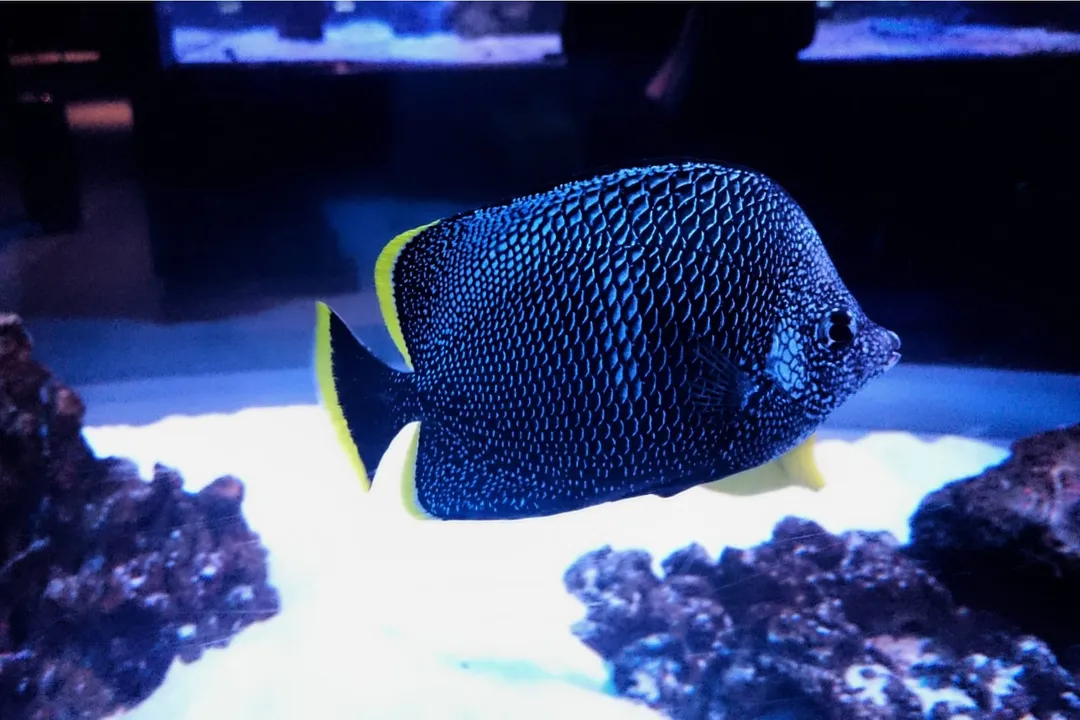
The scarcity of *Chaetodon daedalma* in the aquarium trade is a direct function of its natural environment. Collecting fish near the surface (like the 10 meter range) is manageable, but operating safely and effectively at depths approaching 100 meters introduces significant logistical challenges, increased risk, and higher operational costs. This difficulty in accessing and collecting specimens from their primary habitat inherently limits the supply that can enter the market, which consequently drives up the market value for any specimens that are successfully acquired.
Related Questions
To which family does Chaetodon daedalma, the Wrought-iron Butterflyfish, belong?What is the documented depth range spanned by the Wrought-iron Butterflyfish?Which specific island group is cited as a core area of endemism for C. daedalma?What is another common name used for Chaetodon daedalma besides Wrought-iron Butterflyfish?Is the Wrought-iron Butterflyfish considered widespread or specialized geographically?What zone category often describes the habitat at the 100 meter depth limit for C. daedalma?Which island groups are included in the distribution extending south and west from the Ryukyu nucleus?Why do localized threats pose a disproportionately high risk to the Wrought-iron Butterflyfish population?What directly translates the limited range and deep habitat into scarcity in the marine aquarium trade?Reports of C. daedalma sightings significantly deeper than 100 meters require what type of evidence for trustworthiness?