Wrought Iron Butterflyfish Physical Characteristics
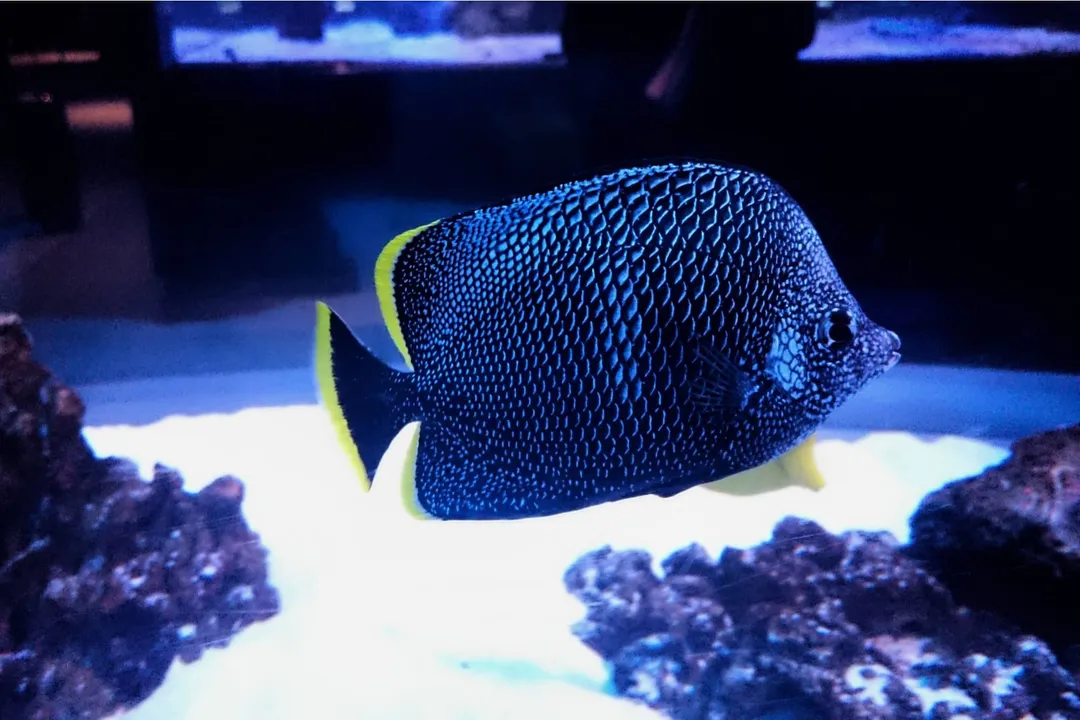
The Wrought Iron Butterflyfish, scientifically designated as Chaetodon daedalma, presents a remarkably different profile compared to many of its more vibrantly colored relatives within the Chaetodon genus. [1][4] Its common name provides an immediate clue to its appearance, evoking the dark, intricate metalwork famous for its durability and complex, web-like patterns. [9][6] This fish is recognized for its deep, almost black base coloration overlaid with a distinctive network of lines, setting it apart visually in the marine aquarium hobby and on the coral reefs where it resides. [3]
# Body Form
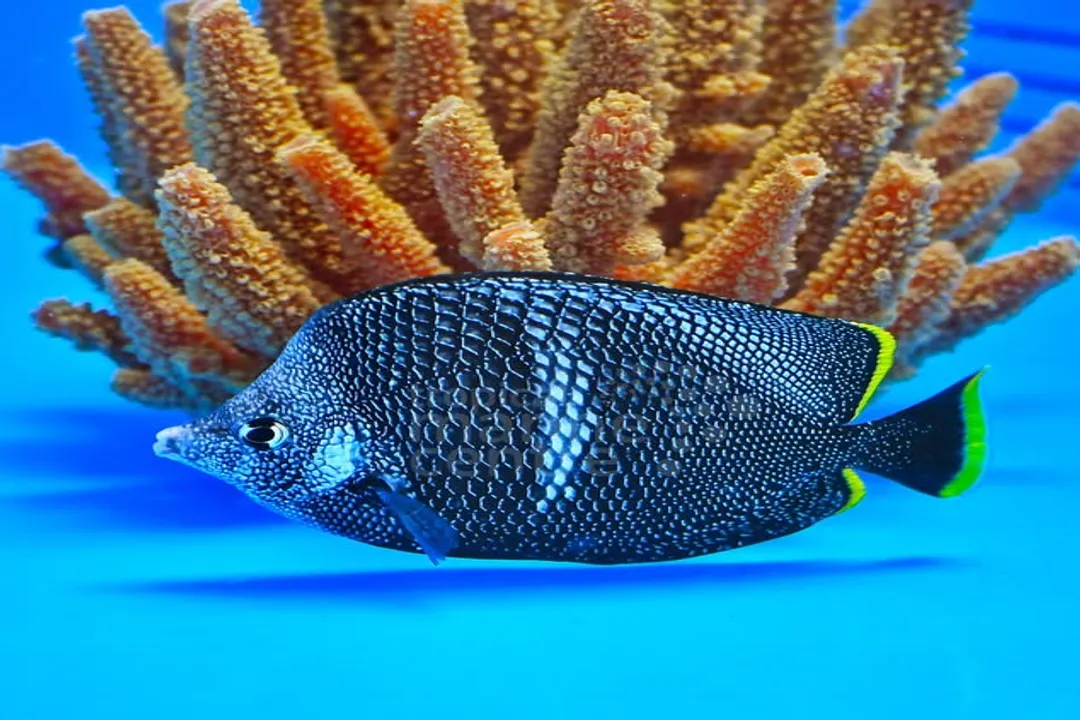
The fundamental shape of the Wrought Iron Butterflyfish adheres closely to the standard morphology found across the family Chaetodontidae. [1] It possesses a laterally compressed, deep, and disc-shaped body, which is typical for many butterflyfish species. [4] This robust, yet flattened, structure is well-suited for navigating the complex, tight spaces often found within reef structures. [1] While specific dimensions can vary based on the source or the individual's maturity, reports indicate that the species generally reaches a maximum total length of around 18 to 20 centimeters, or approximately 7 to 8 inches. [1][2][4] This places it toward the larger end of the medium-sized butterflyfish, suggesting a substantial presence in its environment. [5] The eye is large relative to the head size, a common feature in fish that rely on sight in often dimly lit or complex visual habitats. [7]
# Dark Coloring
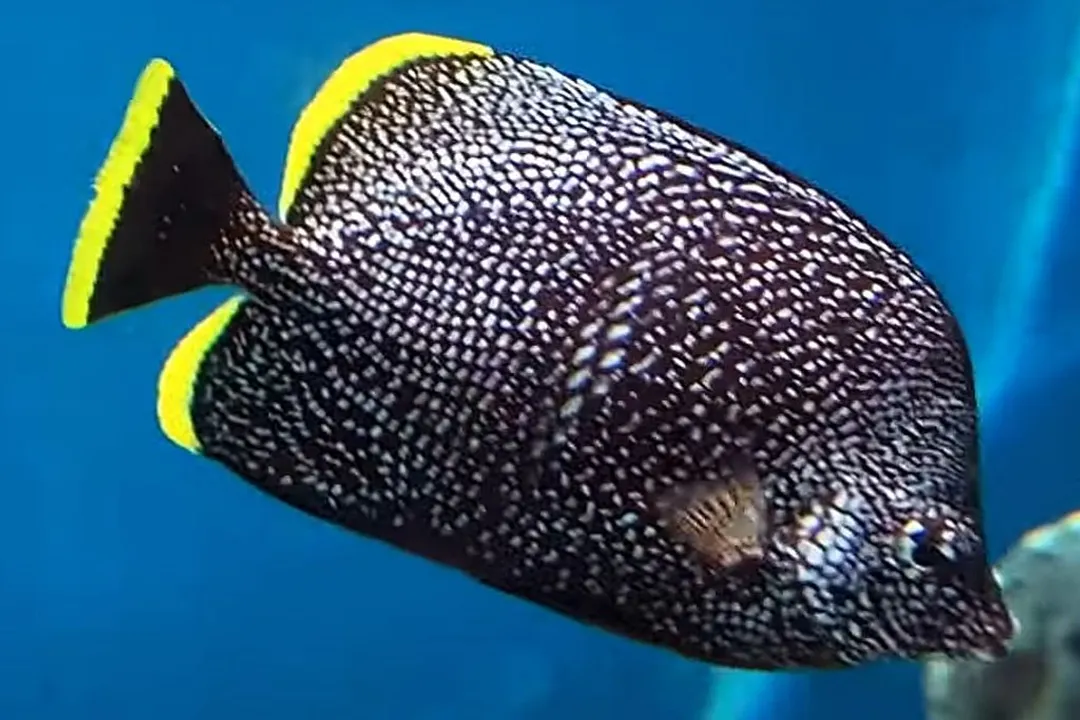
The most compelling physical attribute of C. daedalma is its extraordinary dark pigmentation. [3] The base color of the body is generally described as very dark brown or black. [1][4] However, the description of "wrought iron" does not imply a flat, uniform shade; rather, it describes the pattern imposed upon this dark canvas. [9] Overlaying the dark background is a pale, reticulated or net-like pattern formed by numerous fine lines. [1][4][6] These lines are often described as being grayish, bluish-gray, or sometimes yellowish-white, creating a contrast that highlights the intricate mesh. [3][7]
When considering how this pattern functions, it is interesting to note that this highly contrasting, yet muted, coloration likely serves as disruptive camouflage in certain lighting conditions, especially in the deeper or shadowed areas of the rocky reefs and offshore islands where it is naturally found. [1][5] Unlike many shallow-water butterflyfish that use bright colors to signal territory or species recognition in clear blue water, the Wrought Iron Butterflyfish’s pattern may break up its silhouette against a background of dark rock, rubble, or even the deeper water column itself. This suggests an adaptation for environments with lower light penetration or areas where breaking up the outline is more important than conspicuous signaling. [1]
# Facial Markings
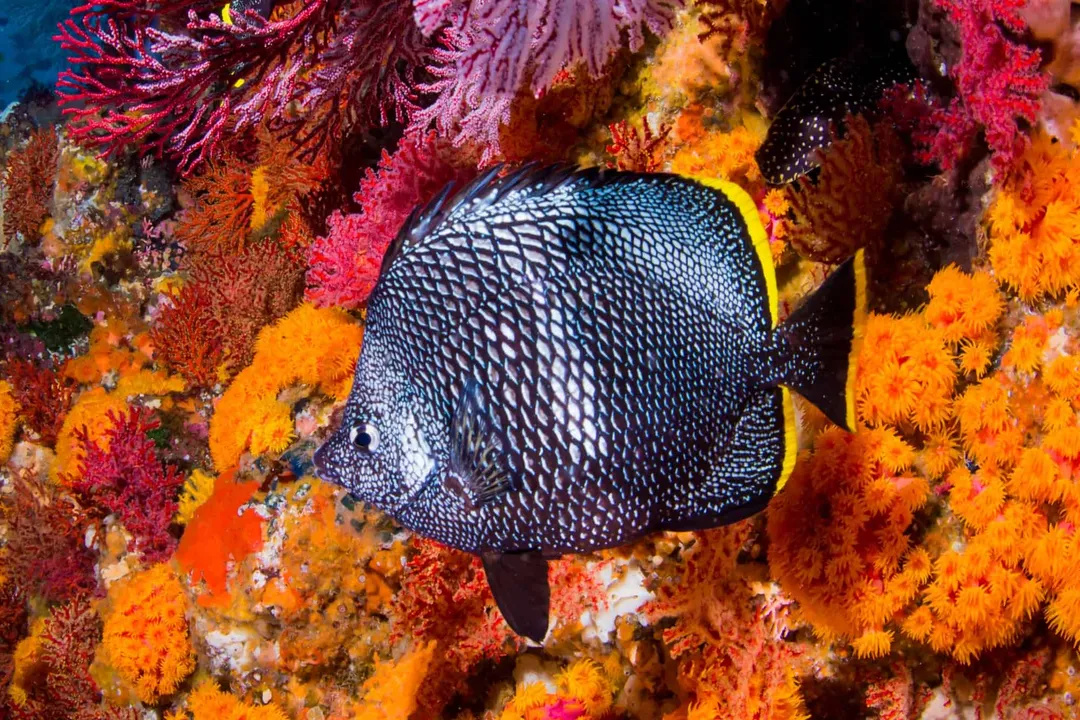
The head region carries several key identifying marks that help distinguish this species, even from a distance or when the full body pattern is obscured. [7] A prominent dark vertical band, characteristic of many butterflyfish, passes directly through the eye. [1][4] This band helps to conceal the eye, which can be a target for predators, adding another layer to its protective visual strategy. [7]
Immediately surrounding the eye, and extending toward the snout or lips, the coloration often differs from the dark body. Sources indicate that the snout area, sometimes including the lips, may be paler—perhaps whitish or yellowish—providing a stark contrast to the dark eye band and the deep coloration of the main body. [3][7] Furthermore, the head itself might exhibit faint lines or streaks that contribute to the overall reticulated appearance, distinguishing the daedalma from other dark butterflyfish that might possess a simple, broad eye bar. [1]
# Fin Structure
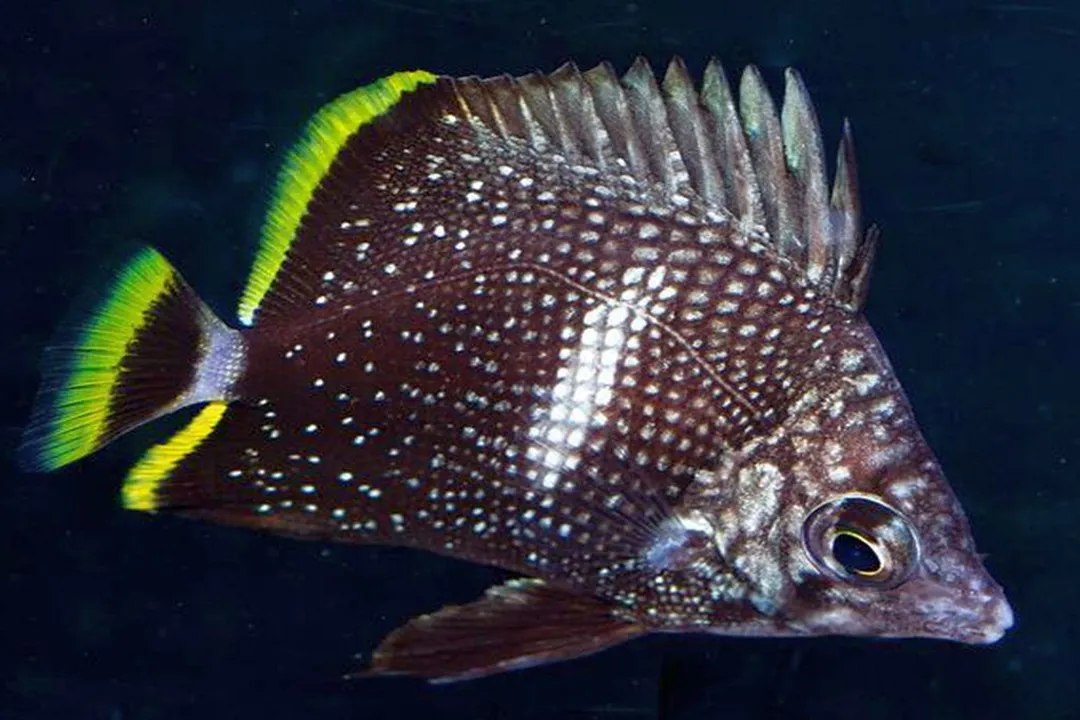
The fins of the Wrought Iron Butterflyfish are generally transparent or semi-transparent, often appearing somewhat dusky or tinged to match the overall dark aesthetic of the body. [3] The dorsal fin runs along the back, and the anal fin runs along the underside, both extending nearly to the caudal (tail) peduncle. [4]
Specific fin ray counts, crucial for precise ichthyological identification, are available, such as the dorsal fin typically possessing 12 spines and 22 to 23 soft rays, and the anal fin having 3 spines and 19 to 20 soft rays, according to FishBase data. [5] These counts, while technical, confirm its placement within the genus, as minor variations in meristics often differentiate closely related species. [1] The caudal fin, or tail fin, is usually truncated or slightly rounded, presenting a clean terminal edge. [4] The pectoral fins are relatively small and clear, serving primarily as maneuvering aids rather than major propulsion drivers, allowing for the characteristic hovering and precise movements often associated with butterflyfish. [7]
# Scale Appearance
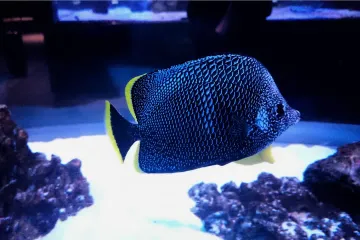
Although the overall impression is of dark metal, the texture contributed by the scales plays a role in how light reflects off the fish. [3] Given the fine, net-like patterning across the body, the individual scales are small, which helps to create the appearance of continuous surface texture rather than distinct, large, overlapping plates. [1] The pale lines forming the net pattern actually lie over the edges of these scales, or perhaps highlight the junction points between them, giving the skin a finely etched quality. [9] This fine detail is one reason why, in captivity, maintaining excellent water quality is important, as the clarity of the water and lighting directly affects how visible and impressive this intricate physical characteristic remains. [3] Observing this fish under different angles of light reveals how subtly the pattern shifts, indicating that the reflective properties of the pale markings are not uniform across the body surface.
# Comparison with Relatives
The sheer darkness of the Wrought Iron Butterflyfish is perhaps its greatest differentiator within the butterflyfish family, most of which are known for bright yellows, whites, and blues. [2] For instance, while a common Raccoon Butterflyfish (Chaetodon lunula) uses black bands against a pale/yellow body, the Wrought Iron reverses this contrast, relying on a dark base. [1] Even compared to other dark species, like the Black-tailed Butterflyfish (Chaetodon melannotis), the daedalma is distinct due to its widespread, fine reticulation rather than broader, simpler bands or spots. [4] If one were to assemble a visual lineup of butterflyfish, the Wrought Iron would instantly stand out not by being the brightest, but by being the most intricately shaded, resembling aged, patterned metal rather than tropical coral coloring. [6] This unique physical expression suggests a divergence in evolutionary pressures compared to its more colorful relatives inhabiting similarly structured but perhaps brighter habitats.
# Summary of Key Physical Traits
To summarize the defining physical traits that allow for positive identification, one can use a simple checklist based on the established descriptions:
- Base Color: Deep, near-black brown. [1][4]
- Pattern: Fine, pale, reticulated (net-like) markings covering the majority of the body. [3][6]
- Eye Mark: A distinct, dark vertical bar passing through the eye. [4][7]
- Snout/Lips: Often notably paler than the rest of the face. [3]
- Size: Up to 20 cm (8 inches) in total length. [2][4]
This combination of dark field color and pale netting is the signature of Chaetodon daedalma. [9] The specific appearance of the fins—dusky or semi-transparent rather than brightly colored or edged—also reinforces this identification, presenting a cohesive, darkly patterned fish profile. [3]
Related Questions
#Citations
Chaetodon daedalma - Wikipedia
Wrought Iron Butterflyfish - Chaetodon daedalma - A-Z Animals
Wrought Iron Butterflyfish - Quality Marine
Chaetodon daedalma - Facts, Diet, Habitat & Pictures on Animalia.bio
Chaetodon daedalma, Wrought iron butterflyfish : fisheries, aquarium
The Wrought Iron Butterflyfish, scientifically known as Chaetodon ...
Species: Chaetodon daedalma (Wrought Iron Butterflyfish) - Saltcorner
Meet the Wrought-iron butterflyfish. Its metallic black scales and ...
Wrought Iron Butterflyfish (Chaetodon daedalmahe)