Wrought Iron Butterflyfish Facts
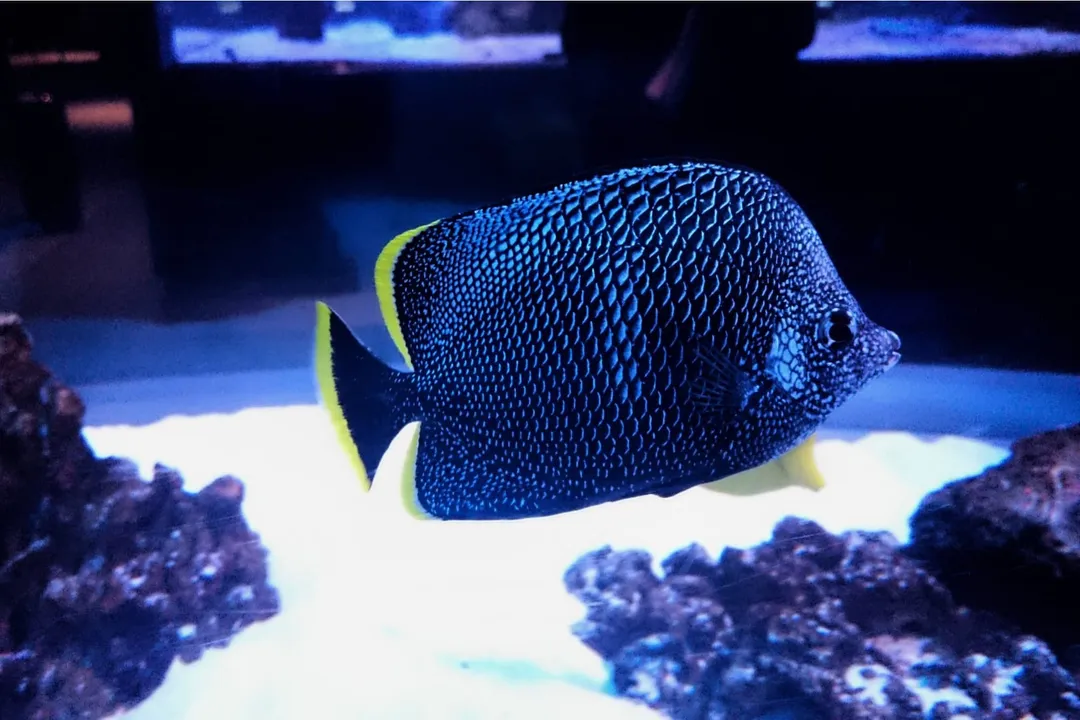
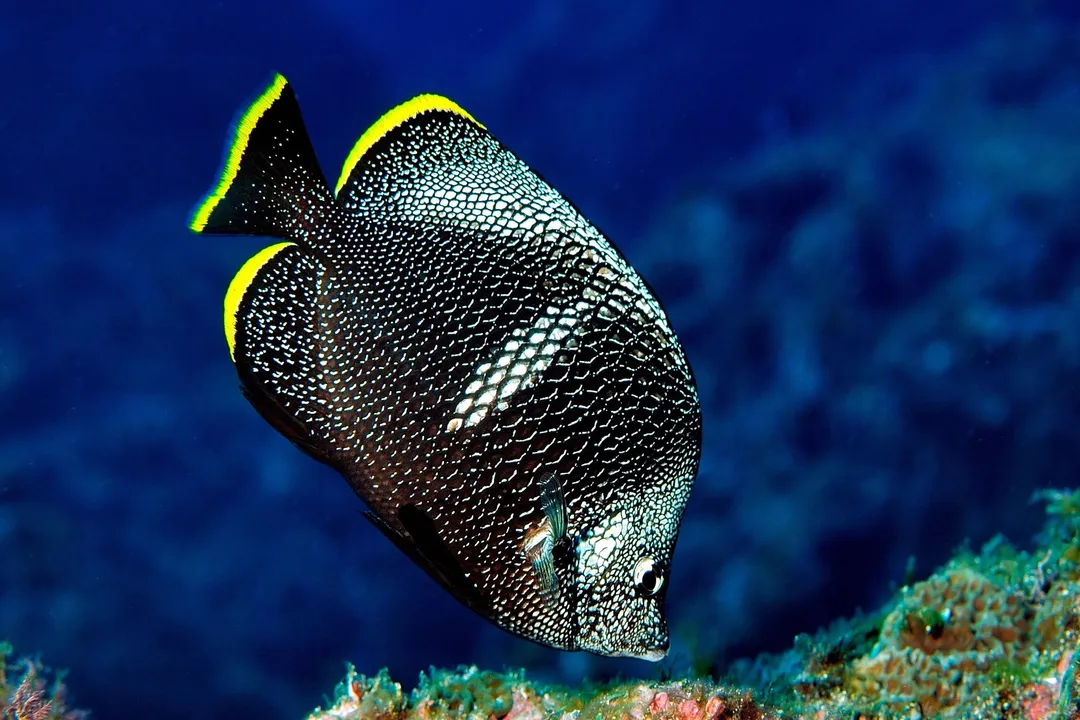
The Wrought Iron Butterflyfish, Chaetodon daedalma, immediately sets itself apart from its more brightly colored tropical cousins with a striking, almost monochromatic appearance that seems forged rather than simply painted. [6] This fish is a masterclass in camouflage set against the deep-sea backdrop it calls home, often presenting as a dark brown to nearly black entity. [2] Its common name perfectly encapsulates this look, suggesting a metallic sheen combined with an intricate, perhaps net-like, surface texture reminiscent of the metalwork it is named after. [6] While the body is overwhelmingly dark, subtle accents provide the necessary contrast, often manifesting as yellow tipping on its fins. [10] Its scales possess a metallic quality that catches the light, enhancing the "wrought iron" effect. [10] Reaching a maximum size of about 12 centimeters, this species is relatively small, yet its distinctive pattern ensures it commands attention when seen. [2][5] The specific epithet, daedalma, itself hints at intricate workmanship or clever design, a fitting description for such a uniquely patterned fish. [6]
# Taxonomy Classification
As a member of the butterflyfish family, Chaetodontidae, Chaetodon daedalma shares a lineage with many of the most recognizable reef inhabitants. [1] However, its placement and characteristics often isolate it slightly from the typical, vibrant tropical assortment one usually associates with the genus Chaetodon. [5] Understanding its scientific name, Chaetodon daedalma, confirms its placement, even if its appearance deviates from the popular image of a butterflyfish. [1][5][7] It belongs to the group known for possessing small mouths and a diet focused on benthic invertebrates, though its specific preferences are adapted to its deeper environment. [5] It’s worth noting that while many butterflyfishes are widely distributed, C. daedalma has a significantly more restricted range. [5]
# Range Distribution
The geographic distribution of the Wrought Iron Butterflyfish is notably constrained compared to many other species in its family, favoring cooler, deeper waters primarily around Japan. [5] Specifically, its known habitat includes the waters surrounding Japan itself, the Ryukyu Islands, and the Ogasawara Islands. [5][8] This limited area suggests a species highly specialized to the environmental conditions found there. [5] Unlike the shallow, sunlit coral reefs where many butterflyfish thrive, C. daedalma is frequently encountered in deeper zones, often documented at depths exceeding 50 meters. [5] This preference for deeper environments directly influences its dark coloration, as less light penetrates to those depths, making dark pigmentation advantageous for concealment. [5] This cooler water preference sets it apart from the warm-water specialists typically discussed in general ichthyology texts. [5] If we consider the overall distribution of butterflyfishes, the concentration of species often peaks around warmer tropical areas; finding one so strongly associated with sub-tropical or temperate Japanese waters is an interesting biogeographical anomaly. [9]
# Habitat Niche
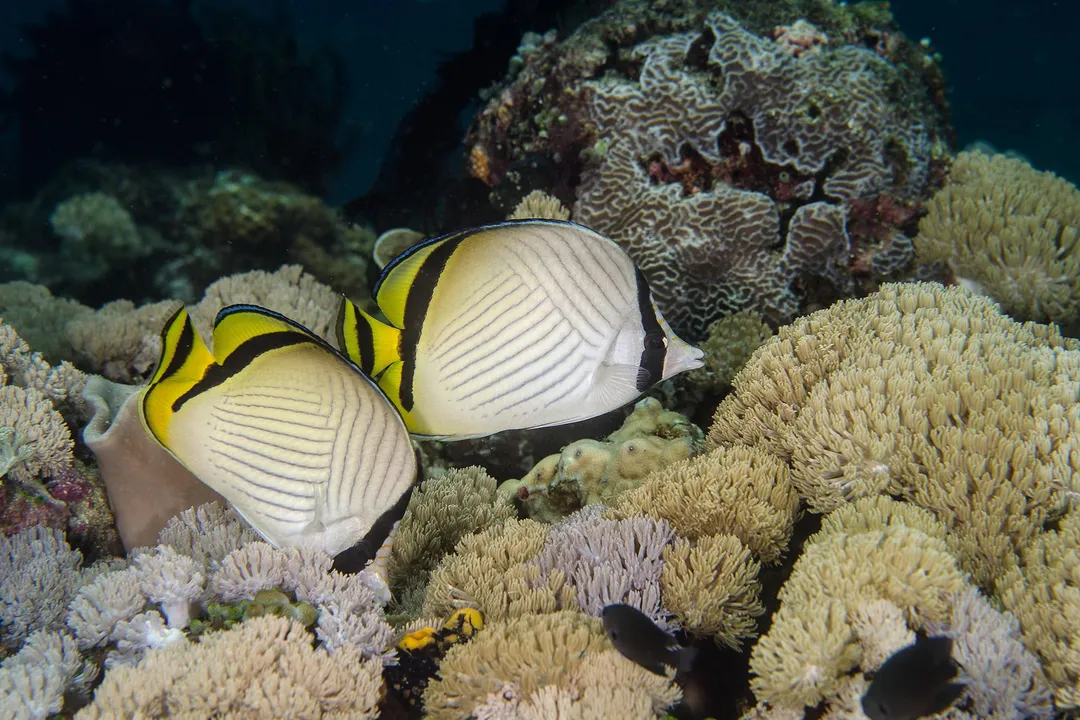
The preferred habitat for this species is not the vibrant coral garden but rather the rocky or rubble-strewn bottoms of deeper zones. [5] This environment necessitates a different approach to survival than that of shallow-water counterparts. The structure of the substrate—rocks and broken debris—provides ample hiding places and surfaces for the small invertebrates that form its diet. [5] The combination of depth and substrate means the light levels are significantly lower, which reinforces the utility of its dark, metallic coloration as effective background matching. [5] A key factor differentiating this fish is its adaptation to water that is inherently cooler than the typical tropical ocean surface layer. [5] When considering the maintenance of this species in aquaria, this depth and temperature adaptation becomes critically important, moving it away from standard tropical fish setups. [4] The rocky terrain also likely influences their social grouping, perhaps encouraging smaller groupings or solitary existence due to sparser resources or fewer complex structures for schooling. [5]
# Feeding Behavior
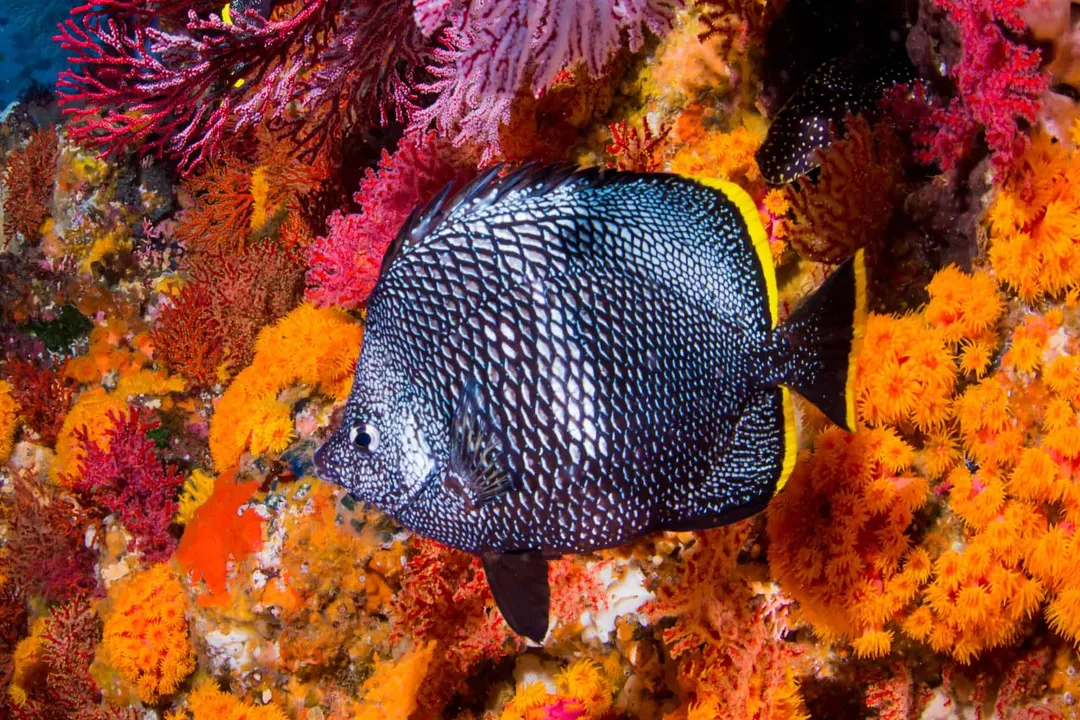
The diet of the Wrought Iron Butterflyfish primarily consists of the benthic invertebrates found clinging to or hiding within the rocks and rubble of its deep habitat. [5] This specialization means it is not likely grazing on coral polyps like some of its shallow-water relatives. [5] While generally characterized by this carnivorous/invertebrate diet, some sources classify the species more broadly as omnivorous. [7] In an aquarium setting, this dietary requirement translates into a need for varied food sources that mimic natural benthic pickings. [4]
When kept by expert aquarists, successful feeding often involves high-quality frozen preparations, such as mysis shrimp or specialized 'marine snow' mixes designed to drift down through the water column. [4] This highlights a practical difference in husbandry: ensuring food reaches the bottom layers effectively without fouling the water. For hobbyists accustomed to surface-feeding butterflyfish, recognizing this need to target food at the lower strata is a critical management step. This feeding strategy, targeting small, perhaps sessile or slow-moving organisms among rocks, suggests a foraging style based on meticulous picking rather than broad grazing across large reef surfaces.
# Social Dynamics
Observations suggest that the Wrought Iron Butterflyfish tends to be solitary or occasionally seen in pairs. [5] This contrasts with some butterflyfish species that form tight, monogamous pairs or larger schools. [5] A fascinating behavioral note related to its cleaning habits is its association with cleaner shrimp. [5] While the exact nature of this interaction isn't always fully detailed in brief species summaries, the connection implies a mutualistic relationship, perhaps for parasite removal, which is a common, beneficial symbiosis throughout the marine world. [5] This suggests that even in its deeper, rockier environment, social behaviors, even those based on interspecies reliance, still play a role in its daily life.
# Aquarium Husbandry Insights
Keeping C. daedalma successfully requires a distinct understanding of its natural environment, moving far beyond the standard bright, warm saltwater tank. [4] The emphasis must be on replicating the cool, dimly lit, rocky environment it inhabits. [4] This fish presents a unique challenge, demanding expertise in deepwater species care. [4]
One useful synthesis for potential keepers or curators involves contrasting its needs against a generic reef fish:
| Feature | Wrought Iron Butterflyfish (C. daedalma) | Typical Shallow-Water Butterflyfish |
|---|---|---|
| Light Level | Low light environment preferred [4] | Bright, full spectrum light [9] |
| Temperature | Prefers cooler water [5] | Requires warm tropical temperatures |
| Substrate | Rocky or rubble-dominated [5] | Live rock and coral structures |
| Feeding Target | Benthic invertebrates; frozen/sinking food [4][5] | Grazing on algae or coral polyps [5] |
| Social | Solitary or pairs [5] | Often tightly paired or schooling |
This comparison immediately illustrates that an aquarium designed for Chaetodon auriga or Chaetodon butterflyfish generally would not suit C. daedalma. [9] Furthermore, the very metallic appearance that makes it so striking in photographs, which might be enhanced by direct lighting, could actually be a source of stress if the actual environment lacks the necessary lower light levels. [10] The visual appeal is a direct reflection of its adaptation to darker depths, meaning replicating that dim environment is paramount to its well-being, not just for aesthetics but for physiological comfort. It speaks volumes about the diversity within the butterflyfish family that one member thrives in conditions that would stress many others to death. [5]
# Specialized Adaptations
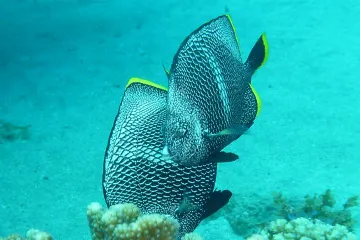
The dark coloration and metallic scales are not accidental; they represent a physical adaptation to its deeper habitat where light penetration is minimal. [5] In the twilight zone where it resides, a dark, non-reflective body is superior camouflage against the dark substrate. [5] The metallic sheen, rather than being a flashy signal, might actually help diffuse the limited ambient light, breaking up the fish's outline in a way that mimics the glint off wet rock or mineral deposits. [6] This suggests that the "metal" aspect of its name refers as much to survival optics as it does to its perceived texture. Many reef fish use bold, contrasting patterns to signal or confuse predators in bright light, but C. daedalma's strategy is one of subtraction—blending into the darkness. [2] This evolutionary path has resulted in one of the most visually unique butterflyfishes available, illustrating how environmental pressure molds form and function across the marine phylogenetic tree. [6] It serves as a wonderful counterpoint to the general narrative that all butterflyfish must be colorful reef inhabitants. [9]
Related Questions
#Citations
Chaetodon daedalma
Wrought Iron Butterflyfish Fish Facts - Chaetodon daedalma
Wrought-iron butterflyfish
Wrought Iron Butterflyfish
Chaetodon daedalma - Facts, Diet, Habitat & Pictures on ...
The wrought-iron butterflyfish is the most metallic of all fish
Chaetodon daedalma, Wrought iron butterflyfish
13 Facts You Didn't Know About Butterflyfishes
Species: Chaetodon daedalma (Wrought Iron Butterflyfish)
Meet the Wrought-iron butterflyfish. ⚫💛 Its metallic black ...