What defense mechanism is used by the Yellow Crazy Ant instead of a prominent stinger found in Solenopsis invicta?
Answer
Reflex bleeding, releasing a foul-smelling chemical
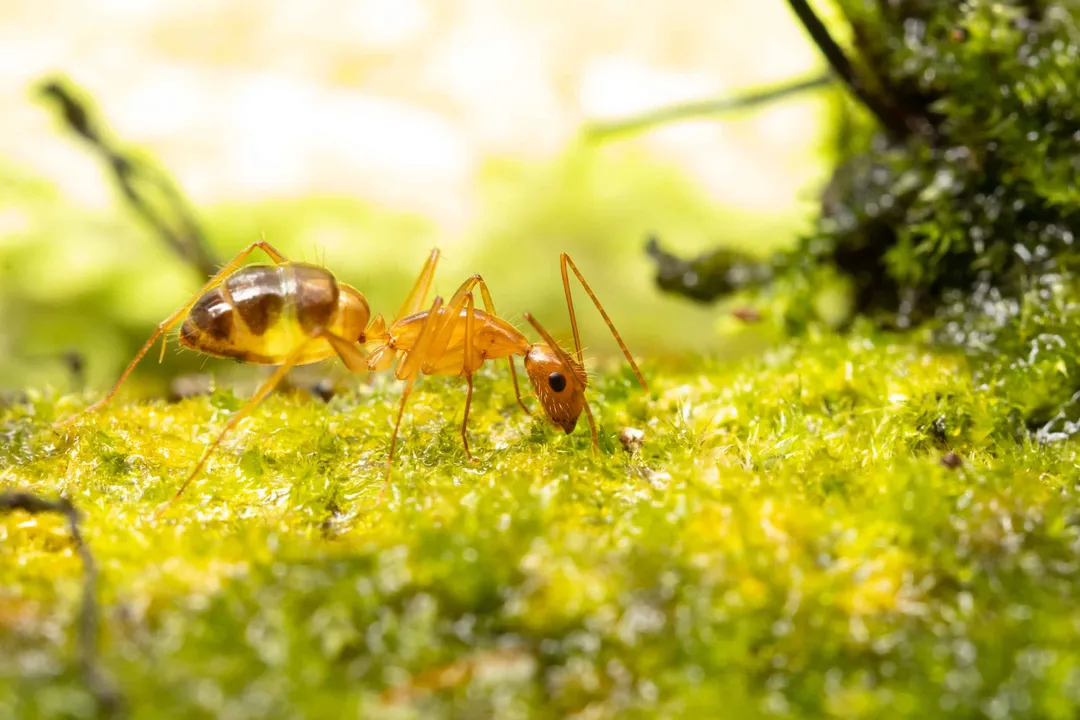
When comparing the defense strategies of *A. gracilipes* to other common invasive pests, such as fire ants (*Solenopsis invicta*), a key difference emerges regarding stinging capability. The Yellow Crazy Ant workers do not possess a prominent stinger used for injecting venom. Instead, their primary physiological defense mechanism involves reflex bleeding. When disturbed or threatened, they release a chemical substance from their abdomen that is distinctively foul-smelling. This chemical emission serves as a deterrent, contrasting sharply with the stinging action employed by species like the fire ant.
Related Questions
What is the typical length range for worker Anoplolepis gracilipes individuals?What range describes the coloration of the Yellow Crazy Ant?Besides color, what is the most defining physical marker of the Yellow Crazy Ant?How is the locomotion of the Yellow Crazy Ant frequently described?How many segments compose the antennae of worker Yellow Crazy Ants?What structural detail distinguishes the antennae of male A. gracilipes from workers?What impression does the body form of A. gracilipes create compared to pavement ants?What defense mechanism is used by the Yellow Crazy Ant instead of a prominent stinger found in Solenopsis invicta?What combination of traits is consistently observed as the most reliable physical indicator for A. gracilipes?What measurement translates to the upper end of the observed length range for Yellow Crazy Ant workers?