What color are the wingbars distinctly described as being in Juvenile *Empidonax traillii* birds?
Answer
buffy brownish
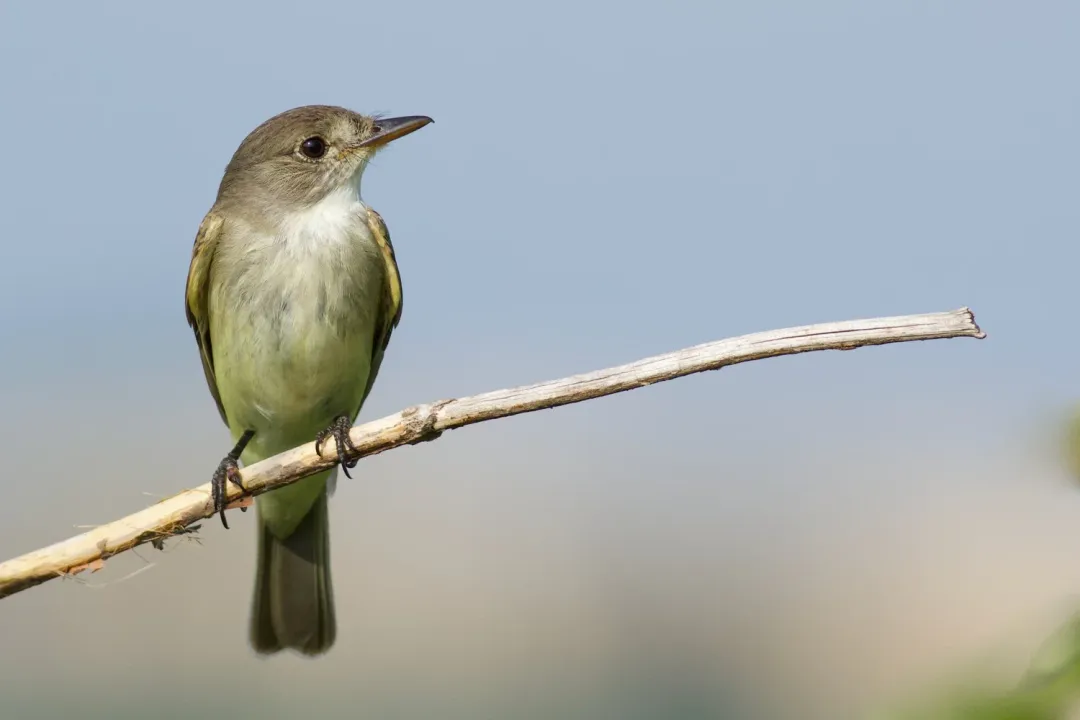
Distinguishing adults from immatures during migration relies on understanding the molting cycle and plumage differences between age classes. Juvenile birds, while similar overall to adults, possess duller upperparts washed with brown. Critically, their wingbars are distinctly buffy brownish, which serves as a marker to differentiate them from adults wearing fresh Definitive Alternate Plumage, whose wing-bars are pale olive or pale buffy grayish-brown. This difference in feather edgings helps observers determine the bird's age, as young birds maintain this juvenile look until they undergo the post-juvenal molt (Prebasic I) late in the fall travel season.
Related Questions
What is the distinct, sneezy song often rendered for the Willow Flycatcher?What is the typical length range for an adult Willow Flycatcher, tail included?What coloration describes the throat of the Willow Flycatcher contrasting its breast area?What coloration marks characterize the upper and lower mandibles of the Willow Flycatcher bill?How is the eye-ring typically described for the Willow Flycatcher compared to the Acadian Flycatcher?Which subspecies of *Empidonax traillii* is federally endangered and breeds in the arid Southwest?What measurable features are generally longer in breeding male Willow Flycatchers than females?How do the wing-bars appear on a Willow Flycatcher in fresh plumage compared to older, worn plumage?What color are the wingbars distinctly described as being in Juvenile *Empidonax traillii* birds?What color is typically described for the inside of the Willow Flycatcher's mouth, or gape?