How do the wing-bars appear on a Willow Flycatcher in fresh plumage compared to older, worn plumage?
Answer
more conspicuous, often showing slightly buffy tips
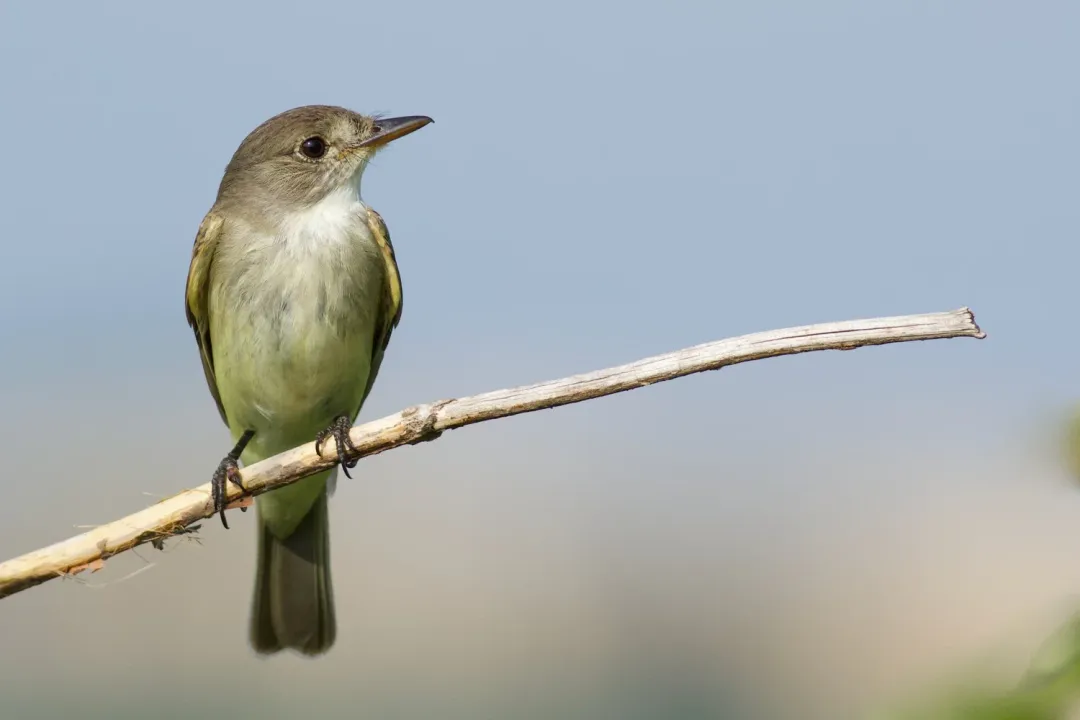
The visibility and appearance of the Willow Flycatcher's wing-bars are highly dependent on the bird's feather condition, relating directly to when it arrived on the breeding grounds. When the bird is freshly arrived, possessing fresh plumage shortly after molt, the two white wingbars formed by the pale tips of the median and greater wing-coverts are described as being more conspicuous. These fresh bars often show slightly buffy tips. As the bird progresses through the breeding season, this plumage experiences wear, causing the wing-bars to appear progressively duller and less noticeable.
Related Questions
What is the distinct, sneezy song often rendered for the Willow Flycatcher?What is the typical length range for an adult Willow Flycatcher, tail included?What coloration describes the throat of the Willow Flycatcher contrasting its breast area?What coloration marks characterize the upper and lower mandibles of the Willow Flycatcher bill?How is the eye-ring typically described for the Willow Flycatcher compared to the Acadian Flycatcher?Which subspecies of *Empidonax traillii* is federally endangered and breeds in the arid Southwest?What measurable features are generally longer in breeding male Willow Flycatchers than females?How do the wing-bars appear on a Willow Flycatcher in fresh plumage compared to older, worn plumage?What color are the wingbars distinctly described as being in Juvenile *Empidonax traillii* birds?What color is typically described for the inside of the Willow Flycatcher's mouth, or gape?