What characterizes the dentition of *Dasypeltis scabra* during feeding?
Answer
Reduced dentition or only small, vestigial teeth anteriorly
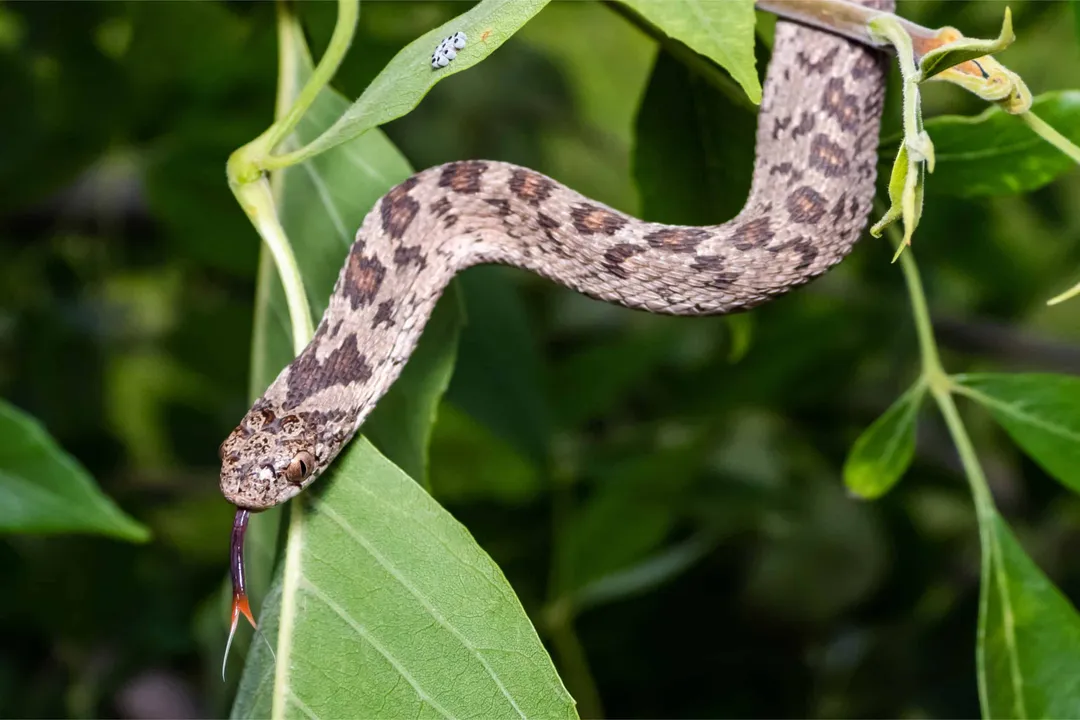
A key feature distinguishing the Rhombic Egg-Eater's feeding apparatus is its lack of functional teeth typical of predatory snakes. Many specimens are described as having reduced dentition, or possessing only very small, vestigial teeth located towards the front (anteriorly). This absence of conventional grasping teeth is crucial because the snake relies entirely on skeletal modification—the modified vertebrae in the esophagus—to break down the eggshell, rather than attempting to puncture or grip the shell externally with dental structures.
#Videos
How to Care for Egg-Eating Snakes! - YouTube
Related Questions
What is the scientific term describing the Rhombic Egg-Eater's specialized diet?Which skeletal features form the internal grinding mechanism inside the esophagus of *D. scabra*?What characterizes the dentition of *Dasypeltis scabra* during feeding?What specific action does the Rhombic Egg-Eater perform to expel dry shell fragments?Which category of birds do Rhombic Egg-Eaters typically favor for their eggs?What time of day does *Dasypeltis scabra* primarily conduct its foraging activities?How much can the body girth of a *D. scabra* temporarily increase when swallowing a large egg?What is the primary vulnerability created by the specialized diet of the Rhombic Egg-Eater?Across which broad geographical area is the *Dasypeltis scabra* widely distributed?Which types of eggs are keepers often required to source for captive Rhombic Egg-Eaters?Why are Rhombic Egg-Eaters sometimes confused with venomous species?