Is rhombic egg eater venomous?
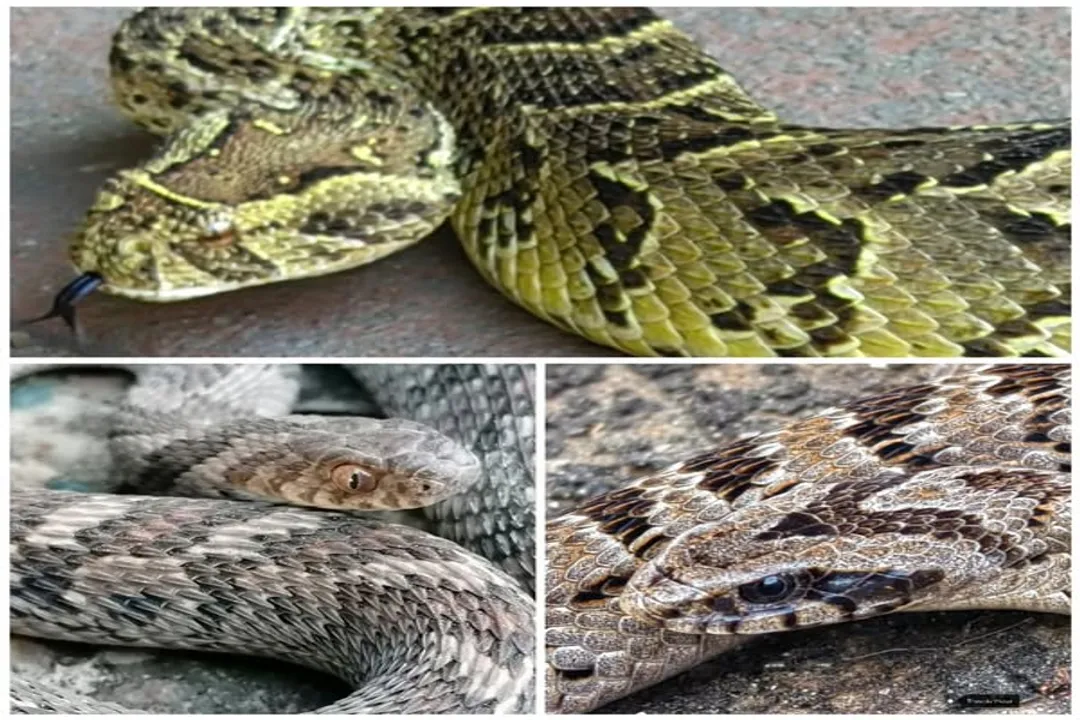
The query about the Rhombic Egg Eater, Dasypeltis scabra, often centers on whether it possesses venom, largely because its defensive displays are quite dramatic and sometimes lead to misidentification. Despite its sometimes startling behavior, this species is reliably non-venomous. [2][5][9] Experts confirm that this snake lacks the necessary apparatus to inject venom, placing it firmly in the harmless category when considering human safety from envenomation. [5] This distinction is particularly important in regions where it coexists with genuinely dangerous snakes, as confusion can lead to unnecessary killing of a beneficial reptile. [4]
# Venom Status
The scientific consensus across reliable herpetological sources confirms the Rhombic Egg Eater's harmless nature regarding venom. [5] It is classified as a colubrid snake, and while some colubrids can be rear-fanged with mild venom systems, D. scabra does not possess a medically significant bite. [2] Its survival strategy is built entirely around its specialized diet and bluffing displays, rather than chemical defense against predators or large prey. [1][4] One of the key reasons for this classification is the absence of developed venom glands and fangs capable of injecting toxins effectively into mammalian skin. [2]
Many people mistake it for dangerous snakes, such as the Night Adder (Causus species), a mistake that can be fatal if the wrong identification is made in a crisis. [4] The Night Adder, for instance, is a venomous viper, and while appearance can sometimes lead to confusion in certain lighting or from a distance, the egg-eater relies on mimicry and intimidation instead of actual toxicity. [4] It is important to remember that even though it is not venomous, any snake should be treated with caution and respect in the wild. [5]
An interesting evolutionary note surfaces when considering its dietary niche. An animal that subsists almost entirely on bird eggs—a highly reliable, stationary, and nutrient-rich food source—has little selective pressure to invest energy into producing complex, metabolically costly venom. Survival for the egg-eater is about finding a nest and successfully swallowing the egg, not overpowering active, fast-moving prey; therefore, the defensive investment is directed toward startling predators away, not paralyzing them. [2]
# Unique Diet
The very name of the snake—Rhombic Egg Eater—highlights its defining characteristic: an extreme dietary specialization. [2][5] These snakes feed almost exclusively on bird eggs. [2][5] Their habitat preference is strongly linked to the presence of nesting sites for various bird species, ranging from ground-nesting birds to those in trees or on kopjes. [2]
The process by which they consume eggs is truly remarkable and provides a fascinating study in biological adaptation. Once an egg is swallowed, the snake employs specialized vertebral features to crack the shell internally. [2][8] The egg is maneuvered down the throat until the skull section of the snake presses against the egg. The snake then contracts its throat muscles, causing the modified teeth or processes on its vertebrae to press against the eggshell, cracking it open. [2] The contents—the yolk and albumen—are then swallowed, and the snake regurgitates the empty, broken shell fragments. [2][5] This specialized structure allows them to consume eggs significantly larger than their own head diameter. [2]
This specialized feeding mechanism means that when observing an egg-eater, one might often find the discarded, cracked shells near a snake's resting spot or basking location, providing a subtle clue to their presence, even when the snake itself is not seen. [2] This unique method of consumption places them in a specialized ecological niche, reducing direct competition with other, more generalist nocturnal predators. [5]
# Defensive Tactics
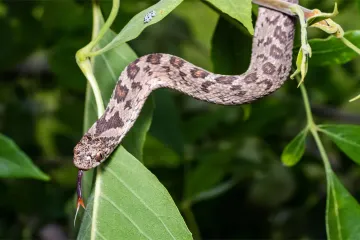
While the Rhombic Egg Eater is not venomous, it is certainly not defenseless, leading many people to mistake its aggressive posture for that of a dangerous snake. [1][5] When cornered or threatened, Dasypeltis scabra engages in a very intimidating and elaborate defensive display. [1] This behavior is designed to make the snake appear larger, more dangerous, and generally unpleasant to handle or eat. [5]
The defensive sequence often involves several striking components:
- Hissing and Striking: They hiss loudly and may strike repeatedly at a perceived threat. [1][5]
- Body Contortion: The snake will often flatten its head, often causing the scales on the back of the neck to raise up, giving it a surprisingly broad or wedge-shaped appearance. [1][5]
- Scale Rattle: A key part of the bluff involves rattling its skin. [1][6] The scales on the dorsal side of the body are keeled, and when rubbed together rapidly, they can produce a distinct rasping or buzzing sound, similar to the warning sound made by some rattlesnakes or vipers. [1][2] This auditory signal is a powerful deterrent, especially when paired with the visual deception. [1]
This entire performance is a textbook example of deimatic behavior, intended purely for bluffing. [5] For those familiar with local fauna, recognizing this specific, noisy, scale-raising display is the single best way to confirm it is an egg-eater and not a venomous species, though relying solely on behavior when an actual bite risk exists is ill-advised. [4]
# Identification Details
The Rhombic Egg Eater is a relatively small to medium-sized snake, typically ranging from 60 to 90 centimeters in length, although larger specimens exceeding a meter have been recorded. [2] Its coloration and pattern are variable, which contributes to potential misidentification. The common name refers to the distinct dark, rhombic (diamond-shaped) markings that run down its back. [2] These markings are often dark brown or black against a lighter background that can vary from tan, gray, to reddish-brown. [2]
The head is often distinct from the neck, and the eyes are relatively large, which is typical for a nocturnal hunter, aligning with its habits. [5] As an egg-eater, it is primarily active at night, searching for bird nests. [5] This nocturnal nature means encounters during daylight hours are often when the snake feels most vulnerable and resorts to its dramatic defense mechanisms. [5]
Its distribution covers a significant portion of sub-Saharan Africa. [2] Specific sightings have been confirmed across South Africa, including areas like Bela Bela in Limpopo province, [9] and it is noted in general checklists for regions like Hong Kong, though its presence there is less common or perhaps introduced/misidentified, emphasizing the need for accurate identification guides. [7] When assessing a specimen, noting the general lack of heavy build, which often characterizes vipers, and the specific texture of the scales that produce the rattling sound can aid in confirmation. [2][4]
# Comparative Context
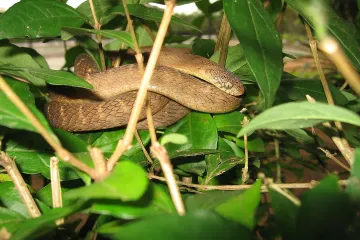
Understanding the egg-eater's place in the snake community is simplified by contrasting it with local venomous species. For instance, in regions like South Africa, the danger often comes from elapids (like cobras or mambas) or vipers (like puff adders or night adders). [4][5] The egg-eater shares an advantage with many non-venomous species: camouflage during the day when resting. However, its nocturnal feeding habit sets it apart from many diurnal or crepuscular hunters. [5]
When comparing it side-by-side with a Night Adder, for example, one might notice subtle differences in head shape or pupil structure, though relying on these features when stressed is risky. [4] A key takeaway for general observers should be the intensity of the bluff: while many harmless snakes gape or strike, the Rhombic Egg Eater’s combination of scale-rattling and inflation is particularly specialized. [1] If you encounter a snake displaying this high-effort bluff and are certain it is Dasypeltis scabra, you can safely retreat, knowing no venomous danger exists, although maintaining distance remains the best practice for any wild animal. [5]
The fact that this snake can be found in suburban gardens or near human settlements, provided there are suitable nesting birds, means that these non-venomous encounters are more frequent than those with truly dangerous species. This proximity often fuels the myths surrounding its toxicity, as frightened residents often default to assuming the worst when confronted by an unknown reptile exhibiting alarming behavior. [3] By correctly identifying the Rhombic Egg Eater, we protect a species that performs an important, albeit specialized, ecological function without posing a medical threat.
#Videos
Night Adder vs Egg Eater - YouTube
Related Questions
#Citations
Intimidating defensive display of the rhombic egg eater, a ... - Reddit
Dasypeltis scabra - Wikipedia
The difference between puff adder, rhombic egg eater ... - Facebook
The Rhombic Night Adder and The Rhombic Egg Eater - Tyrone Ping
Common Egg-eater - African Snakebite Institute
I Am The Zim Croc Guy And Today We Have The Rhombic Egg ...
Rhombic Egg Eater - Dasypeltis scabra — HongKongSnakeID.com
Night Adder vs Egg Eater - YouTube
Nick - Rhombic Egg-eater (Dasypeltis scabra) From Bela ... - Facebook