What do rhombic egg-eaters eat?
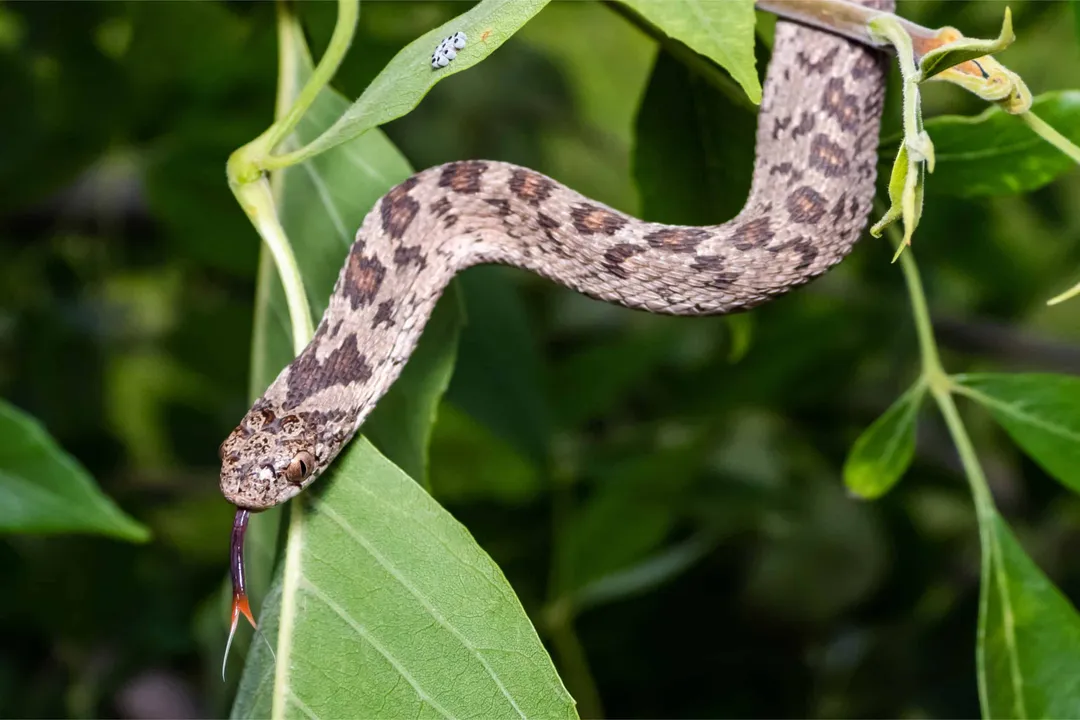
The Rhombic Egg-Eater, scientifically known as Dasypeltis scabra, presents one of nature's most specialized dining habits. This African snake has evolved an extraordinary adaptation centered entirely around consuming eggs, making its feeding mechanism a biological marvel. [2][5] They are often confused with venomous species due to their keeled, keeled scales and sometimes alarming defensive posture, but their true expertise lies not in venom, but in the highly refined process of consuming avian progeny. [8] Their diet is almost exclusively composed of bird eggs, placing them in a unique ecological niche. [2][4]
# Avian Diet
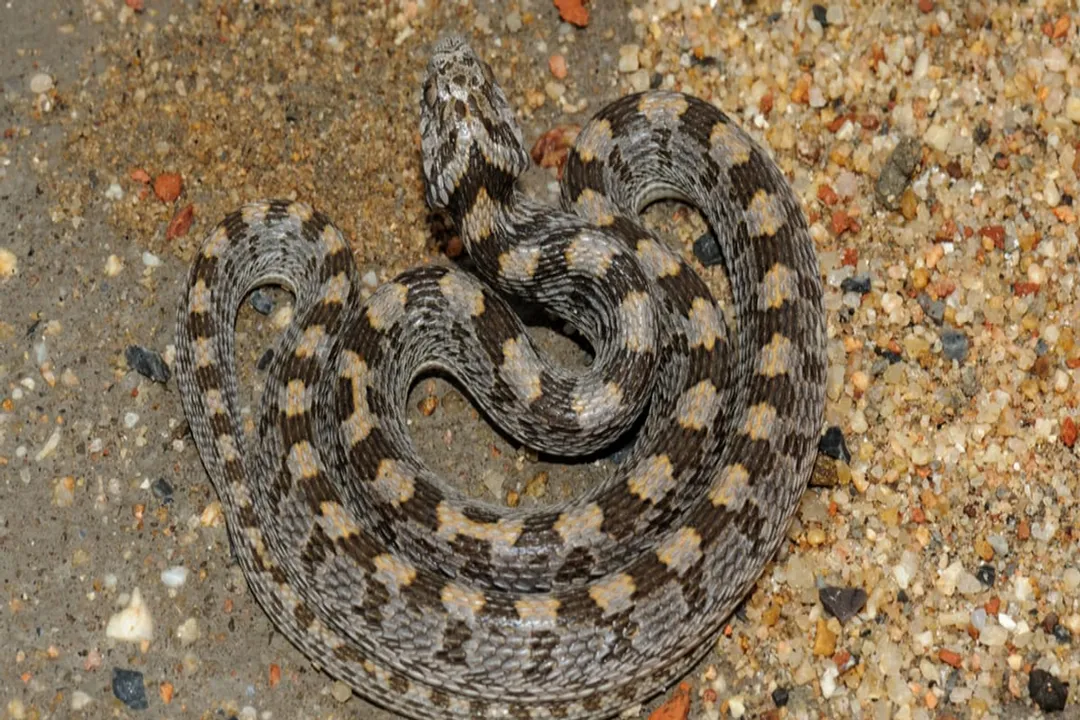
The Rhombic Egg-Eater is an oophagous specialist, meaning it is adapted to feed almost entirely on eggs. [4] Unlike many other snakes that consume whole prey, like rodents or amphibians, D. scabra focuses its entire predatory strategy on retrieving and processing eggs from bird nests. [5] While they will consume eggs from various birds, they typically favor the eggs of smaller birds, often those belonging to passerines (perching birds). [2]
The suitability of an egg depends heavily on its size relative to the snake itself. If an egg is too large, the snake simply cannot engulf it, which is the first critical barrier to consumption. [2] Once an egg is swallowed, the process begins that defines this species, moving far beyond simple ingestion.
# Feeding Anatomy
The most fascinating aspect of the Rhombic Egg-Eater is how it deals with the hard calcium carbonate shell of an egg. They possess a reduced dentition; in fact, many specimens are described as having no functional teeth at all, or only very small, vestigial teeth anteriorly. [2][5] This lack of grasping teeth is compensated for by an incredible skeletal modification within the neck and esophagus.
The snake’s vertebrae, particularly the cervical and anterior thoracic vertebrae, are uniquely modified. The dorsal spines (neural spines) are elongated and project forward, forming sharp, bony projections or pleats that line the interior wall of the esophagus. [2][4]
When the snake swallows an egg, it uses specialized muscles to work the egg down its throat until it reaches this bony section. [2] The snake then locks its lower jaw, and simultaneously contracts powerful muscles around the egg. This action forces the shell against the sharp, backward-curving vertebral projections, effectively using the snake's own skeleton as a specialized grinder or nutcracker. [2][4] The shell is crushed internally, and the contents—the yolk and albumen—are squeezed out and absorbed into the digestive tract. [4]
After the contents are extracted, the snake performs a unique maneuver: it flexes its body in reverse, often involving violent side-to-side heaving motions, to regurgitate the dried, empty shell fragments. [2][4] This expulsion of shell is a clear indicator that a meal has been successfully processed.
| Feature | Description | Significance |
|---|---|---|
| Dentition | Rudimentary or absent | Cannot grip or puncture prey conventionally |
| Vertebrae | Elongated, projecting neural spines | Forms the internal crushing mechanism |
| Process | Internal grinding against bone | Extracts liquid contents while keeping solids out |
| Post-Meal Action | Violent heaving/flexing | Necessary to expel dry shell fragments |
| [2][4] |
# Consumption Logistics
The strict reliance on eggs means that the frequency and quantity of feeding are entirely dictated by nest availability and egg size. A snake that successfully swallows an egg can consume one nearly as wide as its own body diameter, demonstrating remarkable distension capabilities. [2][3] For instance, a large egg might temporarily cause the snake's body girth to double or even triple at the point where the egg rests during crushing. [2]
Considering that eggs are primarily a source of fat and protein but lack the bulk of a whole-body meal, one might hypothesize about the required intake rate. Since they cannot rely on large, infrequent meals like some constrictors, the Rhombic Egg-Eater must locate and consume eggs with relative frequency, perhaps daily or every few days during the breeding season of their preferred avian neighbors, to maintain energy reserves. [5] This need for frequent, small-to-medium energy inputs shapes their entire foraging schedule and location preference.
# Habitat Links
Dasypeltis scabra is distributed widely across sub-Saharan Africa, inhabiting diverse environments from savannas to semi-arid regions. [2][5] Their distribution is naturally constrained by the presence of nesting birds. They are primarily nocturnal hunters, preferring to move under the cover of darkness to raid nests. [5]
Their foraging behavior is therefore intrinsically linked to avian breeding cycles. They are opportunistic concerning where the nests are built, being found near ground nests, rock crevices, or even in trees, depending on the local bird species. [5] In areas where ground-nesting birds are prevalent, the snake will likely spend more time on the substrate; conversely, in areas with high tree canopy nests, they will exhibit more arboreal activity. [5] This flexibility in seeking out nests, despite the specialization of the meal itself, is key to their survival across varied African landscapes.
# Managed Feeding
In captive settings, replicating the natural diet is essential for the snake’s health, though it presents significant challenges. [3] Keepers must source appropriate-sized eggs, often relying on quail or finch eggs, which must be offered whole. [3] Feeding regimens in captivity usually involve offering an egg every few days or weekly, depending on the snake's size and metabolism, which still mirrors the need for relatively regular input compared to other non-specialist snakes.
The evolution of such a hyper-specialized diet presents a fascinating biological trade-off. On one hand, the Rhombic Egg-Eater gains incredible efficiency in processing a high-energy food source without the need for sharp teeth or the struggle of subduing active prey; the bone structure does the work reliably. [2][4] On the other hand, this specialization creates an extreme vulnerability: if a localized bird population suffers a catastrophic decline, or if the average size of available eggs shifts due to environmental pressures, the snake has few, if any, viable dietary backups. It cannot easily switch to consuming lizards or insects because its entire digestive morphology is tuned only to handle liquid contents squeezed from a shell, making their ecological stability surprisingly dependent on the fortunes of their avian neighbors. [5] This tight co-evolutionary link underscores how specialized traits, while beneficial in stable conditions, can become an Achilles' heel when environmental conditions change rapidly.
#Videos
How to Care for Egg-Eating Snakes! - YouTube
Related Questions
#Citations
What do Rhombic Egg Eaters eat when bird nesting season is over ...
Dasypeltis scabra - Wikipedia
Egg Eating Snake Care Sheet | Dubia.com
Rhombic Egg Eater - Facts, Diet, Habitat & Pictures on Animalia.bio
Rhombic Egg-Eater Snake - Dasypeltis scabra - A-Z Animals
The African egg-eating snake lives in Africa, where it feeds on ...
SAReptiles • View topic - Care Sheets For Egg Eaters
Common Egg-eater - African Snakebite Institute
How to Care for Egg-Eating Snakes! - YouTube