What characteristic structure defines the Order Diprotodontia, which includes the quokka?
Answer
Two large, forward-pointing lower incisors
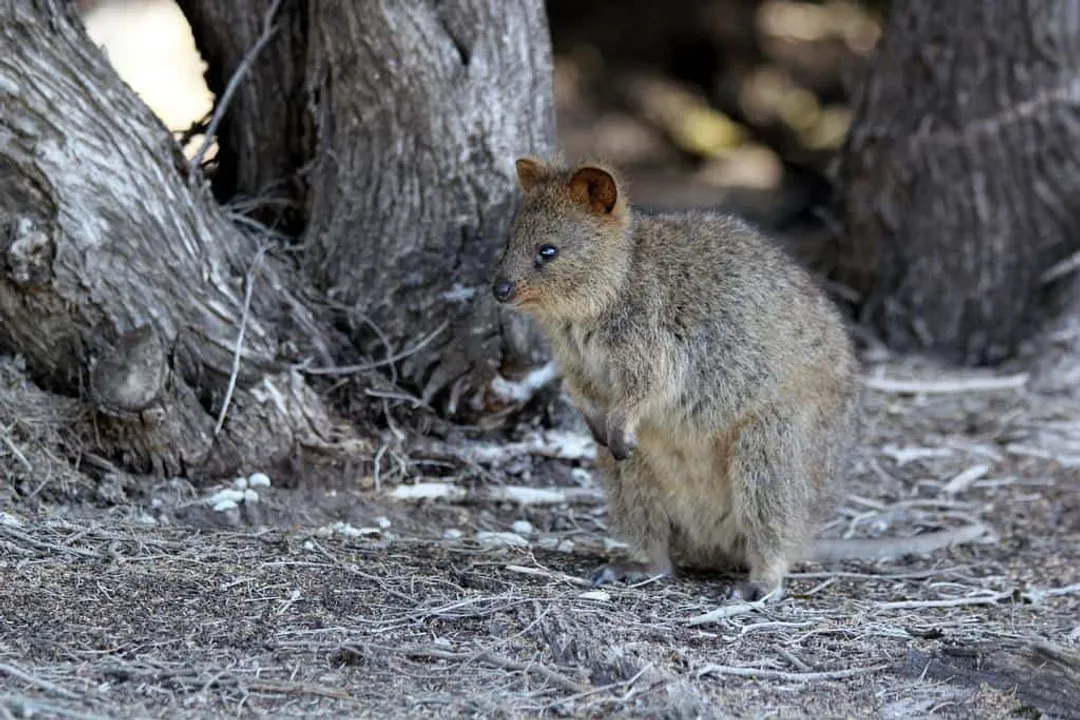
The defining feature that taxonomically groups animals into the Order **Diprotodontia**, which encompasses kangaroos, wallabies, and wombats alongside the quokka, is related to their dentition. Specifically, these animals possess two large, forward-pointing incisor teeth located on their lower jaw. These specialized incisors are crucial for the herbivorous lifestyle, as they are used for effectively cutting and cropping vegetation that forms the staple of their diet. This dental arrangement is a strong inherited trait.
Related Questions
What specific anatomical feature does the specific epithet brachyurus in Setonix brachyurus describe?What characteristic structure defines the Order Diprotodontia, which includes the quokka?The Family Macropodidae is named for a shared physical trait relating to what part of the body?What term describes the taxonomic situation where the Genus Setonix contains only the single living species S. brachyurus?What is the highest taxonomic rank classification assigned to the quokka in the formal system of life organization?Which structural feature is fundamental in classifying the quokka under the Phylum Chordata?Which geographic location supports the healthiest concentration of Setonix brachyurus populations due to environmental factors?What common name, highlighting its size relative to vermin, was sometimes historically used for the quokka?What is the critical characteristic that places the quokka within Class Mammalia?Compared to the diverse Macropus genus, what does the structure of the Setonix genus imply about the quokka's evolutionary path?