What is the classification of a bee?

The world of bees is far more expansive than just the familiar striped insects buzzing around a backyard flowerbed. With an estimated 20,000 known species across the globe, understanding what a bee is requires delving into the detailed hierarchy of biological classification. [1][6] Bees are insects, but their specific placement helps us understand their relationships to other creatures and their unique evolutionary path. [5] They are generally characterized as vegetarians, feeding exclusively on nectar and pollen, and possess physical traits like branched body hairs which aid in collecting that pollen. [1]
# Kingdom Animalia
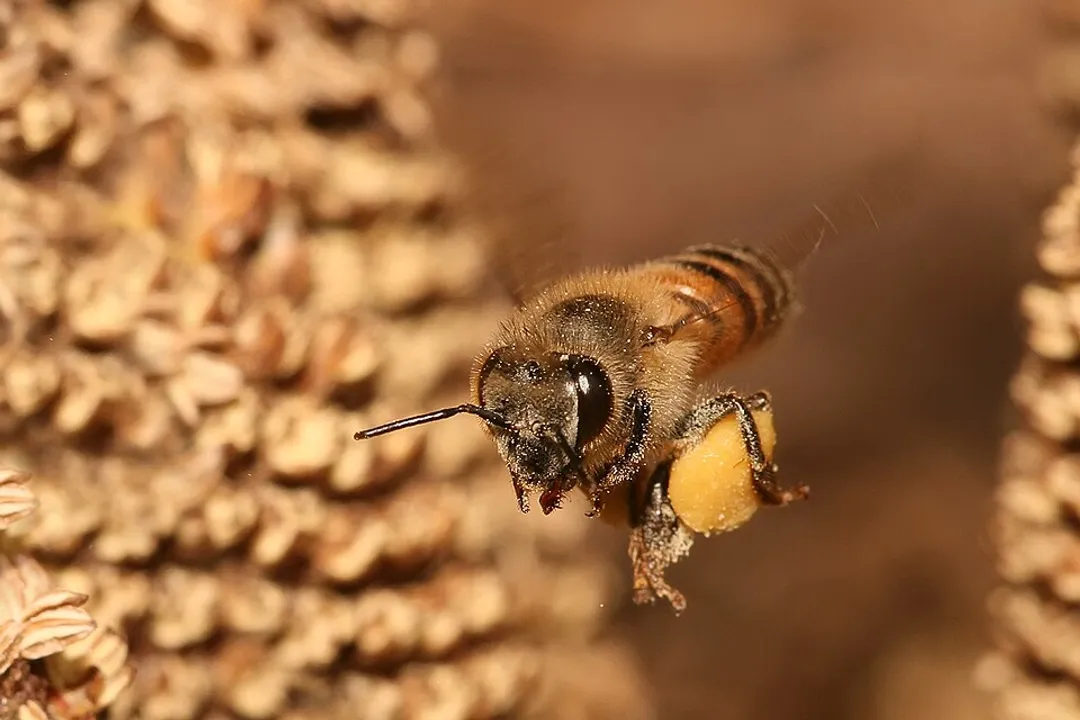
Every living thing on Earth falls into one of the major kingdoms, and bees are no exception. They reside firmly within Kingdom Animalia. [1][7] This placement signifies that bees are multicellular, heterotrophic organisms—meaning they obtain food by consuming other organisms rather than producing their own food through photosynthesis, unlike plants. [7] This fundamental grouping separates them from fungi, plants, and bacteria. [7]
# Phylum Arthropoda

Moving down the classification ladder, bees belong to the Phylum Arthropoda. [1][7] This is a massive phylum encompassing creatures with segmented bodies, jointed legs, and a hard external skeleton, or exoskeleton. Insects, spiders, crustaceans, and millipedes all share this ancestry. [1] The protective exoskeleton is a key feature that defines arthropods, providing both support and defense. [5]
# Class Insecta
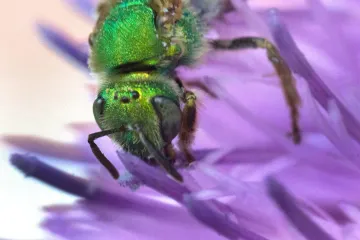
Within Arthropoda, bees are placed in the Class Insecta. [1][7] Insects are distinguished by having three main body parts—a head, thorax, and abdomen—and typically three pairs of legs attached to the thorax. [7] Bees generally possess two pairs of membranous wings, though some species may have reduced or absent wings. [1] This class includes the vast majority of known animal species on Earth. [5]
# Order Hymenoptera
The classification then narrows significantly into the Order Hymenoptera. [1][5][6][7] This group is incredibly significant in ecology as it includes bees, wasps, and ants. [5] While all are related, bees are differentiated from their wasp and ant cousins primarily by their dietary specialization and physical adaptations for gathering pollen. [1] While many wasps are predators, bees are fundamentally tied to flowering plants for sustenance. [5] The term Hymenoptera translates roughly to "impressed wings," referring to the tiny hooks (hamuli) that link the forewing and hindwing together during flight, creating one large, efficient surface. [7]
# Superfamily Apoidea
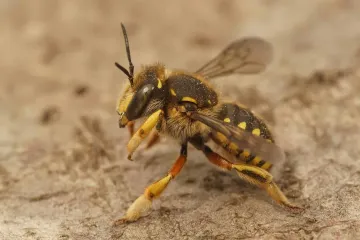
The next major step in organizing bees is the Superfamily Apoidea. [1] While the term "bee" is commonly used, it formally refers to species within this superfamily, which has evolved a unique relationship with flowering plants. [1] It is within this group that the clear evolutionary lineage that separates bees from other Hymenoptera becomes apparent. [1] This superfamily contains the ancestors of all modern bees. [7]
# Subfamilies and Genera
Once we reach the superfamily level, the diversity explodes, leading to numerous families and subfamilies. [1] While the entire group is united by certain characteristics—like the aforementioned branched hairs and pollen-carrying apparatus on the legs or abdomen—the internal structure varies widely. [1]
Several subfamilies exist within Apoidea, such as Melittinae, Fideliinae, Rophitinae, and the large Apinae. [1] The Apinae subfamily is particularly noteworthy as it contains the most well-known groups, including the honey bees (Apis), bumblebees (Bombus), and stingless bees (Meliponini). [1]
Zooming in further to the Genus level highlights the incredible range of bee lifestyles:
- Apis: This genus contains the true honey bees, such as the Western honey bee, Apis mellifera. [8] These are the highly social species famous for producing wax combs and storing honey. [1]
- Bombus: The familiar bumblebees, often larger and hairier than honey bees, are also contained here. [1]
- Osmia: This genus includes the mason bees, a diverse group that is overwhelmingly solitary. [1]
- Andrena: These are mining bees, which often nest in the ground. [1]
It is fascinating to consider that the difference between a highly social Apis bee living in a colony of tens of thousands and a solitary Osmia bee where every female is her own queen, is marked by divisions in classification that begin at the subfamily level. [1] This distinction is crucial because management practices for pollinator health differ vastly depending on the bee's life cycle. [6]
| Bee Group | Primary Genus Example | Sociality Type | Key Feature |
|---|---|---|---|
| Honey Bees | Apis | Eusocial | Extensive honey storage; perennial colonies [1] |
| Bumblebees | Bombus | Primitively Social | Annual colonies; hairy bodies for cold tolerance [1] |
| Mason Bees | Osmia | Solitary | Females build individual nests; often use pre-existing cavities [1] |
| Mining Bees | Andrena | Solitary | Ground-nesting behavior [1] |
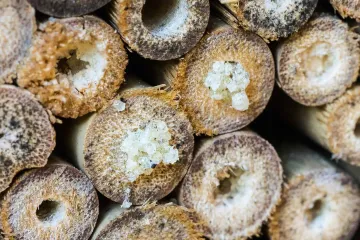
Understanding this spectrum is key to effective conservation. Many people focus their efforts solely on managed Apis mellifera, but supporting the 20,000 other species often means providing habitat suitable for solitary nesters, such as bare soil patches or specific types of nesting materials, rather than simply planting flowers. [6] The classification system helps researchers identify exactly which ecological niche a specific bee fills. [6]
# Defining Features
Beyond the Linnaean ranks, there are tangible biological characteristics that help confirm an insect is, indeed, a bee rather than a wasp or fly mimic. The most universally accepted traits involve how they collect and carry pollen. [1]
Bees possess branched hairs across their bodies. These hairs are much more complex than the simple, straight hairs found on many wasps, allowing them to trap pollen grains effectively as they move around a flower. [1] Additionally, many, though not all, bee species possess specialized structures for carrying large loads of pollen back to the nest or brood cells. [1]
For species like the honey bee (Apis mellifera), this structure is the corbicula, or pollen basket, located on the hind legs. [1][8] Other bees, such as species in the family Melittidae, carry pollen on specialized hairs covering their entire underside (scopa). [1] The presence of these pollen-transport structures, combined with their vegetarian diet, solidifies the classification of an insect as a true bee. [1][5]
# Invasive Classification Note
The classification system also plays an important role when dealing with non-native, or invasive, species. For instance, certain strains of honey bee, like the Africanized honey bee (Apis mellifera scutellata hybrids), are classified differently due to their behavioral traits, such as increased defensiveness and swarming tendencies. [4] Tracking these specific subspecies and hybrids through their formal scientific name—Apis mellifera followed by the subspecies designator—allows regulatory bodies and researchers to monitor their spread and impact on native pollinator populations. [4] While the overall species classification remains Apis mellifera, the subspecies distinction is critical for ecological management. [4]
Ultimately, the classification of a bee moves from the broadest definition of an animal down through increasingly specialized groups: Animalia, Arthropoda, Insecta, and Hymenoptera, finally landing in the specialized bee superfamily Apoidea. [1][7] Within that superfamily, the placement into various genera like Apis, Bombus, or Osmia tells us far more about its behavior—whether it lives in a massive cooperative colony or as a single, independent mother—than just knowing it is an insect. [1][6] This structured naming convention is the bedrock for all ecological study and conservation work concerning these vital insects. [7]
Related Questions
#Citations
Bee - Wikipedia
Exploring Bee Species: 14 Types of Bees and Bee Varieties
Honey Bee Classification
honey bee (Apis mellifera Linnaeus) - Invasive.Org
Bee | Definition, Description, Hymenoptera, Types, & Facts | Britannica
Bee Diversity — Museum of the Earth
Classification - History of HoneyBees - Weebly
[PDF] A Beginner's Field Guide to Identifying Bees - Pollinator.org
Apis mellifera (European honey bee) - Tsammalex -