What is the classification of a springbok?
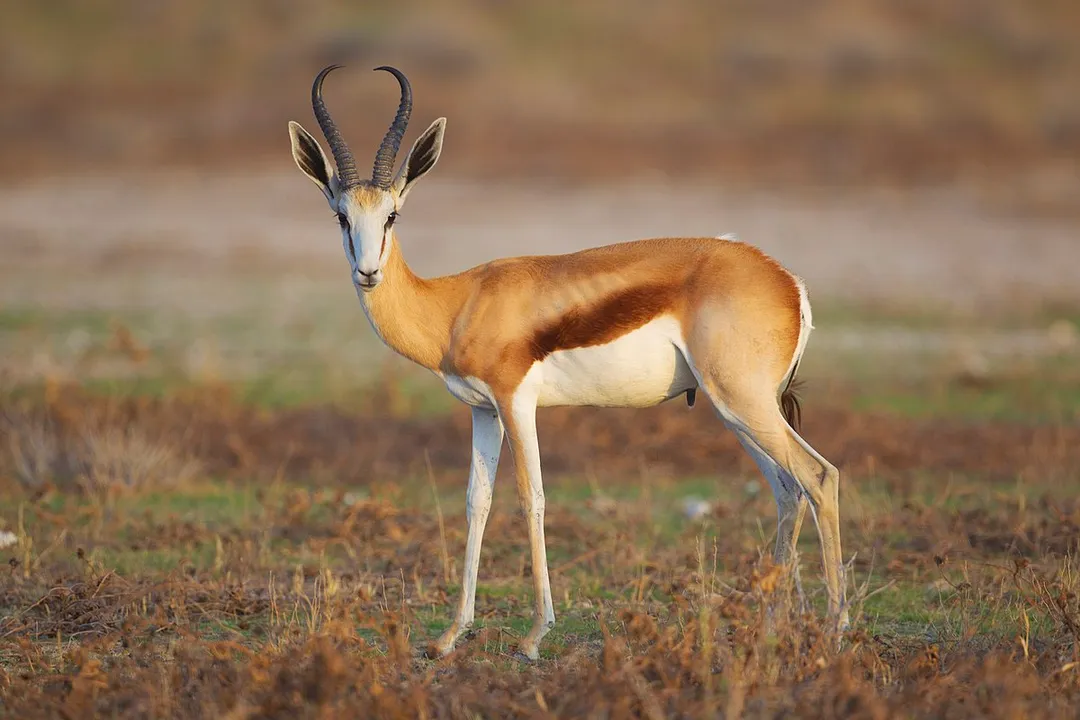
The springbok, scientifically named Antidorcas marsupialis, occupies a very precise position within the global biological hierarchy, immediately signaling its relationship to other hoofed mammals found across the world. [1][3] Starting at the broadest level, it belongs to the Kingdom Animalia, meaning it is a multicellular, heterotrophic organism. [1][3][8] Its internal structure places it in the Phylum Chordata, confirming the presence of a notochord at some point during its development, and classifying it among the vertebrates. [1][3][8]
# Mammalian Status
Moving down the taxonomic ladder, the springbok is firmly placed in the Class Mammalia. [1][3][8] This classification dictates fundamental characteristics, such as being warm-blooded, possessing hair or fur, and nursing its young with milk produced by mammary glands. [1] The presence of specialized teeth adapted for grazing and browsing further solidifies this placement among mammals. [4]
# Order Placement
The next major grouping is the Order Artiodactyla, often referred to as the even-toed ungulates. [1][8] This category groups animals whose weight is primarily borne equally by the third and fourth toes of each foot. [8] While modern systems sometimes use the larger clade Cetartiodactyla, the traditional classification of the springbok falls under Artiodactyla alongside animals like deer, cattle, and pigs. [1] This order immediately suggests a lifestyle adapted for running across open ground, which is certainly true for this swift antelope. [8]
# Family Identity
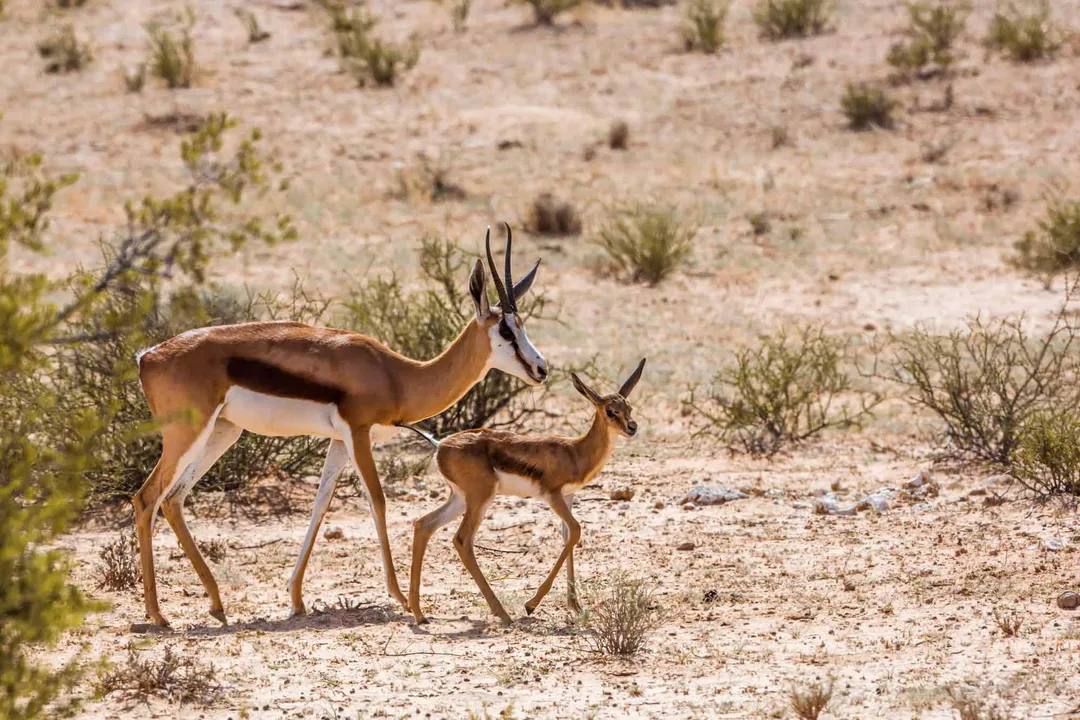
The Family Bovidae is where the springbok's identity as a true antelope is cemented. [1][3][8] This is a significantly large family encompassing cows, sheep, goats, and all true antelopes. [1] A key feature defining Bovidae is the presence of permanent, unbranched horns that grow from the frontal bone of the skull and are covered by a sheath of keratin that is never shed. [1][9] This distinguishes them from deer, which belong to Cervidae and shed their bony antlers annually. [1]
Within the Bovidae family, the springbok is categorized specifically under the Subfamily Antilopinae. [1][8] This subfamily generally consists of smaller, more delicate antelopes, often characterized by speed and agility, frequently including gazelles. [1]
# Genus Distinction
The genus level provides the most specialized grouping before reaching the species itself, and for the springbok, this is the genus Antidorcas. [1][3][8] What is remarkable about this genus is that the springbok is the only living species classified within it. [1][6] This status suggests a lineage that has diverged significantly or survived where its close relatives have gone extinct, making Antidorcas a monotypic genus. [1]
The species name, Antidorcas marsupialis, offers insight into its unique characteristics. [1] The specific epithet marsupialis refers to a distinctive feature: a fold of skin along the back that can be lifted or inflated. [1][3][4] This skin flap conceals a thick pad of white fur and is often displayed during the animal's famous, energetic leaps known as "pronking," a behavior more elaborate than the standard escape jumps seen in many other gazelles. [4] This anatomical trait, hinted at by its classification name, sets it apart from many other members of the Antilopinae subfamily. [3]
It is genuinely intriguing when comparing the springbok’s evolutionary standing to its peers within the Antilopinae subfamily. While it shares the delicate build and speed associated with gazelles, the fossil evidence suggests that the Antidorcas genus is ancient, having split from other major bovid lines quite early on. [1] This implies that the springbok is not simply a modern gazelle variation but rather a surviving representative of a very old, successful evolutionary path adapted specifically for the semi-arid environments of Southern Africa. [1]
# Locomotion and Structure
The classification as an Artiodactyl with features linking it to fast-running bovids is physically manifested in its structure. The springbok is a medium-sized antelope, often standing around 70 to 90 centimeters high at the shoulder. [1][3] Their coloration is also diagnostic: a rich reddish-brown upper body, a distinct dark brown horizontal stripe separating the upper coat from the white underparts, and white facial markings. [1][3]
If we observe the horns, which are key identifiers for the Bovidae family, the springbok's are relatively slender, black, and typically lyre-shaped—curving backward and then slightly upward at the tips. [9] This horn morphology is distinct from the heavy spirals of kudu or the straight spikes of some other small antelopes, aiding in its specific placement within the Antilopinae group. [9]
For field identification, particularly when distinguishing it from gazelles or other small antelopes often grouped similarly in broader classifications, the pronking behavior is a massive clue, directly tied to that unique marsupialis feature. [4] When threatened, a springbok might spring high into the air with all four legs held stiffly, rotating its back, and flashing that white dorsal patch—a visual signal that is highly recognizable to anyone familiar with Southern African wildlife. [1] This behavior provides a high-energy burst of evasion that differs from the sustained, low bounding of a true gazelle, even if they share a subfamily designation based on skeletal and genetic analysis. [1]
# Summary of Taxonomic Ranks
To consolidate the hierarchical classification of this iconic antelope, the established scientific structure is as follows:
| Rank | Classification |
|---|---|
| Kingdom | Animalia |
| Phylum | Chordata |
| Class | Mammalia |
| Order | Artiodactyla |
| Family | Bovidae |
| Subfamily | Antilopinae |
| Genus | Antidorcas |
| Species | A. marsupialis |
This detailed placement confirms that while the springbok shares many common characteristics with other antelopes, its unique combination of morphology—especially the pronking pouch—and ancient evolutionary divergence warrants its own distinct genus within the broader Bovidae family structure. [1][4] Its status as the sole representative of Antidorcas highlights its biological significance within the mammalian record. [6]
Related Questions
#Citations
Springbok - Wikipedia
Antidorcas marsupialis (Springbok) - Tsammalex -
Springbok Animal Facts - Antidorcas marsupialis
Springbok (Antidorcas Marsupialis) - EL Education
Springbok (Antidorcas marsupialis) longevity, ageing, and life history
Springbok - Simple English Wikipedia, the free encyclopedia
Springboks (Genus Antidorcas) - iNaturalist UK
Antidorcas marsupialis (springbok) - Animal Diversity Web
Springbok | TheHunter: Call of the Wild Wiki - Fandom