What is the quokkas classification?
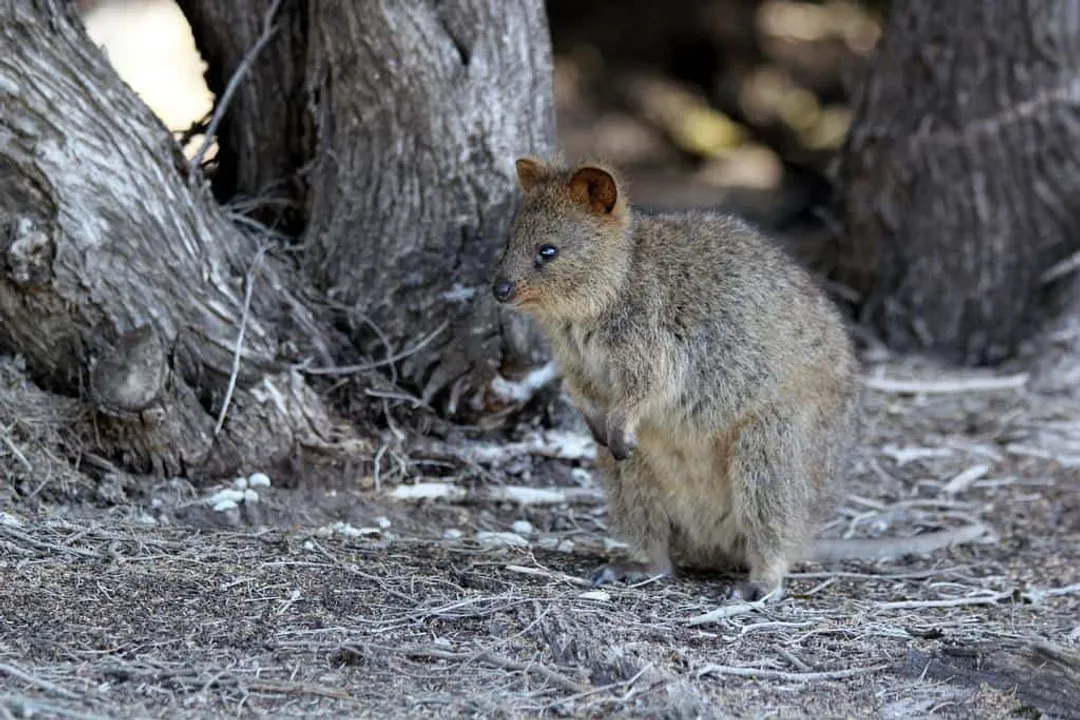
The query surrounding the quokka begins not with a cute smile, but with a precise placement within the vast tree of life. To understand the quokka, one must trace its lineage through the formal system of taxonomy, starting from the broadest grouping down to its specific species designation. The quokka, universally known by its cheerful disposition, holds the scientific name Setonix brachyurus. [1][4][9] This name is the key to unlocking its biological position, which firmly places it within the realm of Australian marsupials. [2]
# Kingdom Rank
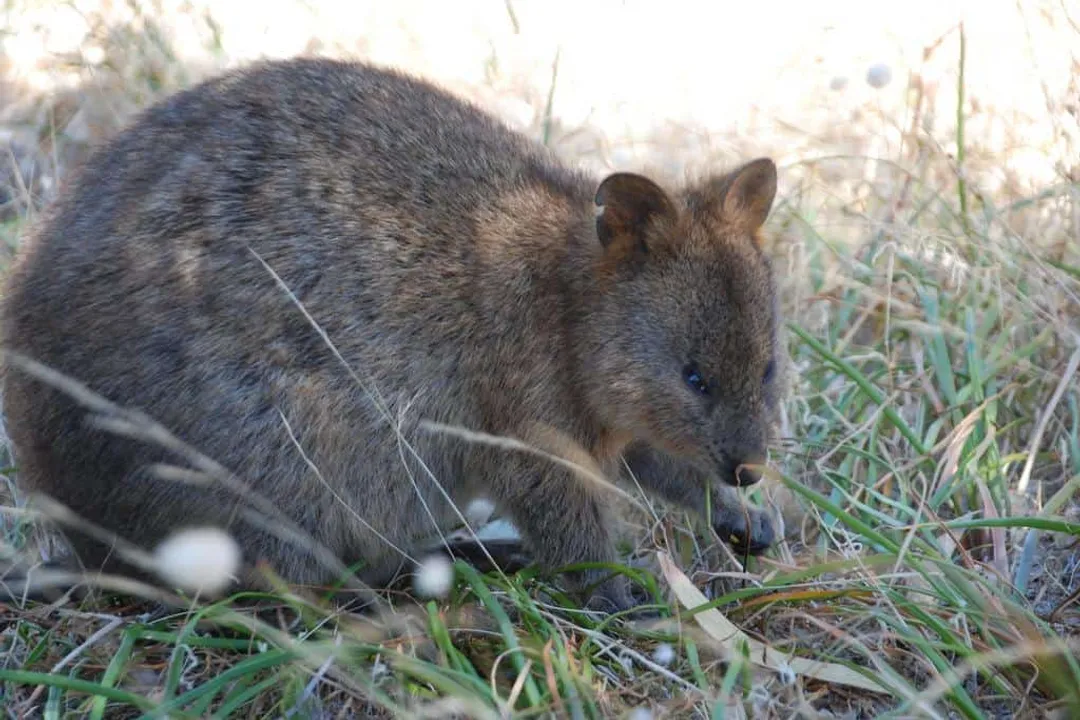
At the very highest level of organization, the quokka falls under the Kingdom Animalia. [1][4][5][9] This simply means it is a multicellular, eukaryotic organism that must consume organic material, breathe oxygen, and is capable of voluntary movement. [4] This initial classification is shared with everything from insects to blue whales, but it sets the stage for its distinction as a true animal, setting it apart from plants or fungi. [1]
# Phylum Chordata
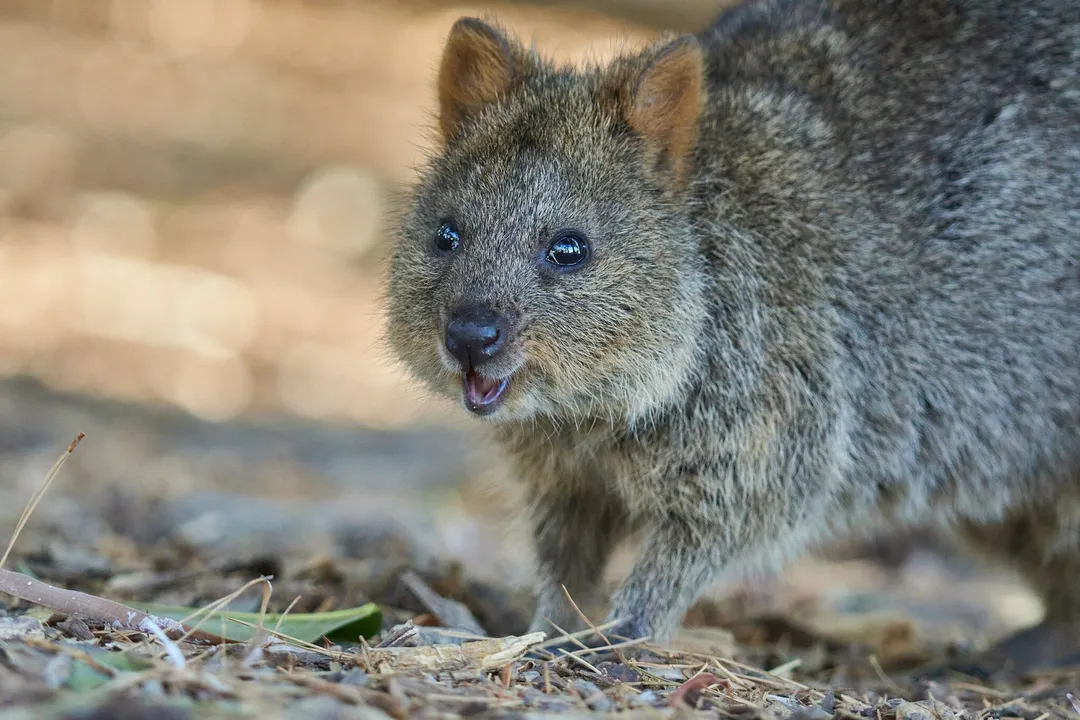
Moving down, the quokka is a member of the Phylum Chordata. [1][4][5][9] This group is defined by the presence of a notochord (a flexible rod-like structure) at some stage of development, a dorsal hollow nerve cord, pharyngeal slits, and a post-anal tail. [4] For the quokka, this structural blueprint indicates it possesses a backbone, confirming its status as a vertebrate. [1]
# Class Mammalia
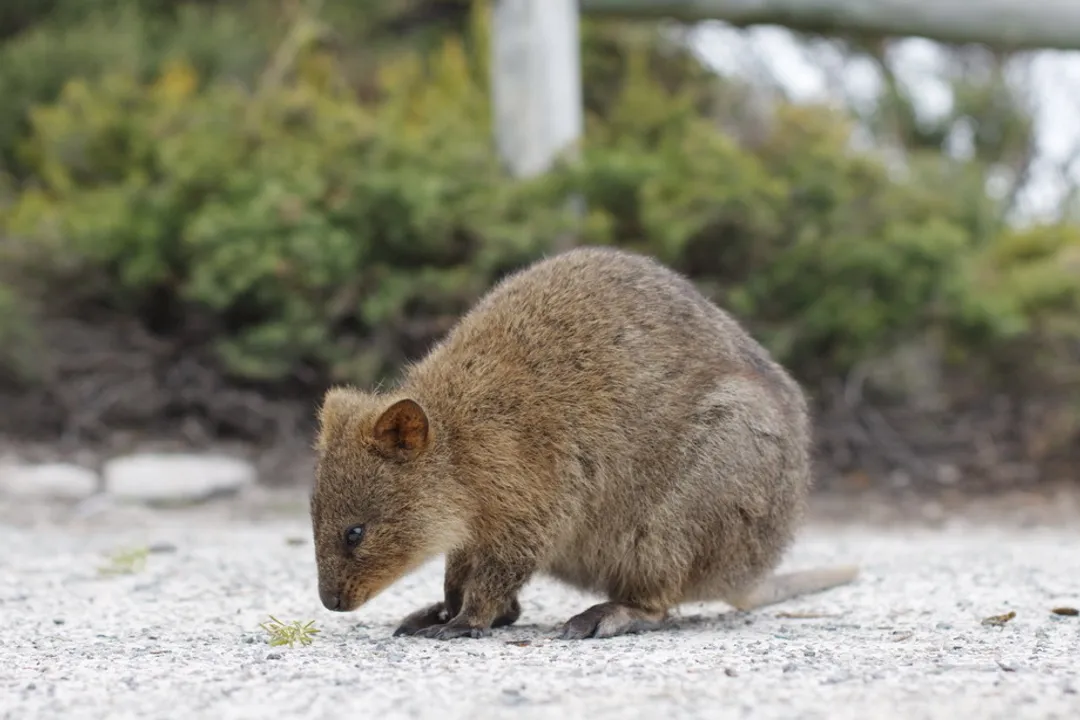
The next major step confirms a characteristic most people associate with this animal: it is a Class Mammalia member. [1][4][5][9] This places the quokka alongside humans, dogs, and bats. Mammals share key traits like the presence of hair or fur, being warm-blooded (endothermic), and, critically, females possess mammary glands that produce milk to nourish their young. [1][4] The quokka’s thick, coarse, brownish-grey fur is a clear indicator of this classification. [2]
# Order Diprotodontia
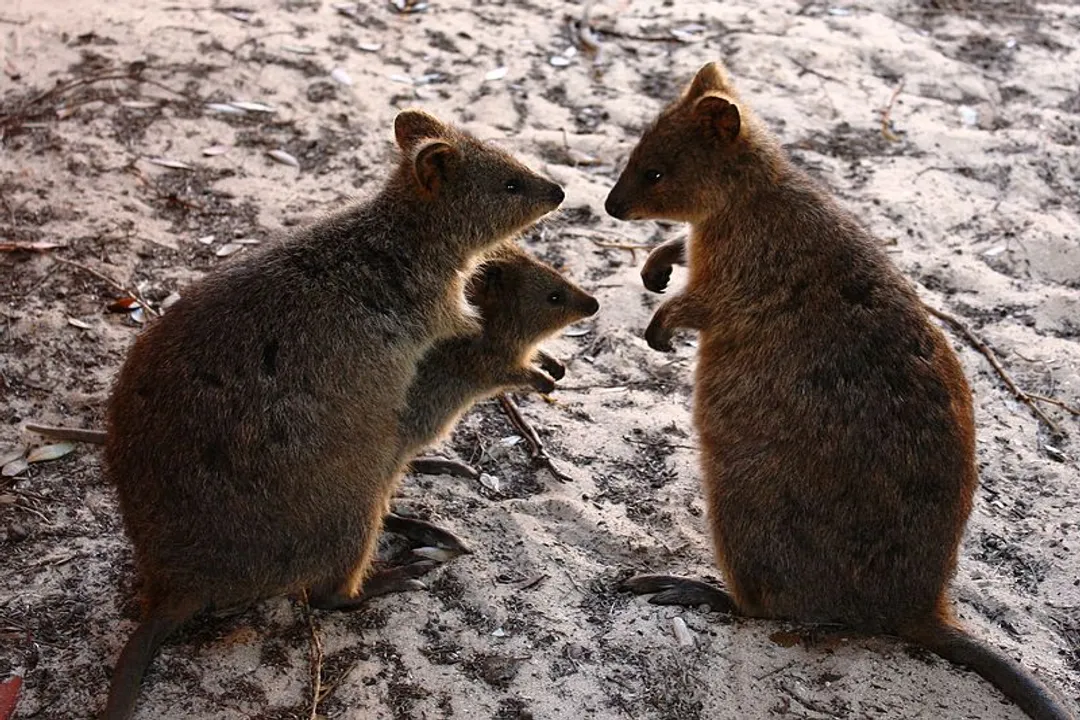
The classification deepens significantly within the mammalian class when we reach the Order Diprotodontia. [1][4][5][9] This order is unique to Australasia and includes some of the most recognizable creatures on the continent: kangaroos, wallabies, possums, and wombats. [1][4] The defining feature of Diprotodontia, as implied by the name, is the structure of their lower jaw. They possess two large, forward-pointing lower incisor teeth, which are used for cutting vegetation. [1][4] This dental arrangement is a strong inherited trait linking the tiny quokka to the towering Red Kangaroo.
# Family Macropodidae
Within Diprotodontia, the quokka is assigned to the Family Macropodidae. [1][4][9] This is the family of the macropods, meaning "large foot". [1] As members of this family, quokkas share the characteristic mode of locomotion—hopping, using their large hind feet and powerful hind legs—although their hopping style is smaller and less sustained than that of a true kangaroo. [4] The Macropodidae family is diverse, encompassing all kangaroos, wallabies, and tree-kangaroos. [1] It is interesting to note that while the quokka is often called a "short-tailed wallaby," it is distinct enough to be placed in its own genus, separating it slightly from the main wallaby groups that share the Macropus genus. [4][9]
# Genus Setonix
The genus level marks a narrowing where the quokka stands alone. It is the sole member of the Genus Setonix. [1][4][5][9] This situation, where a genus contains only one living species, is known as being monotypic. The genus name Setonix itself is a composite, likely derived from Seton (perhaps referring to a person involved in its initial description) and onyx (Greek for claw). [4] Having its own genus separates it from other small macropods, suggesting an evolutionary divergence significant enough to warrant its own distinct classification branch within the Macropodidae family. [1]
When we compare the Setonix genus, which currently contains only S. brachyurus, to the incredibly diverse Macropus genus—which houses many kangaroo and wallaby species—we can see a snapshot of evolutionary specialization. The quokka either adapted very successfully to a specific, limited niche, or its lineage simply did not diversify into as many forms as its larger relatives have. [1][4]
# Species Specifics
Finally, we arrive at the species level: Setonix brachyurus. [1][4][9] The specific epithet brachyurus is descriptive, coming from Greek roots meaning "short-tailed" (brachys for short and oura for tail). [4] This small macropod is often confused with rats or small wallabies due to its size, weighing between 2.5 and 5 kilograms, making it one of the smaller members of the Macropodidae family. [2][4]
The species designation S. brachyurus covers populations found in Southwestern Western Australia and on a few offshore islands, most famously Rottnest Island. [1][4] This geographic distinction is vital to understanding the species today. While the mainland populations are classified as vulnerable or endangered due to predation by introduced species like foxes and cats, the Rottnest Island population thrives due to the absence of these predators. [1][2] This island population represents the healthiest concentration of the species, a direct consequence of its environment shielding it from the selective pressures that have devastated its relatives on the mainland. [4] The classification remains the same, but the ecological pressure applied to the two main groups (Setonix brachyurus brachyurus on the island and the mainland subspecies) leads to vastly different conservation outcomes.
# Other Classification Notes
While the Linnaean hierarchy above is the standard for modern science, other classification systems sometimes apply descriptive or historical labels. [9] The quokka is sometimes referred to as the Rottnest Island rat, a common name that highlights its size relative to true rats when first encountered by early explorers. [4] Furthermore, some databases may list synonyms or older groupings, such as Macropus brachyurus, though Setonix brachyurus is the accepted scientific nomenclature today. [4][9] The genetic data confirms this separation, reinforcing its unique position within the macropod family structure. [5] The animal diversity website notes its conservation status is often listed as Vulnerable globally, even though the island population is robust. [4]
The presence of the quokka in international databases like the Global Biodiversity Information Facility (GBIF) further solidifies its recognized classification, listing Setonix brachyurus as the accepted species name with distribution records spanning its known range. [3] Similarly, platforms cataloging observations, such as iNaturalist, use this binomial nomenclature as the primary identifier for submissions related to the animal. [9] This consistent taxonomic anchoring across scientific, governmental, and community-driven platforms underscores the established nature of its classification. [3][9]
To summarize the exact placement according to the primary sources used:
| Taxonomic Rank | Classification |
|---|---|
| Kingdom | Animalia |
| Phylum | Chordata |
| Class | Mammalia |
| Order | Diprotodontia |
| Family | Macropodidae |
| Genus | Setonix |
| Species | S. brachyurus |
Ultimately, the quokka’s classification as Setonix brachyurus tells a story of evolutionary specialization within the large-footed marsupial lineage, positioning it as a distinct, singular branch—the only living member of the Setonix genus—that managed to thrive where others might have been absorbed into larger, more generalized groups. [1][4] Its small size, short tail, and specific dental structure firmly cement its place just apart from the main wallaby lines, making it a fascinating case study in speciation within Australia’s unique fauna. [2][9]
Related Questions
#Citations
Quokka - Wikipedia
Quokka - Setonix brachyurus - A-Z Animals
Quokka Fact Sheet | Blog | Nature - PBS
Setonix brachyurus (quokka) | INFORMATION - Animal Diversity Web
Quokka (Setonix brachyurus) longevity, ageing, and life history
Setonix brachyurus (Quoy & Gaimard, 1830) - GBIF
Quokka - The Australian Museum
Quokka | All Species Wiki - Fandom
Quokka (Setonix brachyurus) - iNaturalist
Setonix brachyurus — Quokka CLASSIFICATION: Vulnerable The ...