What is the classification of a bean weevil?
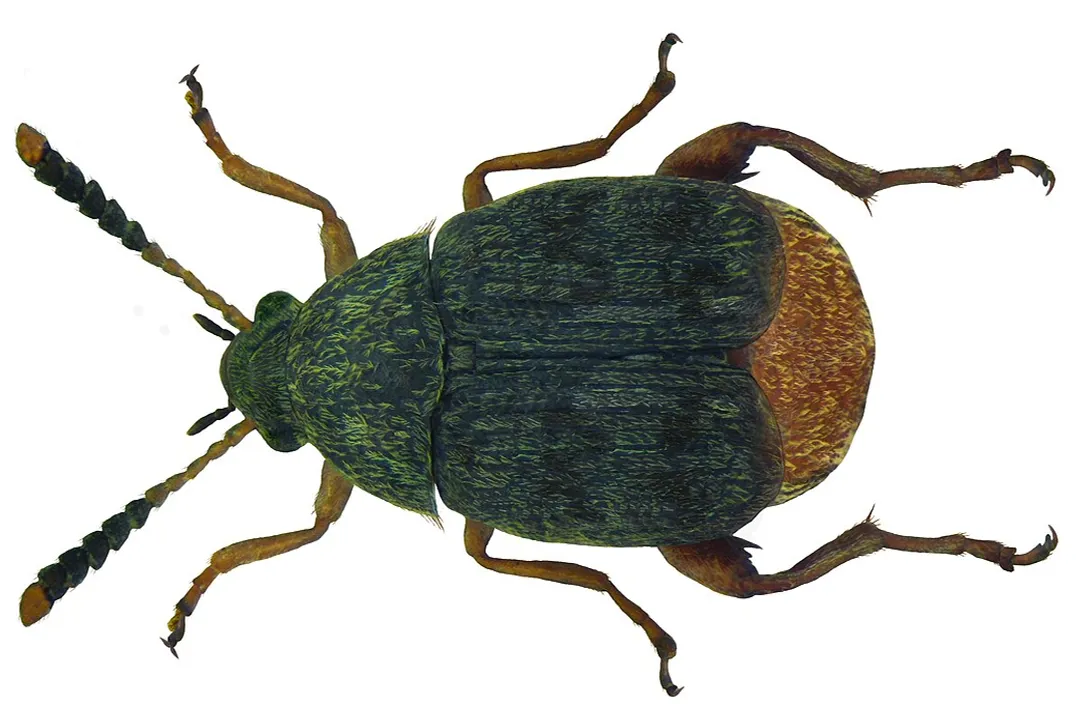
The insect commonly known as the bean weevil is a significant concern for anyone dealing with stored pulses, particularly dry beans. To truly understand this pest—its habits, its vulnerabilities, and how to manage it—we must first define exactly where it sits in the grand scheme of the natural world. This placement is determined through taxonomy, the science of naming, defining, and classifying groups of biological organisms based on shared characteristics. [10] The scientific name assigned to this pest is Acanthoscelides obtectus. [2]
# Hierarchical Ranks
The classification of Acanthoscelides obtectus follows the standard Linnaean hierarchy, starting from the broadest grouping and narrowing down to the specific species. [10] This step-by-step system reveals its lineage as a type of beetle that has evolved to specialize in feeding on seeds. [1]
The full taxonomic classification generally recognized is as follows: [1][2][10]
- Kingdom: Animalia (Animals)
- Phylum: Arthropoda (Joint-legged invertebrates)
- Class: Insecta (Insects)
- Order: Coleoptera (Beetles)
- Family: Chrysomelidae (Leaf beetles)
- Subfamily: Bruchinae (Seed beetles)
- Genus: Acanthoscelides
- Species: A. obtectus
This detailed labeling is far more than just an academic exercise; it immediately flags the insect as a member of the order Coleoptera, which encompasses all beetles—characterized by hardened forewings called elytra that protect the hindwings used for flight. [1]
# Beetle Group
The placement within the family and subfamily provides a crucial initial clue about the weevil’s ecological niche. While historical classifications sometimes placed bean weevils into their own family, Bruchidae, modern systematic biology often treats Bruchidae as the subfamily Bruchinae within the larger Chrysomelidae family, the leaf beetles. [1]
The key distinction here lies in the subfamily designation, Bruchinae. Insects in this group are universally known as seed beetles. [1] This structural classification tells a story about the insect’s life history: unlike many other weevils (Curculionidae) that are often associated with plant stems, roots, or fruits, the Acanthoscelides obtectus lineage is specifically adapted to feed on and develop within seeds. [1] This evolutionary specialization is precisely why they pose such a threat to stored legumes like common beans (Phaseolus vulgaris). [1][4] The adult weevils are small, typically measuring around 3 to 5 millimeters in length, often appearing greyish-brown or black, and possessing a distinctive dark band stretching across their wing covers (elytra). [1][5]
When observing an insect that is damaging stored beans, seeing the hardened wing cases characteristic of Coleoptera confirms it is a beetle. If the specimen is small and appears to bore directly into the bean itself, its classification points strongly toward the Bruchinae subfamily, distinguishing it from generalized grain pests that might chew on the exterior or the germ.
# Pest Status
The classification as Acanthoscelides obtectus directly corresponds to its notoriety as a primary stored-product pest, especially concerning common beans (Phaseolus vulgaris). [1][4] While many insects can invade stored grain, the bean weevil is specialized, capable of infesting bean seeds both in the field before harvest and, critically, throughout subsequent storage and transport phases. [4]
The damage is done almost entirely by the larval stage. Females lay eggs on the surface of developing beans or pods. Once the larvae hatch, they bore directly into the seed, feeding internally on the cotyledons—the nutrient-rich parts of the seed—until they pupate and emerge as adults. [4][5]
A particularly troublesome aspect related to its classification and biology is its ability to continue breeding in stored dry beans, even when the moisture content is quite low. [4] This resilience makes eradication difficult in long-term storage scenarios. For instance, if a shipment of dried beans has an initial low-level infestation, the population can increase significantly during transit without detection, as the damage is internal until the adult beetles chew their way out, creating small, circular exit holes. [4][5]
# Management Implications
Understanding the taxonomic position of the bean weevil offers immediate, actionable insights for those trying to protect their harvests. Knowing it belongs to the seed beetle subfamily Bruchinae suggests that management efforts must focus heavily on pre-storage sanitation and initial seed quality control. Because the entire life cycle, save for adult emergence, occurs inside the seed, topical treatments or surface sprays are largely ineffective against the developing larvae. [4]
Consider this practical implication: If you are inspecting a new batch of dry beans for pest activity, the presence of neat, round exit holes immediately signals a true seed weevil infestation, like A. obtectus, rather than damage from, say, the confused flour beetle (Tribolium confusum), which might leave ragged edges or chew on external debris. [4] This difference in exit morphology stems directly from the larva’s internal feeding habit, a characteristic dictated by its Bruchinae classification. Therefore, the most effective control strategy is prevention: treating seed lots before they enter storage with practices such as controlled low oxygen atmospheres or temperature treatments, or inspecting seeds rigorously before combining them with clean stock. [4][5] A management plan based on the insect’s high specialization within its taxonomic family will always be superior to one treating it as a generalized warehouse pest.
The bean weevil’s classification within Acanthoscelides also helps differentiate it from other major bean pests, such as the larger bean weevil, Bruchus obtectus (though many older texts list A. obtectus simply as Bruchus obtectus or Zabrotus obtectus, reinforcing the need for updated classification adherence for precise identification). [1] Accurate identification, which starts with understanding its taxonomy, prevents the misapplication of control measures designed for different pests. For example, while some pests are controlled by fumigants, the dense packing and small size of beans make penetration challenging, requiring tailored approaches suited for seed invaders.
# Comparative Infestation
When comparing Acanthoscelides obtectus to other closely related pests, the genus level within the Bruchinae subfamily becomes important. Other seed weevils, like those in the genus Bruchus (e.g., the cowpea weevil, Callosobruchus maculatus, or the broad bean weevil, Bruchus rufimanus), are often found attacking different types of legumes. [1] While A. obtectus is famous for attacking common beans (Phaseolus), these other Bruchus species show host-plant preferences for cowpeas or broad beans, respectively. [1]
This host specificity, built upon millions of years of evolutionary divergence reflected in their genus and species classification, means that if your storage contains primarily cowpeas, you should be looking for C. maculatus, while A. obtectus remains the prime suspect for damage in Phaseolus beans. [1] Although all are managed similarly due to their shared Bruchinae subfamily traits (internal seed development), knowing the precise species allows for targeted monitoring traps and better historical data collection on which pests thrive under specific regional storage conditions. [1] For instance, in regions where Phaseolus beans are a staple, vigilance against A. obtectus must be constant due to its high reproductive potential in dry storage. [4]
The fact that this insect has been subject to study across different scientific disciplines—from entomology to food safety—confirms its established authority as a pest. [3][7] Its clear classification provides a solid foundation for international quarantine efforts, as different countries rely on this agreed-upon naming convention to enforce trade restrictions on infested commodities. [4]
Related Questions
#Citations
Bean weevil
Bean weevil (Acanthoscelides argillaceus (Sharp, 1885))
Bean weevil
Bean Weevil
Bean weevil, Acanthoscelides obtectus (Coleoptera: Bruchidae)
Bean weevil Acanthoscelides obtectus (Say) survival and ...
Bean weevil
bean weevil (Acanthoscelides obtectus (Say, 1831))
Classification of Bean Weevil - Petroleum Microbiology