What is a dark fact about quokkas?
The quokka’s instantly recognizable expression—that perpetually upturned mouth that makes them look delighted by everything—often overshadows the practical realities of their existence. While they are celebrated as the world’s happiest animal, dwelling on Rottnest Island off the coast of Western Australia, their survival strategies reveal a much grimmer, calculated side to life as a small marsupial. [5] It is this tension between their public image and their evolutionary necessities that offers the most compelling, if slightly unsettling, facts about these charismatic creatures.
# Smiling Mask
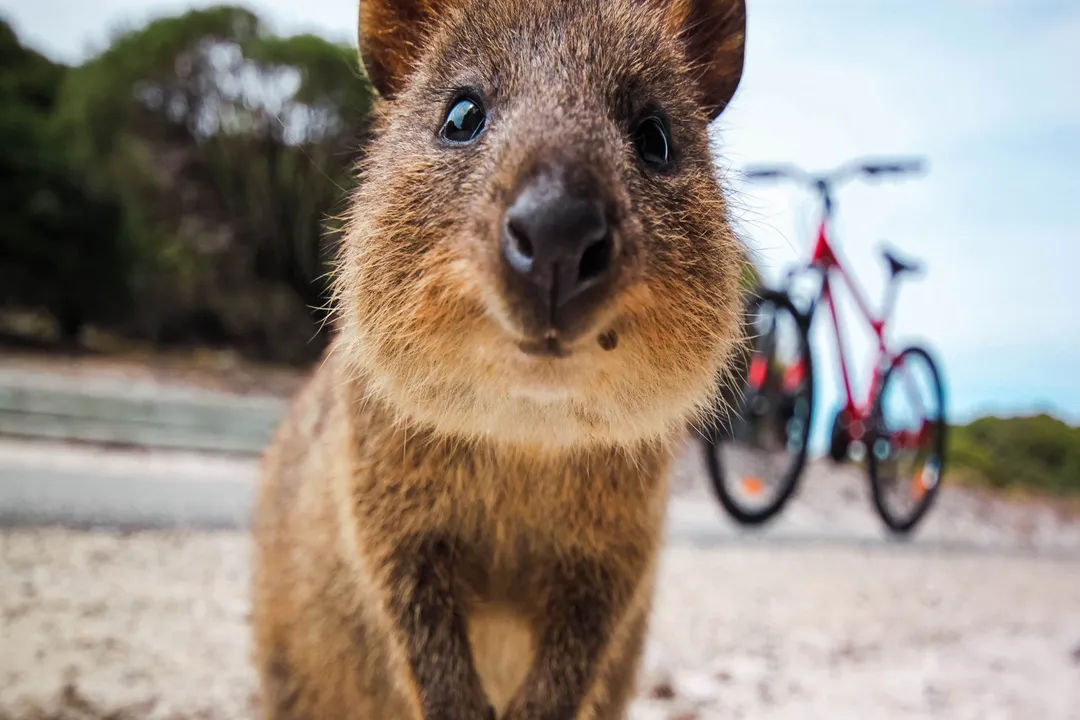
The perception of endless joy is fundamentally a misreading of their anatomy. Quokkas, which are similar in size to a domestic cat or a small wallaby, are actually members of the macropod family, related to kangaroos and wallabies. [1][5] Their famous "smile" is simply the natural structure of their jaw and mouth, combined with their tendency to relax their facial muscles when resting or chewing. [5] This visual appeal has made them global social media sensations. [10] They are herbivorous, eating grasses, leaves, seeds, and bark. [1][5] While they are adept at climbing small trees and shrubs for food, they are primarily ground-dwellers. [7] Their home range is largely restricted to a few islands, most famously Rottnest Island, and small, isolated mainland colonies. [1]
# Joey Sacrifice
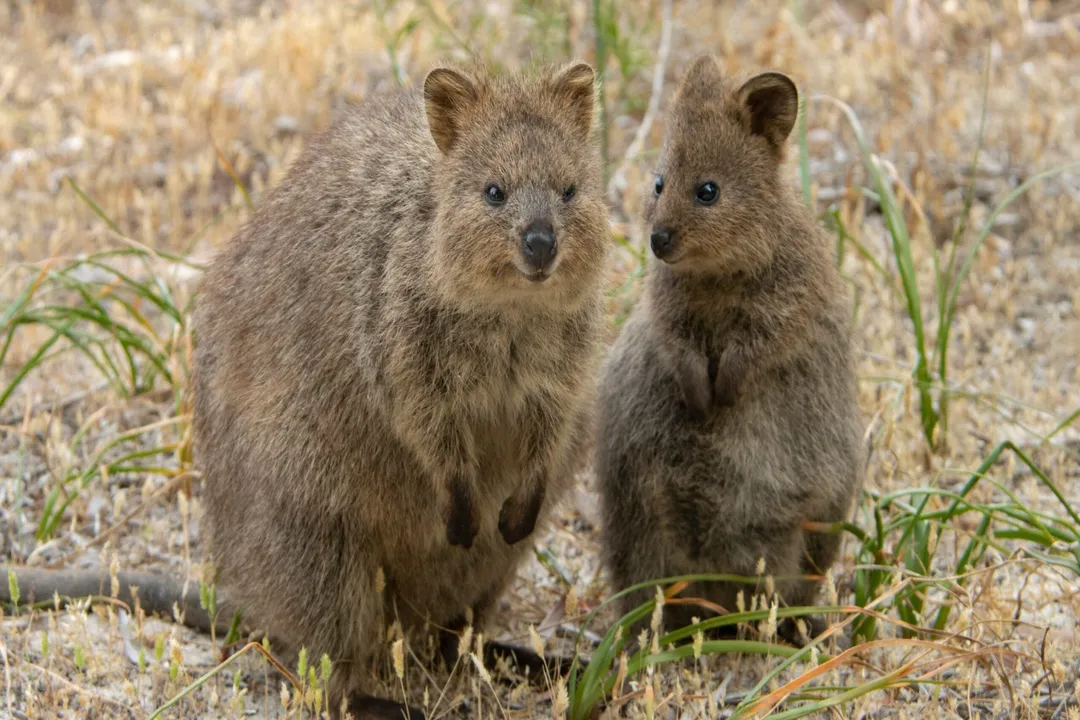
The most starkly "dark" aspect of quokka biology surfaces when a mother faces imminent danger. Marsupials carry their young, or joeys, in a pouch for development. [2] However, the quokka mother possesses a defense mechanism that prioritizes her own survival over her immediate offspring if escape is necessary. When feeling extremely threatened—for instance, by a predator like a quoll, or even a large, aggressive human presence—a mother quokka may eject her joey from the pouch. [2][4]
This action is often misunderstood. It is not a case of the mother actively dropping the joey in a way that guarantees its death immediately; rather, it is a rapid disengagement meant to lighten her load and increase her speed for escape. [2] However, the outcome for the ejected joey is usually fatal, either through the shock of the fall, immediate predation, or the mother not returning to it. [2] While some sources discuss the myth that mothers can store a second, undeveloped embryo in a state of suspended animation (diapause) which can be developed only after the older joey is lost, the immediate, desperate act of dropping the older young one to save herself is a chilling example of natural selection at its harshest. [2] This action is a prime example of evolutionary trade-offs; in an environment where escape is paramount, the energetic cost of carrying a vulnerable joey during a high-speed dash can outweigh the chance of both surviving. [4]
# Fearlessness Rules
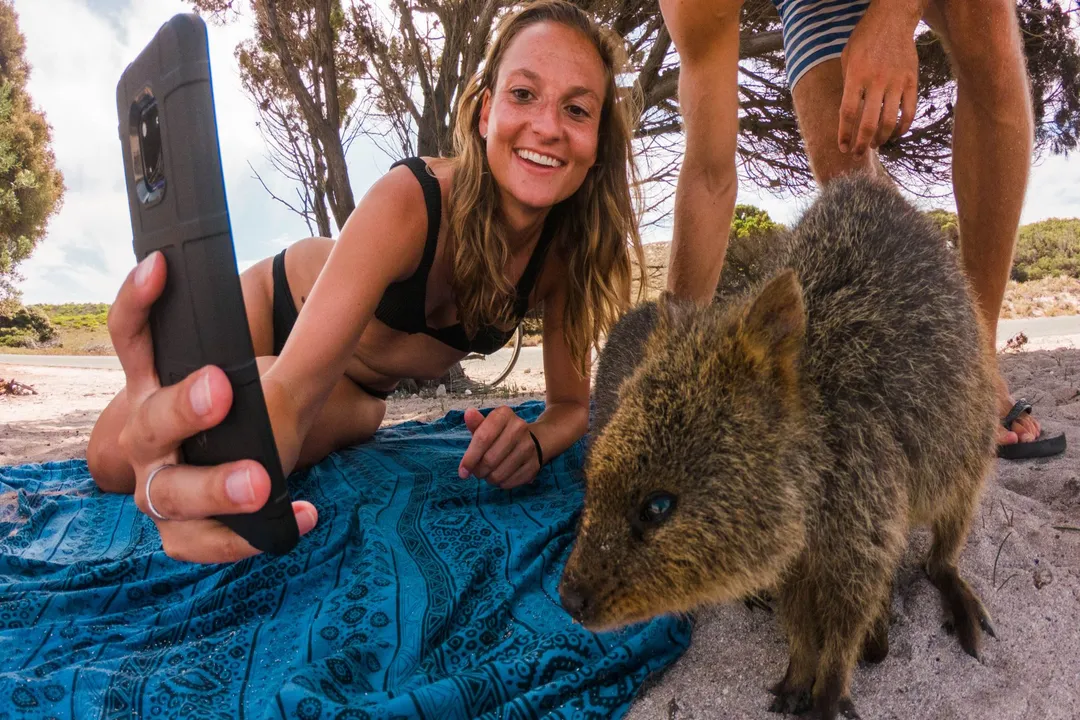
Another reality that contrasts sharply with their cuddly image is their surprising lack of innate fear toward humans. [9] On Rottnest Island, where they have virtually no natural land-based predators, quokkas never developed the wariness that marsupials on the mainland possess. [1][7] This learned or inherited confidence means they often approach people without hesitation. [9]
This benign appearance and lack of self-preservation instinct have led to significant management issues. It is illegal to touch or feed quokkas in their native habitat. [9] The reason for this prohibition is twofold: first, human food is incredibly detrimental to their health; their digestive systems are designed for native vegetation, and items like bread or crackers can cause severe illness and even death. [9] Second, an animal that loses its fear of humans becomes vulnerable, not just to intentional harm, but to accidental injury from vehicle strikes or rough handling. [9] The fact that an explicit law must exist to prevent people from cuddling an animal that seems to invite interaction points to a dangerous disconnect between the animal's perceived friendliness and its protected status.
# Social Structure
Beyond the survival instinct related to predators, the social dynamics within quokka populations also feature less gentle aspects. While often observed in small groups grazing contentedly, the reality among adult males can be quite different. Reports indicate that male quokkas engage in fighting, particularly over resources or breeding rights. [4] This intraspecies competition, common across many animal groups, serves as a reminder that the idyllic snapshot captured in photographs only tells part of the story about their daily lives. [4]
# Island Ecology Context
The entire existence of the modern quokka population is shaped by geography. Their isolation on islands like Rottnest provides a unique ecological niche. [1] Because there are no native land predators on Rottnest, the intense evolutionary pressure that drives mainland species to be perpetually alert and fearful is largely absent. [7] This absence is what allowed their general disposition to become so trusting. [9]
Consider a comparative scenario: A mainland wallaby species might spend a significant percentage of its waking hours monitoring its surroundings for threats from dingoes, foxes, or large birds of prey. The quokka, relieved of this constant, high-energy vigilance, can devote more resources to foraging and reproduction, leading directly to their relaxed demeanor. [1] It is fascinating to trace the development of the modern quokka's behavior as a direct line of retreat from mainland competition. When Europeans arrived, the quokka's native habitat on the mainland began to shrink rapidly due to land clearing and the introduction of invasive predators like cats and foxes, making the offshore islands their critical refuge. [1] For an ecologist studying island biogeography, the quokka represents a living case study in island tameness, where the lack of historical pressure sculpts behavior that is now maladaptive when confronted with novel human interactions. [9]
This situation creates an interesting management paradox. The very traits that make them endearing—their tameness and photogenic nature—are the ones that most urgently require human intervention to protect them. [9] Therefore, the dark fact is not some hidden venom or monstrous behavior, but rather the profound vulnerability created by their own success in a previously predator-free environment, making them entirely dependent on strict human oversight to prevent the very thing their smiles suggest they are immune to: distress and demise.
#Videos
The Quokka: The Happiest Animal… With a Dark Secret - YouTube
Quokka Facts: NOT a RAT Animal Fact Files - YouTube
Related Questions
#Citations
8 interesting facts about quokkas - WWF Australia
Quokkas throw their babies at predators to escape, and ... - ABC News
The Quokka: The Happiest Animal… With a Dark Secret - YouTube
10 Facts about the Quokka | Het is de Merckx
Fun facts about the Quokka, the happiest animal on earth
Quokka book reveals dark side of these animals - Facebook
20 fun facts about quokkas, complete with adorable photos
Quokkas have no fear of humans. But it's illegal to touch one- you ...
Quokkas Reveal Dark Secret: Sacrificing Joey to Save Themselves