What adaptation contrasts the bone processing strategy of *E. haydeni* with most modern canids?
Answer
Modern canids focus on slicing through flesh and shearing hide
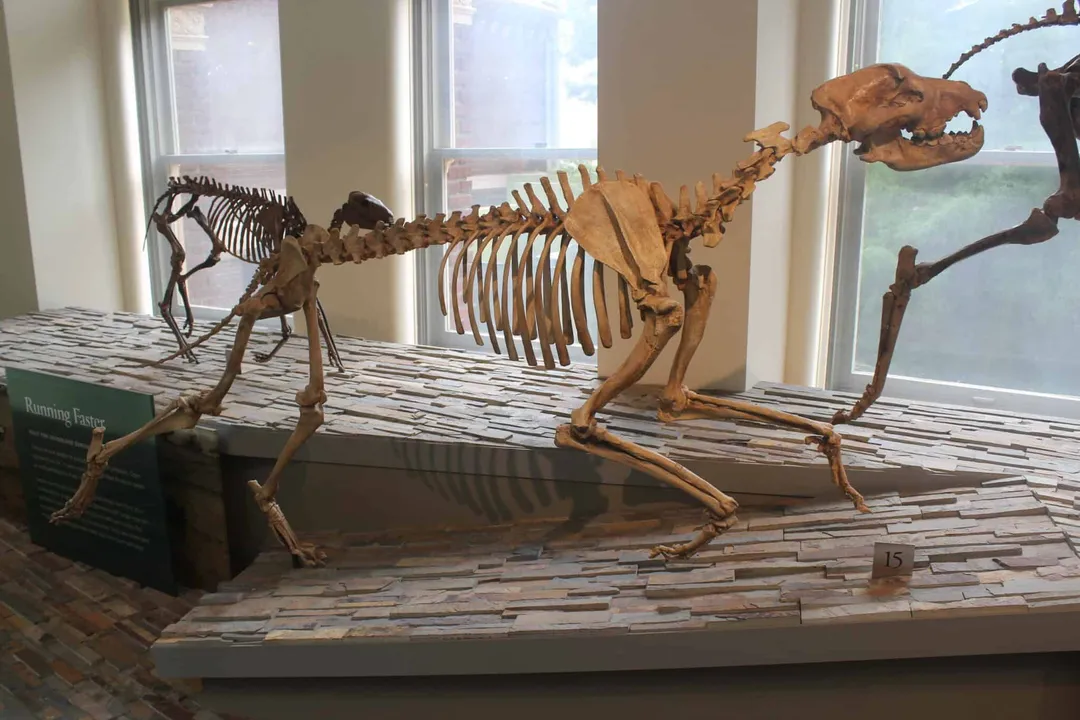
The fundamental difference in dietary strategy lies in dental function. *Epicyon haydeni*'s specialized dentition—thick, blunt cheek teeth—was optimized for processing hard bone to gain access to marrow. In sharp contrast, most modern canids possess dental structures, such as shearing carnassials, that are principally designed for slicing through muscle tissue and tearing hide. While a modern wolf might break a very small bone, the specialization of *E. haydeni* points to accessing dense caloric resources within large bones as a routine necessity, unlike the flesh-ripping generalism of its descendants.
#Videos
Epicyon, the largest dog species ever, capable of killing a tiger or ...
Related Questions
What is the estimated length of *Epicyon haydeni*, recognized as the largest canid?What specialized feature characterized *Epicyon haydeni*'s dentition for processing bone?What moniker do paleontologists often use for *Epicyon haydeni* due to its feeding habits?How did the robust build of *E. haydeni* contrast with modern cursorial canids?During which geological epoch did *Epicyon haydeni* exist as a giant among canids?What adaptation contrasts the bone processing strategy of *E. haydeni* with most modern canids?Which genus represents the line of canids that *Epicyon haydeni* is explicitly stated to predate?What caloric resource provided a competitive advantage to the bone-crushing *E. haydeni*?Based on feeding mechanics, what modern animal might *Epicyon* functionally resemble?What type of pursuit strategy did the powerful build of *E. haydeni* suggest, unlike long-distance chasing?