What is special about Epicyon haydeni?
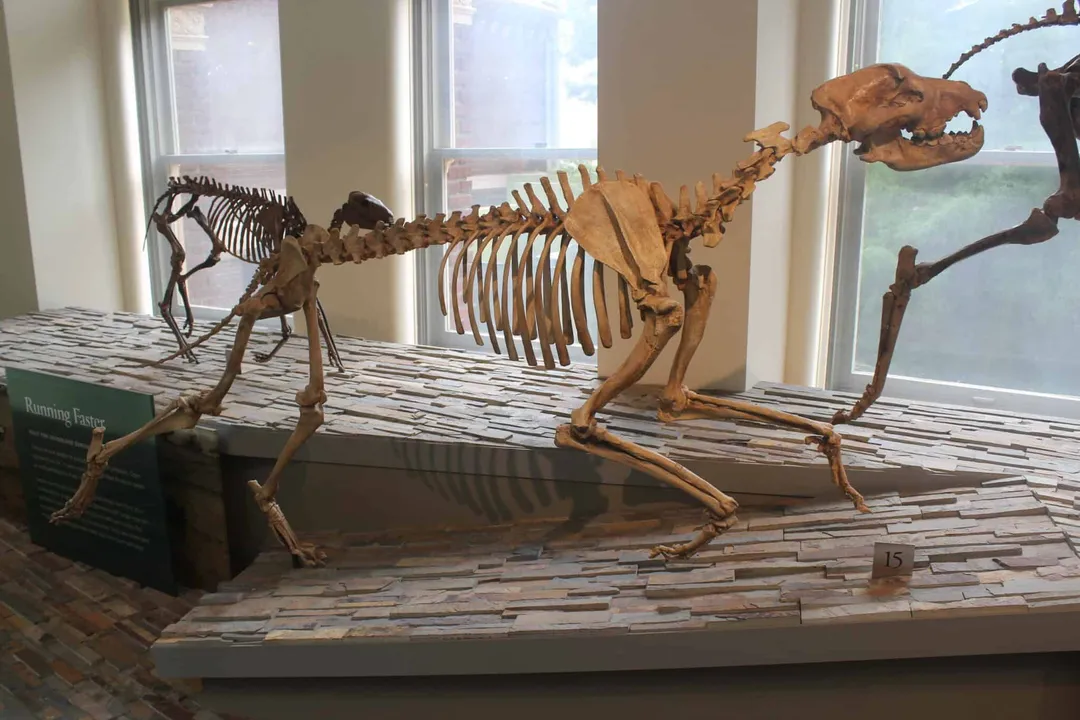
The title of the largest canid to have ever walked the Earth belongs to Epicyon haydeni, an ancient predator that roamed prehistoric North America. When picturing a dog, images of wolves or even massive modern breeds might come to mind, but E. haydeni dwarfed them both, representing a fascinating, powerful branch of the canid family tree that is now entirely extinct. What sets this animal apart is not just its sheer size, but the specialized physical adaptations that suggest a brutal, high-impact lifestyle unlike many of its modern relatives.
# Immense Proportions

The sheer scale of Epicyon haydeni is perhaps its most immediate claim to fame, earning it recognition as the largest dog ever known. Estimates place its length at roughly eight feet long, a truly imposing figure for a canine relative. While it shared the North American landscape with other formidable creatures, its robust build distinguished it from the lighter, more cursorial (running-adapted) canids common today.
While comparisons are often drawn to the modern gray wolf (Canis lupus), E. haydeni appears to have been considerably stockier and more heavily muscled, suggesting strength over pure endurance running. This massive size likely translated into significant weight, making it a top-tier predator or scavenger in its environment. Think of it as the prehistoric equivalent of a very large, incredibly powerful bear-dog hybrid, rather than a swift, loping hunter.
For a sense of just how special this size distinction is, consider that this animal was a giant among its peers during the Miocene epoch. Its dominance as the largest canid establishes a high benchmark in the evolutionary history of dogs, a record that has stood until scientists examined the fossil evidence closely.
# Bone Crusher
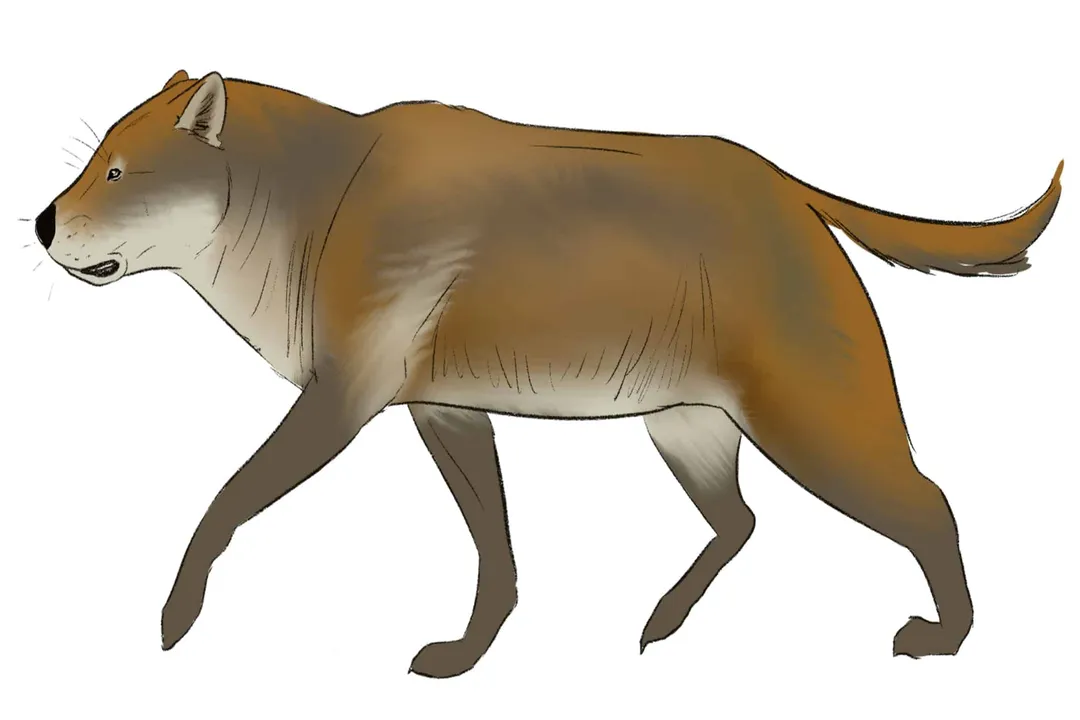
The name Epicyon itself hints at one of its most remarkable characteristics, often being referred to by paleontologists as the "bone crusher". This moniker isn't merely hyperbole; it reflects the specialized morphology of its skull and teeth. E. haydeni possessed incredibly robust jaws and thick, blunt cheek teeth, features perfectly suited for processing bone, not just muscle and soft tissue.
This adaptation contrasts sharply with most modern canids, whose teeth are generally designed for slicing through flesh and shearing hide. The difference suggests a distinct dietary strategy. A modern wolf might break a small bone or chew on a leftover marrow shaft, but the architecture of Epicyon's dentition implies that breaking large bones was a routine part of its feeding pattern. This level of bone processing capability is rare among canids and points toward an ecological role where access to dense caloric resources, like marrow locked inside thick bone, was necessary for survival.
If we were to assign a modern analogy based on feeding mechanics rather than overall body shape, Epicyon might share functional similarities with powerful hyaenids, known for their ability to crush and consume bone fragments. This specialization in the fossil record provides strong evidence for expertise in resource exploitation.

# American Reign
Epicyon haydeni inhabited North America during a critical period of mammalian evolution. Understanding its place in the food web helps paint a picture of the ancient American landscape. This animal was a major player, a large carnivore reigning supreme in its time.
One perspective notes that this era of canine dominance eventually waned, with later evolutionary pressures or environmental shifts leading to the rise of different groups. Specifically, some researchers suggest that the later proliferation of specialized felines may have contributed to the eventual decline or niche change of the massive Epicyon lineage. This competitive dynamic between emerging groups of carnivores shapes the whole ecosystem. The transition from a world ruled by enormous canids to one increasingly dominated by specialized cat lineages highlights a significant turnover in prehistoric American apex predators.
When mapping out the predator landscape of the Miocene, E. haydeni occupies the top slot for canids. It existed before the widespread appearance of the Canis genus, placing it in an earlier, more experimental phase of canid evolution where size and specialized crushing power were favored adaptations.
# Extinct Kinship
The scientific classification of Epicyon places it within the Canidae family, the group that includes modern dogs, wolves, foxes, and jackals. However, it belongs to an extinct subfamily or group distinct from the Canis line we recognize today. Being an older, separate lineage emphasizes that its unique traits—like the bone-crushing molars—were specific solutions to environmental problems faced by its ancestors, rather than traits inherited by modern wolves.
Its relationship to other prehistoric megafauna is also revealing. While large predators like the saber-toothed cats (Smilodon), which appeared later, are famous, Epicyon represents the massive-canid counterpart of that era. Examining the bone structure of E. haydeni reveals adaptations that suggest it was less adapted for long-distance pursuit than later wolves, favoring short bursts of power, perhaps ambushing prey or efficiently dispatching carrion.
If we were to construct a simplified table illustrating key differences between a major modern canid and E. haydeni, it might look something like this:
| Feature | Epicyon haydeni | Modern Gray Wolf (Canis lupus) |
|---|---|---|
| Relative Size | Largest known canid; ~8 feet long | Medium to large; up to 5 feet long |
| Primary Adaptation | Bone crushing, high bite force | Endurance running, tearing flesh |
| Dental Structure | Robust, blunt cheek teeth | Shearing carnassials emphasized |
| Ecological Niche | Apex predator/bone processor | Pack hunter, generalist carnivore |

# Paleo-Ecology Insight
The specialization toward bone crushing suggests a fascinating insight into the pressure faced by Epicyon. In ecosystems dominated by large herbivores, the carcasses left by other kills or natural deaths would present a significant caloric opportunity in the form of marrow and fat locked within the bone. A predator that can access these deep resources gains a serious competitive advantage over those limited to muscle and organ meat. This is what separates the "bone-crusher" from the "flesh-ripper."
It is often the case in paleontology that the structure of the animal informs our understanding of the environment, but we can also look at the surrounding geology for confirmation. When analyzing fossil sites where E. haydeni remains are found, the presence of associated herbivore fossils bearing deep, crushing bite marks—marks far exceeding what a regular wolf could inflict—would serve as tangible, environmental proof of this animal's reputed strength. This direct fossil evidence, when discovered, transforms E. haydeni from merely a large dog on paper into a documented ecological powerhouse whose feeding habits shaped the decomposition process of large carcasses in its time.
Considering its build, Epicyon haydeni was not optimized for the marathon chases seen in modern large canids. Its power suggests a strategy more akin to ambush predation or highly efficient scavenging where immediate, overwhelming force was needed to secure a meal or defend a kill from rivals. This makes it a more specialized evolutionary experiment than the generalist success story represented by the Canis genus that followed it into dominance. The study of this magnificent, extinct creature offers a look at one path the canid family took before settling on the traits that define modern wolves and dogs.
#Videos
Epicyon, the largest dog species ever, capable of killing a tiger or ...
Related Questions
#Citations
This prehistoric monster is the largest dog that ever lived and was ...
Meet The 'Largest Canid Ever' That Ruled Prehistoric America Until ...
Epicyon, the bone crusher known by Paleontologist to be the largest ...
Epicyon is an extinct huge canid, a subfamily of Canidae ... - Facebook
Ancient eight-foot long “bone-crushing” dog was the largest ever
Epicyon - Bone Crushing Dog - Creature submission archive - ARK
Epicyon haydeni Animal Facts
Epicyon | Dinopedia - Fandom
Epicyon, the largest dog species ever, capable of killing a tiger or ...