Under what conditions does the wahoo transition from its typical solitary existence to schooling behavior?
Answer
During spawning periods
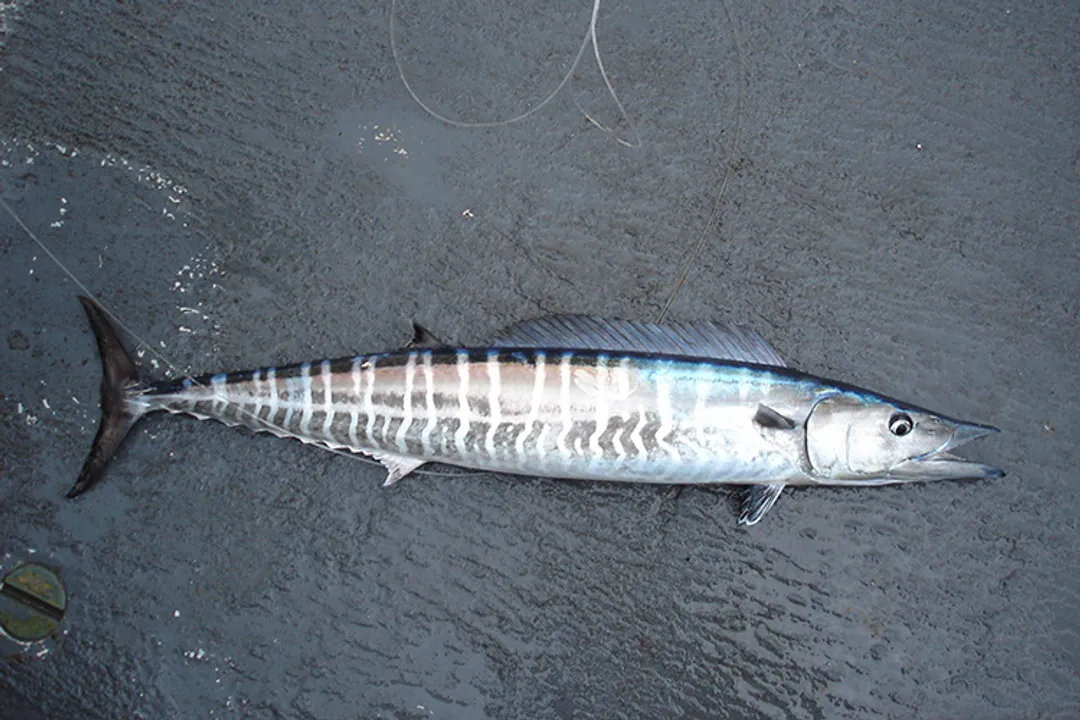
While wahoo are generally solitary creatures or found in very small groups of two or three individuals, this social behavior shifts significantly during specific life cycles. When spawning, these fish congregate in much larger numbers, forming schools that can reach a hundred or more individuals. This behavior is linked to their reproductive strategy, which relies on the aggregation of mature adults to ensure the success of their broadcast spawning method, where eggs and sperm are released into the water column simultaneously.
Related Questions
What does the Hawaiian name Ono signify regarding the Acanthocybium solandri?Which distinctive feature helps anglers distinguish the wahoo from the king or Spanish mackerel?How does the wahoo generate its remarkable swimming velocity despite lacking thermal regulation?Under what conditions does the wahoo transition from its typical solitary existence to schooling behavior?What percentage of the wahoo diet consists of cephalopods according to research in the Western and Central Pacific Ocean?What reproductive method is employed by the wahoo to enhance the fertilization success of its buoyant eggs?How does the International Union for Conservation of Nature classify the wahoo in terms of its population status?Which stomach worm is commonly found in the wahoo and what is its effect on the fish?What are the primary culinary characteristics of wahoo meat that make it versatile for various preparation methods?In which country was the wahoo caught that currently holds the IGFA all-tackle record of 184 pounds?