Wahoo Fish Physical Characteristics
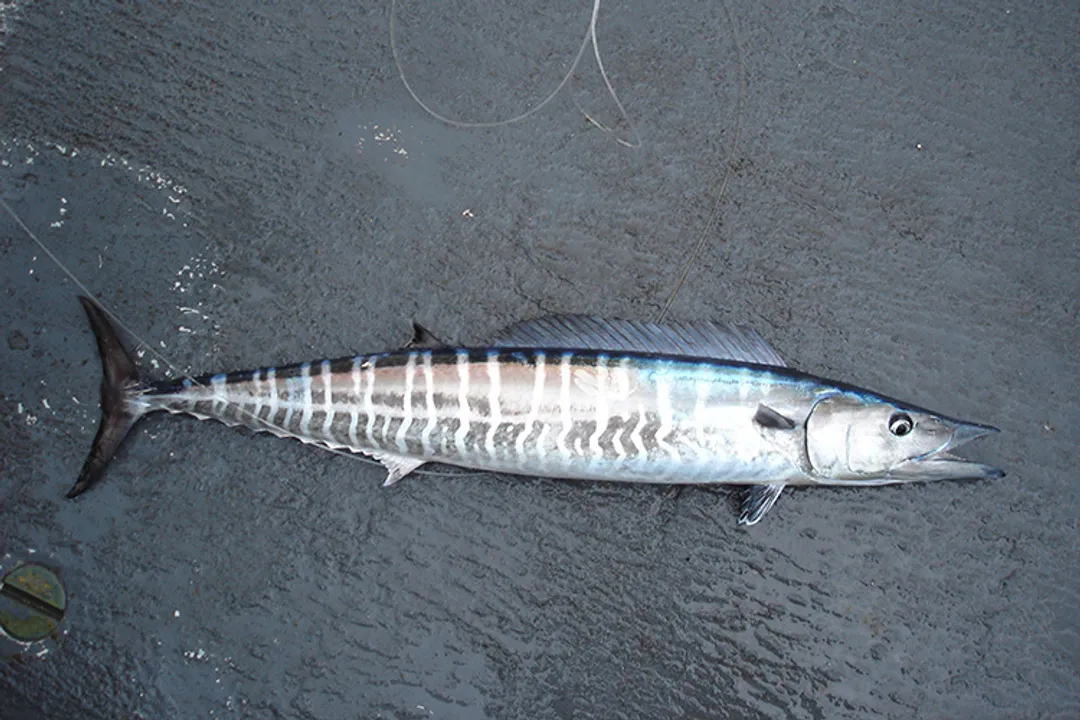
The physical makeup of the wahoo (often Acanthocybium solandri) is a perfect study in aquatic efficiency, built for sheer speed across the open ocean. Its appearance is immediately striking, defined by a body that is long, slender, and laterally compressed, giving it a distinct, streamlined silhouette. This shape is often described as torpedo-like, an engineering marvel perfectly adapted for life as a pelagic predator that relies on rapid acceleration to ambush prey. The compression—meaning it is flattened side-to-side—reduces drag as it cuts through the water.
# Body Form
The general structure emphasizes length over girth, allowing the wahoo to move with minimal resistance. This elongation is a shared trait across populations, whether in the Atlantic or the Pacific. The overall effect is a fish that looks perpetually ready to sprint, a necessity given its reputation as one of the fastest fish in the sea. The efficiency of this design is so complete that it visually separates the wahoo from many other swift scombrids, such as the larger tunas. Its physique suggests evolutionary refinement honed over millennia for high-velocity pursuit in the water column.
# Fin Placement
Examining the dorsal apparatus reveals further specialization. The dorsal fin is remarkably long and low, stretching across nearly the entire length of the back, starting quite far back on the body. This long, continuous structure likely contributes to stability at high speeds. Specifically, the soft-rayed portion of the dorsal fin typically includes between 26 and 34 rays, a consistent feature noted in descriptions of Atlantic and Pacific specimens. In contrast, the anal fin is comparatively small.
The tail, or caudal fin, is another critical component of its speed machinery. It is characterized by being deeply forked. This deep V-shape is common among fast-swimming pelagic species, providing the necessary thrust and control for sustained bursts of speed and sharp directional changes.

# Head Features

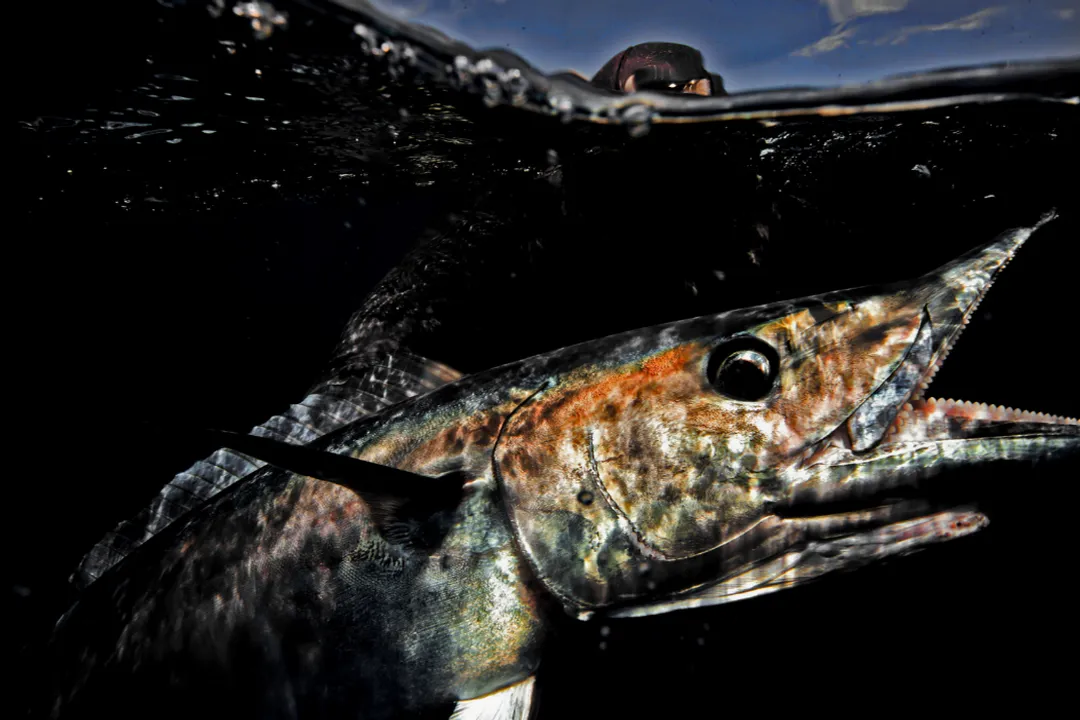
The head structure supports the fish’s predatory lifestyle. Wahoo possess notably large eyes relative to the size of their head. These large visual organs suggest a dependence on sight, which is vital when hunting smaller, fast-moving prey in the often clear, sunlit waters they inhabit.
The mouth of the wahoo is large and armed with formidable dentition. The teeth are sharp, pointed, and distinctly triangular. This dental arrangement is similar to that found in mackerel species, designed not for crushing, but for slicing and grasping slippery targets securely before the prey can escape.
# Coloration Dynamics

Wahoo coloration is famously vibrant when the fish is alive and fresh from the water, yet it undergoes a dramatic shift immediately upon death. In its prime condition, the fish displays an iridescent blue-green or metallic blue on its dorsal side, shading down to silvery flanks, and a clean white belly. This countershading—dark above, light below—is a classic camouflage technique that helps obscure the fish both from predators below looking up toward the surface light and from prey above looking down toward the darker depths.
What truly sets the wahoo apart visually are the dark, irregular vertical bars that traverse the sides of the body. These bars are faint or irregular in placement between the dorsal fin rays. An angler witnessing a wahoo immediately after being landed will see these bars vividly displayed. However, this magnificent pattern fades rapidly as the fish dies. This swift loss of color makes post-capture identification challenging if one is relying solely on memory of the vibrant hues, leading to potential confusion with other long, silver pelagic fish if markings are the only differentiator sought. Observing these bars on a freshly caught specimen is key to definitive identification in the field.

# Dimensions and Scale
Wahoo are capable of reaching impressive sizes, cementing their status as a highly sought-after game fish. While maximum measurements can vary slightly depending on the ocean basin and data collection methodology, the overall potential for growth is substantial. Sources indicate that they can reach lengths approaching eight feet. One measurement places the maximum length near 98 inches (over 8 feet). In terms of mass, weights exceeding 180 pounds have been recorded, with one source citing a maximum weight of 183 pounds. While most sport catches are significantly smaller than these absolute maximums, understanding the potential scale helps define the species' physical scope.
| Attribute | Common Range / Description | Notes |
|---|---|---|
| Body Shape | Torpedo, Slender, Compressed | Built for extreme speed. |
| Dorsal Rays (Soft) | 26–34 | Consistent between Atlantic and Pacific specimens. |
| Maximum Length | Up to 98 inches | Approximately 8.1 feet. |
| Maximum Weight | Up to 183 pounds | A rare maximum catch weight. |
| Color Change | Rapid post-mortem fading | Vertical bars disappear quickly after death. |
It is interesting to consider how the body mass scales with that length. A fish reaching 98 inches is immense, yet its laterally compressed form means that while it has a long profile, its "girth" relative to a round-bodied fish of similar weight might appear less substantial at first glance. This efficiency in profile minimization is why they can achieve such high speeds without the bulk associated with true bottom-dwelling strength fish.
# Distinguishing Features Summary
To summarize the key physical identifiers that an angler or biologist would use to separate a wahoo from similar pelagic species, one must look for the combination of traits: the narrow, highly compressed body, the extremely long dorsal fin running nearly the length of the back, the large eye, and the sharp, triangular teeth. If the fish is still alive or very freshly dead, the specific, vibrant blue-green iridescence coupled with the dark vertical barring provides near-certain confirmation. If those colors are gone, relying on the fine detail of the fin structure and the specific arrangement of the teeth becomes the fallback identification method. This specific assembly of features is what makes the wahoo a unique member of the scombrid family.
Related Questions
#Citations
Atlantic Wahoo | NOAA Fisheries
Wahoo – Discover Fishes - Florida Museum of Natural History
Wahoo - South Atlantic Fishery Management Council
Wahoo - Wikipedia
Learn About the Wahoo Fish - Guidesly
Maryland Fish Facts - Wahoo
Species Profile – Wahoo - SatFish
Wahoo - Texas Saltwater Fishing Magazine
Pacific wahoo - California Sea Grant