Due to poor eyesight in murky waters, what senses do White Sturgeon heavily rely on to detect hidden prey?
Answer
Chemoreception and lateral line stimulation.
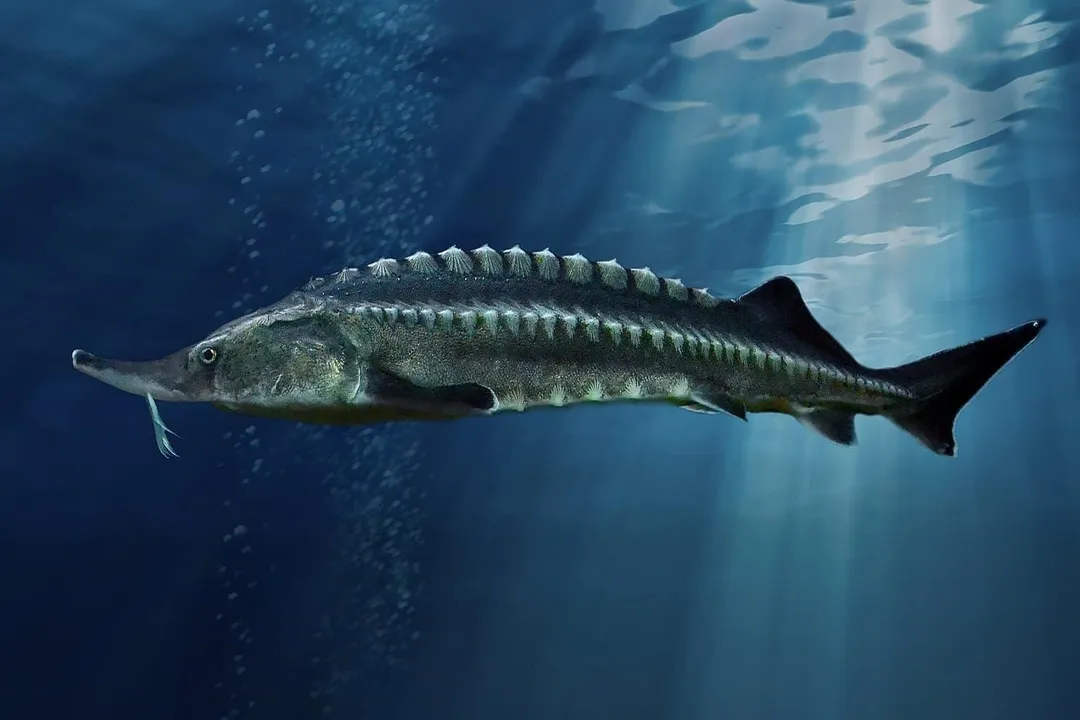
White Sturgeon frequently inhabit murky or turbid waters where visual acuity is severely limited. To compensate for this environmental challenge and successfully locate prey that might be buried or obscured in the mud or sand, they have evolved a strong reliance on non-visual sensory input. Chemoreception, which involves the senses of taste and smell, allows them to detect the chemical signatures released by potential food items. Concurrently, they utilize stimulation of their lateral line system, enabling them to sense subtle movements or pressure changes caused by nearby organisms, making the palatability and chemical signature crucial factors in their foraging success.
Related Questions
What does the term *benthic* primarily describe regarding White Sturgeon feeding?What is the initial food source for White Sturgeon larvae after exhausting their yolk sacs?What two major categories dominate the adult White Sturgeon diet in many river systems?Due to poor eyesight in murky waters, what senses do White Sturgeon heavily rely on to detect hidden prey?What specialized physical feature do White Sturgeon use, situated near the mouth, to detect tactile signatures of buried prey?How does the diet of a White Sturgeon fundamentally change when transitioning from the juvenile phase to the adult phase?Which prey items are often found in higher percentages in the gut content of sturgeon inhabiting a brackish estuary?What action is created by the rapid extension of the White Sturgeon's mouth cavity during feeding?How is the feeding impact of a mature White Sturgeon often characterized regarding the local environment?What is a potential negative consequence if an invasive species outcompetes the native prey of the White Sturgeon?