Are elk technically deer?

The short answer to whether elk are technically deer is a resounding yes. Belonging to the family Cervidae, elk (Cervus canadensis) share the same zoological family tree as the smaller, more familiar white-tailed deer and mule deer found across North America. [1] They are, in essence, very large members of the deer clan. [1] However, just because they are relatives doesn't mean they are interchangeable, especially when you look closely at the distinct features that separate the wapiti—the common name for elk in many areas—from its smaller cousins. [1][6]
# Family Ties
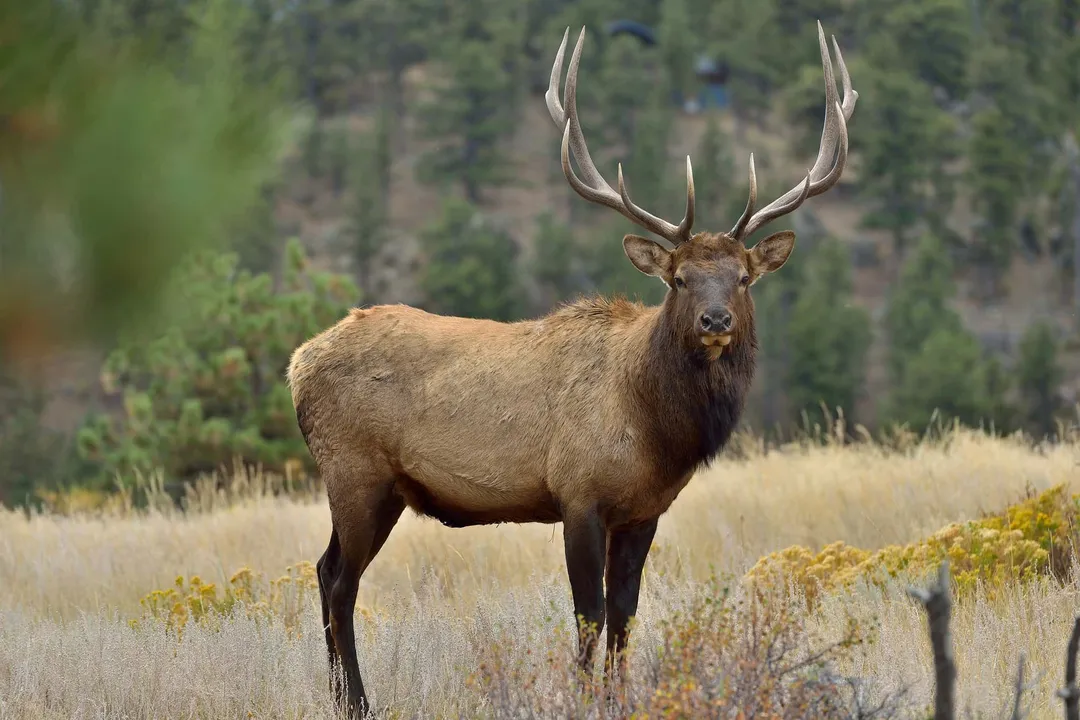
To understand the relationship, we look at taxonomy. The entire group known as Cervidae encompasses all deer, elk, moose, and caribou/reindeer. [5][6] When you see an elk grazing in a meadow, you are looking at one of the largest members of this family. [1] This places them in a classification bracket with animals like the red deer, to which they are closely related, sometimes even being grouped under the same species depending on the specific taxonomic authority being followed. [1][10] This close relationship explains why people often lump them together in conversation, but field biologists and hunters recognize significant differences stemming from their evolutionary divergence within the same deer family. [2]
# Size Matters

The most immediate and undeniable difference between an elk and what most people picture when they hear the word "deer" is sheer scale. [2][4] Elk are substantially bulkier and taller than the most common North American deer species. [2]
Consider the weight disparity. A large, mature bull elk can easily top 700 pounds, sometimes weighing in at over 1,000 pounds when fully grown. [2] Contrast this with a substantial white-tailed buck, which rarely exceeds 300 pounds. [2] This size difference isn't just a minor variation; it’s a massive gap in body mass, which impacts everything from their habitat requirements to their behavior during the annual rut. [4]
If we map out the general hierarchy based on size within the Cervidae family, the ranking is quite clear in North America:
| Rank (Largest to Smallest) | Common Name | Typical Weight Range (Approximate) |
|---|---|---|
| 1 | Moose (Alces alces) | 840 to 1,500+ lbs |
| 2 | Elk (Cervus canadensis) | 700 to 1,100 lbs |
| 3 | Mule Deer / White-tailed Deer | Up to 300–400 lbs |
This scale highlights that while elk are massive, they are second only to the moose in the North American deer family. [5] When looking at wildlife management areas, for instance, understanding these size classes often dictates how resources are managed, as the dietary needs and habitat impact of a herd of 1,000-pound animals are dramatically different from those of 150-pound ones. [9]
# The Rack Difference

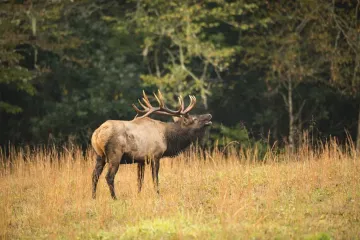
For many wildlife observers, the easiest way to differentiate an adult male elk from a deer is by examining the antlers, commonly referred to as "the rack". [2] Antler structure is a key evolutionary specialization within the Cervidae family.
Elk antlers exhibit a distinct shape: they are generally longer, thicker at the base, and sweep backward and upward from the skull, often with prominent brow tines positioned near the base. [2][4] The entire structure has a sweeping, robust appearance. [2]
In contrast, the antlers on species like the white-tailed deer typically project forward or outward from the head, with the tines pointing upward along the length of the main beam. [2] While there is variation across different deer species, the general architecture of the elk rack is uniquely grand and curved backward compared to the more outward or forward projection seen on many common deer species. [4]
# Visual and Vocal Markers

Beyond bone structure, physical markings and sounds during the mating season offer additional clues distinguishing elk from deer. [2]
Elk possess a very noticeable light-colored patch on their rump area, which stands out against the rest of their typically tan to dark brown body coat. [4] Furthermore, bull elk, especially during the fall rut, develop a thick, dark brown or blackish neck mane that gives them a rugged appearance. [2] Deer coats are often more uniformly brownish, though white-tailed deer are famous for the bright white underside of their tail, which they flash when alarmed. [2][4]
The vocalizations are perhaps the most striking difference in behavior. Deer communicate using bleats, grunts, and snorts. [2] Elk, however, are famous for their high-pitched, whistling bugle during the rut, a call rarely, if ever, produced by deer. [2] If you hear a sound that feels impossibly loud and resonant echoing through the mountains, you are likely hearing an elk bull, not a buck. [2]
# Global Naming Confusion
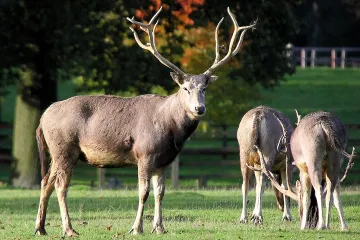
A significant source of confusion when discussing elk is the difference in naming conventions between continents. [7] In North America, the term "elk" specifically refers to Cervus canadensis, the wapiti. [1][6] However, if you travel to Europe and ask for an "elk," you will likely be shown a moose (Alces alces). [1][5][6]
This transatlantic linguistic mix-up often leads to people incorrectly asserting that North American elk are moose, or vice-versa, based solely on what they have read about European wildlife. [7] To maintain clarity, North American wildlife managers often default to the native name wapiti when specifically discussing Cervus canadensis, though "elk" remains the most common colloquial term. [1] It is important to remember that while the European "elk" is a cervid, it is the moose—the largest deer—not the wapiti. [5]
# The Caribou Contrast
While elk are related to deer, they also share family ties with caribou (reindeer). [6] The distinction here comes down to body structure and sexual dimorphism regarding antlers. [6] Caribou tend to be stockier with shorter legs relative to their body mass compared to elk. [6] More significantly, in caribou populations, both males and females typically grow antlers, a trait not seen in elk, where only the males grow them. [6] This makes the presence of antlered females a definitive indicator that you are looking at caribou, not elk or deer. [6]
# Contextualizing Wildlife Observations
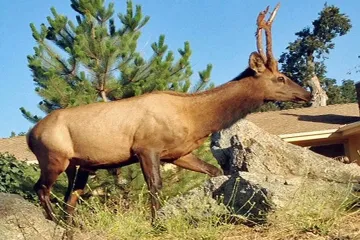
Understanding these biological distinctions has practical implications, especially for wildlife enthusiasts or those managing land. [9] For instance, the Idaho Department of Fish and Game manages deer and elk populations separately due to biological differences, which impacts harvest regulations and conservation strategies. [9] If you are in an area known for both species, like parts of the Rocky Mountains, being able to correctly identify the animal you see—perhaps distinguishing a young elk from a large mule deer based on that defining rump patch or the slight backward sweep of its growing antlers—enhances the entire experience. [4]
For those interested in identifying animals near towns, like in areas such as Estes Park, Colorado, observing the animal's profile is key: A deer will usually have a daintier muzzle, while the elk’s neck and body mass suggest a much larger animal, even if the antlers are still small. [5] The consistent presence of the lighter rump patch on the elk serves as a quick field marker, even when the animal is moving away. [4] These subtle yet consistent biological markers define them as separate, albeit related, species within the grand tapestry of the deer family. [1]
Related Questions
#Citations
Elk - Wikipedia
Elk vs Deer | Field & Stream
Deer, Elk & Moose in Estes Park CO | Wildlife Spotting Guide
Elk vs Deer: 8 Key Differences Explained - A-Z Animals
Deer, elk, and moose are distinct species - Facebook
What is the difference between deer and similar animals like elk and ...
What is with people insisting "that is an elk, not a deer" as if ... - Reddit
Elk, Reindeer, and Caribou: What's the Difference?
Interesting facts you may not know about Idaho's deer and elk
RMEF Media What's the difference between red deer and elk?