Yak Facts
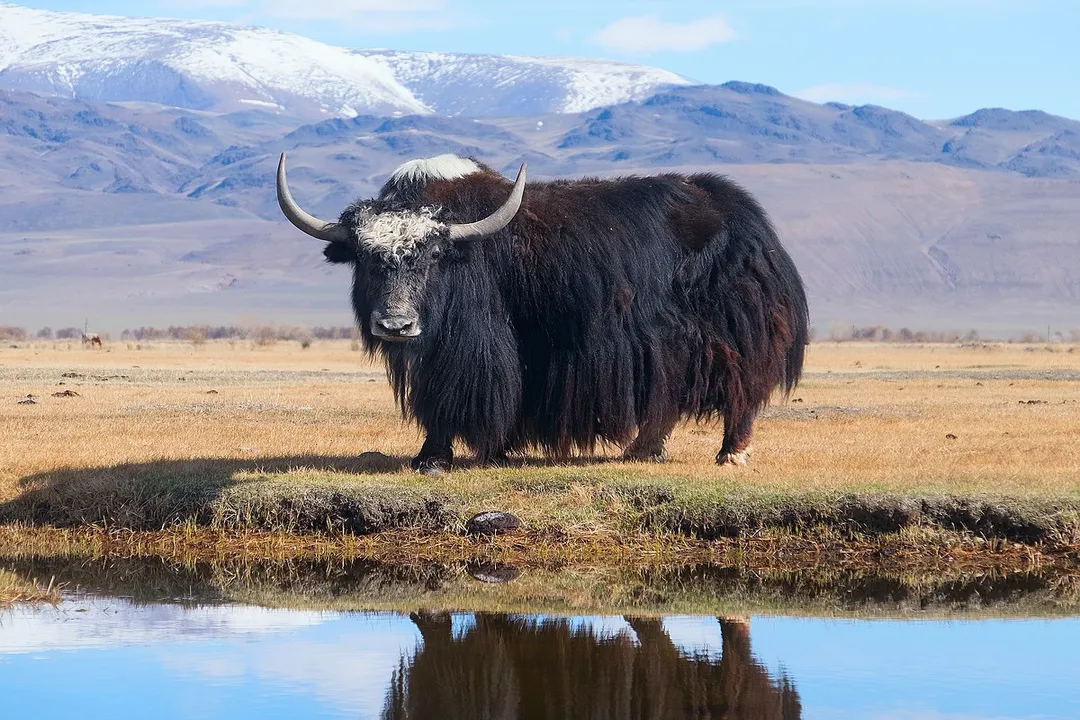
The yak, an imposing and shaggy creature, stands as a defining icon of the world’s highest elevations. These bovine relatives, most closely associated with the stark beauty of the Tibetan Plateau, are not merely surviving in harsh environments; they thrive where most other large mammals would perish. [1][5] Their very existence speaks to an incredible degree of specialized evolution, making them indispensable to the cultures that have relied upon them for millennia. [1]
# Altitude Masters
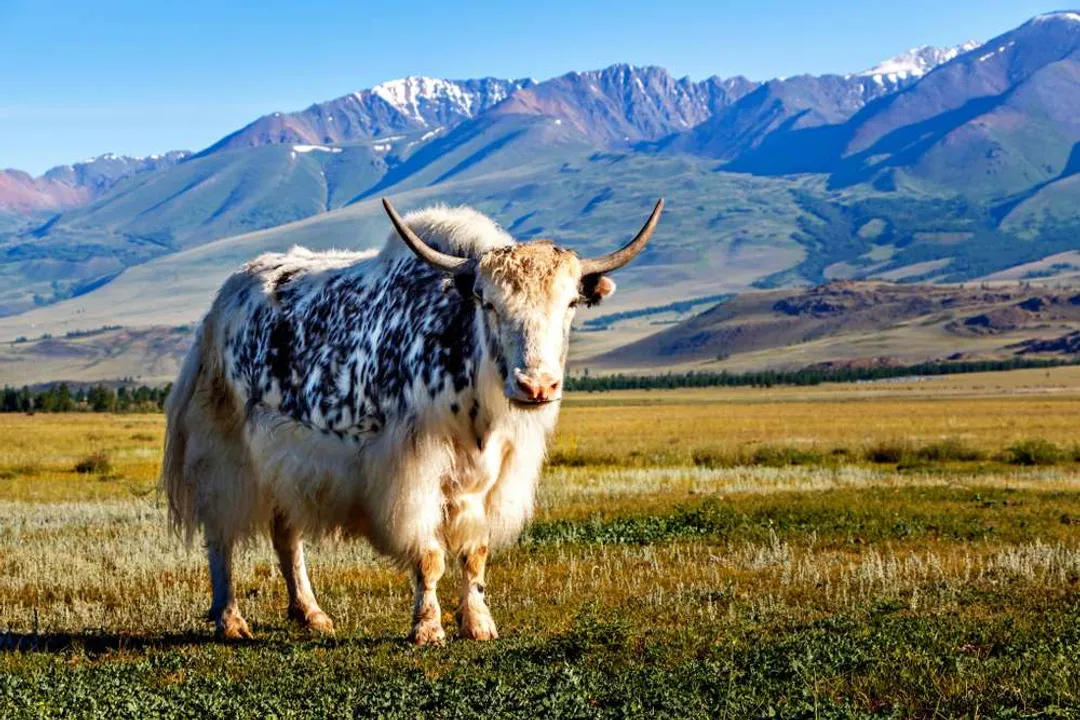
The primary characteristic defining the yak’s existence is its habitat. Yaks are native to the alpine areas of Central Asia, commonly found on the vast Tibetan Plateau and neighboring regions in countries like India, Nepal, Bhutan, and Pakistan. [5] They are true high-altitude specialists, regularly inhabiting areas above 10,000 feet, and sometimes reaching altitudes as high as 20,000 feet above sea level. [2][5]
To function in such thin air, yaks possess distinct physiological adaptations. They have significantly larger lungs and hearts relative to their body size compared to lower-altitude cattle, enabling more efficient oxygen intake and circulation. [2][10] Furthermore, their blood is particularly efficient at carrying oxygen. [10] This ability to maintain high levels of activity in oxygen-deprived conditions is remarkable; for instance, while a human acclimatizing to 16,000 feet might feel severely breathless during mild exertion, a yak traverses that terrain carrying a heavy load with relative ease. [2][10] They are also noted for their superb eyesight and sure-footedness, essential qualities when navigating steep, rocky terrain. [10]
# Physical Traits
Yaks are built for insulation and brute strength. They have a stocky, heavily built frame, often appearing somewhat shorter-legged than typical domestic cattle, though males can stand up to six feet high at the shoulder. [4][8] Males are significantly larger and heavier than females. [8] A wild male yak can weigh upwards of 1,800 pounds, whereas domestic males are generally smaller. [1][2]
The most recognizable feature is their coat. It is extraordinarily long and shaggy, hanging down over their flanks and almost touching the ground in some cases. [8] This dense covering consists of two layers: an outer layer of long, coarse guard hairs that shed rain and snow, and a supremely fine, dense undercoat that provides superior insulation. [2][6] Wild yaks tend to be darker in color, usually black or dark brown, while domesticated varieties exhibit a wider range of coloration. [2] Both male and female yaks possess horns, though those on the male tend to have thicker bases. [9] Interestingly, while they are closely related to domestic cattle, the wild yak possesses a slightly more robust build suited to rugged survival. [9]
# Lifelong Utility
The domestication of the yak has been central to the lives of Himalayan peoples for thousands of years. [1] They are multi-purpose animals, often referred to as the "cattle of the plateau" because they supply nearly every necessity of life in that remote environment. [1][4]
Yaks serve critically as pack animals, capable of transporting goods across challenging mountain passes where motorized transport is impossible. [4] Beyond transport, they provide sustenance: milk, which can be churned into butter, and meat. [1][4] In an environment where wood is scarce due to the high altitude, dried yak dung is a vital source of fuel for cooking and heating. [1]
Domestication has made these animals an integral part of local economies. In North America, where yaks were introduced beginning in the 1990s, they are now prized as heritage livestock primarily for their fiber and meat. [7] Yak meat is noted for being very lean and having a lower cholesterol content compared to beef, which is an appealing factor for modern consumers. [7] This shift in use—from essential survival provider in Asia to niche luxury/heritage livestock in the West—shows how a single species can adapt its role across different economic systems. [1][7]
# Super Fiber
The insulation that keeps the yak warm at frigid altitudes translates directly into one of the most valuable natural fibers in the world. [6] Yak wool is inherently warmer than standard sheep's wool because of the density and quality of the undercoat. [6]
When processing the coat, the coarse guard hairs must be separated from the soft underfur. [6] This undercoat is incredibly fine—sometimes compared favorably to cashmere—and is highly sought after for creating luxurious, warm textiles. [6] While the labor involved in separating the two types of hair adds to the cost, the resulting high-quality yarn justifies the effort for specialized manufacturers. [6] A unique aspect of managing this resource is recognizing the dual value: the guard hairs are often used for sturdier ropes or coarse textiles, while the down is reserved for premium garments. This differentiation in fiber quality means that a single animal yields products suited for very different market tiers, unlike many other livestock animals where the product is more uniform. [6]

# Wild Status
While the domestic yak is a common sight across many highlands, the story for its wild counterpart is significantly more precarious. [5] The wild yak, Bos grunniens, faces severe threats across its historical range. [5] Habitat loss and fragmentation, coupled with poaching, have reduced their numbers significantly. [1] Consequently, the wild population is classified as vulnerable, and in some areas, endangered. [5] Because of this critical status, direct contact with or study of wild yaks is rare, making the domestic population the primary subject for most ongoing research and management efforts. [9] Maintaining the genetic integrity of the domestic stock while also preserving the wild gene pool remains an important conservation goal. [1][5]
#Videos
Yak Facts For Kids Learn All About Yaks | MON Kids - YouTube
Related Questions
#Citations
What Is a Yak? 8 Spectacular Facts About Yaks - Treehugger
Yakety-yak: 7 Fun Faks About Yaks - Animals | HowStuffWorks
Yak Facts For Kids Learn All About Yaks | MON Kids - YouTube
yak - Kids | Britannica Kids | Homework Help
Yak - Wikipedia
Yak Wool: 7 Facts About The Unsung Hero Of The Himalayas
North American Yak - The Livestock Conservancy
Yak | Stone Zoo - Zoo New England
Tibetan yak - The Alaska Zoo
The Ultimate High-Altitude Survivor: 12 Shocking Facts About Yaks