Xenotarsosaurus Locations
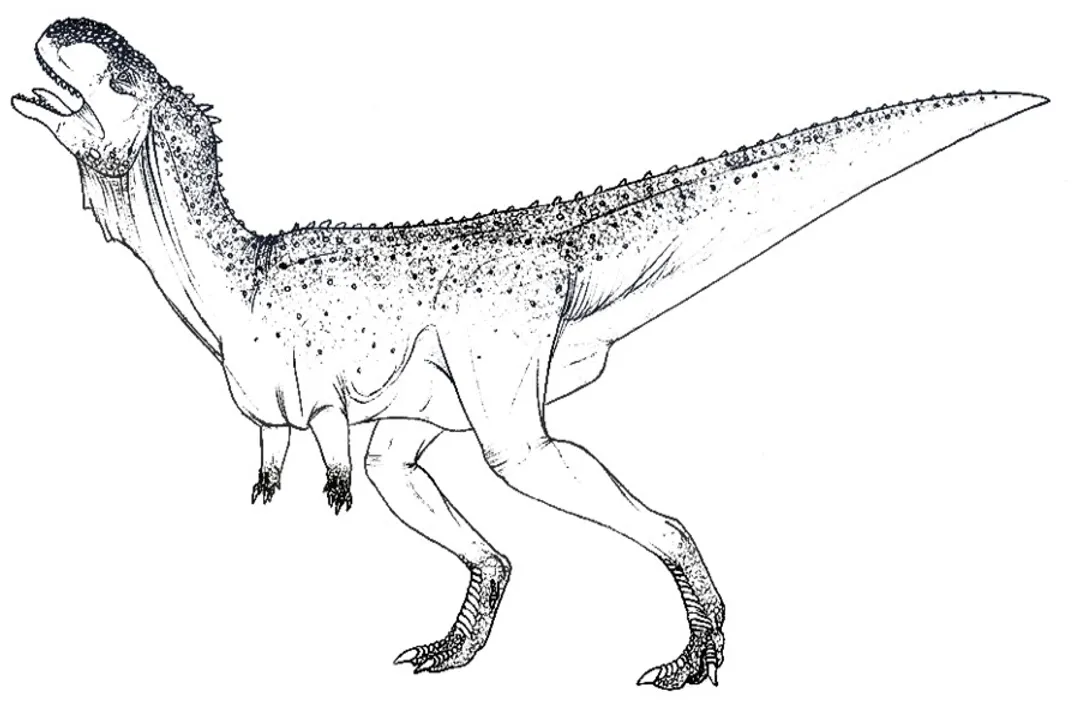
The known physical locations associated with Xenotarsosaurus center almost entirely on its discovery site in the Southern Hemisphere, specifically in Argentina. This abelisaurid theropod is known from fossils unearthed in the Chubut Province, making its primary address a patch of what was once Late Cretaceous Patagonia. To truly locate this dinosaur, one must look at the specific geological unit that preserves its remains: the Bajo Barreal Formation.
# Geographic Origin
The paleontological home of Xenotarsosaurus is firmly rooted in South America. While its classification places it within the diverse family of abelisaurids, which had representation across Gondwana, the only tangible evidence for Xenotarsosaurus bonapartei—the sole recognized species—comes from one restricted area. The association with the Bajo Barreal Formation is a key locator, serving as the definitive provenance for the known specimens. This context places the animal within the environment of the Late Cretaceous, with current dating suggesting it thrived during the Cenomanian to Turonian stages. Some earlier assessments placed it in the Campanian, but re-assessment of the formation has shifted this dating. The PaleoBioDB suggests its first and last recorded appearance fall within the range of 99.6 to 89.3 Million Years Ago (Ma).
# Discovery Events
Pinpointing the exact location requires a closer look at the initial finding. The story begins in 1980, when geologist Juan Carlos Sciutto discovered a rich fossil site. This location was situated approximately six kilometers north of the Ocho Hermanos ranch within Chubut province. Subsequent work by a team led by José Fernando Bonaparte recovered additional theropod bones, likely belonging to the same individual. It was in 1986 that the formal description of the genus and species, Xenotarsosaurus bonapartei, was published by Rubén Martínez, Olga Giménez, Jorge Rodríguez, and Graciela Bochatey. The specific epithet, bonapartei, acts as a direct tribute to Bonaparte’s work in the region. The fact that the fossils were uncovered in the early 1980s but not described until 1986 highlights the typical time lag between field discovery and scientific publication in paleontology.
# Rock Layers
Understanding the Xenotarsosaurus location means understanding the rocks that held it. The Bajo Barreal Formation is the critical geological marker. The recovered material is sparse, consisting of only two cotypes: UNPSJB PV 184 (two anterior dorsal vertebrae) and PVL 612 (a right hind limb). These bones, though few, are what define the creature's existence in that time and place. Considering the fragmentary nature of the fossil evidence—two back vertebrae and a single limb—it is fascinating that this specific location yielded such uniquely diagnostic elements, particularly the ankle bones. For paleontologists studying this region, the discovery site in Chubut represents a window into a Cenomanian–Turonian Patagonian ecosystem that also supported creatures like the hadrosaurid Secerosaurus and the titanosaurian sauropods Drusilasaura. The rarity of the specimen, with only these few bones known, means that this particular spot in Argentina is the only confirmed source for this animal globally. It serves as a stark reminder that while vast ancient landmasses existed, the fossil record we examine is built from extremely localized, preserved remnants of life.
# Ankle Anatomy
The very name Xenotarsosaurus directs us back to a specific part of its location—its anatomy found at the site. The generic name translates to "strange tarsus lizard," derived from Greek words referencing the tarsus (ankle bones). This strangeness stems from the complete fusion of the astragalus and calcaneum bones in the ankle, with no sutures present, and their subsequent fusion to the widened lower end of the tibia. This unique ankle structure, present in the right hind limb specimen (PVL 612), is what convinced the original describers to place it within the Abelisauridae, showing similarities to Carnotaurus sastrei. This fusion is arguably the most significant characteristic derived from its fossil location.
| Bone/Feature | Measurement/Description | Significance | Source |
|---|---|---|---|
| Femur Length | 611 millimeters (24.1 in) | Part of the recovered right hind limb | |
| Ankle Bones | Fused astragalus and calcaneum | Key feature; basis for generic name | |
| Vertebrae | Two anterior dorsal vertebrae | Also part of the type material | |
| Time Period | Cenomanian–Turonian | Revised dating for the Bajo Barreal Formation |

# Media Presence
While the scientific location is strictly the Bajo Barreal Formation in Argentina, Xenotarsosaurus has since been "located" in various forms of media, which offer different—and sometimes conflicting—environmental settings for the dinosaur. One notable appearance is in the children's show Dinosaur Train, where it is featured in the episode "Dinosaurs A to Z". Furthermore, user-generated content related to the survival game The Isle showcases a model labeled Xenotarososaurus. In this digital context, the creature is described as having "razer shap teath" and hunting in groups. Interestingly, this media depiction sometimes incorrectly places the creature in the Jurassic period and the Cretaceous period, an assertion that conflicts with the established Cenomanian–Turonian dating derived from the Argentine fossil site. This contrast between the documented geological location and its fictional settings is common; in the game, it is modeled as an early relative of Carnotaurus, echoing the original scientific similarity assessment. When examining these media "locations," it is important to remember they reflect interpretive artistic choices rather than direct taphonomic evidence from Chubut Province.
Related Questions
#Citations
Xenotarsosaurus | Dinopedia - Fandom
Xenotarsosaurus - Wikipedia
Xenotarsosaurus Pictures & Facts - The Dinosaur Database
Xenotarsosaurus - Mindat
Xenotarsosaurus - PaleoCodex
Xenotarsosaurus - Prehistoric Wildlife
Xenotarsosaurus - Dinosaur Wiki | Fandom
Comunidad de Steam :: :: Xenotarososaurus