Xenacanthus Locations
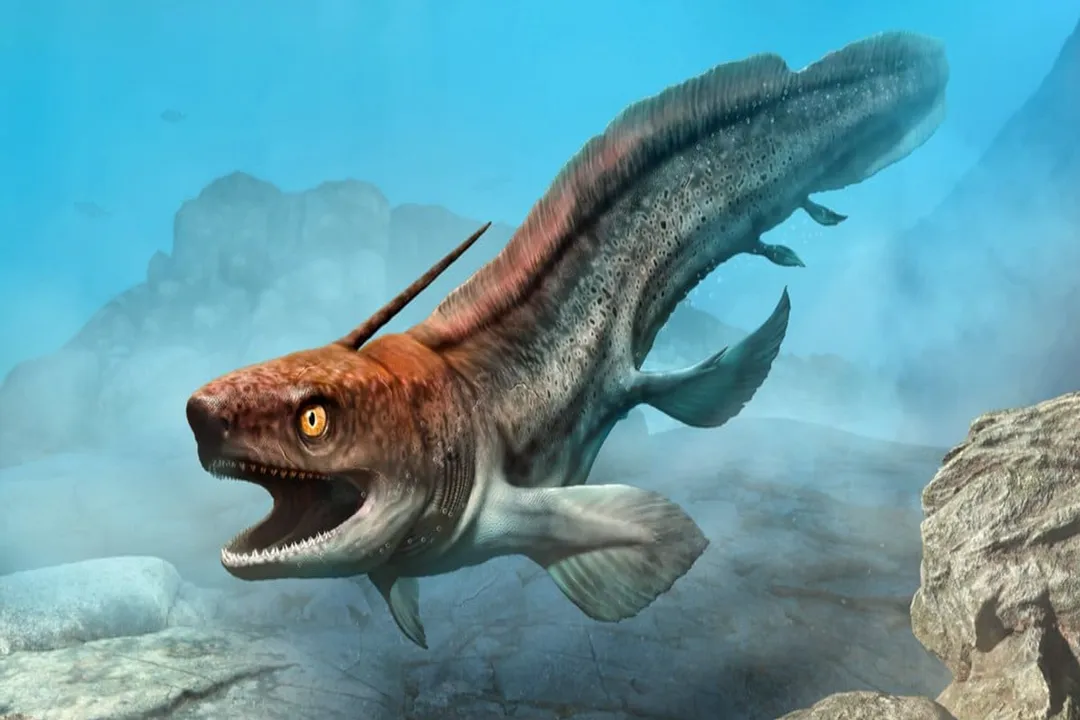
The ancient shark Xenacanthus presents a fascinating puzzle when tracing its historical distribution, primarily because its preferred environment was not the open ocean like most of its relatives, but rather freshwater systems. [2][4][6] Determining its "locations" therefore involves looking at the sedimentary basins and geological formations where its distinctive fossils have been preserved, rather than mapping current ocean currents or modern coastal habitats. This creature, known for its elongated body and the backward-pointing spine on its head, inhabited Earth millions of years ago. [2][3][5]
# Time Range
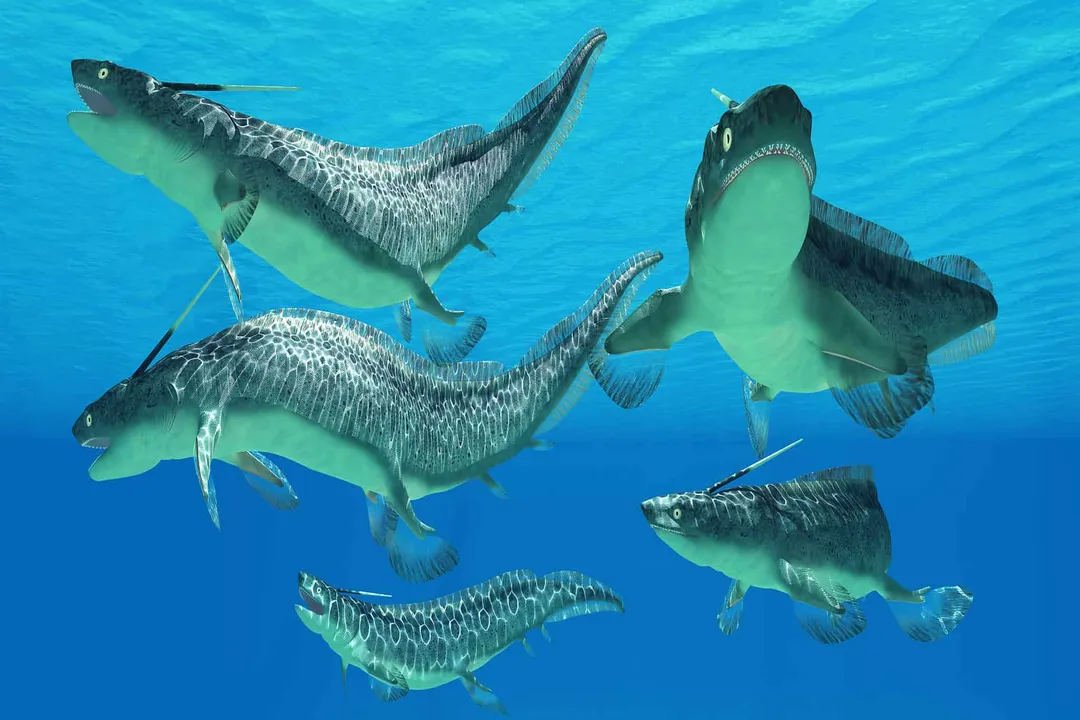
The known temporal range for Xenacanthus spans a significant chunk of the late Paleozoic Era. [1] While fossil evidence firmly places members of this genus in the Permian Period, they also appear earlier, during the Carboniferous. [1][4][5] To understand where we find Xenacanthus today—in museum drawers and paleontology journals—we must first appreciate the vast time scale over which these freshwater environments existed and subsequently became fossilized rock. [4] The longevity of the Xenacanthidae family itself is remarkable, suggesting a highly successful adaptation to these non-marine settings across various geological epochs. [4]
# Continental Distribution
When examining the continents, the fossil record points toward a distribution across what we now recognize as North America and Europe. [1][4] The presence of these fossils across what were once distinct landmasses emphasizes the widespread nature of suitable freshwater habitats during the late Paleozoic. [4]
One area that frequently yields significant finds of Xenacanthus is Texas. [3] The Smithsonian National Museum of Natural History, for instance, highlights Xenacanthus as a Permian freshwater shark specifically from that state. [3] This localized reference suggests that certain fossiliferous beds in the region have proven particularly rich in preserving these often fragile aquatic remains. [3] While specific formation names are not universally detailed across all general overviews, the concentration in the central North American craton during the Permian is a key feature of its fossil geography. [4]
It is worth noting that while the Xenacanthus genus itself is tied to specific locations like the Texas Permian, the broader family Xenacanthidae shows evidence of having had a much wider, potentially cosmopolitan, distribution across continents via ancient freshwater drainage systems. [4] The relative scarcity of marine shark fossils compared to freshwater shark fossils in certain Paleozoic deposits presents an interesting taphonomic bias; because Xenacanthus lived entirely in fresh water, its preservation is linked to the geological processes that preserve inland riverbeds, swamps, and lake deposits, meaning its apparent location might be skewed toward areas with excellent preservation conditions for fluvial sediments, rather than simply where the sharks were most numerous. [4][6]
# Habitat Importance
The critical factor governing the locations of Xenacanthus fossils is its obligatory freshwater existence. [2][4][6] This immediately separates its fossil finds from the vast majority of other Paleozoic shark discoveries, which are marine. [4] Finding a Xenacanthus tooth or spine means searching through sedimentary rock layers that were once part of a large, stable, non-saline body of water, likely lakes or extensive river networks, rather than ancient shallow seas. [2] The environment was crucial not just for its life, but for its ultimate discovery millions of years later. [6]
If one were to model the ancient geography of the locations where Xenacanthus thrived, the resulting paleogeographic map would focus intently on the extent of large, continental interior drainage systems prevalent during the late Carboniferous and early Permian, rather than coastal shelves. [1][4] This fundamental difference in habitat suggests that tracking Xenacanthus is a study of ancient continental hydrology as much as it is ichthyology. For example, while a modern shark might have a range spanning thousands of miles of open ocean, Xenacanthus's range was defined by the continuous flow and boundaries of ancient river basins, which could be extensive but fundamentally landlocked. [4]
# Locality Context
The Texas finds, such as those associated with the Clear Fork Formation in some paleontological contexts (though not explicitly named in every source here, it is a known Permian site often yielding these sharks), [3] represent specific points in time where the conditions allowed for the preservation of elasmobranch remains in a terrestrial context. [3] The preservation of these sharks, often relatively complete, suggests periods where the water bodies might have slowly dried or experienced anoxia, leading to mass mortality events that favored fossilization over scavenging or decomposition. [5]
A secondary insight arises when considering the evolutionary spread implied by the fossil locations. While the genus Xenacanthus is noted from specific periods, the broader shark group it belongs to adapted successfully to a global distribution across freshwater environments when continents were arranged differently than they are today. [4] This implies that the "location" wasn't just a single river system but perhaps a connectivity that allowed gene flow between, say, what would become North America and Europe, provided the intervening or connecting waterways remained viable for an extended duration. This successful adaptation to freshwater allowed them to occupy ecological niches unavailable to contemporaneous marine sharks, effectively broadening the scope of environments they could colonize globally before continental drift and climate change restricted their final range. [4]
In summary, the locations of Xenacanthus are defined by the deep time of the late Paleozoic, spanning the Carboniferous and Permian periods, and are rooted specifically in the sediments of ancient freshwater basins across continents, most clearly evidenced today in sites like those found in Texas. [1][3][4] Understanding this creature's range is inseparable from reconstructing the ancient drainage patterns of Pangaea. [4]
#Videos
How to Catch Xenacanthus in FFXIV - YouTube
Related Questions
#Citations
Xenacanthus - Wikipedia
Xenacanthus Fish Facts - A-Z Animals
Oh, hello there. Meet Xenacanthus, a Permian freshwater shark from ...
Xenacanthus | Ancient, Prehistoric, Extinct - Britannica
Xenacanthus – @wtf-triassic on Tumblr
Xenacanthus - Prehistoric Wildlife
Xenacanthus | SciiFii Wiki - Fandom
How to Catch Xenacanthus in FFXIV - YouTube
Xenacanthus - Mindat