Wrasse Facts
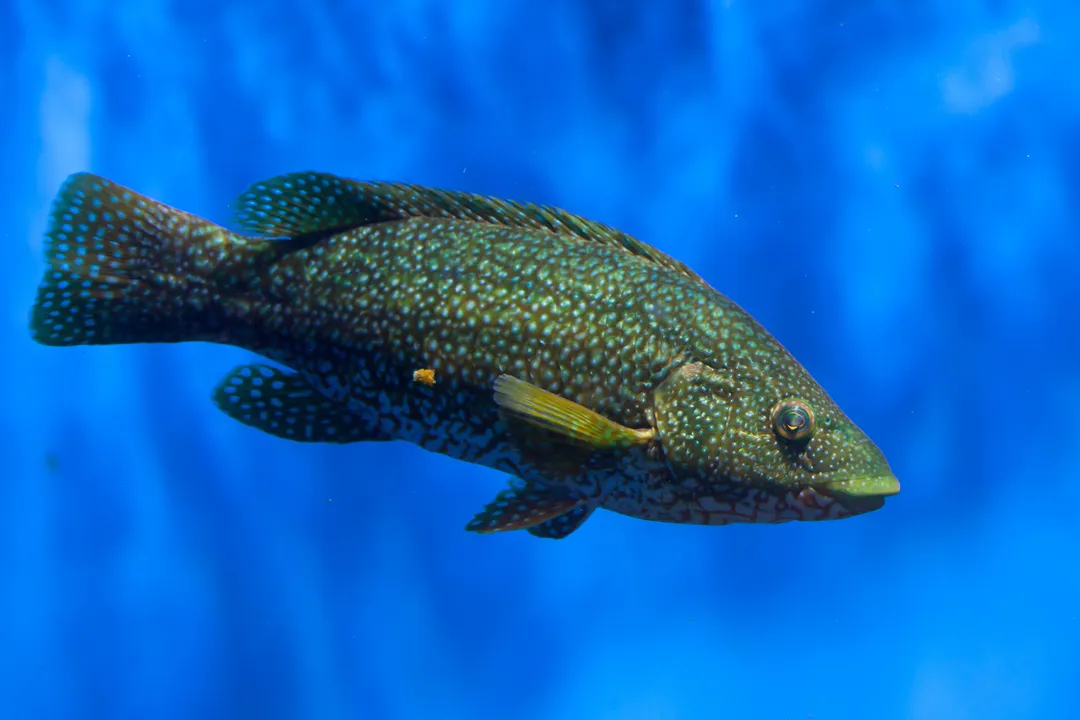
The vibrant, almost impossibly colorful fish that dart through coral ecosystems across the globe often go by a single, somewhat tricky name: wrasse. For those unfamiliar with marine nomenclature, the pronunciation itself can be a hurdle; it’s not "razz," but rather the silent 'w' renders it simply as "rass," sounding much like the common green ground cover. [4] This large and varied group, belonging to the family Labridae—a name derived from the Latin labrum, meaning "lip"—is characterized by their thick lips and often protruding canine teeth. [1][3][4]
# A Vast Family
Wrasses are not just one type of fish; they represent a massive and diverse branch of the ocean's inhabitants. Globally, there are estimated to be more than 600 different species belonging to this family. [3] In terms of sheer numbers within marine ichthyology, Labridae ranks as the second-largest family of marine fish and the third-largest within the order Perciformes. [8] This immense diversity manifests in an astonishing array of shapes, sizes, and coloration, filling ecological niches across tropical and temperate zones alike, from the warmest reefs to the cooler waters near Norway. [1][4][8]
The scale of variation is staggering. While the majority of species are relatively small, often measuring under (), the family includes giants. [5][8] The largest member, the Humphead Wrasse (Cheilinus undulatus), commands respect, capable of reaching lengths of () or more, sometimes weighing over or $400$ pounds. [5][6][8] Conversely, some dwarf wrasses are tiny, with Minilabrus striatus barely reaching . [8] Biologically, they are ray-finned fish (Actinopterygii), defined in part by unique fins covering their bodies. [4]
# Physical Traits and Movement
A quick way to spot a wrasse, even among the riot of color on a reef, is to look for their defining physical attributes. Beyond the namesake thick lips, which can look almost puckered, they possess smooth scales and a single, continuous dorsal fin without a noticeable notch. [4][8] Their mouths are protractile, meaning the jaw structure allows the mouth to project forward, equipped with large canine teeth that jut out when needed to snatch prey. [1][3][8]
Their method of movement is also distinctive. Most wrasses primarily rely on their pectoral fins for continuous propulsion, a style known as labriform locomotion. Their caudal fin, or tail, is typically reserved for quick bursts of speed when necessary, rather than constant use. [8]
Wrasses are also known for some unique adaptations related to feeding. Many species exhibit tool use behavior, employing hard objects like rocks or coral fragments as "anvils" to smash open heavily armored prey such as clams, sea urchins, and crabs. [5] This isn't random behavior; some individuals display memory, repeatedly returning to a specific, effective anvil site. [5]
# Diurnal Life and Ecological Roles
Wrasses are overwhelmingly diurnal, meaning they are active during the daylight hours, spending the night sleeping. [3][8] When the sun sets, they secure themselves for safety, often by burying themselves completely in the sand substrate or hiding deep within rock crevices. [8] Interestingly, some captive observations even suggest they experience a rapid eye movement (REM) stage while sleeping, a phenomenon often associated with dreaming in vertebrates. [8]
Their diets reflect their diversity, encompassing everything from plankton to coral tissue. [8] They are generally carnivorous, with diets ranging across piscivores (fish eaters), molluscivores (shell eaters), and specialized crustacean hunters. [3][8]
However, several wrasse species take on a specialized, symbiotic role vital to reef health: the cleaner. Cleaner wrasses, such as Labroides dimidiatus, set up "cleaning stations" where larger fish—including predators like groupers and snappers—will queue up to have parasites, dead tissue, and scales meticulously removed. [1][4][8] This relationship is generally mutualistic, though cleaner wrasses are known to "cheat" by occasionally nipping healthy mucus or tissue when parasites are scarce. [5][8] The service they provide, especially parasite removal, appears so critical that few cleaners are ever eaten by predators themselves. [5]
To better illustrate the functional roles within this single fish family, consider this generalization of their primary feeding strategies:
| Wrasse Type/Role | Primary Diet Focus | Key Behavior | Ecological Impact |
|---|---|---|---|
| Cleaner Wrasse | Ectoparasites, dead tissue | Station-based grooming, entering client mouths | Host health maintenance, parasite control [8] |
| Forager/Follower | Small invertebrates | Following larger fish to capitalize on disturbed prey | Benthic turnover, invertebrate control [5][8] |
| Durophage | Hard-shelled prey (urchins, mollusks) | Using rocks/coral as anvils to crush shells | Controlling armored invertebrates [5] |
| Piscivore | Small fish | Ambush or active pursuit | Population regulation of smaller fish [8] |
# Transformations of Gender
Perhaps the most talked-about biological fact regarding wrasses is their capacity for sex change, a process known as sequential hermaphroditism. [4] The majority of species are protogynous hermaphrodites, meaning they begin life functioning as females before transitioning into males later in life as they age and grow larger. [1][8] This transition is often accompanied by dramatic color changes, moving from drab or female-specific patterns to the brilliant, complex coloration of the dominant male. [1][8]
The mechanism is rooted in social structure. In harem-based systems, the death or absence of a dominant male acts as a social cue, prompting the largest female to change sex and assume the dominant role. [2][5][8] This transition isn't instant; it can take a few hours for behavior to shift and several days for the sex change to become fully functional. [5] Interestingly, this flexibility can sometimes be reversed; experimental conditions have shown that a male Labroides dimidiatus will revert to a female if paired only with another male. [5] Evolutionarily, lineages of wrasses appear to trend toward monandry (where all individuals start as female), while other species maintain diandry (where both primary, born-male, and secondary, female-turned-male, individuals coexist). [5] This inherent plasticity allows populations to maintain reproductive viability even if a dominant male is suddenly lost from a social group. It presents a fascinating model for population stability, yet it also represents a specific point of vulnerability for the species, as their social dynamics directly control their sex ratio. [8]
# The Gentle Giant: Humphead Wrasse
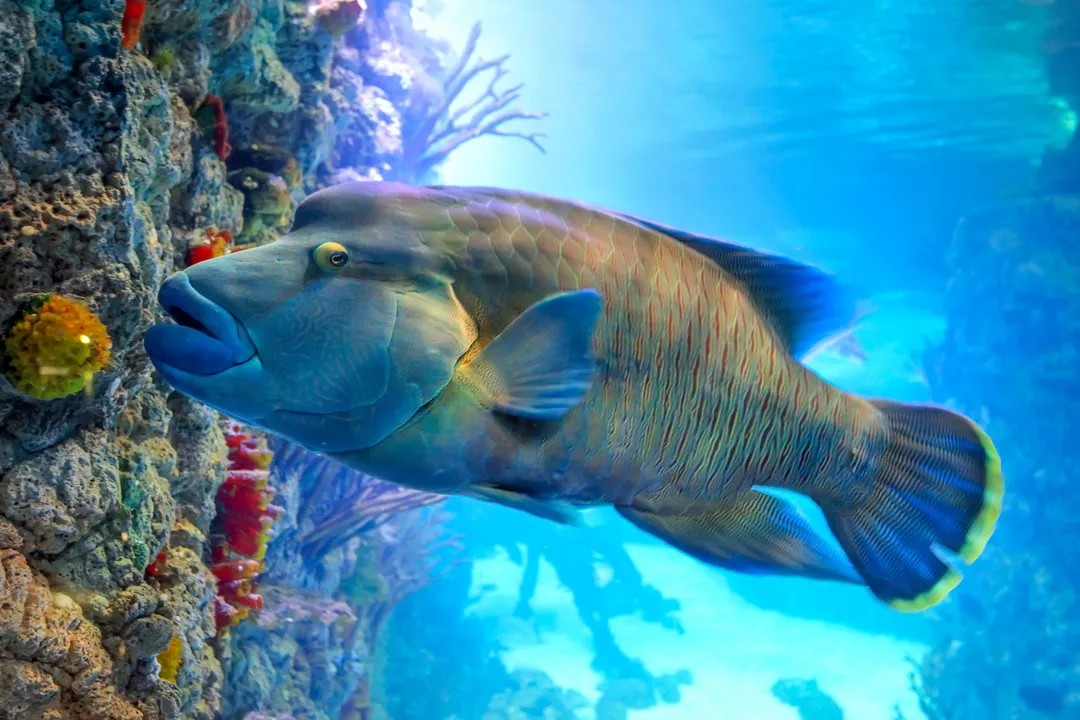
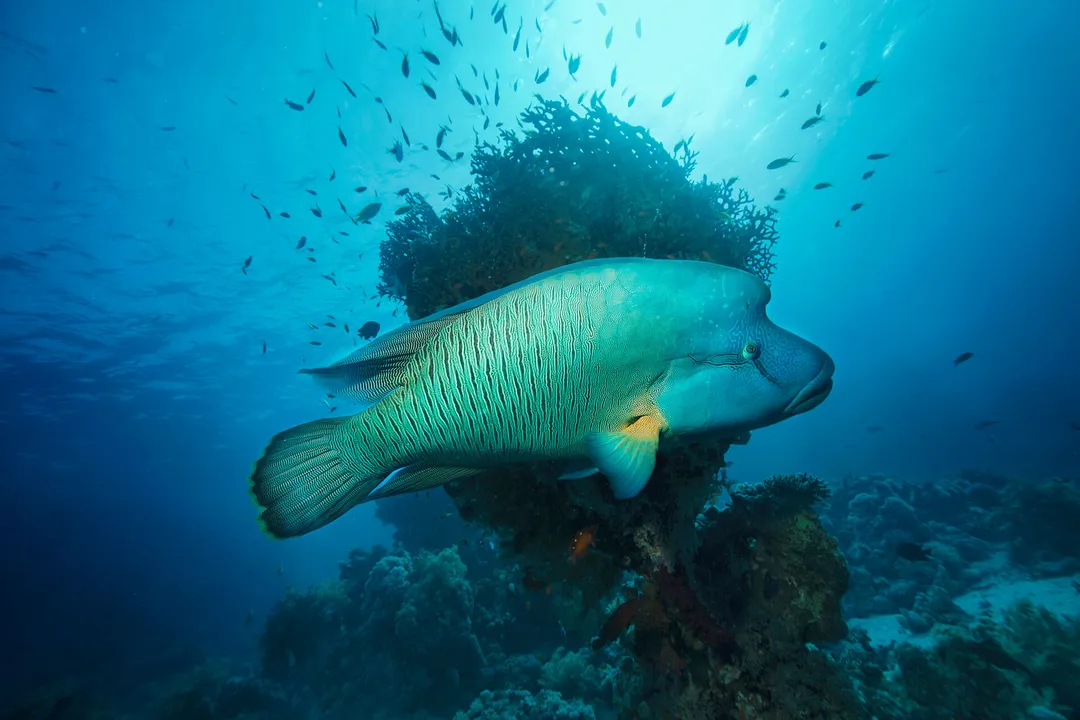
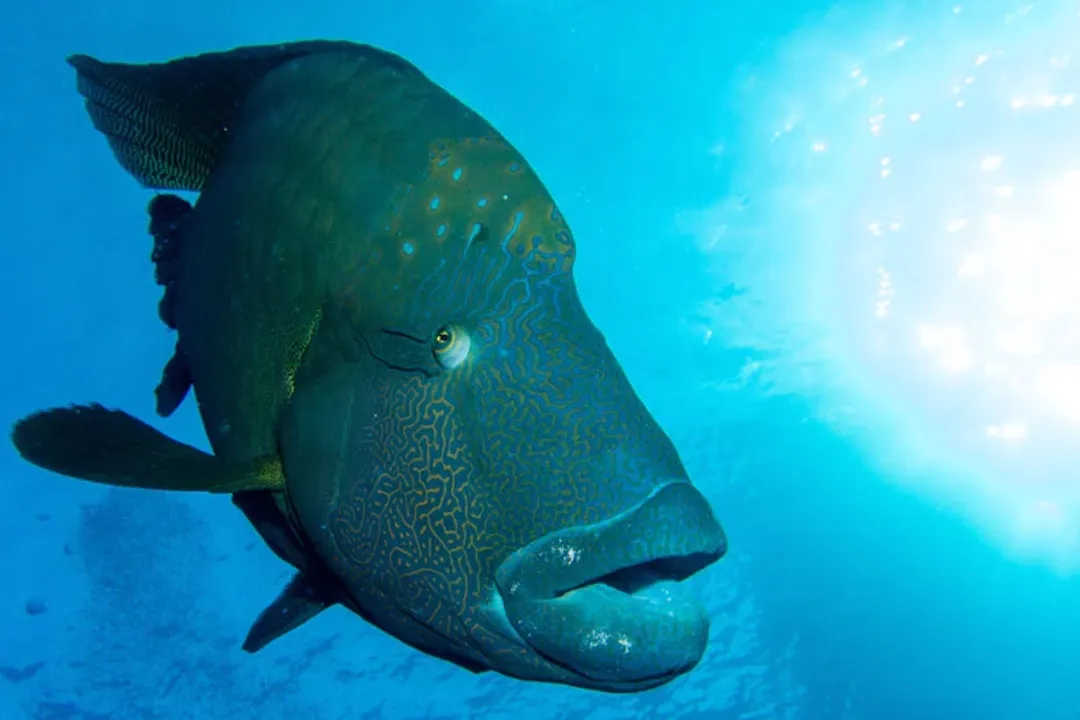
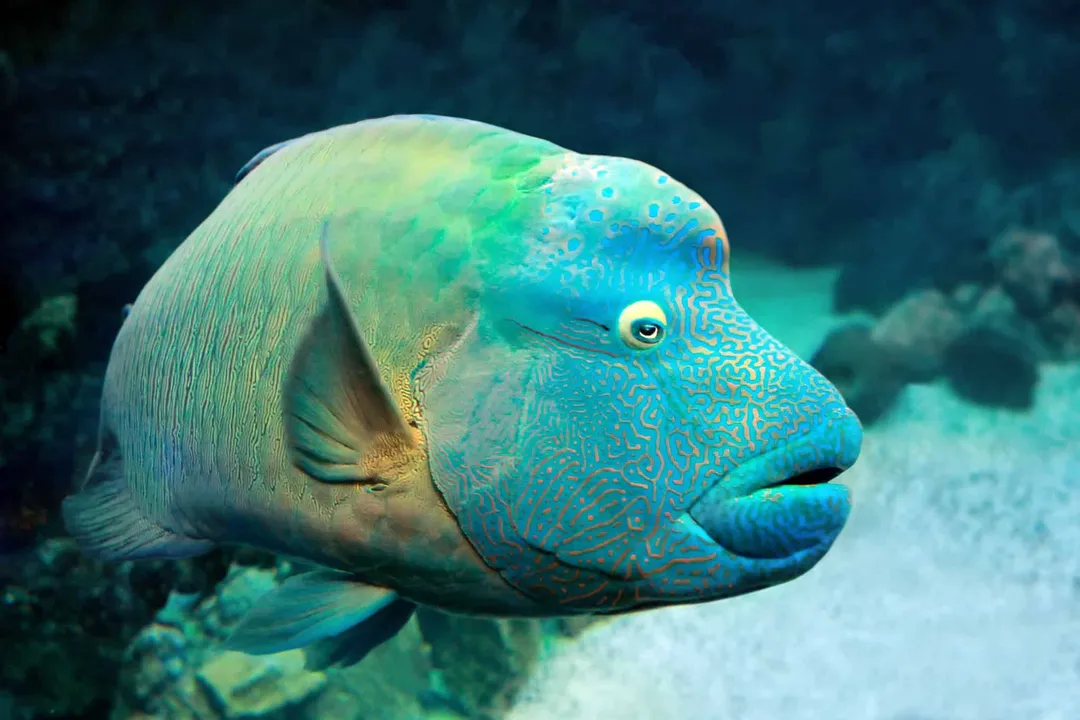
The Humphead Wrasse (Cheilinus undulatus), also commonly known as the Napoleon Wrasse or Māori Wrasse, stands out even within this colorful family. [2][6][7]
Distinguishing Features and Longevity
Mature males are unmistakable due to the prominent, fleshy hump developing on their forehead, which gives them their English common names. This hump, along with intricate facial markings that resemble traditional Māori tā moko tattoos, aids identification. [6] Females remain a reddish-orange color, while males develop brilliant blue-green flanks. [2][6] Another remarkable feature is their vision; their eyes can rotate a full 360 degrees independently, much like a chameleon, allowing constant observation of their surroundings. [2] Lifespans are relatively long, often exceeding $30$ years, though females generally live longer than males. [2][6]
Ecological Importance and Threats
The Humphead Wrasse plays a key role in reef maintenance because it is one of the few fish capable of consuming highly toxic invertebrates like the crown-of-thorns starfish, sea hares, and boxfish, thereby keeping populations of reef-damaging predators in check. [2][6]
Despite its ecological significance and imposing size, the species is classified as Endangered or Vulnerable by conservation bodies. [3][6][8] Its large size and excellent flesh make it a target for the lucrative live reef fish trade in Southeast Asia. [6][7] Poachers often use destructive methods to capture them, threatening both the fish and the coral ecosystems they inhabit. [6] Conservation efforts, such as buyback programs in places like Malaysia where fish intended for sale are released back into protected waters, aim to mitigate this pressure. [6]
A final, relevant piece of Humphead Wrasse husbandry comes from diver experience: while they are naturally curious, feeding them is discouraged. In the past, divers sometimes used hard-boiled eggs to attract them, but postmortems revealed high cholesterol levels in the fish, leading to bans on this practice in areas like the Red Sea and Australia. [7] Their natural diet consists of mollusks, crustaceans, and urchins, which they are well-equipped to handle. [6]
The sheer variety in the Labridae family, from the utilitarian cleaner fish to the massive, hump-headed predator, demonstrates an incredible evolutionary success story on the world's reefs. Understanding their complex life cycles, especially their gender fluidity, offers a unique window into how marine populations adapt and persist in dynamic underwater environments. [5][8]
Related Questions
#Citations
6 Interesting Facts About Wrasse - Hastings Aquarium
Wrasse Fish Facts - A-Z Animals
Wrasse - Wikipedia
Interesting facts about Napoleon wrasse - Master Liveaboards
Labridae (Wrasses) | INFORMATION - Animal Diversity Web
Top Ten Bumphead Wrasse Facts | Original Diving Blog
Wrasse | Marine, Coral Reefs & Cleaners - Britannica
Labridae Facts For Kids | AstroSafe Search - DIY.ORG