Woolly Mammoth Locations
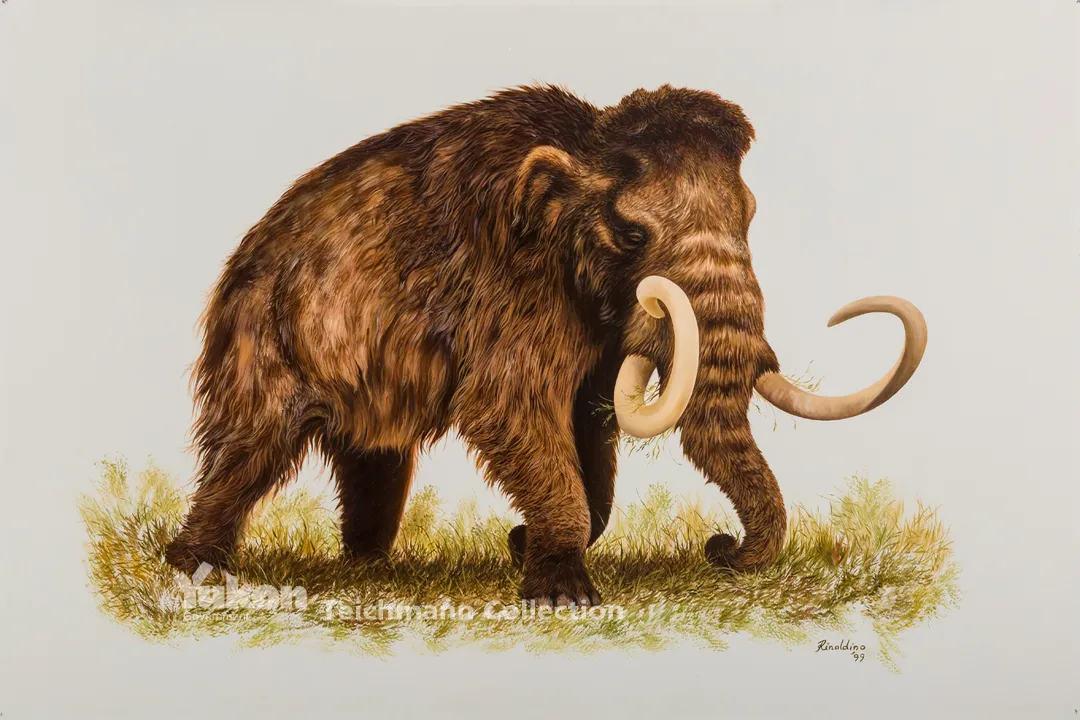
The woolly mammoth once covered an immense geographical area, far surpassing the relatively small pockets where their remains are most famously discovered today. Their ancient domain spanned massive tracts of the Northern Hemisphere, stretching across Europe, Asia, and North America. [1][2] While the common image often places them solely in the frozen north, their historical presence extended southward, with some fossil evidence even pointing toward earlier habitation in regions like Africa. [2] As the Pleistocene epoch gave way to the Holocene, this colossal animal's footprint began to shrink, leading to a fascinating mosaic of locations that mark their past presence and final retreats. [3]
# Continental Range
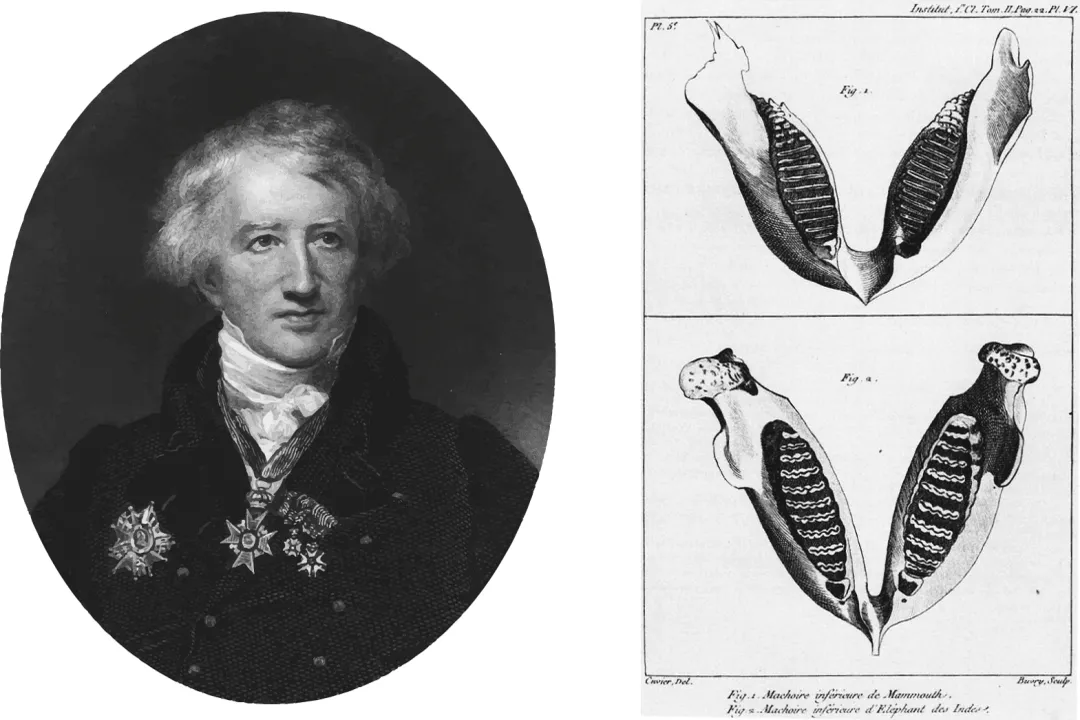
The historical distribution of Mammuthus primigenius was dictated largely by the extent of the cold grasslands known as the mammoth steppe. [6] In North America, their territory stretched widely, covering areas where states like Missouri and South Dakota now stand. [2][5][7] Yet, these findings represent only the fringes or temporary outposts of their main habitat, which was heavily concentrated in the vast northern plains connected by the ancient land bridge, Beringia. [4][6]
In contrast to the somewhat scattered findings in the contiguous United States, the most concentrated evidence for their existence often lies within the region encompassing modern-day Alaska, the Yukon, and Siberia. [8] This area was the heartland of the woolly mammoth population for millennia. [6] While the sheer breadth of their historical range across Eurasia and North America is impressive, it is essential to differentiate between where they once lived broadly and the specific locales where their fossils are preserved and unearthed today. [1]
# North American Fossils
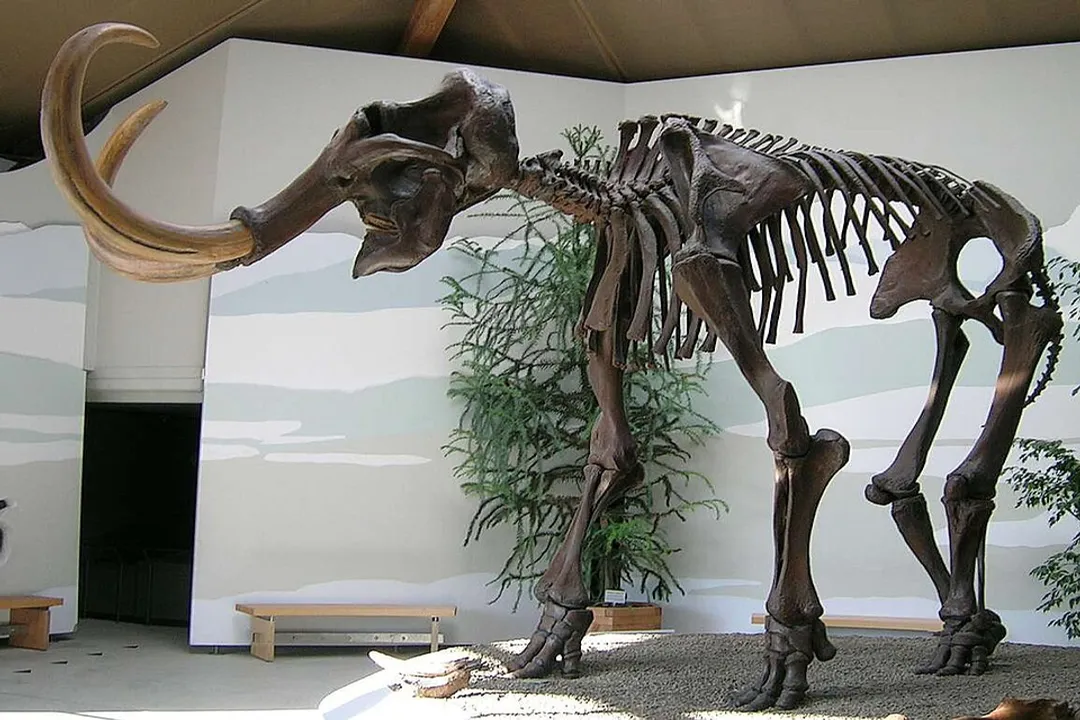
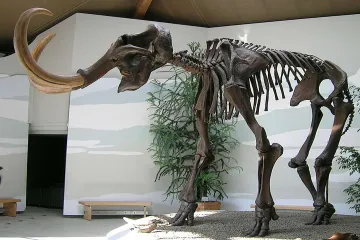
North American discoveries provide crucial chronological markers for the extinction timeline in the New World. For instance, the region now known as St. Joseph, Missouri, yielded woolly mammoth remains discovered within a gravel pit, highlighting that these giants roamed areas far south of the glacial margins. [5] Similarly, the Mammoth Site in Hot Springs, South Dakota, presents an exceptionally rich concentration of fossils, suggesting it might have been a significant locale, perhaps even a localized graveyard due to specific environmental conditions. [7]
Moving west, the story becomes even more complex when considering coastal changes. Remains have been recovered in the Pacific Ocean, specifically within the Cordell Bank National Marine Sanctuary off the coasts of Oregon and California. [9] These findings are critical because they prove that the mammoths were not restricted to inland areas; they inhabited coastal plains that have since been inundated by rising sea levels following the last glacial maximum. [9] This submerged evidence is a testament to a dramatic environmental shift that effectively erased prime habitat. It serves as a sobering reminder that our current map of North America vastly underestimates the terrestrial area these megafauna once utilized, as much of that landscape is now underwater. [9] Thinking about these coastal fossils, one can appreciate how a change in global sea level by even a hundred meters can completely restructure the available territory for large grazers, turning migration routes into deep-sea trenches over a relatively short geological timescale. [9]

# Beringian Core
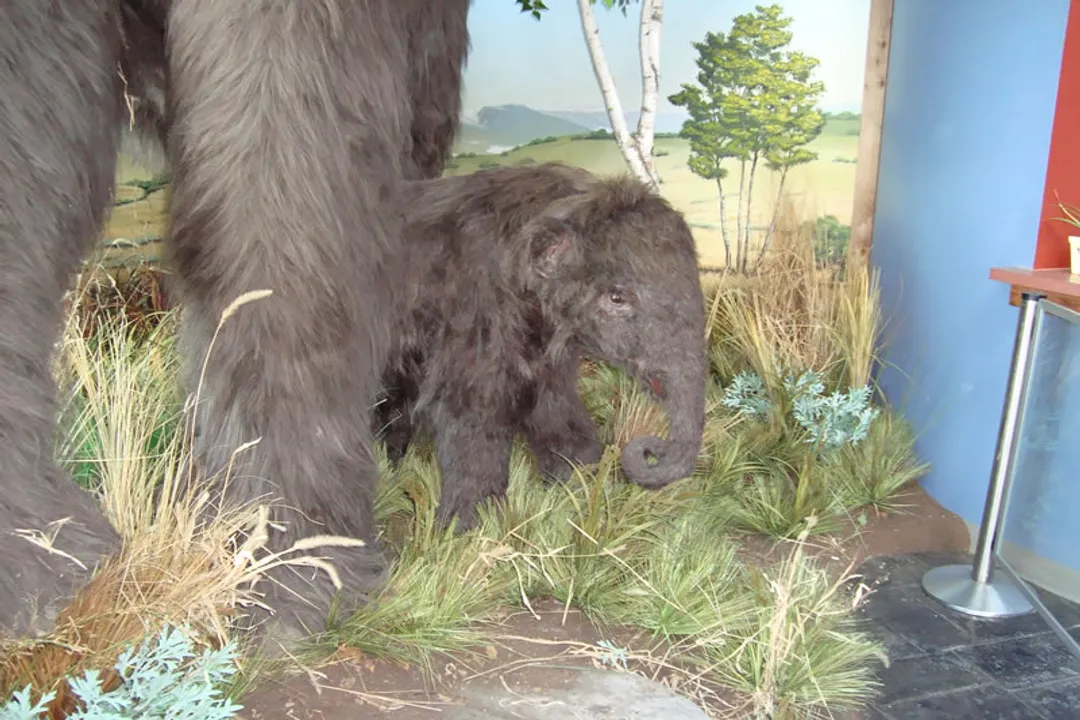
The area known as Beringia—the landmass connecting Siberia and Alaska that was exposed due to lower sea levels—remains central to understanding the woolly mammoth’s life cycle. [4] This region was characterized by cold, dry grasslands well-suited to their dietary needs, which consisted primarily of grasses and sedges. [6]
Research conducted by institutions like the University of Alaska Fairbanks helps piece together individual life stories within this core habitat. For example, studying the remains of a specimen named Mishka, whose bones were discovered near Fairbanks, allowed researchers to analyze its isotopic signature, providing clues about the ancient trails and environments it traversed across Alaska. [10] This type of localized, high-resolution data contrasts with the broad continental sweep. Where Hot Springs, South Dakota, tells us that mammoths were there, the analysis of an Alaskan individual like Mishka tells us how they moved through a critical habitat zone. [7][10] Furthermore, analyzing tusks—which grow incrementally much like tree rings—can reveal migratory habits. Tusks from specimens across Siberia, Alaska, and the Yukon have been used by scientists to map out vast seasonal movements, suggesting that a single mammoth could potentially cover hundreds of miles during its lifetime, connecting disparate ecosystems. [8]
# Last Refuges
The mainland populations across Eurasia and North America largely vanished around 10,000 years ago. [3][6] However, the story of the woolly mammoth did not end there. Isolation in geographically distinct, resource-stable areas allowed some small populations to persist for millennia longer than their continental cousins. [1]
The most famous of these final strongholds was Wrangel Island, located in the Arctic Ocean between Siberia and Alaska. [1] While mainland mammoths were gone, a small population managed to cling to existence on this island refuge. Astonishingly, the fossil record shows these final mammoths survived until approximately 4,000 years ago. [1] This means that when the ancient Egyptians were beginning to build the pyramids, tiny, isolated herds of woolly mammoths were still walking the Earth on Wrangel Island—a chronological overlap that is truly remarkable. [1] Understanding these final locations provides insight into the specific pressures that caused the final extinction event, which likely involved a combination of climate change reducing their grassland habitat and perhaps genetic bottlenecks due to small population size. [3]

# Interpreting Fossil Sites
When we examine the locations where mammoth remains are found, we are essentially looking at two types of geological signals: mass accumulation sites and scattered individual remains. [7] Sites like the one in Hot Springs, South Dakota, are unique because they represent a high concentration, possibly a death trap or seasonal gathering spot that preserved dozens of individuals. [7] In contrast, finding a single tusk or bone washed up on a modern shoreline, like those off the California coast, represents a snapshot of an organism living on land that no longer exists above the waves. [9] The utility of a location data point depends entirely on the context of the discovery. A bone preserved in permafrost in Siberia tells a story of long-term stability in a cold environment, [8] whereas a find in a river-deposited gravel layer in Missouri tells a story of a creature temporarily venturing into a warmer, more southerly environment before the main climate shift. [5]
The sheer volume of records gathered from these diverse locales—from the deep subarctic to the southern edges of the Pleistocene plains—paints a picture of an animal exquisitely adapted to a vast, interconnected, and rapidly changing world. The search for woolly mammoth locations is not just an archaeological exercise; it is a crucial effort to map the boundary conditions of the last Ice Age environment. [6]
# Mapping Individual Lives
Beyond static site locations, modern paleontology allows us to trace the pathways a mammoth took during its life, turning a simple location into a dynamic route. The analysis of tusk growth, as mentioned with specimens across Siberia and Alaska, allows scientists to essentially read the mammoth's travel log. [8] By analyzing the chemistry within the ivory layers, researchers can determine when the animal was near a specific water source or moving through different geological provinces. [10] This moves the concept of "location" from a static point on a map to a narrative of movement. For example, if a tusk shows a period of high growth rate followed by a sharp change in isotopic signature, it strongly suggests a seasonal migration between two distinct feeding grounds, perhaps one inland near Fairbanks and another closer to the coast. [10] This contrasts sharply with the evidence from mass burial sites, which are inherently tied to a single time and place of death. [7]
# Final Summary
The locations tied to the woolly mammoth are geographically vast and chronologically staggered. They stretch from historical—and perhaps momentary—forays into temperate North America [5] to their deep-rooted stronghold in Beringia, [6] and finally to their isolated stand on Wrangel Island. [1] The evidence is locked in the permafrost of Siberia, [8] the gravel beds of the American Midwest, [5] and beneath the waves of the Pacific Ocean. [9] Each location serves as a different piece of evidence: one confirming the species' broad range, another marking a mass die-off, and the last noting the final, desperate survival of the species against overwhelming environmental odds. [3]
Related Questions
#Citations
Woolly mammoth - Wikipedia
Distribution of Mammoths - Children's Discovery Museum of San Jose
About the Woolly Mammoth - Revive & Restore
Woolly Mammoth - Bering Land Bridge National Preserve (U.S. ...
The Woolly Mammoth | St. Joseph, MO - Official Website
Woolly Mammoth | Yukon Beringia Interpretive Centre
Visit - The Mammoth Site
When in Roam, a Woolly Mammoth's Tusks are the Map
Remains of woolly mammoths found in Marine National Monument
On the ancient trail of a woolly mammoth | UAF news and information