Wolffish Facts
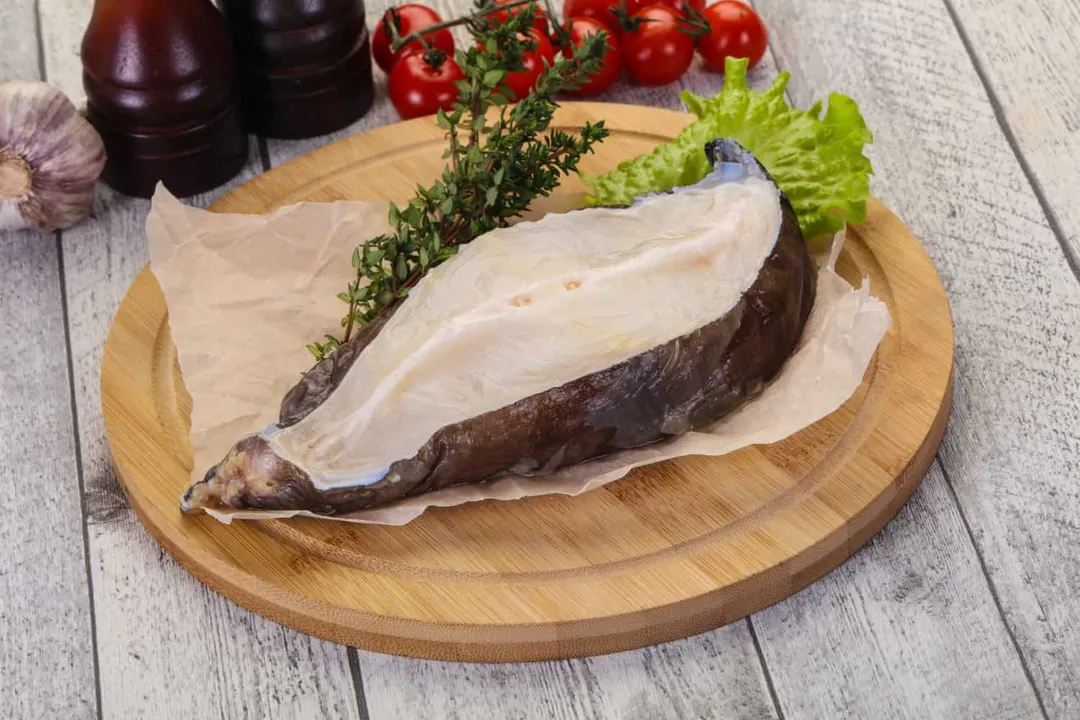
The Atlantic Wolffish, often simply called the wolf fish, is one of the ocean’s most distinct and formidable-looking inhabitants, possessing a rugged appearance that perfectly suits its cold, deep-water home in the North Atlantic. [1][2] These creatures look less like typical fish and more like something pulled from myth, characterized by a long, muscular body that tapers toward the tail. [5] They are generally gray, brown, or greenish, often mottled with darker vertical bars or blotches that help them blend into rocky bottoms and kelp forests. [4][6]
# Bony Features
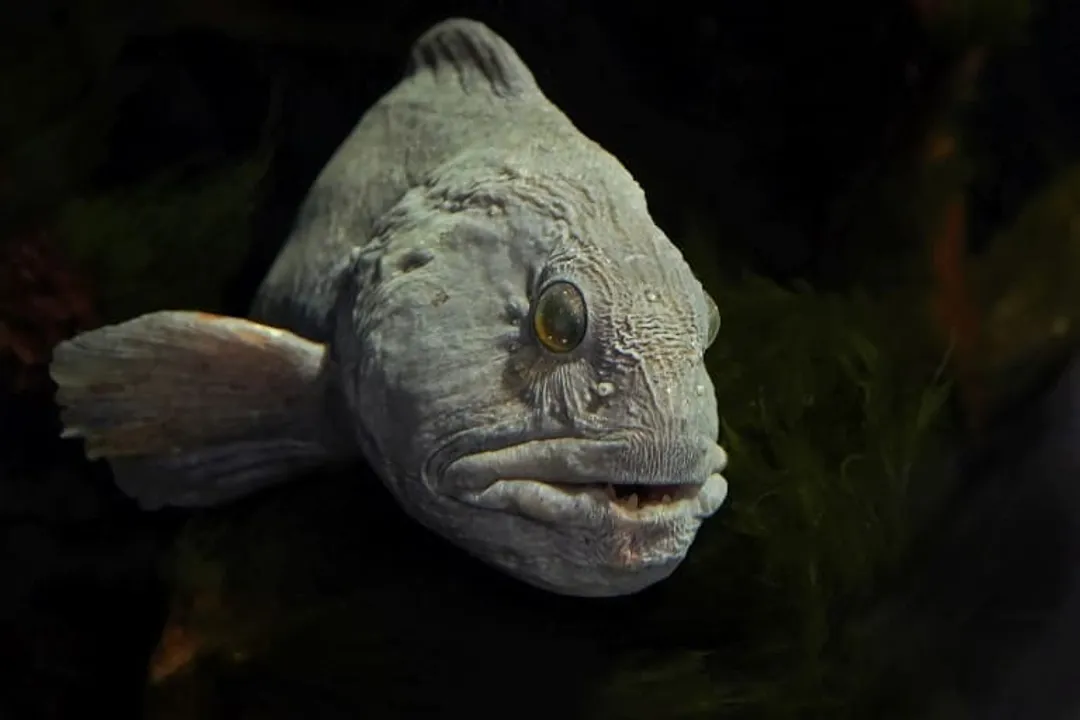
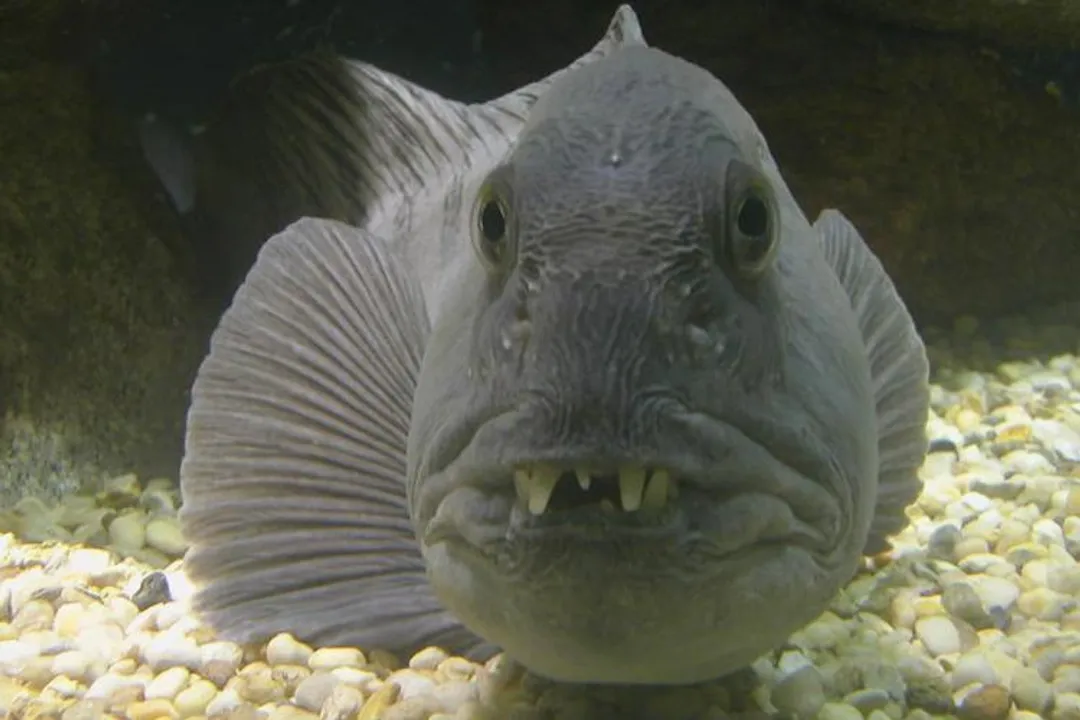
The most striking characteristic of the wolffish is its massive, sloped head, which houses an incredibly powerful jaw system. [5][6] Their mouth is armed with strong, conical teeth in the front, ideal for piercing and gripping, but the real crushing power comes from the rounded, molar-like teeth located further back on the palate. [1][5] This dental arrangement is specialized for demolition; they are perfectly equipped to shatter the hard shells of their preferred meals. [6][7] Furthermore, their skin is thick and slimy, lacking traditional scales, which gives them a durable, almost armored protection against scrapes in their rough benthic habitat. [4][5] This combination of thick skin and crushing dentition suggests an evolutionary path favoring defense and the exploitation of prey unavailable to less specialized predators.
# Cold Domain
Atlantic Wolffish are creatures of the cold, preferring temperatures between 39 to 54 degrees Fahrenheit (4 to 12 degrees Celsius). [4][6] Their native range is extensive, spanning the cold waters of the Northwest and Northeast Atlantic, from the northern coast of Europe and Russia down to the waters off the Mid-Atlantic United States. [1][4] In North America, their distribution includes the Gulf of Maine, the Georges Bank, and deeper waters off the Canadian coast. [8][9] They are typically found along the bottom, favoring rocky areas, gravel substrates, and complex reef structures where they can seek shelter. [1][2] While they are considered a bottom-dwelling species, depth preference can vary; records show them inhabiting waters from just a few meters deep down to over 500 meters. [6][8] This reliance on specific cold, rocky environments means that environmental shifts in the deeper continental shelf regions can have an outsized impact on their populations, as they lack the flexibility to easily move into warmer, more diverse habitats. [9]
# Crushing Diet
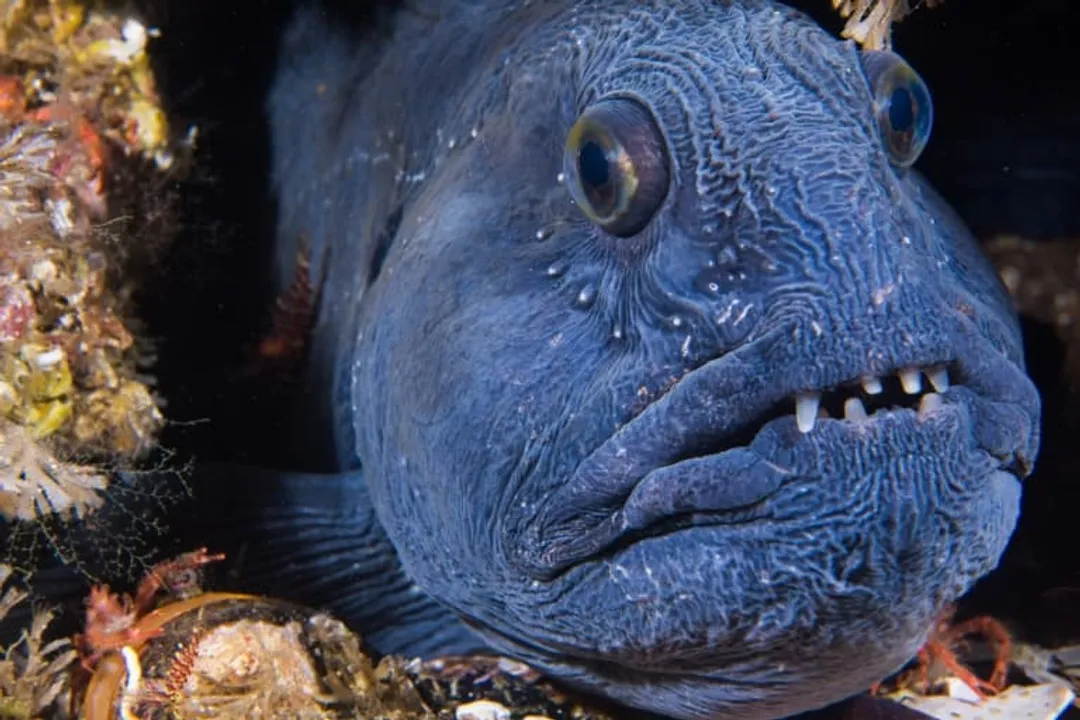
The wolffish is an opportunistic carnivore, but its menu is heavily skewed toward animals protected by heavy exoskeletons or shells. [7] Their diet primarily consists of sea urchins, crabs, clams, mussels, and scallops. [1][2] They use those formidable jaws to literally crush their prey into pieces small enough to ingest. [6] This specialized feeding strategy makes them important regulators of benthic invertebrate communities. For instance, in areas where wolffish populations are healthy, the grazing pressure on sea urchins can be significant, potentially altering kelp forest health by controlling urchin barrens—a dynamic often seen in Pacific ecosystems, but relevant wherever these highly adapted crushing predators thrive. [7] Observing a wolffish feeding is a clear demonstration of evolutionary specialization; the energy expended developing such powerful musculature and dense teeth is only worth the investment if that hard-shelled food source is consistently available.
# Guarding Eggs
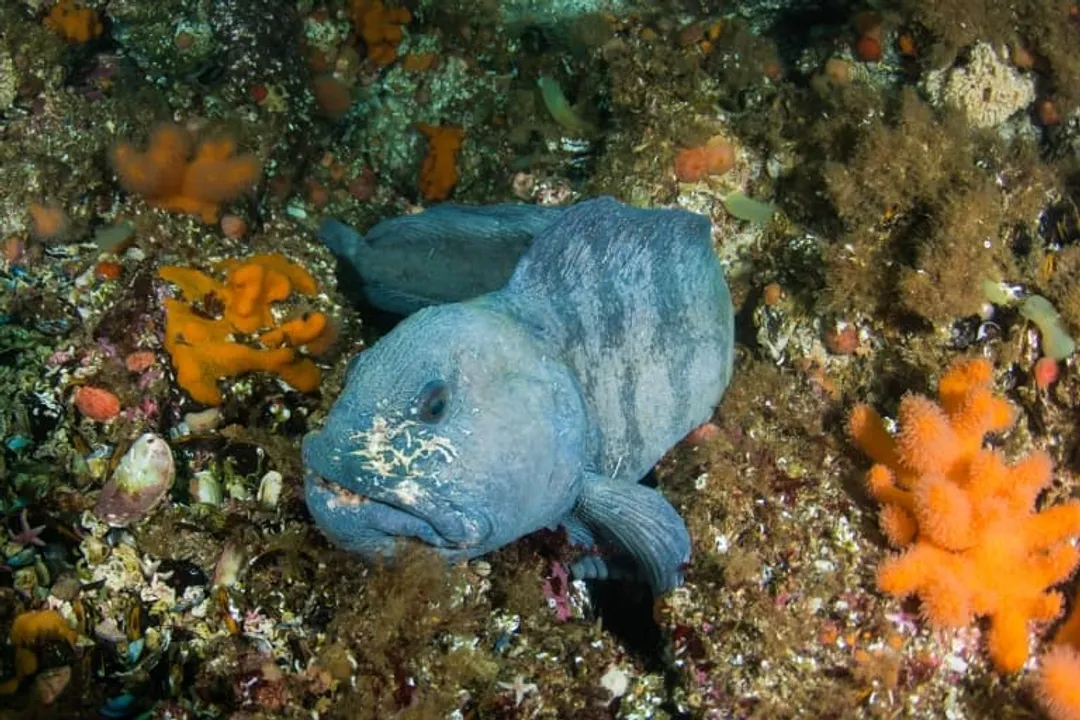
Reproduction in wolffish involves a fascinating display of paternal care, which is relatively rare among fishes. [4] Spawning generally occurs in the late fall or early winter, with females laying large masses of sticky, reddish-brown eggs in crevices or beneath boulders. [6][8] Once the eggs are laid, the female departs, leaving the male to assume sole responsibility for the nest. [4][8] The male diligently guards the eggs, sometimes for several months, until they hatch. [6] This vigilance protects the vulnerable egg mass from predation and ensures proper oxygenation, which is critical for development in colder waters where metabolic rates are slower. [8] This extended parental investment by the male places him at greater risk during the guarding period, highlighting the importance of successful recruitment for the species' survival.
# Status and Threats
The Atlantic Wolffish holds a significant conservation status in certain regions, reflecting historical population declines. [1][2] In the United States, the species has been listed as Threatened under the Endangered Species Act (ESA) since 2011, and fishing for them has been prohibited in those waters. [1][4] The primary threats driving this decline are related to human activity and environmental change. [2][8]
The most immediate threat historically has been bycatch in commercial fishing gear, particularly bottom-trawling nets and large traps designed for other species. [8][9] The fish’s tendency to inhabit the bottom and its thick, leathery hide sometimes allowed it to survive short periods out of water, but repeated capture in trawls often leads to mortality. [4][6] Habitat degradation, particularly the destruction of the rocky, complex seafloor they depend on for shelter and nesting, poses a long-term danger. [2][8] Additionally, because they are cold-water specialists, rising ocean temperatures present a severe challenge to the long-term viability of southern populations, forcing them further north into increasingly restricted areas. [1]
When comparing the status across their range, it is interesting to note that while the United States lists the population as Threatened, [1] Canadian management bodies, such as those monitoring the Gulf of Maine and Southern Gulf of St. Lawrence, also regard them as species of concern, sometimes listing them as Threatened or Special Concern under their own national protection acts. [8][9] This patchwork of management across international waters underscores the complexity of protecting a migratory species whose vulnerability points differ slightly depending on local fishing pressures and regional oceanographic conditions.
# A Note on Relatives
While the focus is often on the Atlantic species (Anarhichas lupus), it is worth mentioning that there are other wolffish species, such as the Pacific Wolffish (Anarhichas orientalis), which shares many characteristics but occupies the colder waters of the North Pacific and Bering Sea. [4] Another related species is the Spotted Wolffish (Anarhichas minor), which also inhabits the North Atlantic but is generally smaller than the Atlantic Wolffish. [4][5] Knowing the differences matters for researchers and fishers alike, as management strategies and historical records must accurately reflect the specific species being observed. [6] For example, the Spotted Wolffish is sometimes seen closer to the coast than its larger Atlantic cousin. [4]
# Fishing Encounters
For anglers, hooking into a wolffish is often an unexpected and powerful experience. [3] They are strong fighters that live in rough terrain, meaning that when one strikes a lure or bait intended for cod or haddock, the angler must be ready for a serious battle. [3] Because they hold tight to their rocky lairs, landing one requires heavy tackle and firm pressure to pull them away from cover. [3] In areas where they are not federally protected, such as in some Canadian fisheries, they are valued as a hard-fighting sport fish. [3][8] However, given the legal restrictions in US waters, responsible anglers must exercise extreme caution; if one is accidentally caught, the best practice, based on current guidelines for threatened species, is to immediately return it to the water as gently as possible, avoiding any unnecessary handling that could compromise its survival upon release. [1] Handling a large, heavily-toothed fish requires respect for both the animal's defensive capabilities and its protected status.
#Videos
Wolffish facts: they have some of the biggest eggs around - YouTube
Related Questions
#Citations
Atlantic Wolffish | NOAA Fisheries
Atlantic Wolffish - Oceana
7 Things You Never Knew About The Wolf Fish - Flylords Mag
Atlantic wolffish - Wikipedia
Wolffish Fish Facts - A-Z Animals
[PDF] atlantic wolffish - Conservation Law Foundation
19 Atlantic Wolffish Facts - Fact Animal
Wolffish: What you need to know
Atlantic Wolffish - Oceana Canada
Wolffish facts: they have some of the biggest eggs around - YouTube