White German Shepherd Physical Characteristics
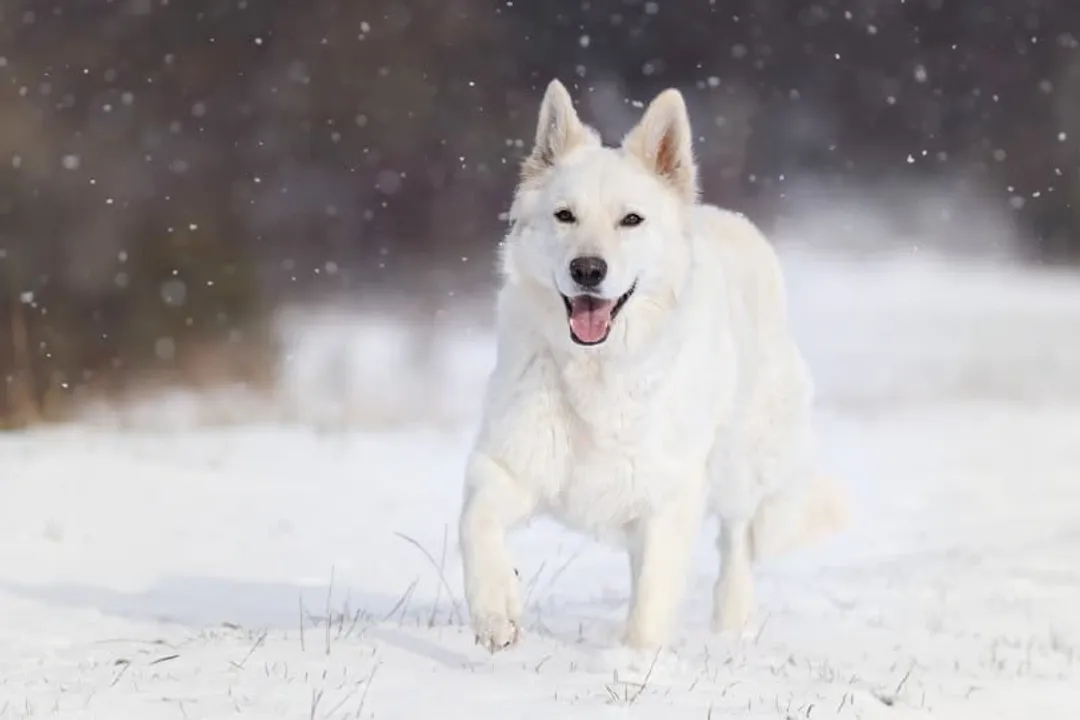
The White Shepherd, a striking relative of the German Shepherd Dog, presents a physique that is both elegant and powerfully built, immediately drawing attention with its snow-white coat. [1][7] While sharing the same foundational lineage as the standard German Shepherd, enthusiasts have worked to establish the White Shepherd as a distinct entity, recognized separately by organizations like the United Kennel Club (UKC) since 1999. [4][5] Understanding their physical makeup reveals a dog built for work, grace, and endurance, rather than just looks.
# General Stature

Physically, the White Shepherd is classified as a medium-sized dog, expected to be well-balanced and muscular. [2][4] A key characteristic of their structure is that they are often slightly longer than they are tall, with the UKC standard favoring a ratio of 10 parts length to 8 parts height. [3][4] This slightly elongated frame contributes significantly to their efficient movement.
Ideal adult dimensions vary slightly depending on the registry standards being followed, but a consistent pattern emerges: males are built to be substantially larger and more muscular than their female counterparts. [2][4][5] For males, the ideal height at the withers generally lands around 25 inches (about 64 cm), weighing between 75 to 80 pounds. [3] Females are slightly smaller, ideally standing at about 23 inches (58 cm) and weighing in the range of 60 to 70 pounds. [3] While these are ideals, a generally acceptable height range might stretch about one inch in either direction. [4] Owners seeking a dog for high-level performance work must ensure their dog possesses the lean, hard physical condition that characterizes the breed, avoiding any sense of bulkiness. [4]
# Coat Attributes
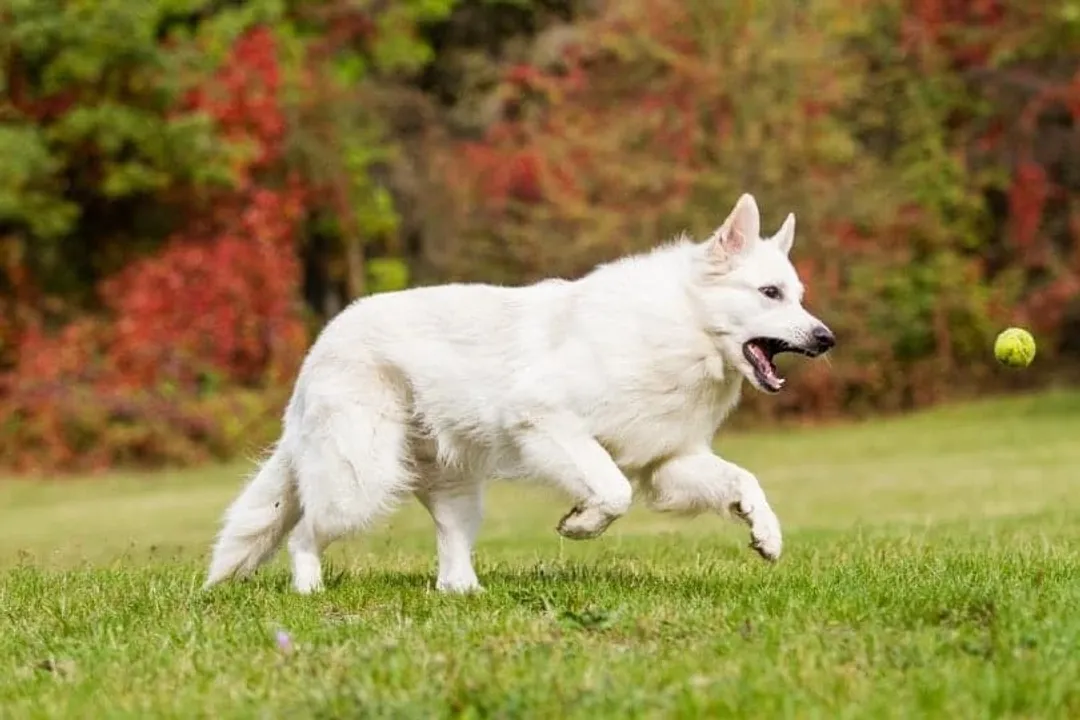
The most defining physical characteristic is, naturally, the coat color. The UKC standard calls for a pure white coat. [4] While this is the goal, slight variations such as very light cream or even a light biscuit tan are considered acceptable, though they are not the preferred shade. [3][5] It is important to note that this white coloration stems from a recessive gene carried by German Shepherds, and this gene does not inherently affect health or working ability. [5][7]
Beneath the white exterior lies a functional, weather-resistant double coat. [2][3] The outer coat is described as dense, straight, and harsh to the touch, lying close to the body. [2][4] Conversely, the undercoat is shorter, thick, and fine. [2][4] Males may exhibit slightly longer and heavier hair around the neck, and there is typically longer, thicker hair on the rump and the underside of the tail, giving it a bushy appearance. [4]
The density of this coat means shedding is a constant factor. Owners should expect hair loss throughout the year, with heavier molting periods seasonally. [1] For maintenance, weekly brushing is often recommended to manage loose hair, escalating to daily sessions during heavy coat blowouts to keep the dead undercoat from causing issues. [2]

# Cranial Features
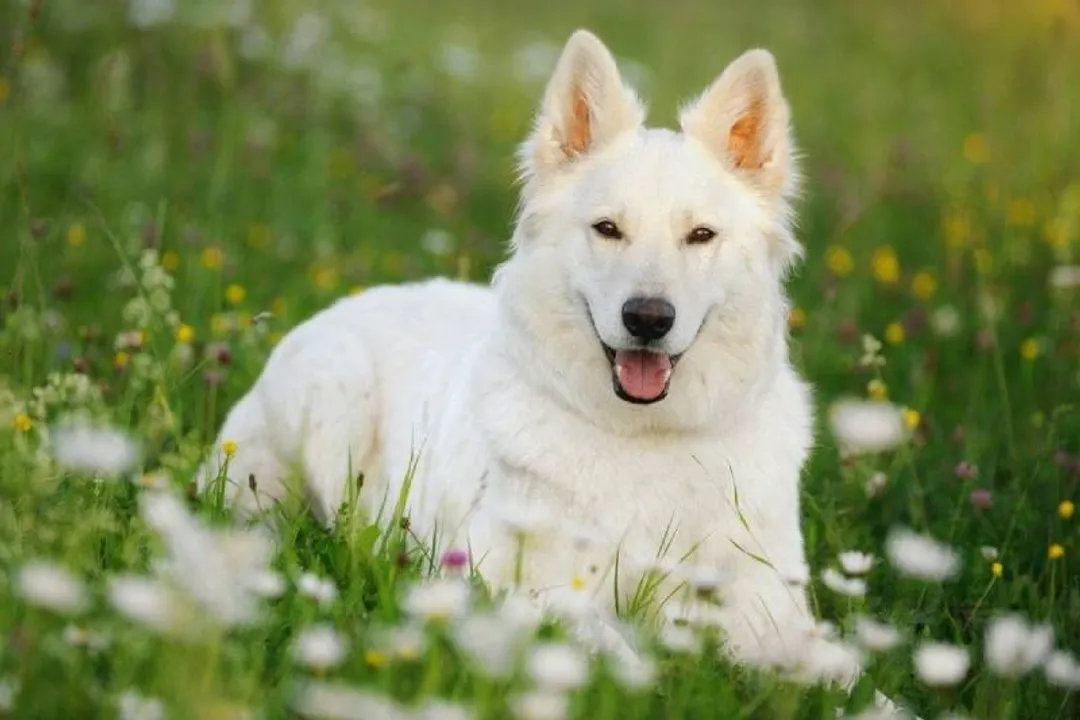
The head structure is critical in balancing the dog’s overall powerful profile. The head should be proportionate to the dog’s size, avoiding any suggestion of coarseness in males or being overly fine in females. [4] A moderate stop—the transition area between the skull and the muzzle—joins the two features, which are ideally equal in length and parallel to each other. [4] The skull itself is broad and nearly flat when viewed from the top, tapering evenly toward the muzzle. [4]
Alertness is conveyed through the eyes and ears. The ears are naturally erect, triangular in shape, set high on the head, and should have firm leather capable of supporting their weight. [2][4] When the dog is attentive, the center lines of the ears should stand perpendicular to the ground. [4] The eyes are medium-sized and almond-shaped, set slightly obliquely, with dark brown being the preferred color. [2][4] A keen, intelligent, yet composed expression is sought. [4] Furthermore, the nose, lips, and eye rims should display dark pigmentation. [2] While the nose is ideally solid black, it can sometimes present as a lighter color, sometimes termed a “snow nose,” particularly in colder weather, though this is not preferred over solid black. [4][7]
If you are closely examining a dog's head for breed conformation, pay specific attention to the oral area; a serious fault or disqualification in the UKC standard involves the total lack of pigment on the lips, nose, eye rims, or pads. [4] It is always a good practice for owners to monitor the darkening of the tissues around the eyes and lips, even if the nose color fluctuates seasonally with temperature changes, as this deep, dark pigment is a hallmark of breed quality. [4]
# Body Proportions
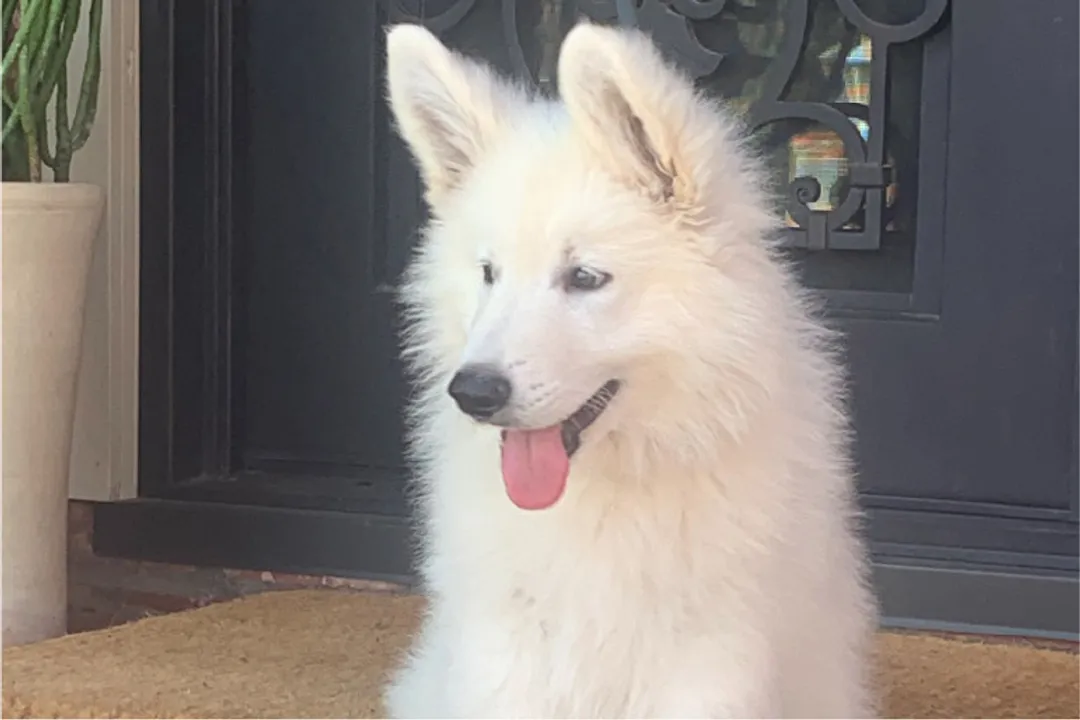
The White Shepherd’s body is designed for sustained activity, reflecting its herding and working background. [4][5] It should appear solid, without being bulky, and possess a deep chest where the brisket reaches down to the elbows. [4] This depth is crucial, equating to approximately 48–50 percent of the dog’s total height. [4] The topline flows smoothly, with the withers sloping slightly into a short, strong, and straight back. [4] The croup is long and slopes gradually, feeding into the tail set. [4]
The rear assembly must balance the forequarters, being broad and muscular to provide the necessary drive for movement. [4] The hindquarters are constructed to facilitate a powerful forward thrust. [4]

# Locomotion
Correct movement is essential for a working dog, and the White Shepherd’s gait reflects this need for efficiency and agility. [4] When trotting, the dog exhibits a long, efficient stride where the rear leg swings under the front leg, landing where the forefoot just lifted off. [4][5] This motion propels the body forward while keeping the feet close to the ground. [4] The back should remain firm and level during this trot, with the dog capable of quick, sudden directional changes as needed for herding work. [4] When evaluating structure, faults that diminish this efficient movement are penalized proportionally to how much they interfere with the dog’s ability to work. [4]
If you watch your dog move across a wide field, observe the smoothness—a lack of angles and choppiness in the gait suggests excellent structural integrity inherited from working lines. [5] A good way to assess if the dog has the correct rear angulation for that driving motion is to note if the hind legs remain parallel when viewed from the rear; they should drop straight to the ground and point directly forward, without turning in or out at the hocks. [4]
# Breed Distinctions
While the White Shepherd shares its ancestry with the German Shepherd Dog (GSD), its physical status varies by registry. [1][5] The American Kennel Club (AKC) does not recognize the white-coated dog as a separate breed, disqualifying white GSDs from conformation events. [1][7] However, the White Shepherd is recognized as its own breed by the UKC. [4] This separation means that while the physical characteristics are nearly identical except for color, the White Shepherd breed has evolved under a dedicated standard focused on preserving its appearance and working aptitude outside the GSD mainstream. [5] It is also distinct from the White Swiss Shepherd Dog (Berger Blanc Suisse), which also traces back to white GSD stock but developed separately in Europe. [3][5]
Ultimately, the White Shepherd is a strong, athletic dog whose physical characteristics—from its double coat to its balanced structure and powerful gait—speak to its heritage as a versatile working companion. [1][4][5]
Related Questions
#Citations
White Shepherd - UKC Breed Standards
About The White German Shepherd Breed
White Shepherd
White German Shepherd: History, Characteristics, Care ...
White Shepherd | Dog Breed Facts and Information
White German Shepherd: History, Appearance, and More
White Shepherd Dog Breed: Info, Pictures, Traits & Care ...