What is the taxonomy of the Saharan horned viper?
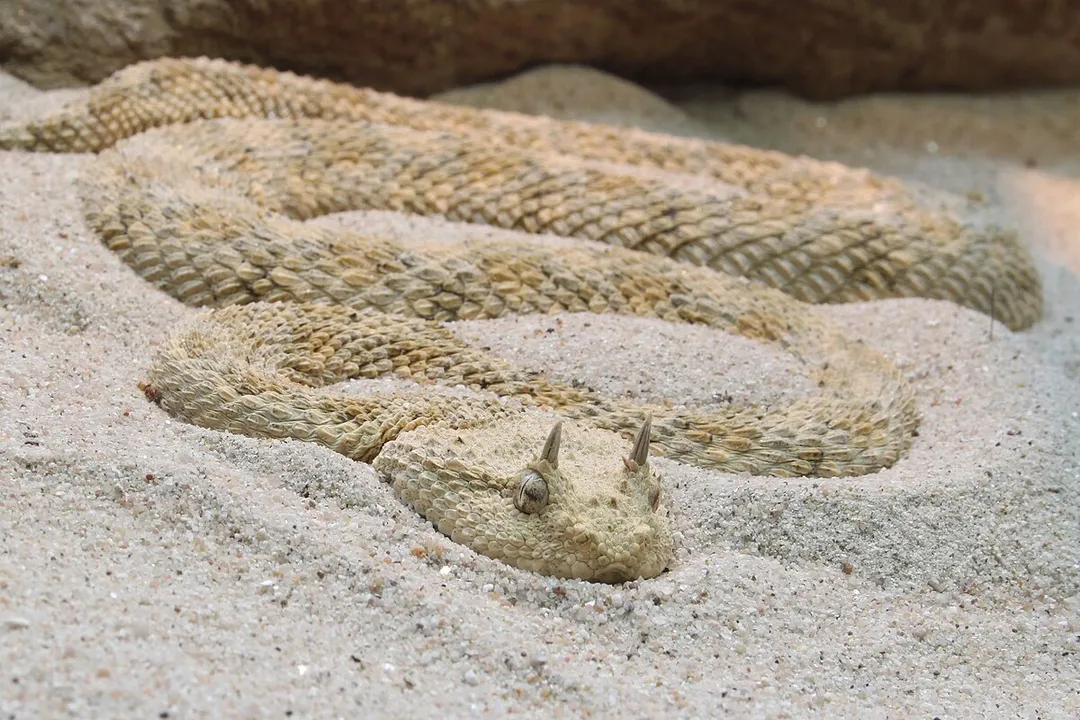
The Saharan horned viper, Cerastes cerastes, is immediately recognizable, not just for its potent venom, but for the distinct supraocular "horns" that give it its common name and scientific pedigree. To truly appreciate this creature of the desert, one must look past its camouflage and delve into the precise scientific hierarchy that defines its place in the tree of life. Understanding its taxonomy is essential, as it roots the snake within its closest relatives and dictates how scientists categorize its evolutionary history and physical characteristics. [1][5][9]
# Higher Ranks
Like almost all snakes, Cerastes cerastes starts its classification in the broadest categories that group living things. It belongs to the Kingdom Animalia, signifying it is a multicellular, heterotrophic organism. [7] Moving down, it is classified in the Phylum Chordata, which includes all animals possessing a notochord, such as vertebrates. [7] Within this phylum, it falls into the Class Reptilia, characterized by being cold-blooded, possessing scales, and typically breathing air with lungs. [7] The Order is Squamata, a massive group that encompasses all lizards and snakes, distinguished by their kinetic skulls and shedding skin. [7]
# Family Placement
The next significant grouping places the Saharan horned viper among the heavyweights of the snake world: the Family Viperidae. [2][3][7] This family contains all the true vipers, which are characterized by having long, hinged fangs located at the front of their upper jaws, used to inject venom via a sophisticated striking mechanism. [3] This places C. cerastes alongside well-known groups like rattlesnakes (Crotalus) and bushmasters (Lachesis), although it is distinctly part of the Old World vipers group within that family. [3]
# Genus Definition
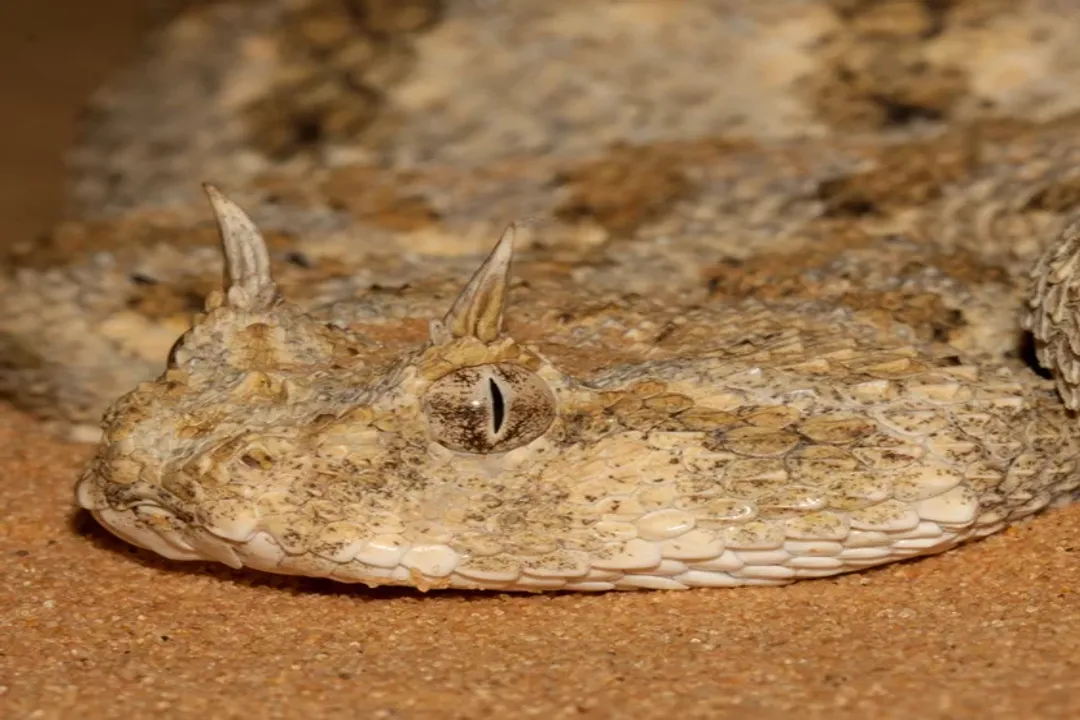
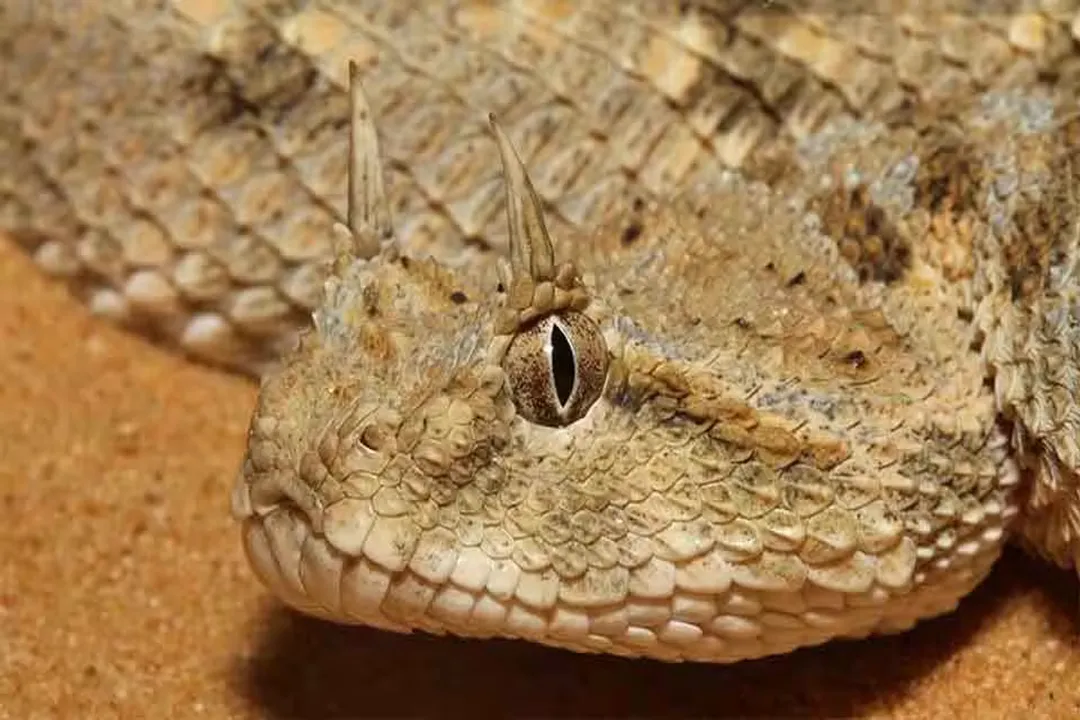
The genus level is where the Saharan horned viper truly begins to take shape morphologically. It is classified under the Genus Cerastes. [2][5][6] This genus name itself is derived from the Greek word meaning "horned," directly referencing the prominent projections above the eyes found in at least some members of this group. [9] The genus Cerastes is generally confined to arid regions across North Africa and the Middle East. [6] A key taxonomic point within this genus is the physical feature that separates C. cerastes from its close relative, Cerastes vipera (the desert viper or "hornless viper"). While C. cerastes typically possesses one or two prominent horns, C. vipera completely lacks them—a difference significant enough to maintain the distinction at the species level, even though they share the same genus and habitat overlap. [6][9]
# Species Identity
The species name is Cerastes cerastes. [2][5][6] This specific designation is often redundant with the genus name, as cerastes also translates roughly to "horned" or "horned one," reinforcing the snake's most recognizable trait. [5] The species C. cerastes is known by several common names, most frequently the Saharan horned viper, but also the desert horned viper. [1][4]
It is worth noting that the Linnaean classification system demands precision, and sometimes this leads to scientific debate regarding which specific taxonomic level a characteristic defines. For instance, the presence or absence of those horns can sometimes be variable within a population or may even be lost due to injury, leading early researchers to sometimes misclassify individuals. However, established morphological studies confirm that the presence of these supraocular structures is the primary defining trait for the species C. cerastes when contrasted with other members of its genus. [9]
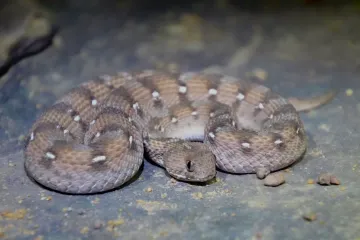
# Subspecies Variation
Taxonomy often delves into subspecies to account for geographic variation within a single species. For Cerastes cerastes, several subspecies have been recognized, primarily distinguished by subtle differences in scale counts, body patterning, or horn configuration across their vast desert range. [6]
The nominate subspecies, C. c. cerastes, is generally considered the "typical" form from which the species was first described. [6] Other recognized subspecies include:
- C. c. aspera: This form is often associated with slightly different morphological traits compared to the nominate form. [6]
- C. c. siphonops: Historically recognized, this form also shows regional differences in scale characteristics. [6]
It is fascinating to observe how these subspecies are delineated. Unlike differences in color which can be plastic, subspecies classifications often rely on countable, fixed traits like the number of ventral scales or subcaudal scales, which are less likely to be influenced by diet or immediate environment but rather by long-term geographic isolation and selection pressures. [6] Examining the data from the Reptile Database reveals that while these subspecies are often cited, modern systematic reviews sometimes suggest collapsing them back into a single, widely distributed species, highlighting the dynamic nature of taxonomy as new data emerges. [6] This constant refinement underscores that scientific classification is a living process, not a static label.
# Taxonomic History
The scientific history of C. cerastes shows the typical progression of species description. It was originally described by Carl Linnaeus in 1758 under the genus name Vipera as Vipera cerastes. [6] This reflects an older system where many vipers were grouped together before the establishment of the modern Cerastes genus based on morphology, particularly the presence of the horns and characteristic head shape. [6][9] The subsequent move to the genus Cerastes solidified its distinction from other vipers, placing it with its closest close relatives like C. gasperettii and C. vipera. [6] Reviewing historical synonyms can be crucial for researchers tracking older ecological or venom studies, as they might refer to the snake using outdated nomenclature like Vipera cerastes. [6]

# Insights into Classification Structure
When comparing the taxonomy of C. cerastes to other African vipers, its placement within Cerastes is critical for predicting certain behaviors and venom components. For example, while many vipers in the region belong to genera like Bitis or Echis (the saw-scaled vipers), the Cerastes genus is specialized for extreme arid environments, often employing a unique sidewinding locomotion. [4] This adaptation to fine, loose sand is likely linked to the specific cranial and scale structures that define the genus, suggesting a clear evolutionary path dictated by the harsh Saharan ecology. [4]
Furthermore, considering the distribution across the vast Sahara, it is intriguing to note how the subtle scale count differences used to define subspecies like C. c. siphonops might correlate with microclimates. A population living in rocky outcrops might experience slightly different thermal stress or predatory pressure than one in pure sand seas, and these long-term environmental factors can subtly drive reproductive isolation, resulting in the morphological divergence that warrants a subspecific designation. While the sources confirm the existence of these subspecies based on morphology, one can infer that this granularity in classification might eventually correlate with distinct differences in venom composition across their range, a factor highly important for antivenom development. [4][6]
# Final Naming Context
Ultimately, the accepted taxonomy places the Saharan horned viper firmly as Animalia | Chordata | Reptilia | Squamata | Viperidae | Cerastes | C. cerastes. [2][7] This entire structure tells a story of descent, beginning with basic vertebrate life, specializing into scaly reptiles, then into venomous snakes, and finally honing the traits necessary to thrive—horns and specialized locomotion—in the world's largest hot desert. [3][4][9] This scientific naming convention ensures that whether a researcher is in Algeria, Egypt, or a laboratory in Europe, the organism being discussed is universally understood to be the same, distinct species of horned serpent. [1]
Related Questions
#Citations
Cerastes cerastes - Wikipedia
Desert Horned Viper (Cerastes cerastes) - iNaturalist
Genus Cerastes - taxonomy & distribution / RepFocus
Saharan Horned Viper - African Snakebite Institute
Cerastes cerastes - Citizendium
Cerastes cerastes - The Reptile Database
Saharan horned viper facts, distribution & population - BioDB
Desert horned viper (Cerastes cerastes) longevity, ageing, and life ...
Cerastes | Desert, Horned, Vipers - Britannica