Do female takin have horns?
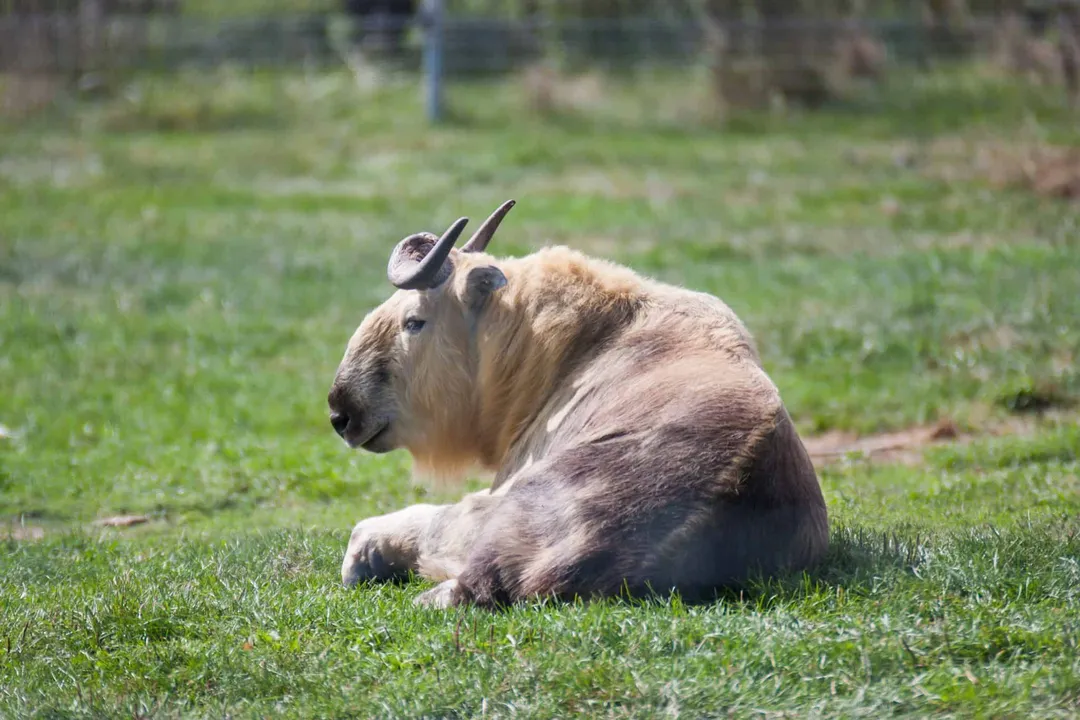
The presence of horns on a female takin is a definitive characteristic of this fascinating creature, one often mistaken for a sheep, goat, or even a small bison due to its massive build and shaggy coat. To put the question to rest immediately, yes, female takin possess horns. [1][2][3][4][5][6][7][8] This trait is not reserved solely for the males, distinguishing the takin from several other horned ungulates where only the males carry this bony appendage.
# Horn Presence
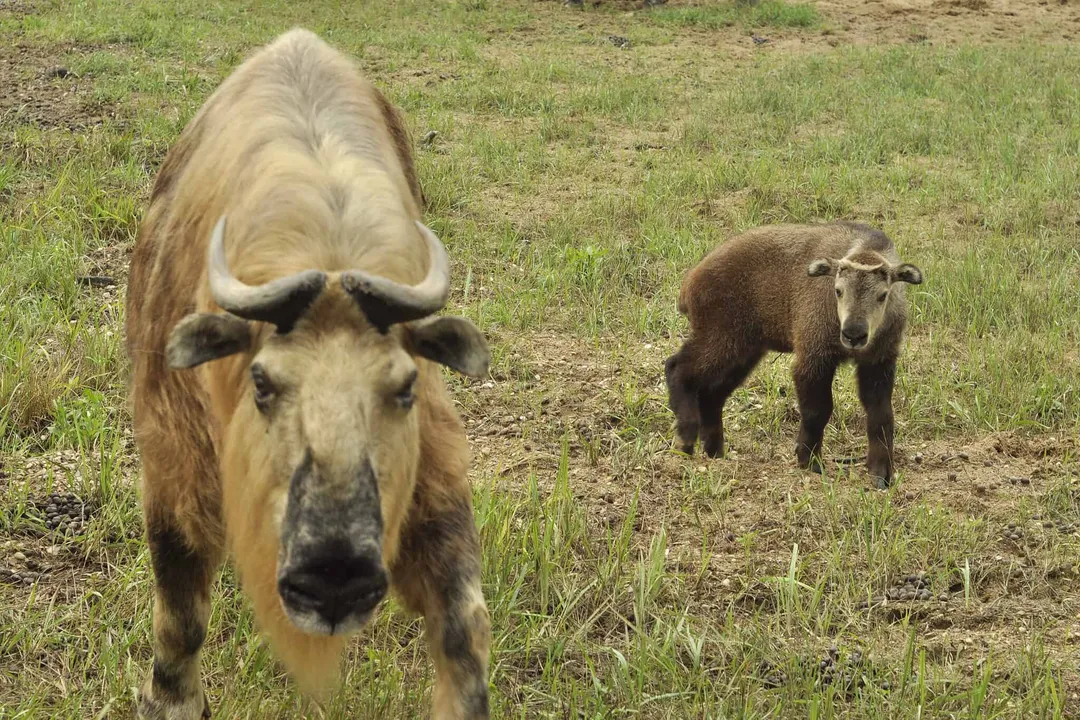
The horns are a constant feature across both sexes of the takin (Budorcas taxicolor), regardless of which of the recognized subspecies an individual belongs to. [1][6] These structures emerge from the sides of the head and follow a distinct, rather unique curvature. [7] They sweep backward initially, before curving upward at the tips. [1][4][7] This shape contributes significantly to the animal’s overall imposing silhouette. [3] While present in both genders, the horns are described as heavy, which gives the takin a formidable appearance. [3] The horns themselves are composed of keratin, the same material that makes up human fingernails and hair, growing continuously from the skull. [2]
# Size Variation
While the presence of horns is universal, there is a noticeable distinction between the sexes concerning size and mass. Generally, the male takin—often called the bull—possesses significantly larger and more robust horns than the female, or cow. [2][7] The difference in horn size reflects the broader sexual dimorphism seen in the species, where males typically outweigh females. [2] For instance, a large bull might have horns that can reach lengths of around 20 inches, while the female's horns, though similar in shape, will be noticeably smaller and less massive. [2][7] This difference in armament density often correlates with social status and fighting ability within the herd structure. [3]
| Feature | Male Takin (Bull) | Female Takin (Cow) |
|---|---|---|
| Horn Presence | Yes | Yes [2][5] |
| Horn Robustness | Greater; more massive [2][7] | Smaller and less heavy [2][7] |
| Horn Length | Potentially up to 20 inches [2] | Generally shorter than males |
| Body Size | Larger overall [2] | Smaller overall [2] |
# Physical Contrast
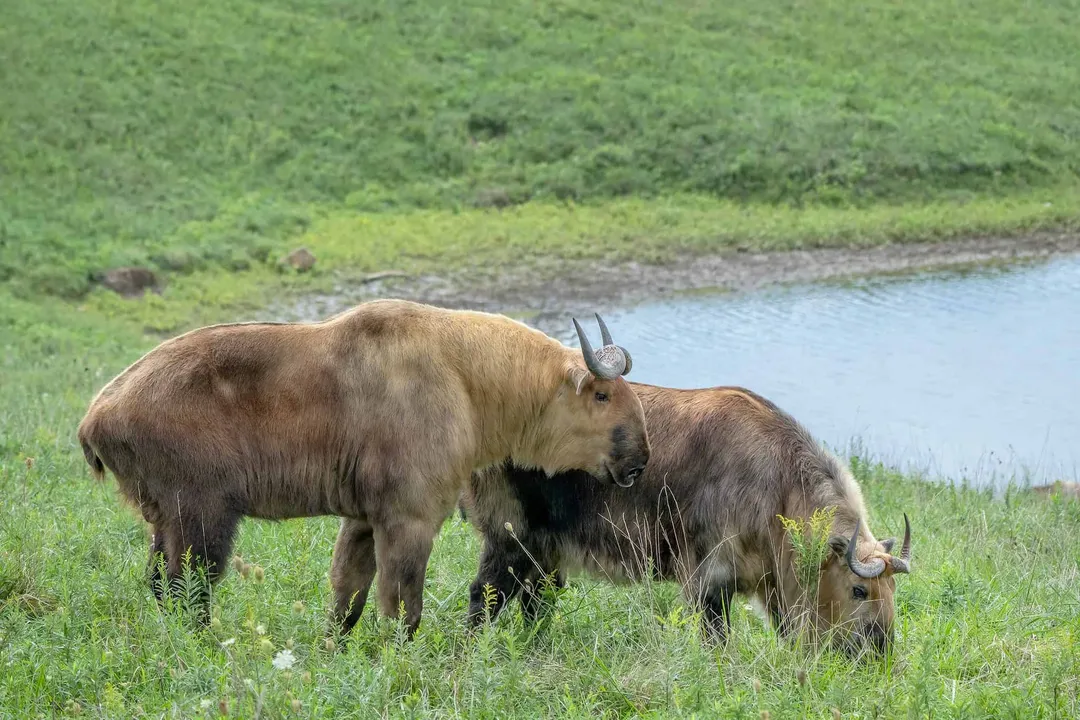
Beyond the horns, the overall physical presentation of male and female takin shows variations that aid in distinguishing the sexes in the field. These differences are critical for understanding herd dynamics and reproductive behaviors. The takin is a stocky, powerful animal, often compared in build to a muskox or a small American bison due to its heavy shoulders and sloping back. [5][7]
The coloration is another area where subtle, yet important, differences can appear, though this is highly dependent on the subspecies. [1] The golden-haired takin, for example, exhibits a striking color, but even within that group, males can sometimes be darker or possess a richer coat color than the females, especially as they age. [1] The sheer bulk of the male is perhaps the most immediate identifier; bulls are substantially larger than the cows. [2] This size disparity is a common feature in many ungulate species where males compete directly for breeding access, and the larger horn set serves as both a weapon and a visual display of fitness. Considering the harsh, high-altitude environment they inhabit, possessing these heavy horns, even for the females, indicates a significant evolutionary investment in defense and social signaling. [3][7]
# Subspecies Variation
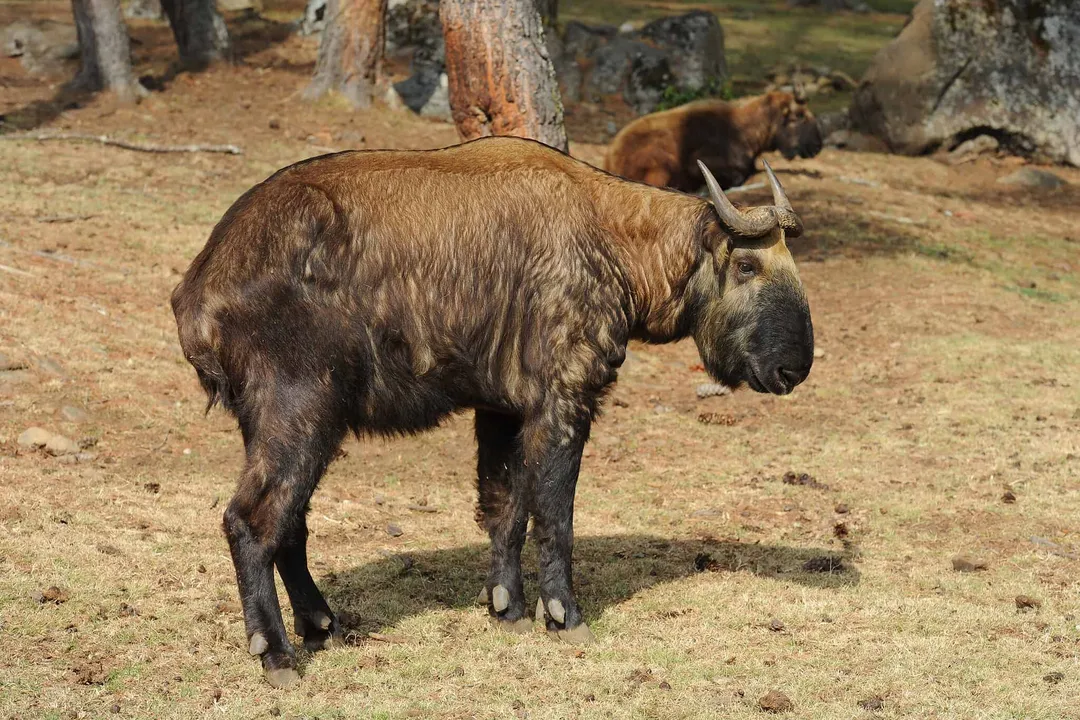
The takin is not a single, homogenous species but is divided into four recognized subspecies, each occupying a distinct geographical region across the Eastern Himalayas and southwestern China. [1] These subspecies include the Mishmi (or Mishmi Hills) Takin, the Bhutan Takin, the Sichuan Takin, and the Qinling Takin. [1] A key point for naturalists is whether the presence of horns is consistent across all these geographically isolated populations. The consensus across various zoological descriptions confirms that the fundamental structure—heavy, backward-curving horns present on both sexes—is maintained across the entire genus Budorcas. [1][4][6]
Where the subspecies diverge most noticeably is in their pelage. For instance, the Bhutan Takin tends to have a shaggier, darker coat, while the Sichuan Takin often displays a more golden-yellow hue, which can sometimes appear lighter in the females than in the dominant males. [1] Observing a herd in a specific region would show females with smaller horns alongside males with much larger ones, but the fundamental anatomy—the presence of the horn—remains unchanged. [2][3]
This consistency across four distinct subspecies, spanning diverse mountain ranges from the eastern Himalayas to the high mountains of China, speaks to the adaptive success of the horned morphology for this animal. [1] It suggests that the horn is not merely a secondary sexual characteristic but plays a vital, perhaps universal, role in survival, whether for sparring over resources or warding off large predators like snow leopards. [3] It is interesting to consider that in such challenging, resource-scarce alpine zones, the energetic cost of growing and maintaining a full set of horns for the females would only be justified if those horns provided a crucial survival benefit beyond simple mating displays, which leads one to assess their function in daily life.
# Usage and Defense
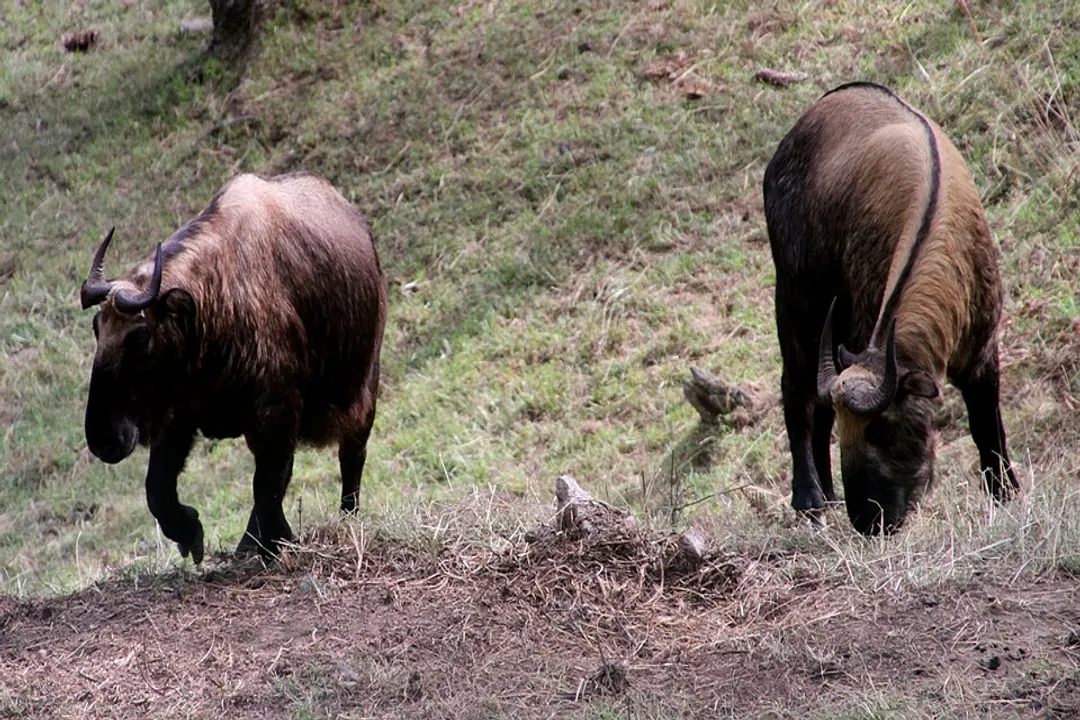
The purpose of these substantial head structures extends beyond mere appearance or gender roles. Horns on both sexes strongly suggest a necessity for self-defense against predation. [3] Takin inhabit steep, rugged terrain, and while their formidable size deters many attackers, they must be equipped to defend themselves and their young when cornered or encountered by apex predators common to their habitat. [7]
When threatened, the takin's primary defense is to group together, forming a defensive circle with the young protected in the center. [7] In this formation, the heavy horns are presented outwards, creating a virtually impenetrable barrier of sharp points and powerful bodies. The female's contribution to this defensive perimeter is just as crucial as the male's; her horns, though smaller, are still capable of inflicting serious injury. [3]
Within the social structure, the horns are also employed in non-lethal contests between males for dominance, especially during the rutting season. [3] These contests usually involve pushing and wrestling matches where the horns are locked, testing strength and resolve rather than resulting in fatal wounds, which is a common pattern in horned ungulates whose horns are more curving than pointed like an African antelope's spear-like horns.
If one analyzes the evolutionary trade-off here, it becomes clear why females retain them. In species where only males have horns, those horns are typically used primarily for intrasexual competition. However, when females also bear significant defensive structures, it suggests that the risk of predation on the entire group, including females and juveniles, is high enough to warrant the high energetic investment in horn growth for all adults. [7] For a female caring for a dependent calf in the mountains, having a functional set of horns is an absolute necessity for herd protection, not just a marker of reproductive quality. This contrasts sharply with some deer species where antlers are shed annually and are purely male ornamentation.
# Social Dynamics
The presence of horns on both sexes subtly shapes the social dynamics of the takin herd. Unlike species where a clear distinction exists between the heavily armed male and the unarmed female, the takin presents a more evenly matched adult unit in terms of immediate defensive capability. [2][7] This might contribute to the tight, cohesive nature of their herds, where cooperation in vigilance and defense is paramount for survival in remote, high-altitude habitats. [3]
We can infer that social status within the female cohort might also be subtly adjudicated through horn size or condition, even if the primary dominance battles are reserved for the bulls. A female with noticeably smaller or damaged horns might occupy a lower ranking within the female hierarchy, potentially affecting her access to prime forage, especially during periods of scarcity, which are common in their natural environment. [1] While sources emphasize the male dominance displays, observing how less-dominant females interact during a restricted feeding opportunity could reveal a nuanced, horn-related pecking order below the level of the bulls. This continuous, low-level assessment of capability, signaled by horns, likely keeps the herd organized without constant, energy-draining fights.
The collective defense strategy, relying on the circular wall of horns, is an excellent example of convergent evolution in extreme environments. It mirrors formations seen in muskoxen, another stocky, shaggy-coated inhabitant of harsh climes. For the takin, the constant presence of horns on every adult ensures that the defensive front is always ready, regardless of which individuals might be leading the group at any given moment. [3][7] This shared biological endowment reinforces the collective survival mechanism inherent to their way of life.
Related Questions
#Citations
Takin - Wikipedia
Takin (Budorcas spp.) Fact Sheet: Physical Characteristics - LibGuides
Bhutan Takin | Bhutan & Nepal Wildlife Guide
Takin facts for endangered Central Asian ungulate presentation
TAKIN: CHARACTERISTICS, BEHAVIOR AND REPRODUCTION
Takin Facts for Kids
Takin | Planet Zoo Wiki | Fandom
The Takin's Tale - National Wildlife Federation
Takin Animal Facts - Budorcas taxicolor