What is the taxonomy of the smooth hammerhead shark?

The smooth hammerhead shark, scientifically designated as Sphyrna zygaena, occupies a distinct and ancient lineage within the cartilaginous fishes, a classification group that places it far removed from the bony fish we commonly encounter. Understanding its position in the tree of life—its taxonomy—reveals much about its evolutionary history, its physical characteristics, and its relationship to other large, predatory sharks swimming in the world’s oceans. [1][5]
# Scientific Placement

The highest level of classification commonly cited for the smooth hammerhead places it firmly within the phylum Chordata, belonging to the subphylum Vertebrata, as it possesses a backbone, even if that structure is cartilaginous rather than bony. [1] It is a member of the class Chondrichthyes, [1][5] the group encompassing all sharks, rays, and skates. This shared class membership immediately signals key physiological traits, such as the absence of a swim bladder and a skeleton made of cartilage. [5]
The order to which the smooth hammerhead belongs is Carcharhiniformes. [1][5] This is a massive and significant grouping, often referred to as the ground sharks. Members of this order are characterized by possessing two dorsal fins, an anal fin, and, notably, having nictitating membranes—a protective third eyelid—over their eyes. [1] Within this broad order, the smooth hammerhead is separated into its own family, which is the most visually defining feature of the animal.
Its family name is Sphyrnidae, [1][5] the group that exclusively contains all hammerhead sharks. This family unites species that share the characteristic, laterally expanded cephalofoil, or "hammer". [1] The genus name is Sphyrna, [3][5] which is derived from the ancient Greek word for a type of shark, but more commonly understood to mean "hammer-shaped," directly referencing its unique head structure. [1] Finally, the specific epithet, or species name, is zygaena. [3][5] This species name is shared across multiple hammerhead species, highlighting the distinct group within the genus Sphyrna that possesses the more rounded, less indented head shape, as opposed to species like the scalloped hammerhead. [2] Therefore, the full binomial nomenclature is Sphyrna zygaena. [4]
| Taxonomic Rank | Classification | Defining Feature Summary |
|---|---|---|
| Class | Chondrichthyes | Cartilaginous skeleton [1][5] |
| Order | Carcharhiniformes | Presence of an anal fin and nictitating membrane [1] |
| Family | Sphyrnidae | Hammer-shaped head (cephalofoil) [1] |
| Genus | Sphyrna | Hammerhead sharks [5] |
| Species | S. zygaena | The smooth or unnotched variant [2] |
# Family Divergence

The family Sphyrnidae is what truly sets the smooth hammerhead apart for the casual observer. While all sharks in this family possess the iconic cephalofoil, the degree and shape of this structure vary significantly, which is how different species are distinguished. [2] The smooth hammerhead gets its common name from this feature: its cephalofoil is relatively smooth and lacks a distinct, central indentation or notch often seen in other species, such as the great hammerhead (Sphyrna mokarran) or the scalloped hammerhead (Sphyrna lewini). [2]
This distinction in head morphology is key to identification. While the great hammerhead has a distinctly concave front edge to its hammer, and the scalloped hammerhead has scallops along its leading edge, the smooth hammerhead has a more rounded, almost continuous curve between the eyes. [2] Interestingly, the structure of the head is not just a cosmetic feature; it is believed to play a role in generating lift, providing superior maneuverability, and potentially assisting in prey detection through electroreception. [1] Placing the smooth hammerhead within the family Sphyrnidae signifies that, despite minor variations in the cephalofoil’s shape, the fundamental adaptation is shared across its immediate relatives. [5]

# Order Context
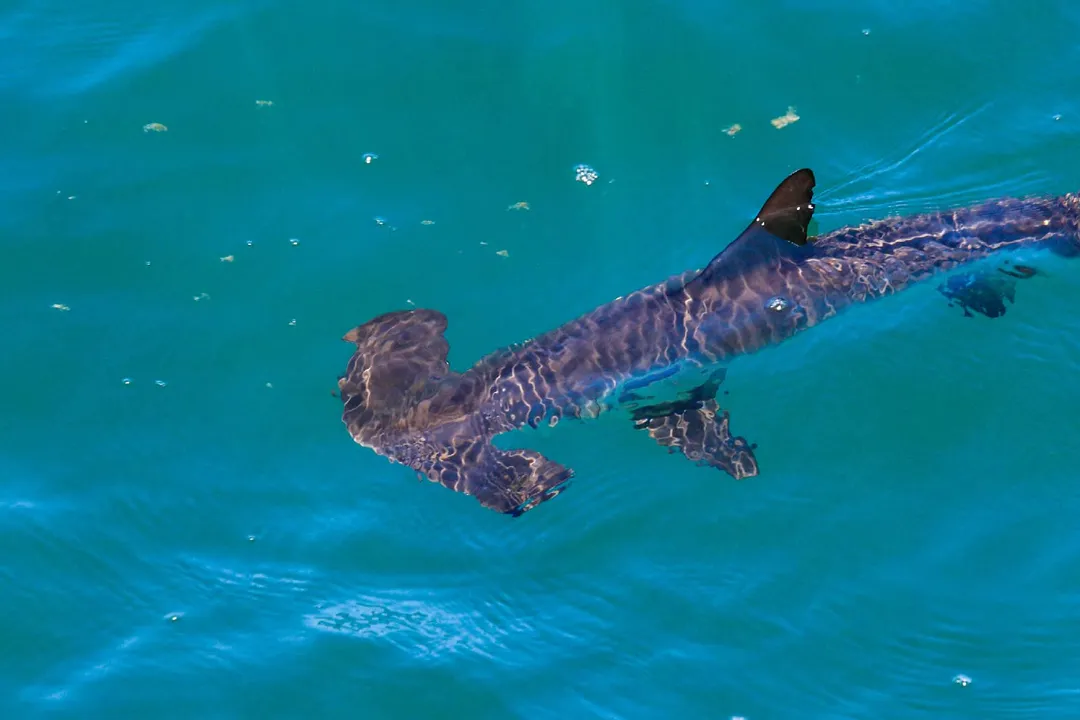
Being classified in the order Carcharhiniformes places Sphyrna zygaena alongside some of the ocean’s most widespread and recognizable sharks, including requiem sharks like the blue shark and bull shark. [1] The defining characteristics of Carcharhiniformes, particularly the two dorsal fins and the presence of an anal fin, are conserved in the smooth hammerhead, showing it belongs to a successful, generalized group of sharks that have dominated coastal and pelagic environments for millions of years. [1] When considering the evolutionary pressures that led to the development of the hammerhead shape, it is fascinating to reflect that the smooth hammerhead diverged from this mainstream ground shark lineage to develop such a specialized sensory and hydrodynamic structure, all while retaining the basic body plan of its order mates. [1] This retention of fundamental traits while developing a novel appendage speaks to a highly successful, adaptive evolutionary path within a largely successful order.
# Naming Insight
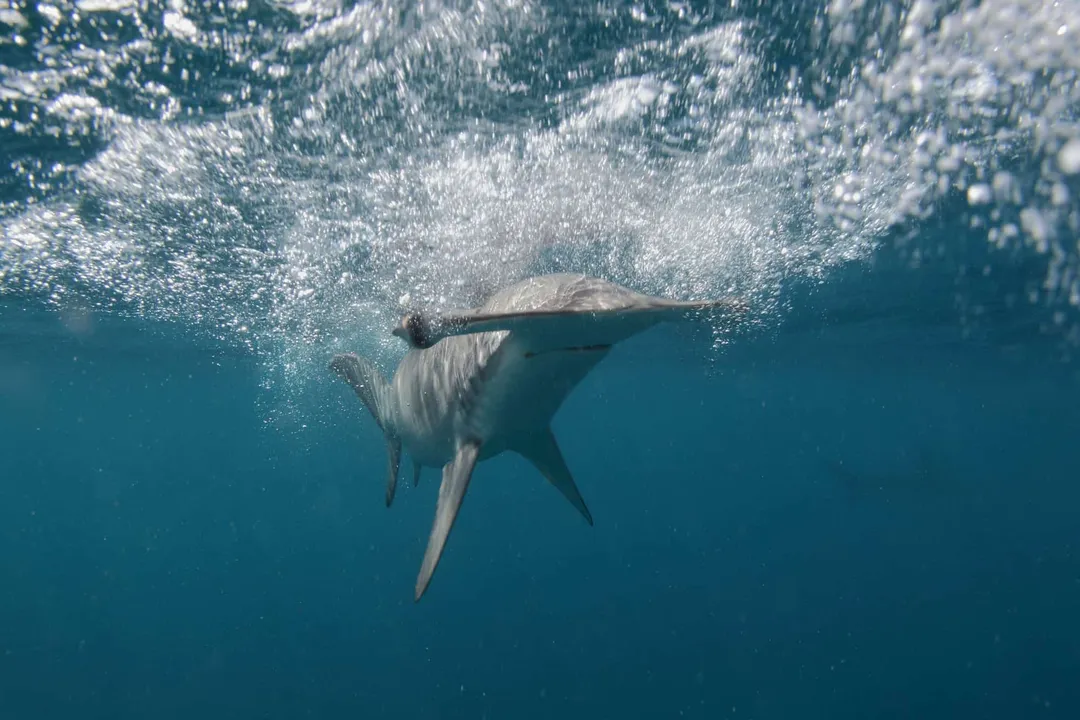
The scientific name itself offers a clue to identification and history. The genus Sphyrna directly points to the defining physical trait—the hammer. The species name zygaena is derived from Greek, often interpreted in biological contexts to mean "yoked" or "shaped like a yoke," which perfectly describes the broad, slightly curved bar connecting the eyes across the shark’s head. [1] This echoes the consistent effort in taxonomy to link the formal Latinized name back to a recognizable physical attribute of the organism, providing a universal descriptor across languages and eras. [3]
# Global Distribution
While taxonomy defines what the shark is genetically and morphologically, its scientific placement is also linked to its distribution, often reflected in how various scientific bodies catalogue it. [1][5] The smooth hammerhead is known to have a wide, somewhat cosmopolitan distribution, typically found in temperate and tropical waters globally. [5] Its presence has been noted across the Atlantic, Pacific, and Indian Oceans. [5] For instance, records exist from the Gulf of Mexico and the Caribbean Sea, [6] as well as off the coasts of Australia. [7] This broad distribution suggests a highly successful generalist strategy within the constraints of its family adaptations, differentiating it from some other hammerhead species that might be restricted to more purely tropical or specific oceanic zones. [5] Understanding this wide geographic range reinforces why consistent, globally accepted taxonomic classification is so important for conservation tracking. [4]
# Identification Challenges
One aspect that directly relates to taxonomy is identification, especially when dealing with species that look similar or are geographically close. [2] Distinguishing the smooth hammerhead from its closest relatives, particularly the great hammerhead and the scalloped hammerhead, is critical for researchers and fishers alike. [2] Misidentification can skew population data and improperly assign conservation status, which is particularly relevant since the smooth hammerhead is globally considered vulnerable or endangered by many conservation groups. [4] The primary visual cue remains the cephalofoil's shape, as noted previously: smooth and rounded for S. zygaena, versus indented or scalloped for the others. [2] If researchers were to rely only on general body shape or fin placement, they might mistake it for another member of Carcharhiniformes, but the unique cranial structure anchors it firmly within Sphyrnidae. [1]

# Conservation Status Link
Although the core topic is taxonomy, the classification directly feeds into conservation efforts. The smooth hammerhead is listed on the IUCN Red List of Threatened Species. Its placement in the Sphyrna genus, within the Sphyrnidae family, means it is tracked alongside other hammerheads, many of which face severe population declines due to finning and bycatch. [4] For example, conservation monitoring groups often track Sphyrna zygaena listings specifically because of its sensitivity to fishing pressure. [4] This systematic classification ensures that when a listing applies to the family or order, specific research can be targeted to the species level, recognizing the specific biological vulnerabilities associated with S. zygaena. [4] If the taxonomy were less clear, or if common names were relied upon too heavily, the species could slip through the cracks of international protective measures. [1]
# Summary of Classification
The smooth hammerhead shark, Sphyrna zygaena, is definitively a member of the class Chondrichthyes, meaning it possesses a cartilaginous skeleton. [1][5] It resides in the order Carcharhiniformes, sharing ancestral traits with other ground sharks, such as possessing an anal fin. [1] Its identity is solidified within the family Sphyrnidae and the genus Sphyrna due to the possession of the hammer-like head, though its specific species epithet zygaena denotes the specific morphology of that head—rounded and lacking the central notch found in related species. [2][3] This precise scientific positioning is the foundation upon which all biological understanding of this magnificent pelagic predator is built.
Related Questions
#Citations
Smooth hammerhead shark (Sphyrna zygaena) - SPAW-RAC
Smooth Hammerhead – Discover Fishes
Smooth Hammerhead (Sphyrna zygaena) - iNaturalist
Sphyrna zygaena, Smooth hammerhead : fisheries, gamefish
Smooth Hammerhead Shark - Digital Fish Library
Species: Sphyrna zygaena, Smooth Hammerhead, Smooth ...
Smooth Hammerhead - Sharks - Port Phillip Bay Taxonomy Toolkit
Smooth Hammerhead Shark - Sphyrna zygaena - A-Z Animals
Smooth Hammerhead Shark ID Guide