What is the description of the horned viper?
The moniker "horned viper" immediately conjures an image of a snake uniquely equipped for its harsh surroundings, yet this common name is applied to at least two visually and geographically distinct species, demanding a careful description of each. Predominantly, when discussing the quintessential desert-dwelling horned viper, the subject is Cerastes cerastes, also known as the Desert Horned Viper or Sahara Horned Viper. This species is famous for the pair of projections above its eyes, a feature that grants it its distinctive title. A different snake, the Vipera ammodytes, found in Europe, shares the "horned viper" name due to a completely different structure on its snout. To properly describe this group, we must focus first on the African and Middle Eastern specialist, C. cerastes, before drawing a contrast with its European namesake.
# Distinctive Head Structures
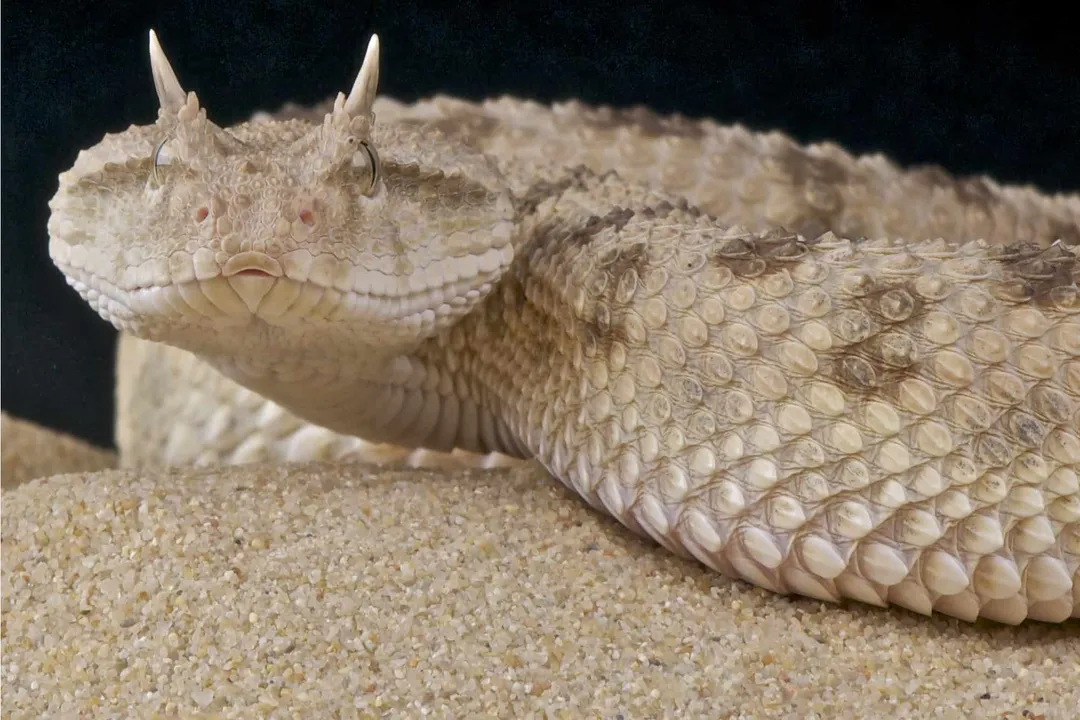
The most defining characteristic of Cerastes cerastes is the presence of the supraorbital "horns" situated directly above each eye. These horns are formed from a single modified scale, though not all individuals possess them; in fact, only about half of the population typically displays this feature. The evolutionary pressures in the arid environment appear to have selected for this feature primarily as a protective mechanism, helping to shield the eyes from abrasive, wind-blown sand that collects above them. Furthermore, these unusual head structures might serve a secondary purpose by breaking up the snake’s outline, potentially confusing predators.
Compared to many desert snakes, C. cerastes is relatively short and stocky, generally measuring between 12 and 24 inches in length, though specimens can reach close to 33 inches. The body maintains a robust frame, appearing broad and somewhat flat, narrowing toward a short tail that may sometimes possess a dark tip. While both sexes share the general body structure, females tend to be larger than males. The head itself is broad and somewhat triangular, contrasting with a thin neck.
Scale texture and coloration are crucial elements of this viper's description, serving as its primary defense against detection. The body is covered in many rows—often 25 to 35—of heavily keeled scales. Coloration is expertly adapted to match the substrate, ranging through yellowish, brownish, reddish, and grayish shades. These base colors are frequently overlaid with darker, rectangular brown patches dorsally, which can sometimes merge into a disruptive, dark zigzag pattern along the spine.
# Locomotion in Sand
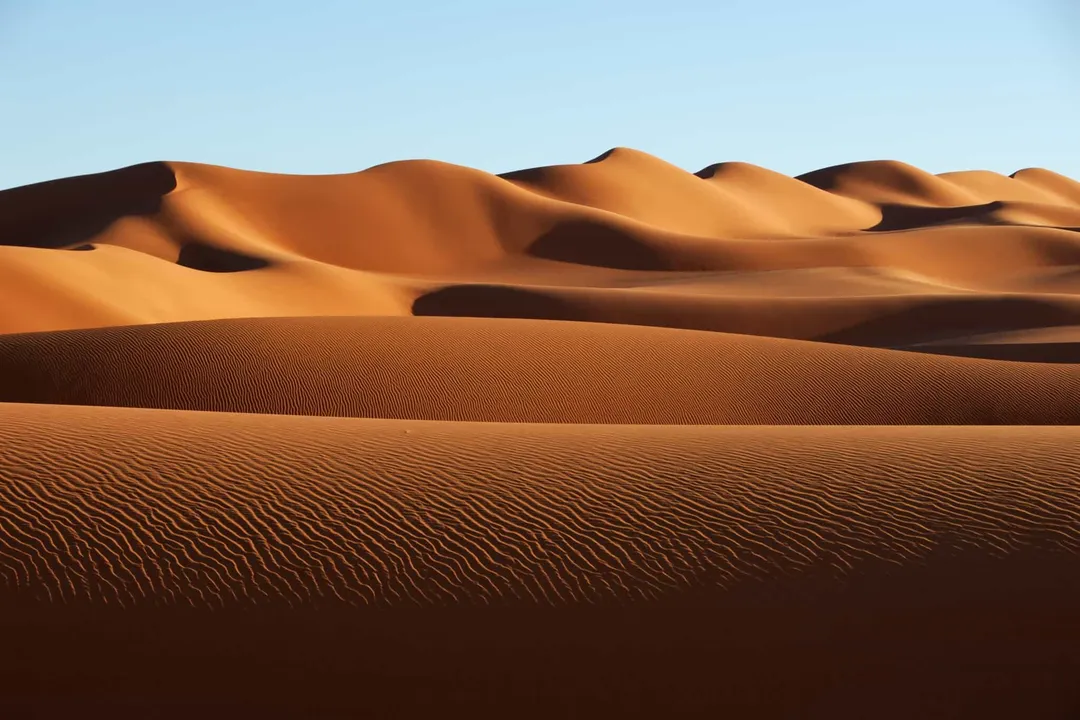
The description of the Cerastes cerastes is incomplete without detailing its highly specialized method of movement: sidewinding. This locomotive style is an adaptation that allows the snake to traverse loose desert sands efficiently without sinking or overheating. By lifting a loop of its body and moving that loop forward while the rest of the body follows, the viper minimizes the contact area between its belly and the scorching ground. This sideways, looping motion is also effective when the snake needs to ascend sandy slopes, preventing slippage.
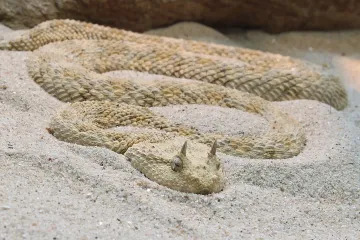
This reliance on ground contact and sand movement points to a deeper level of adaptation. It is fascinating to consider that beyond the visually striking horns and camouflage, the C. cerastes utilizes subtle, internal water management strategies. Sources note that this viper is known to fill its scales with morning dew, using these reserves as a critical source of water in an environment where liquid water is almost non-existent. This behavioral adaptation for water retention, paired with the heat-avoiding fossorial habit—burying itself in the sand during the day until only eyes and nostrils are exposed—shows a mastery of water conservation that is arguably as important as its striking visual features. In contrast, the European Vipera ammodytes largely avoids the shifting sands, preferring dry, rocky hillsides with sparse vegetation, suggesting that its evolutionary adaptations emphasize stability and cover over specialized loose-surface movement.
# Defense and Venom Profile
As a member of the Viperidae family, the horned viper is venomous, utilizing hinged, hollow fangs that unfold when the mouth opens to inject its toxic payload. When threatened, C. cerastes has a unique first line of defense: it cannot hiss through the nose, so instead, it produces a rasping or crackling sound by rubbing together specially serrated scales arranged in oblique rows on its sides. This acoustic warning is usually given before the viper resorts to striking.
The venom composition varies depending on the viper’s geographical location, though it generally contains about 13 different toxins. The effects upon envenomation are serious, with documented symptoms including massive local swelling, acute pain, nausea, vomiting, and profuse sweating. A particularly dangerous aspect is its ability to cause hemorrhagic aftereffects and issues with blood clotting. While the venom is generally considered less toxic than that of some other snakes, a dose of approximately 40 to 50 milligrams of dried venom is cited as a lethal risk to humans.
# The European Counterpart
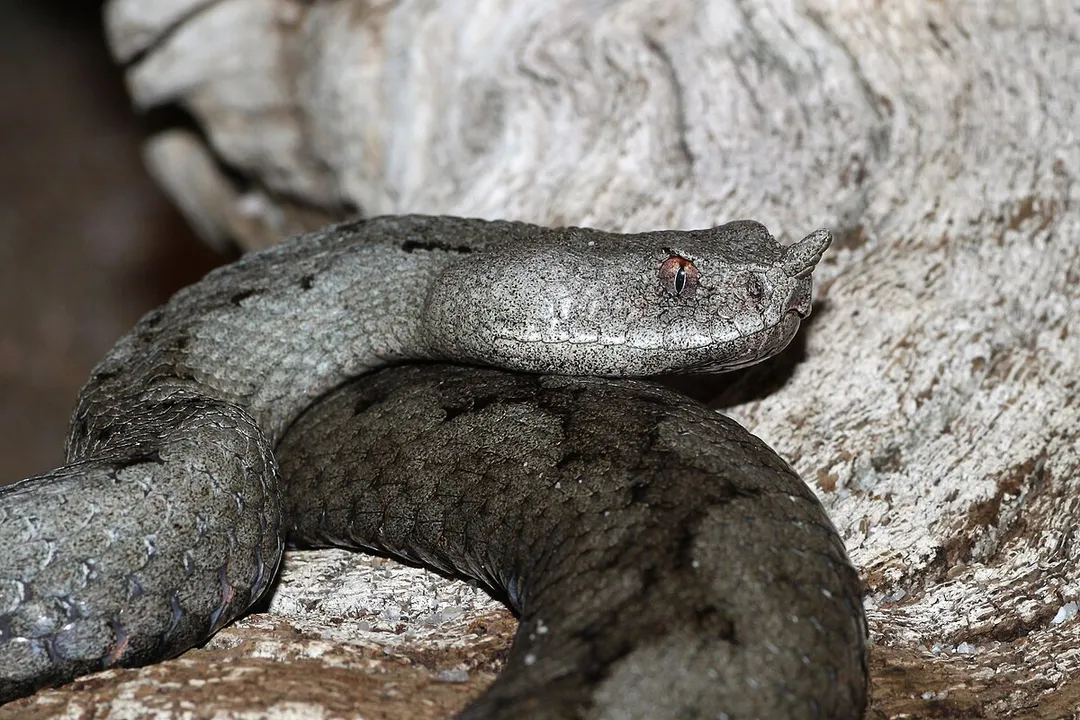
It is important to distinguish C. cerastes from the Vipera ammodytes, which is also referred to as the horned viper, or more specifically, the long-nosed viper. This species resides across a wide area of Southeastern Europe, including the Balkans, northern Italy, and parts of Asia Minor.
The 'horn' of V. ammodytes is structurally different from the supraorbital scales of C. cerastes. The European species sports a single soft, flexible protuberance on its snout, situated above the rostral scale, composed of roughly nine to seventeen small scales arranged in transverse rows. This horn can grow to about 5 mm, pointing vertically in southern subspecies and diagonally forward in the nominate subspecies. V. ammodytes is generally larger than its desert cousin, often reaching up to 29.5 inches (75 cm).
Regarding its threat level, V. ammodytes is considered the most dangerous of the European vipers due to its substantial size, relatively long fangs (up to 13 mm), and high venom toxicity. Its venom contains both proteolytic and neurotoxic components, along with hemotoxins that powerfully affect blood coagulation, akin to Crotaline venom. While lethal potential exists, expert medical treatment significantly reduces fatality risks. Unlike the desert species, V. ammodytes typically prefers dry, rocky hillsides rather than deep sands, leading to the common name "sand viper" being considered misleading for this species.
# Habitat, Diet, and Lifecycle
Focusing back on the Desert Horned Viper (Cerastes cerastes), its life is intrinsically tied to arid, open country. Its geographic range spans North Africa, extending through the Sahara Desert to southwestern Arabia and Israel. It thrives in stony deserts, rocky hills, and sandy environments, often taking shelter in wadis (dry riverbeds) or dunes. While records are sparse, it can occasionally be found in the transitional Sahel region.
The viper maintains a solitary existence, emerging from its daytime burrowing or hiding spots primarily during the cooler hours of the night or at dusk to hunt. It is an ambush predator, positioning itself partially or completely buried in the sand near rocks or vegetation. Its diet is composed mainly of small vertebrates, with lizards forming the largest portion, supplemented by small mammals, such as rodents, and birds that wander into its hunting ground.
In terms of its reproductive cycle, C. cerastes is an oviparous species, meaning it lays eggs. Mating typically occurs in the early spring, around April, with the snakes likely locating each other via chemical signals (pheromones) while buried beneath the sand. The female deposits between 8 and 23 eggs, usually hidden under rocks or in abandoned burrows, and provides no subsequent parental care. After an incubation period spanning 50 to 80 days, the hatchlings emerge, already independent and equipped for desert life, reaching sexual maturity around two years of age. The species is assessed by the IUCN as "Least Concern," reflecting its successful adaptation to these severe ecosystems, though habitat loss remains a general threat to many reptiles in the region.
Related Questions
#Citations
Horned viper - Zoo Basel
Horned Viper Animal Facts
Cerastes cerastes (Desert Horned Viper) - Animal Diversity Web
Horned viper | snake - Britannica
Vipera ammodytes - Wikipedia
Desert Horned Viper | Planet Zoo Wiki - Fandom