How can you identify a carpet viper?
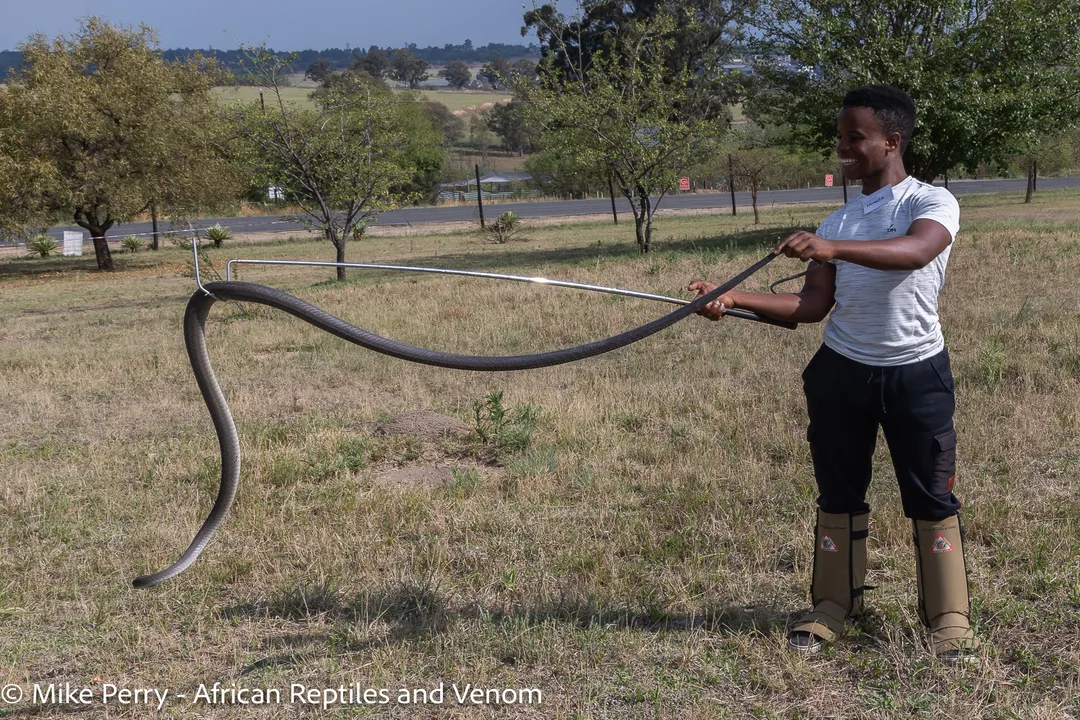
Identifying a carpet viper, often referred to by its more common name, the saw-scaled viper (genus Echis), requires close attention to several distinct physical markers, though their incredible camouflage can make the process challenging. [1][4] These snakes are responsible for a significant number of serious snakebites across their range, making accurate field identification an important skill for anyone living or working in their habitats. [7] Getting the identification right is critical because these snakes are known to be medically significant and highly venomous. [4]
# Head Shape
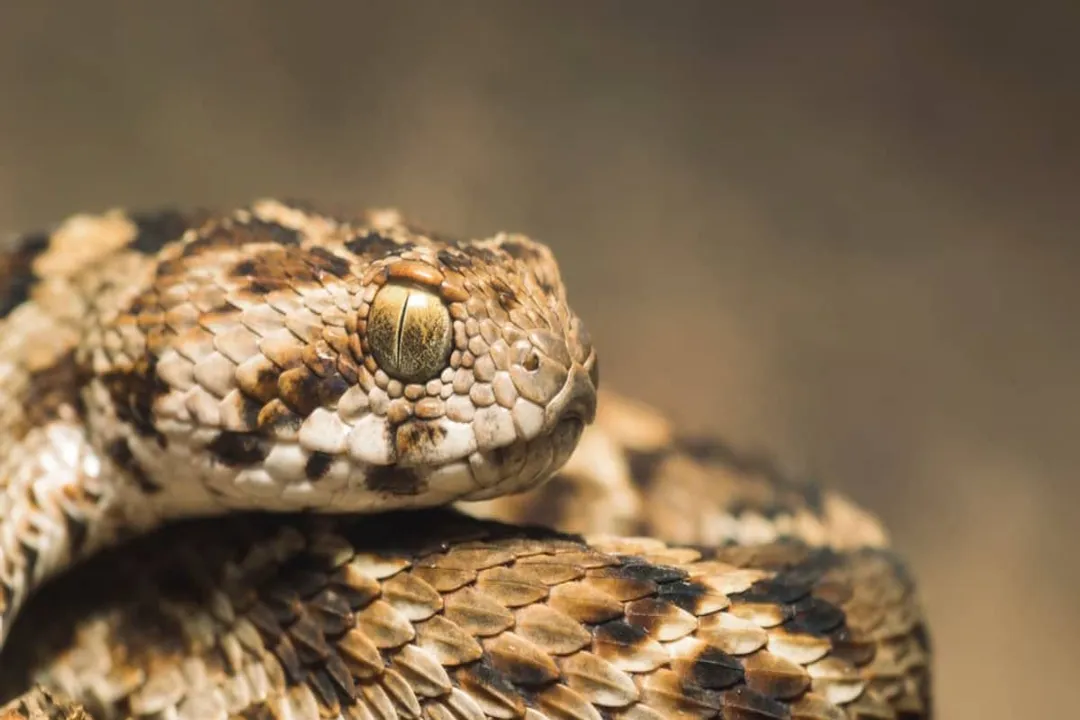
One of the immediate giveaways for many viper species, including the carpet viper, is the shape of the head. Look for a head that is distinctly triangular and noticeably wider than the neck. [4] This broad, angular shape is typical of venomous snakes possessing long, hinged fangs used for envenomation. [4]
Another key feature to check, provided you can safely observe the eyes without getting too close, is the pupil shape. Carpet vipers possess vertical slit pupils. [4] While this is not unique to them, combined with the head shape and habitat, it narrows down the possibilities considerably.
# Coloration Patterns
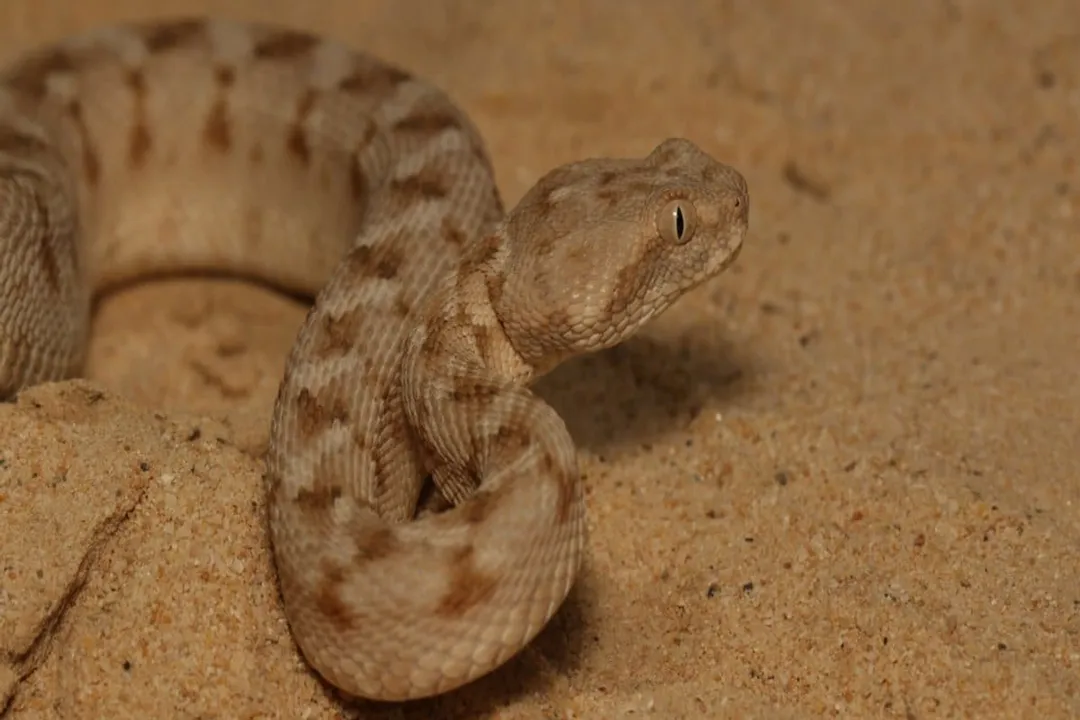
The coloration of the carpet viper is highly variable, which contributes to its ability to blend into its surroundings, often resembling sandy, arid terrain. [1][4] They typically exhibit shades of sandy brown, grey, or reddish-brown. [4]
The most reliable visual identification clue, besides the head shape, lies in the markings along the back. Most saw-scaled or carpet vipers feature dark, somewhat rounded spots or distinct crossbands running down their dorsal side. [4] For instance, the West African Carpet Viper (Echis ocellatus) often displays dark spots that are bordered with white—a pattern that can stand out slightly even against a complex background. [7]
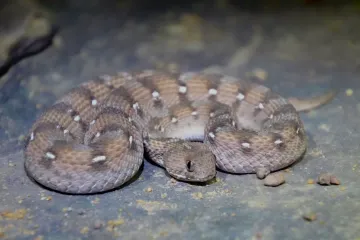
It is important to remember that coloration can be influenced by local environment; a viper found in rocky, reddish soil will look quite different from one dwelling on light-colored sand, yet both share that characteristic spotted or banded dorsal design. [4] If you happen to be observing specimens in areas like Oman, the specific patterning might include diamond shapes, showing the wide degree of geographical variance in appearance. [8]
# Scale Sound
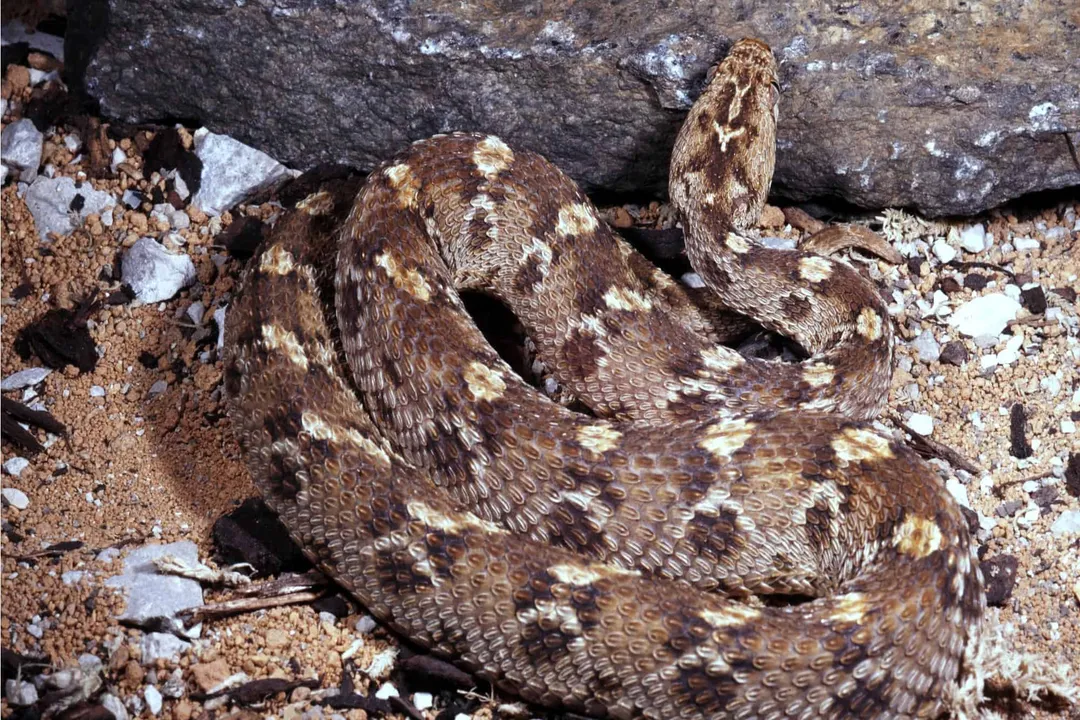
While physical markings are key, one of the most distinctive identification features is auditory, particularly when the snake feels threatened or agitated. Carpet vipers possess heavily keeled scales. [4] These scales are not smooth; they have a prominent ridge running down the center, and the edges are often serrated or roughened. [4]
When the snake rubs these rough scales together rapidly—a behavior known as stridulation—it produces a distinctive, loud, rasping, or sizzling sound. [4][7] This auditory signal is a prime warning mechanism. The sizzling sound is often heard before the snake is visually located, acting as an auditory tripwire that alerts you to a potential danger at close range, typically when they feel their space is being invaded. [4][7] If you hear this distinct sound, stop moving immediately and scan the ground near the source; this sound is a much more reliable field indicator than relying solely on visual confirmation in dense scrub. [2][6]
# Size and Build
Carpet vipers are generally not large snakes, which can sometimes lead inexperienced observers to misidentify them as a non-dangerous species if they only focus on size. They are relatively small, usually measuring less than three feet in length, or about one meter. [1][4] Echis ocellatus, for example, rarely exceeds about 2.5 feet. [7] Their build is stocky for their size, lending them a somewhat thick appearance relative to their length. [4]
# Habitat Context
Knowing where you are observing the snake can significantly help narrow down the identification, as the genus Echis is spread across Africa, the Middle East, and Asia. [1] In many parts of Africa, these vipers thrive in semi-arid regions, savannas, and rocky landscapes. [1] They are often found near human habitation because their preferred prey, like rodents, are abundant there, leading to frequent encounters. [7]
If you are observing snakes in a region confirmed as West Africa, for example, the presence of a saw-scaled viper is highly probable if the physical description fits, narrowing the identification from the entire Echis genus to the specific Echis ocellatus. [7] This contextual knowledge, combined with physical observation, moves the identification process from guesswork to informed assessment.
# Distinguishing Features Summary
To summarize the primary visual and behavioral cues that point toward a carpet viper identification:
| Feature | Characteristic Trait | Significance |
|---|---|---|
| Head | Broadly triangular, wider than the neck [4] | Classic viper profile [4] |
| Pupils | Vertical slits [4] | Common in many vipers |
| Scales | Heavily keeled and rough [4] | Produces the warning sound |
| Pattern | Dark spots or crossbands on a lighter base [4][7] | Key visual ID against camouflage |
| Size | Generally small, under 1 meter [1][4] | Not a large constrictor |
| Behavior | Produces a distinct sizzling sound when disturbed [4] | Reliable auditory warning |
When encountering a snake matching this description, it is essential to maintain a safe distance. The consensus among experts is that these snakes are highly venomous and potentially deadly. [4][7] If you are uncertain about the identification, treating the snake as dangerous is the only safe course of action. [7] Recognizing the combination of a triangular head, keeled scales, and characteristic dorsal spots is your best defense for immediate recognition in the field.
#Videos
How To Identify Carpet Viper? How do carpet vipers hunt ... - YouTube
Finding a Carpet Viper | Ep 1: Oman - Desert Canyon - YouTube
Related Questions
#Citations
Carpet Viper - A-Z Animals
How To Identify Carpet Viper? How do carpet vipers hunt ... - YouTube
Echis ocellatus - Wikipedia
Saw-scaled or Carpet Vipers - African Reptiles & Venom
Is this snake a Northeast African Carpet Viper? - Facebook
West African Carpet Viper - African Snakebite Institute
Id needed [near Muscat, Oman] : r/whatsthissnake - Reddit
Burton's Carpet Viper