What is the taxonomy of thunnus obesus?
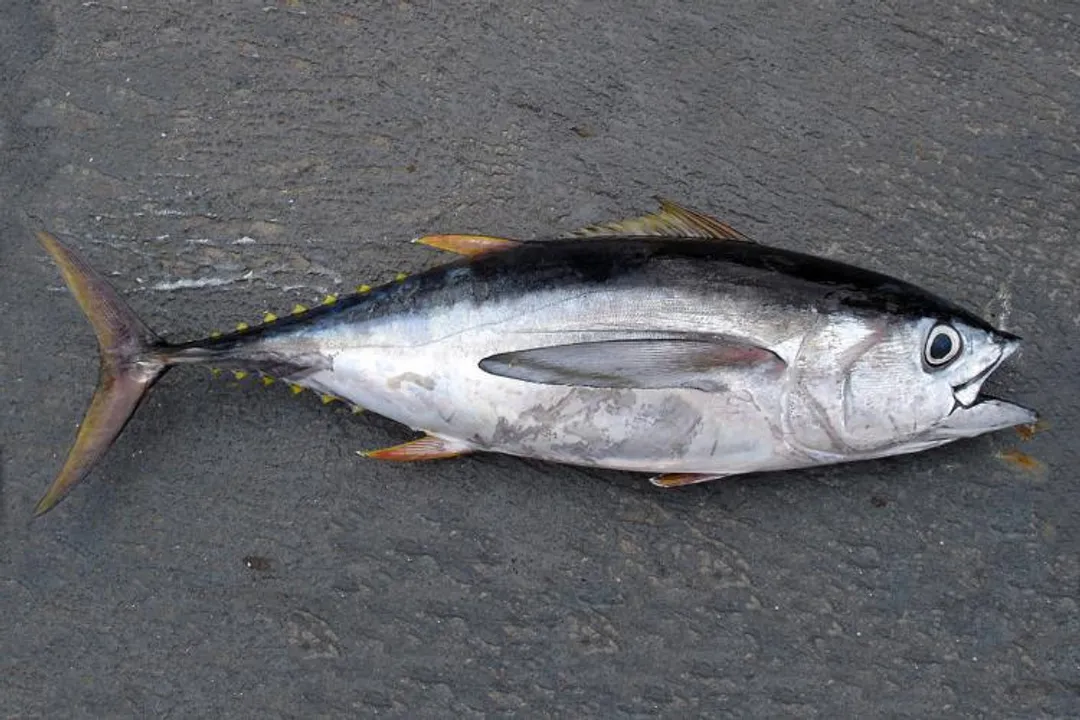
The classification of Thunnus obesus, commonly known in commercial circles as Bigeye Tuna, is a precise reflection of its evolutionary placement within the diverse world of marine life. Understanding this taxonomy—the formal system of naming and classifying organisms—is fundamental not only for ichthyologists but also for fisheries management across the globe, as regulatory bodies depend on consistent scientific identification to track and conserve these commercially valuable pelagic fish. [4] The placement begins at the broadest biological levels and narrows down systematically to the specific species epithet.
# Animal Kingdom
The broadest classification places T. obesus squarely within the Kingdom Animalia, indicating it is a multicellular, heterotrophic organism incapable of producing its own food, a characteristic shared by all fish species. [3][9] This kingdom represents the highest level of agreement across all biological classification systems, whether viewed through a genetic lens like UniProt [9] or a broad biodiversity registry like GBIF. [7]
# Chordate Phylum
Moving deeper, the Bigeye Tuna belongs to the Phylum Chordata. [3] This classification is crucial because it signifies that, at some point in their development, these organisms possess a notochord, a dorsal nerve cord, pharyngeal slits, and a post-anal tail. [6] For Thunnus obesus, which is a highly mobile, active swimmer, these underlying structural traits support its streamlined, powerful body plan, essential for its oceanic existence. [6]

# Bony Fish
Within Chordata, the Class Actinopterygii identifies the fish as ray-finned fishes. [3] These are the dominant group of modern fish, characterized by skeletal rays supporting their fins, as opposed to the fleshy, lobe-like fins of sarcopterygians. This large class reflects the evolutionary success of bony fish in colonizing nearly every aquatic niche. [6]
# Higher Order
The placement within the Order has seen some modern revision, reflecting ongoing genetic research, though older or more traditional classifications often persist in various databases. Traditionally, many tunas were placed in the Order Perciformes. [3] However, more modern phylogenetic studies, often supported by large-scale genomic data used by sequence repositories, frequently place them within the Order Scombriformes. [2] The WoRMS database recognizes Thunnus obesus within Scombriformes, suggesting this is the currently accepted higher-level arrangement by many marine taxonomists. [2] The stability of the genus Thunnus itself, however, appears much more established than the exact order it belongs to, suggesting that while the higher branches of the fish evolutionary tree are being re-sculpted, the core grouping of the tunas remains robust. [1][7]
# The Tuna Family
The Family level pinpoints the organism as a member of the Scombridae, which encompasses the mackerels and tunas. [3] Members of this family are typically characterized by fast-swimming, streamlined bodies, and often exhibit countershading—dark on top and light on the belly—a camouflage technique particularly well-suited for pelagic life in the open ocean where Bigeye Tuna reside. [4] This family grouping clearly separates them from other large ocean predators like billfish (Istiophoridae) or sharks (Chondrichthyes).
# Genus Thunnus
The Genus is Thunnus, a name derived from Greek, signifying the fish itself. [1] This genus includes the most highly prized and well-known large tunas, such as Bluefin (T. thynnus) and Yellowfin (T. albacares). Species within Thunnus are generally recognized by their rigid, torpedo-shaped bodies, deeply forked caudal fins, and the presence of finlets running down the back and belly towards the caudal peduncle. [6] The fact that T. obesus shares this genus means it shares key physiological adaptations, such as being partially warm-bodied (endothermic), which allows it to maintain higher muscle temperatures than surrounding water, granting superior burst speed and sustained cruising ability compared to fully cold-blooded fish. [4]
# The Specific Species
The species epithet is obesus, a Latin term meaning "fat" or "corpulent," a reference likely stemming from the fish's deep body and substantial girth relative to other tunas. [1] The full binomial nomenclature, Thunnus obesus, is the globally recognized scientific name for the Bigeye Tuna. [7]
The accepted authority for this name varies slightly across global scientific repositories, though they all point to the same taxon. FishBase lists the original description authority associated with T. obesus as Lowe, 1839. [1] Other major taxonomic authorities, such as the World Register of Marine Species (WoRMS), confirm this nomenclature while acknowledging the need for database synchronization across all platforms, as shown by the agreement between GBIF and WoRMS on the accepted name. [2][7]
# Synonyms and Nomenclatural Stability
A significant aspect of any species taxonomy is synonymy—the list of older, discarded names that once referred to the same organism. For T. obesus, several junior synonyms exist, names that were proposed by earlier scientists but are no longer considered valid. These historical names can cause confusion in older literature or regional datasets. [6] Examples of these past designations, as cataloged in various biological repositories, include:
The existence of these synonyms highlights the historical challenge in clearly delineating different tuna species before modern morphological and genetic tools were available. For instance, distinguishing Bigeye (T. obesus) from Yellowfin (T. albacares) based solely on external features in a field setting can be difficult, leading to misidentification and the creation of redundant names in early records. [4] Modern databases strive to link all valid synonyms back to the currently accepted name, T. obesus, which is essential for accurate global stock assessment. [2][7]
# Database Cross-Referencing Insights
It is interesting to note how different scientific data aggregators structure this information. While the core Linnaean ranks (Kingdom, Phylum, Class, Order, Family, Genus, Species) are largely consistent, the specific numerical identifiers differ based on the purpose of the database. For instance, NCBI uses Taxonomy ID 8241 for Thunnus obesus, [3][9] while NatureServe uses an Element Global ID of 104430, [5] and the Smithsonian Tropical Research Institute database references a local ID of 2236. [6] This divergence in internal coding underscores a key challenge in large-scale biodiversity science: ensuring semantic interoperability—that data tagged with a WoRMS ID, an NCBI ID, and a GBIF Key are all correctly interpreted as referring to the exact same biological entity, Thunnus obesus, regardless of regional or disciplinary application. [5]
A practical takeaway for anyone analyzing fisheries data across multiple sources is to always check the primary authoritative list (like WoRMS or FishBase) for the accepted name and then cross-reference the associated common names. For example, while NOAA focuses on the Pacific Bigeye Tuna for their management region, [4] FishBase also associates the name Tambakol with T. obesus, a term more common in certain regions of Southeast Asia. [1] This regional naming variation, even when the taxonomy is settled, can sometimes obscure catch statistics when data is aggregated globally.
# Conservation Taxonomy Link
The taxonomic assignment of Thunnus obesus is not merely an academic exercise; it directly informs its conservation status, as recorded by organizations like NatureServe. [5] NatureServe’s classification uses the accepted scientific name to assign a global rank, which in this case is G4 (Apparently Secure). [5] This designation relies entirely on the scientific community agreeing on what T. obesus is, separating it clearly from potentially more threatened or vulnerable tuna species. If a new study were to suggest that T. obesus should be split into two or more distinct species based on cryptic genetic differences, the conservation status of the newly defined populations would need to be re-evaluated independently, potentially placing one or both in a much more precarious position than the current aggregate G4 status suggests. [5]
# Integrated View of Classification
To summarize the generally accepted scientific hierarchy as compiled from these various authoritative sources, one can visualize the path from the broadest group to the specific fish, noting where minor differences in higher classification exist:
| Rank | Classification | Authority Note |
|---|---|---|
| Kingdom | Animalia | Universal agreement [3][7] |
| Phylum | Chordata | Universal agreement [6][9] |
| Class | Actinopterygii | Ray-finned fishes [3][6] |
| Order | Scombriformes / Perciformes | Scombriformes is often cited as current [2][3] |
| Family | Scombridae | Mackerels and Tunas [3] |
| Genus | Thunnus | True Tunas [1] |
| Species | Thunnus obesus | Bigeye Tuna [7] |
This systematic breakdown provides the necessary scaffolding for international bodies like those managing highly migratory stocks to apply specific rules, such as those related to maximum age estimates or sustainable yield calculations, which are species-specific parameters derived from the established taxonomy. [4] The shared presence of T. obesus across multiple large specimen collections, tracked by museum databases like Arctos, further validates this classification by confirming morphological consistency across different geographic samples labeled with this name. [8]
Related Questions
#Citations
Thunnus obesus, Bigeye tuna : fisheries, gamefish - FishBase
World Register of Marine Species - Thunus obesus (Lowe, 1839)
Thunnus obesus - NCBI
Pacific Bigeye Tuna | NOAA Fisheries
Thunnus obesus | NatureServe Explorer
Thunnus obesus, Bigeye Tuna - Shorefishes - The Fishes - Species
Thunnus obesus (Lowe, 1839) - GBIF
Taxonomy Details: Thunnus obesus
Thunnus obesus (Bigeye tuna) | Taxonomy - UniProt