How poisonous is a carpet viper?

The reputation of the carpet viper precedes it, cementing its place as one of the most medically significant snakes across its range. This notoriety stems not just from the chemical makeup of its venom, but also from its widespread distribution and its tendency toward defensive aggression when disturbed. [1][7] While the term "carpet viper" can refer to several species within the Echis genus, much of the documented danger, particularly in West Africa, centers on species like Echis ocellatus. [1][3] Understanding the true measure of its poison requires looking past simple lethality ratings and examining the clinical realities of an encounter.
# Snake Identity

The snakes commonly referred to as carpet vipers belong to the genus Echis, also known worldwide as saw-scaled vipers. [4][7] These snakes are geographically widespread, inhabiting arid regions across Africa, the Middle East, and South Asia. [7] In West Africa, the species Echis ocellatus is a primary concern. [1][3] Despite often being small in stature, they deliver a venom yield capable of causing severe harm. [1][4][7]
Their physical demeanor contributes significantly to their hazard level. They are known for being irritable and defensive when cornered. [3][4] A unique defensive mechanism they employ involves rubbing specialized scales together, creating a rasping or "sizzling" sound that warns potential threats. [4] This characteristic behavior often means that proximity to the snake is established before an actual bite occurs, increasing the likelihood of envenomation compared to snakes that flee first.
# Venom Effects
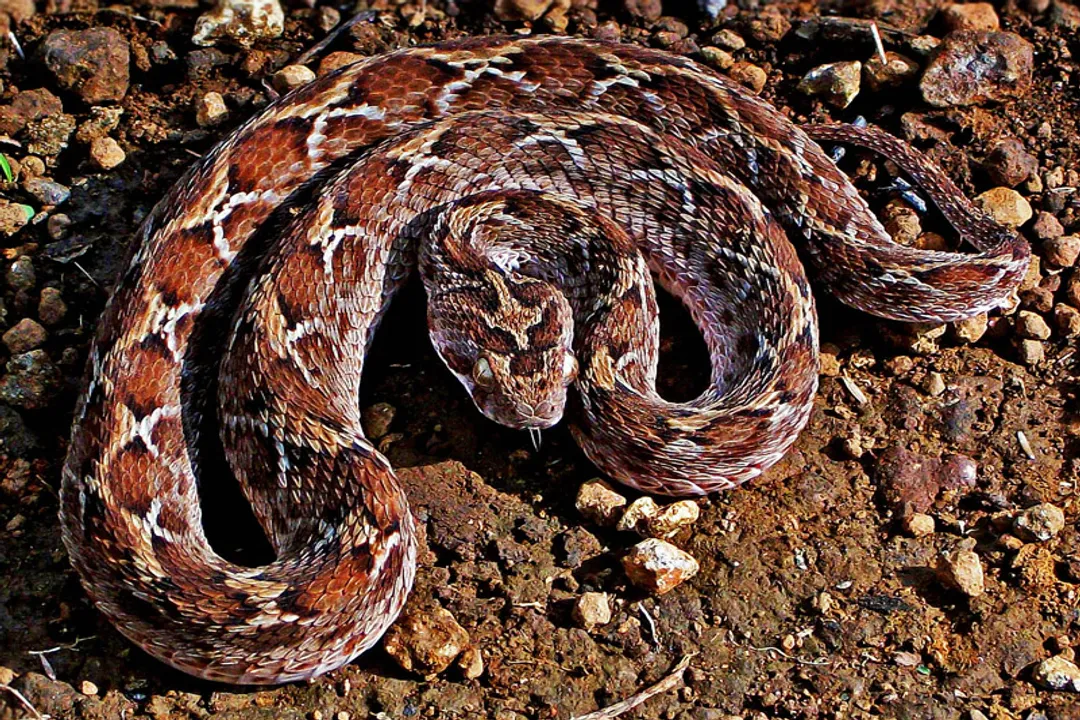
The primary danger posed by the venom of the saw-scaled or carpet viper lies in its powerful haemotoxic properties. [4][6][7] While some sources also classify the venom as cytotoxic, [3] the systemic effect that causes the greatest mortality is its impact on the blood's ability to clot. [1][6]
When venom is successfully injected into the victim's bloodstream, it initiates a cascade of disruptive processes. This disruption leads to systemic hemorrhaging—uncontrolled bleeding—which is the hallmark of a serious Echis envenomation. [3][6] The venom directly interferes with the clotting factors in the blood, meaning that minor injuries can bleed profusely, and internal bleeding can become life-threatening. [6][7] Beyond immediate bleeding issues, significant envenomation has been linked to damage in vital organs, specifically leading to acute kidney injury or renal failure. [6] This potential for kidney shutdown represents a major hurdle in treatment protocols and significantly increases morbidity. [2]
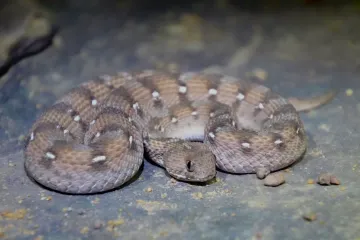
# Bite Manifestation
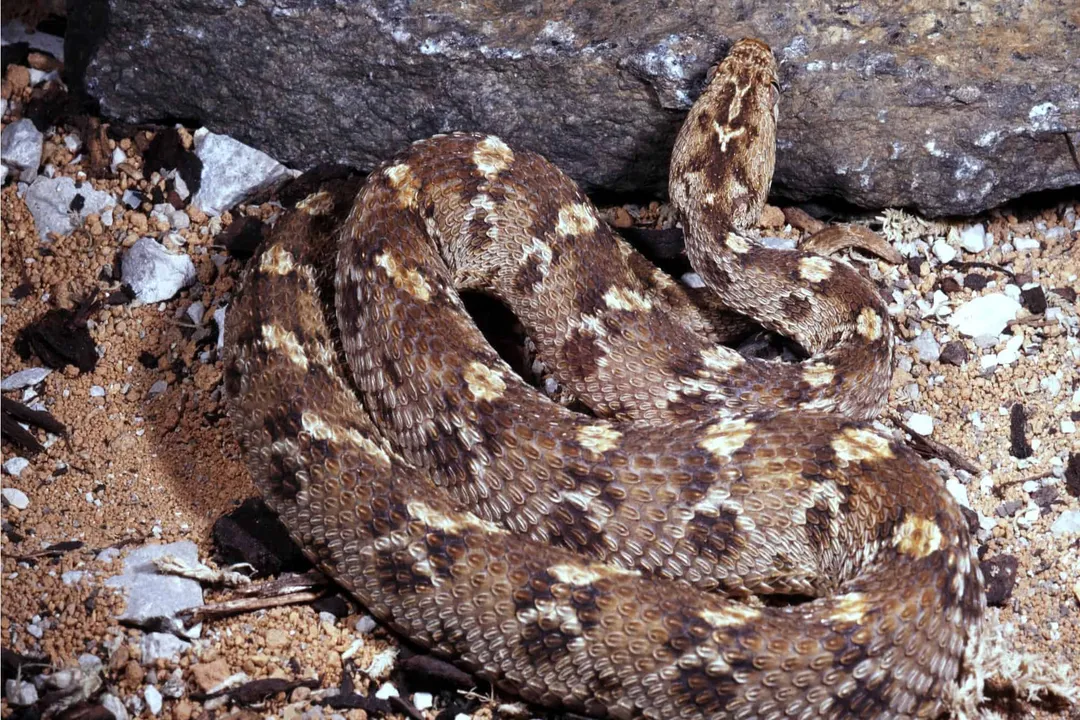
A bite from any of the Echis species demands immediate and serious medical attention due to the potential severity of the envenomation. [3] The symptoms typically unfold in stages, beginning locally. Victims usually experience severe local pain at the site of the bite. [3] This pain is rapidly followed by significant swelling and the development of blisters around the bite area. [1][3] Tissue damage can progress to necrosis in severe cases. [1]
Systemically, the haemotoxic effects become apparent as the venom circulates. One of the most visible signs is spontaneous bleeding, often presenting as nosebleeds (epistaxis) or bleeding from the gums. [3] Internally, this coagulation failure is far more dangerous, potentially leading to life-threatening internal hemorrhage. [6]
It is worth noting a crucial factor in the presentation of these bites that complicates risk assessment: the frequency of dry bites. [5] A dry bite occurs when the snake strikes but injects little to no venom. Given the small size of the fang apparatus on these vipers, this is not an uncommon event. [5][6] However, a bite that initially appears "dry" offers no guarantee against subsequent envenomation from a later, more serious strike. Medical observation is necessary to confirm the absence of venom effects, as coagulopathy can sometimes have a delayed onset. [2]
# Mortality Profile
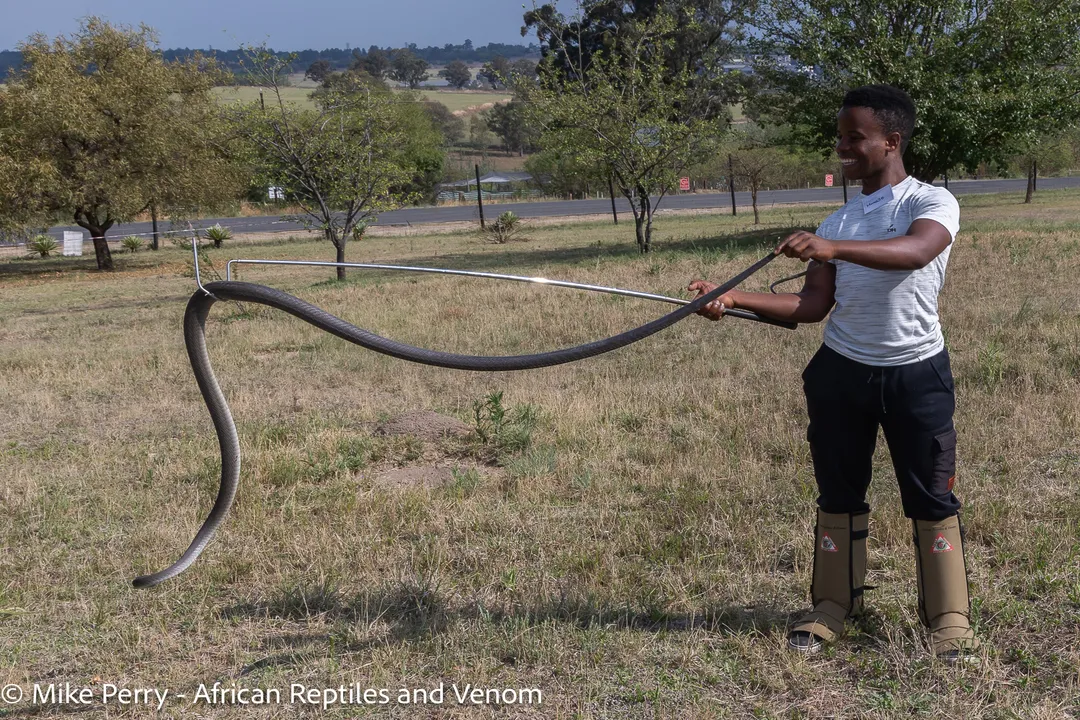
The overall danger level associated with carpet vipers is exceptionally high, positioning them as a leading cause of snakebite-related fatalities globally. [7] In Africa, Echis ocellatus is frequently cited as being responsible for the greatest number of serious snakebite incidents and deaths. [3] This high death toll is a result of a confluence of factors: the venom's potency, the snake's aggressive nature, and its prevalence across populated, often arid or semi-arid, areas where medical access may not be instantaneous. [1][7]
The data coming out of regions endemic to these snakes, such as Nigeria, consistently shows high morbidity associated with bites, even with access to modern medical facilities. [2] When antivenom treatment is delayed or unavailable, the progression from envenomation to severe systemic effects, like organ failure and uncontrollable bleeding, significantly increases the fatality risk.
When considering the risk profile, one must account for the ecosystem these snakes inhabit. Their preference for arid and semi-arid zones means that many bites occur in rural settings where populations may have limited or no rapid access to specialized antivenom or coagulation monitoring facilities. This geographical reality acts as a multiplier on the inherent danger of their haemotoxic venom; a potent toxin delivered far from immediate medical intervention translates directly into poorer outcomes. [7] Therefore, the danger is not purely a measure of venom per milligram, but a measure of venom potential versus timely intervention capability across their habitat.
# Bite Variables
The nature of the bite itself presents variables that influence outcome. As mentioned, the possibility of a dry bite means that not every defensive strike results in the full systemic poisoning. For instance, a snake might successfully deter a threat with an initial warning bite that lacks significant venom load. [5][6] This is a saving grace in some immediate encounters, but it absolutely cannot be relied upon for self-triage.
Another unusual clinical consideration arises from unfortunate accidents involving deceased snakes. There is documented, albeit rare, evidence suggesting that venom transmission can occur even after the snake is dead. [9] One case study highlighted a situation where a victim developed bilateral renal failure after being bitten by a carpet viper that was already deceased. [9] This suggests that venom, or perhaps mechanical inoculation of residual venom, can remain viable for a period, underscoring the need for extreme caution when handling any part of a recently killed snake.
If a bite is confirmed to be venomous, rapid medical assessment is paramount to check the patient’s coagulation status. [2] For example, if a local health worker suspects envenomation but antivenom is hours away, understanding the baseline coagulopathy allows them to make informed decisions regarding supportive care, such as administering blood products if available, while arranging transport. However, the definitive treatment remains the administration of species-appropriate antivenom, which is designed to neutralize the circulating toxins before they cause irreversible damage to the blood's clotting mechanisms or vital organs. [3]
A comparative perspective between various Echis species, though largely focused here on the West African type, reveals a common theme: small snakes with disproportionately dangerous venom. [7] For the general reader encountering information about these vipers, the actionable takeaway is consistency: treat every suspected bite as a life-threatening emergency requiring professional medical assessment, regardless of initial pain levels or fang size. [3] The potential for internal, unseen damage, especially to the kidneys, is too high to gamble on symptoms alone.
Related Questions
#Citations
West African Carpet Viper - Eswatini Antivenom Foundation
Poisoning by bites of the saw-scaled or carpet viper (Echis carinatus ...
West African Carpet Viper - African Snakebite Institute
Saw-scaled or Carpet Vipers - African Reptiles & Venom
The Sindh Saw-scaled Viper (Echis carinatus sochureki) is one of ...
Saw-Scaled Viper Bite: Why it has Enough Venom to Kill 6 Humans ...
Echis - Wikipedia
im kinda mesmerised by this specie, how potent is the venom for the ...
Urology Pearls: Bitten by a dead carpet viper - The Mining Journal