What is the rarest Warbler in the United States?
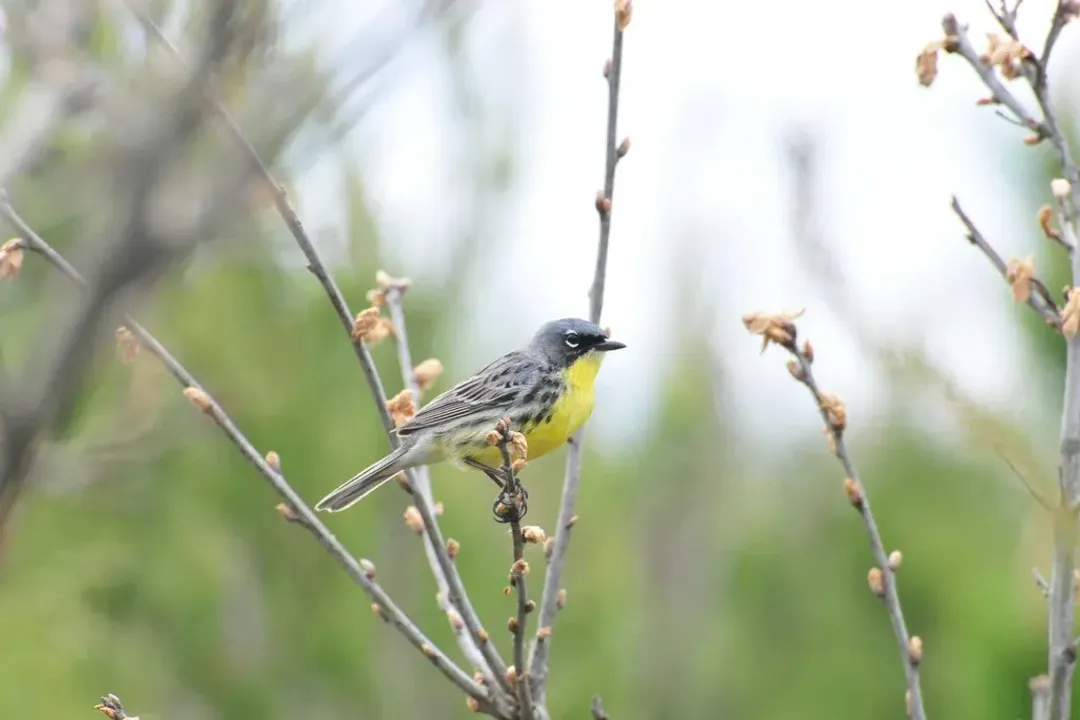
The title of the rarest warbler in the United States belongs, by near consensus among birders and conservationists, to the Kirtland's Warbler (Setophaga kirtlandii). [1][3] This small, flame-breasted songbird holds a distinction that is both tragic and remarkable—it is one of the most endangered birds in North America, yet its story is also one of determined human intervention pulling a species back from the brink. [4][6] To understand its rarity, one must look beyond just the current population count and examine its incredibly specific ecological niche and perilous migratory habits.
# First Sightings
The initial formal documentation of this species occurred in 1851 in Ohio, when Charles H. Kirtland collected a specimen near Cleveland. [5] This initial discovery set the stage for decades of mystery, as the bird seemed to appear only sporadically, making it an elusive prize for early ornithologists. [5] The bird's extremely specialized breeding range meant that for many years, scientists were unsure where it spent the bulk of its year, leading to considerable debate and limited conservation action. [8]
It took several more decades for the primary breeding grounds to be definitively located. While the warbler was first identified in Ohio, its persistent, tiny breeding habitat is now known to be confined almost exclusively to a small region of the northern Lower Peninsula of Michigan. [1][5][8] This concentration in one area is a key factor underpinning its vulnerability. [1]
# Specialized Home
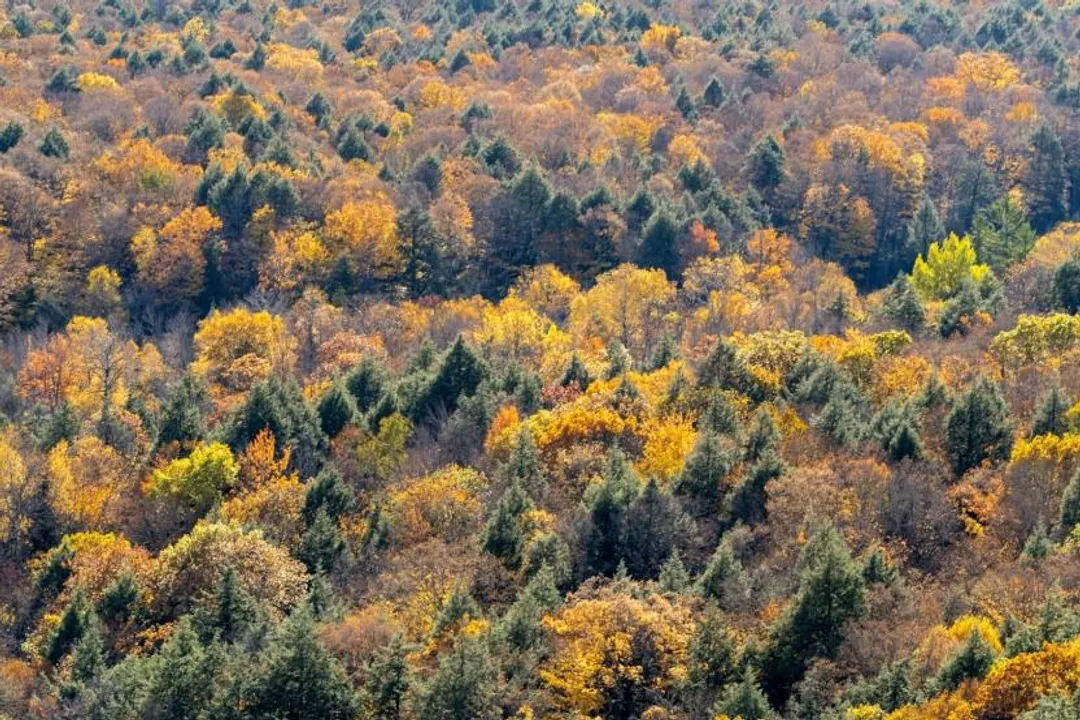
The Kirtland's Warbler is not just rare; it is obsessively particular about where it raises its young. Its existence is inextricably linked to the Pinus banksiana, commonly known as the jack pine. [1][9] Specifically, the warblers require dense stands of young jack pine, typically those between 15 and 20 years old, that are about 15 to 25 feet tall, often resulting from large, relatively recent forest fires. [1][8][9]
This dependency on a specific successional stage of a single tree species makes the Kirtland's Warbler an ecological specialist of the highest order. [1] When fire suppression efforts became widespread throughout the 20th century, the natural cycle that created the perfect 15-to-25-foot-tall jack pine stands was broken, directly correlating with the sharp decline in the warbler population. [9] This level of habitat lock-in, where a bird's entire reproductive viability depends on a narrow window of forest age, sets it apart even from many other threatened species whose habitat needs might be slightly more flexible or geographically widespread. [1]
# Migration's Gauntlet
Once the breeding season concludes in Michigan, the Kirtland's Warbler faces the long, dangerous journey south. Its migration route is relatively narrow, passing through the eastern half of the United States before reaching its wintering grounds. [1]
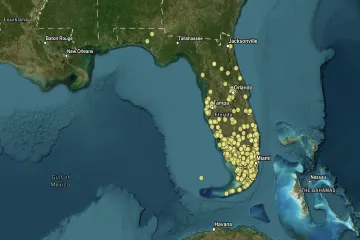
While the majority of its breeding population is confined to Michigan, its migratory path takes it through or near several other states, including Ohio, Indiana, Illinois, and even as far east as Virginia. [7] For birdwatchers outside of Michigan, these migratory stopovers are the only realistic chance to see the species. For instance, seeing a Kirtland's Warbler in Virginia is a notable event, usually occurring as the bird briefly rests and feeds during its southern transit. [7] The warbler winters almost exclusively in the scrublands and brushy areas of the Bahamas, primarily on a few islands. [1][8] This long-distance travel, crossing international boundaries and potentially encountering numerous hazards, adds significant risk to an already small population. [1]
# Conservation Triumph and Status
The population plummeted to critically low levels, hitting an estimated low of fewer than 200 breeding pairs in the 1980s. [4][6] In response to this dire situation, significant, federally backed recovery efforts were launched. [4][6]
The success of these coordinated efforts is one of the great conservation success stories of recent decades. Management actions focused heavily on creating and preserving the necessary young jack pine habitat in Michigan, often through controlled burns or prescribed harvesting. [6][9] The U.S. Fish and Wildlife Service, in partnership with state agencies and conservation organizations, actively managed large tracts of land to ensure a continuous supply of ideal habitat. [6][9] This proactive habitat manipulation has paid off handsomely. By the 2010s, the population count showed a steady increase, leading to a historic change in its legal status. [4] In 2018, the species was officially removed from the Federal List of Endangered and Threatened Wildlife, being reclassified as Threatened under the Endangered Species Act. [4]
This delisting is a monumental achievement, yet it does not mean the bird is safe. Its population must maintain a robust number—well above the previous low—and continue to show stability across its range for full recovery to be declared. [4][6] The management focus remains strong, viewing the warbler as "once endangered" rather than "cured". [7]
# Distinguishing the Flame
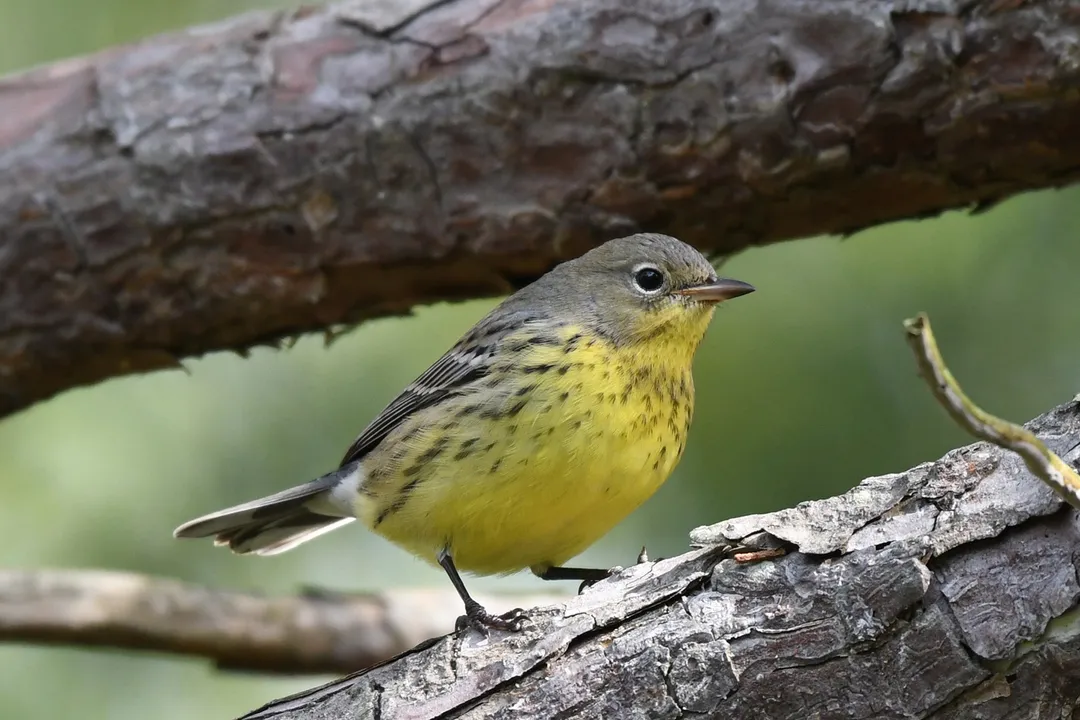
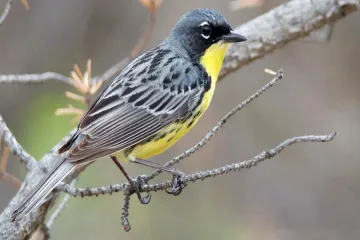
For the dedicated birder hoping for a rare fly-by, knowing what to look for is essential. The Kirtland's Warbler is visually distinct within the Setophaga genus. [1] The male sports a slate-gray head with a striking, solid yellow eye-ring and a pale yellow throat. [1][8] Its back is streaked dark, and the breast and flanks are bright yellow, often with heavy black streaking. [1] The female is duller but shares the characteristic yellow eye-ring. [1][8]
Its song is equally characteristic, often described as loud and rambling, composed of buzzy, rising and falling phrases. [1][8] While the bird is generally difficult to spot due to its preference for dense, young canopy, its bright color and strong song help it stand out when it does offer a clear view, whether in its Michigan breeding grounds or along a migratory corridor. [1]
# Following the Migration Path
The conservation story of the Kirtland's Warbler offers practical lessons for those interested in supporting less visible species. One critical, actionable element for birders is understanding when to look. Since the majority of the population is concentrated on the breeding grounds, seeing one during migration requires patience and being in the right place at the right time, usually during spring (late April to mid-May) or fall (late September through October). [7] If you are birding in the eastern U.S., particularly in areas with brushy clearings or young successional growth—even if far from Michigan—it is worth keeping an eye out, as these birds are known to occasionally stop in states like Virginia during their long transit. [7]
Another key takeaway relates to forest management practices. The bird’s reliance on fire-dependent ecosystems highlights how human attempts to control natural processes can inadvertently destroy critical habitat. [9] Conservation success here depended on reversing decades of strict fire suppression by actively creating the right conditions again, showing that saving specialized species often requires actively managing the environment to mimic historical disturbance patterns rather than simply setting land aside. [9] This isn't just about planting trees; it’s about managing the age and structure of the forest stand. [6]
# Ongoing Stewardship
Despite the success of reaching "Threatened" status, the Kirtland's Warbler requires continued intensive management. Organizations like the National Fish and Wildlife Foundation support ongoing efforts to ensure the habitat remains suitable and accessible. [6] These efforts extend beyond Michigan, focusing on protecting the wintering grounds in the Bahamas as well. [6]
The future of this rare songbird depends on sustained funding for habitat creation, monitoring of the population trends, and international cooperation between the U.S., Canada (where small numbers may occasionally be seen), and the Bahamas. [1][6] For a species that once teetered on true extinction, every successful breeding season is a victory, but the guard must remain up to ensure the jack pine stands thrive and the Kirtland's Warbler continues its perilous, yet successful, annual passage. [4]
#Videos
I Tracked Down the RAREST Warbler in the United States! - YouTube
Related Questions
#Citations
Kirtland's Warbler Overview, All About Birds, Cornell Lab of ...
I Tracked Down the RAREST Warbler in the United States! - YouTube
Kirtland's Warbler: The Rarest Warbler : r/birding - Reddit
North America's Rarest Warbler Comes Off the Endangered List
Michigan State Parks, Trails and Waterways - Facebook
Kirtland's Warbler | NFWF
Spotted! The Once-Endangered Kirtland's Warbler Visits Virginia
Kirtland's Warbler Setophaga kirtlandii - Birds of the World
How Trees Helped Save the Kirtland's Warbler - Arbor Day Foundation