Where are pythons located in the United States?
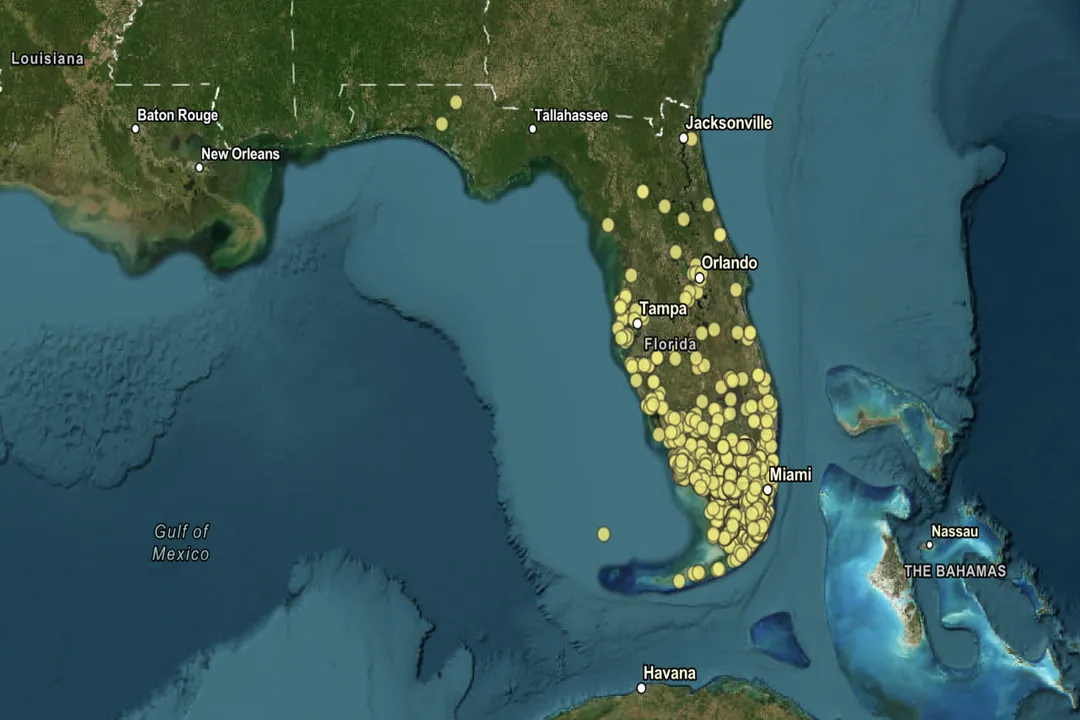
The definitive location for established, breeding populations of large constrictors in the United States is overwhelmingly concentrated in South Florida. [3] When people discuss pythons in the US, they are almost exclusively referring to the Burmese python (Python bivittatus), a species introduced to the region, primarily through the pet trade, that has managed to create a self-sustaining presence. [1][4] This invasive establishment represents a significant ecological concern, deeply rooted in the unique subtropical environment of the southernmost peninsula. [8]
# Primary Zone
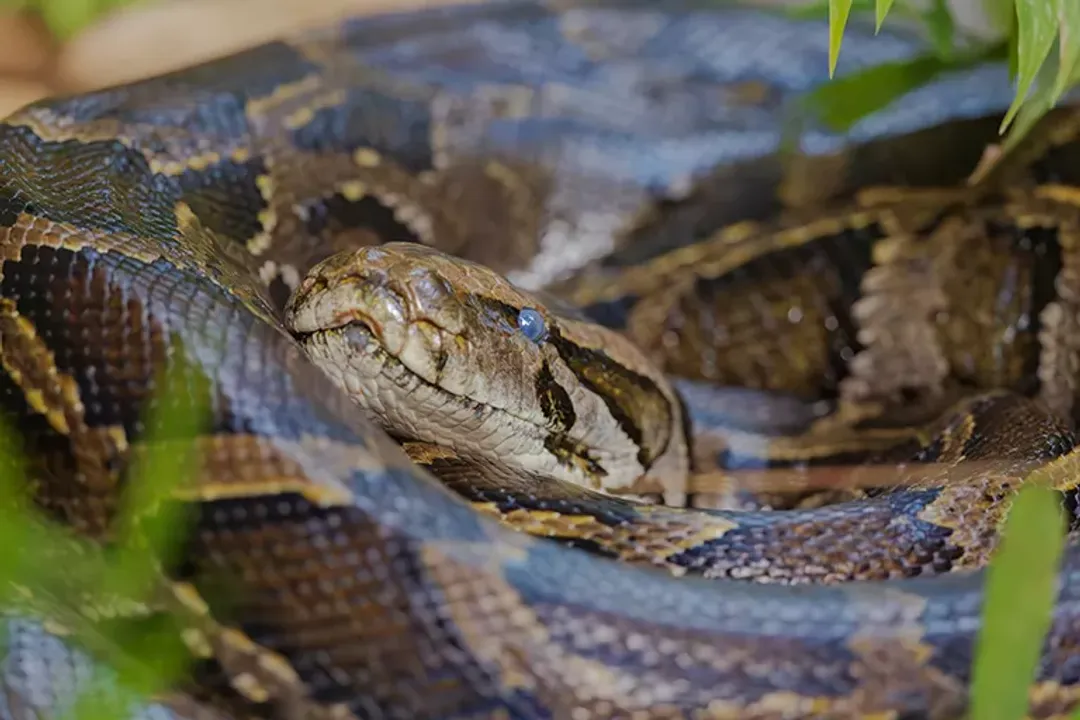
The heart of the Burmese python invasion lies within the protected lands of South Florida. Specifically, the population has become firmly established across areas like Everglades National Park and Big Cypress National Preserve. [3] These vast, interconnected wetland systems provide the ideal climate and prey base for these large, non-native snakes to thrive and reproduce year after year. [1] The concentration of sightings and confirmed breeding activity points directly to this extreme southern region as the epicenter of the current ecological issue. [5]
# Northern Reach
While the Everglades remains the stronghold, the question of how far north these snakes have managed to venture within Florida is a subject of ongoing monitoring. Reports and sightings confirm that pythons have been documented well outside the core zone, suggesting a southward-to-northward creep across the state. [2] However, a crucial distinction exists between isolated sightings and the development of a breeding population. While occasional pythons are found farther north—sometimes even reaching central Florida areas—the sources indicate that the established, reproductive colonies persist predominantly in the southern tier. [2] This suggests that colder winters or other climatic factors outside the subtropical zone act as a natural barrier to widespread colonization, at least for now. [8]
# Gulf Coast Spread
Beyond the traditional focus on the eastern side of the peninsula, monitoring has revealed significant movement along the western edge as well. The Florida Gulf Coast has seen its own share of python expansion, indicating that the snakes are not strictly confined to the Atlantic-facing Everglades basin but are moving outward to utilize available habitats throughout the southern half of the state. [6] This expansion along a different coastline highlights how effectively the snakes are adapting to the various wetland and scrub habitats available south of the state’s frost lines.
It is interesting to note how invasive range expansion often follows established hydrological corridors or major topographical features, rather than expanding in a perfect circle. In Florida, the interconnected nature of the freshwater systems likely acts as a superhighway for python dispersal, allowing them to rapidly colonize areas like the Gulf Coast while only occasionally showing up in more isolated, less connected inland habitats further north. [1][6]
# Broader Potential
When scientists model the future habitat suitability for these non-native constrictors, the scope of concern extends beyond the current confirmed distribution in Florida. Habitat suitability maps, based on environmental parameters like temperature and rainfall, suggest potential suitable non-native python habitat along three US coasts. [7] While these maps do not indicate established populations exist there currently, they do illustrate areas where the environment could theoretically support them should a new introduction occur or if the species successfully navigates northwards over decades. [7] Comparing maps of known python locations in the Southeast against maps showing native snake distributions further clarifies that the established non-native presence is tightly focused in Florida, differentiating it clearly from the native herpetofauna range. [9]
# Management Implications
Understanding the exact location is vital for management and eradication efforts. The density of the population in the Everglades is so high that aggressive control measures, including public hunts and specialized capture programs, are necessary to mitigate their impact on native wildlife populations. [1][3]
When approaching management, it is useful to consider the difference in recovery effort based on location. Suppressing the population in the densely populated, interconnected Everglades—the established core—requires massive, sustained resources. [3] Conversely, managing an isolated, single detection farther north is generally a matter of containment and removal, as those snakes are less likely to be part of a breeding network. [2] This distinction in population structure—core vs. peripheral—is fundamental to prioritizing where resources like trapping and surveillance are most effectively deployed across the state.
# Confirmed Species
While the general public often speaks of "pythons," scientific tracking and data collection focus heavily on the Burmese python due to its successful establishment. [1][3] Other large constrictors, though perhaps present in low numbers or only as escaped pets, do not share the same level of established, ecologically disruptive presence in US habitats as the Burmese species. [3] Databases tracking invasive species list the relevant entries, often using broader nomenclature like Python sp. when necessary, but the environmental narrative is dominated by P. bivittatus. [4] The specific identification matters because different python species might have slightly different environmental tolerances or predatory behaviors, though the management focus remains squarely on the most numerous invader.
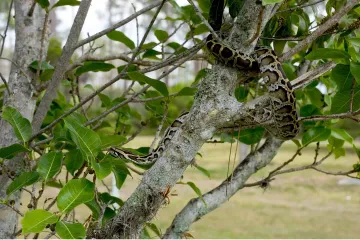
# Climate Constraints
The geographic limitation to the southern part of the US, particularly Florida, strongly suggests a climatic ceiling for these reptiles. [8] Burmese pythons require warm conditions to successfully incubate eggs and maintain high activity levels necessary for hunting and growth. While they can survive brief cold snaps, sustained freezing temperatures are lethal, preventing them from establishing robust populations in states further north, even where habitat might appear suitable on paper. [7] This natural temperature regulation effectively confines the known US python issue to the subtropics of South Florida. [3] The fact that mapping models show potential habitats along the Atlantic and Gulf coasts further north, but the actual invasion has not breached the central Florida barrier, reinforces the importance of the seasonal temperature gradient as the ultimate gatekeeper for this invasive species. [7]
The ongoing tracking of python locations—from confirmed capture sites in national preserves to modeled projections of their potential spread—paints a picture of a tightly controlled but persistent invasion, one whose known territory is currently restricted to the unique, warm, watery landscapes of Southern Florida. [1][3][9]
Related Questions
#Citations
Burmese pythons in Florida - Wikipedia
How Far North Are Pythons in Florida? What Homeowners Need to ...
Where are Burmese pythons or other large constrictors distributed in ...
Burmese & African Rock Pythons - Texas Invasive Species Institute
Interactive Map: Pythons Observed in Florida - Retro Report
Experts issue warning as massive snakes spread across US region
USGS Maps Show Potential Non Native Python Habitat Along 3 US ...
Burmese pythons in Florida: A synthesis of biology, impacts, and ...
Map of southeastern United States showing locations where pythons ...