How many states have mockingbird?
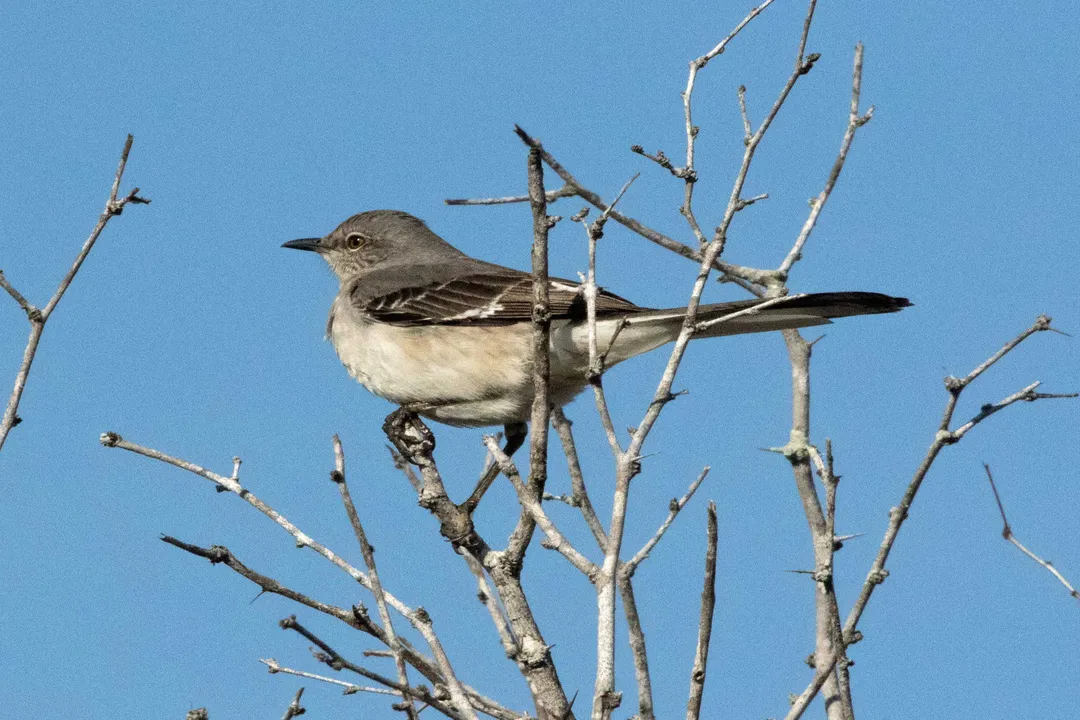
The Northern Mockingbird holds a distinguished, if shared, position among the avian symbols representing the states of the Union. This particular songbird, celebrated for its remarkable vocal talents, has been selected by a distinct group of states to serve as their official feathered ambassador. Determining precisely how many states bestow this honor requires a close look at the official designations, as the roster of state birds is not static across time or readily agreed upon by all contemporary observers.
# Five State Symbols
The consensus among detailed state bird listings confirms that five states officially recognize the Mimus polyglottos, the Northern Mockingbird, as their state bird. These five entities are clustered across the American South, indicating a shared appreciation for this common, yet charismatic, species. The states currently holding the mockingbird as their emblem are Arkansas (designated in 1929), Florida (1927), Mississippi (1944), Tennessee (1933), and Texas (1927).
It is worth noting that this figure of five is not universally recognized across all online references, suggesting that older data may persist. For instance, some sources might only cite Texas and Tennessee, overlooking the confirmations from Arkansas, Florida, and Mississippi in their more recent summaries. This discrepancy underscores the value of consulting comprehensive, updated legislative records, as bird designations, though often old, can be subject to modern review or debate.
# Mimicry and Mythology
The primary trait that elevates the Northern Mockingbird above countless other widespread species is its extraordinary vocal range. These birds are renowned mimics, capable of learning and reproducing the calls of dozens of other birds, and even non-avian sounds like barking dogs or mechanical noises. A single male can accumulate a repertoire exceeding 200 distinct phrases, often repeating each one several times before moving to the next in a grand vocal display. This impressive musicality is central to why states like Tennessee, with its deep musical heritage, selected the bird.
Culturally, this talent translates into symbolism. The mockingbird is often seen as a representation of artistic expression or, conversely, a lack of originality—the latter being the crux of the debate surrounding shared state symbols. Furthermore, its defense of its nest is legendary; mockingbirds are fiercely territorial, known to aggressively ward off much larger potential predators, leading to associations with vigilance and bold protection.
# Geographic Unity Analysis
The five states claiming the Northern Mockingbird—Arkansas, Florida, Mississippi, Tennessee, and Texas—form a nearly unbroken geographic bloc across the Southeastern and South Central United States. This contiguous nature suggests that the selection was not random but tied to a shared ecological setting where the bird is a year-round resident, unlike migratory choices favored by northern states. These areas generally share warmer climates where the mockingbird does not need to depart during harsh winters. It is plausible that the very familiarity and constant presence of the bird across this entire region, rather than unique local traits found in rarer species, solidified its selection by multiple state legislatures over time.
# Dynamics of Shared Status
The mockingbird is a frequent choice, but it is far from the most repeated avian emblem. The Northern Cardinal holds the top spot, claimed by seven states, while the Western Meadowlark is claimed by six states. The fact that the mockingbird is shared by five states places it firmly in the category of frequently chosen birds, a situation that many birding enthusiasts find undesirable. Critics argue that a state bird should be unique to that state, native to it, and representative of its distinct character. When a bird like the mockingbird is shared, it diminishes the singular avian identity for each state that adopts it.
This desire for distinct representation is evident when examining states like South Carolina, which initially elected the Northern Mockingbird in 1939 but repealed the designation in 1948 in favor of the Carolina Wren, specifically because the mockingbird was already shared with others.

# Debates Over the Emblem
The continued status of the Northern Mockingbird is not without contention, particularly in Florida, a state known for its incredible biodiversity. Florida officials have repeatedly considered replacing the mockingbird to gain a unique symbol, with proposals even arising to adopt the flamingo or the scrub-jay. Proponents for keeping the mockingbird, such as former National Rifle Association lobbyist Marion Hammer, often argue for its established place: it is "prolific," "independent," and easily seen and enjoyed across all areas of the state, which resonates with a broader population than a more specialized species might. The debate highlights a fundamental tension in state symbolism: should the emblem be what is most common and familiar, or what is most rare and ecologically unique to the region?. While Texas embraces the mockingbird's "bold personality" as fitting its larger-than-life ethos, other states might feel constrained by such a shared identity.
# Practical Birding Insight
For those who wish to observe and appreciate the five states’ shared emblem, timing your listening can reveal the bird's true genius. While mockingbirds sing throughout the day, the most intense and complex vocal performances—the ones that best exemplify why they were chosen—often occur during the courtship and nesting periods, which generally run from March through August. If you are birding in Arkansas, Florida, Mississippi, Tennessee, or Texas during these months, pay close attention to any male perched high on a rooftop or antenna wire around dawn or dusk. If the song you hear cycles through several distinct motifs, switching abruptly between a hawk's scream, a frog's croak, and a car alarm's beep, you are witnessing peak mockingbird performance, a sound that defines an entire region.
# Selection History
The tradition of adopting state birds largely began in the 1920s, following a campaign launched by the General Federation of Women’s Clubs, which aimed to give every state a unique feathered representative. Kentucky was the first to act, adopting the Northern Cardinal in 1926. These early selections were often influenced by popular vote, sometimes involving schoolchildren, which explains why widespread, familiar birds like the mockingbird and the cardinal gained early momentum. The legislative process, sometimes slow, resulted in New York being the last state to officially adopt its bird in 1970. This historical context reveals that many of the shared emblems stem from a desire for widespread appeal during the initial selection period, a criterion that birding experts today often feel should be superseded by the call for uniqueness.
Related Questions
#Citations
List of U.S. state birds - Wikipedia
US State Birds - Kaytee
Two States Have the Mockingbird as Their State Bird
A List of All State Birds (and which states should change)
Florida ponders a change from mockingbird as the official state bird
Getting Serious About State Birds | FatherSonBirding