Are Japanese Bush Warblers endangered?
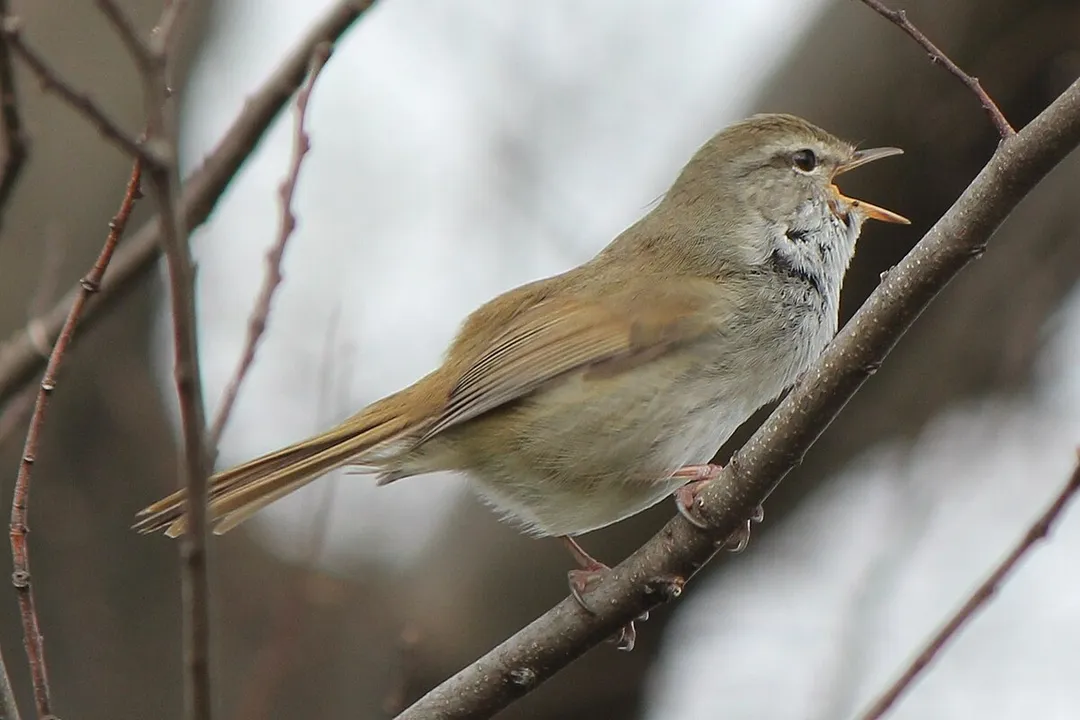
The Japanese bush warbler (Horornis diphone), universally known in Japan by its evocative name, uguisu (鶯), is perhaps more often audited than seen by the casual observer. Its distinctive, melodious song rings out across the archipelago, cementing its cultural status as a primary herald of spring. Given this prominent role in nature and culture, a frequent question arises among bird enthusiasts and gardeners alike: Is this beloved songster facing a conservation crisis? The most current scientific assessments provide a reassuring answer: the Japanese bush warbler is currently classified as Least Concern by the IUCN Red List, indicating that, on a broad scale, it does not face an immediate threat of extinction in the wild. [2][4]
However, this broad assessment hides a complex picture of subspecies dynamics, migratory behaviors, and localized pressures, particularly where this adaptable bird has been introduced outside its native East Asian range. To understand the uguisu fully, one must look past the simple conservation label and delve into its widespread distribution, intricate life history, and the cultural pressures it has faced for centuries.
# Range and Appearance
The uguisu is a small, rather plain passerine bird, whose subdued coloring serves as excellent camouflage in its preferred dense cover. [3] Adults are typically olive-brown on their upper parts, softening to dusky or cream-grey tones underneath. [2][3] A pale, contrasting eyebrow stripe (supercilium) sets off its face, and its beak curves slightly upward, which lends it an almost smiling appearance. [2][3] Measuring around 15.5 centimeters in length, it is a modest bird physically. [2][3] While there is little obvious visual difference between the sexes—minimal sexual dimorphism—females are generally slightly smaller than the males. [3]
The bird’s natural distribution spans a significant portion of East Asia, though its year-round status varies by latitude. It is a common resident throughout the main islands of Japan, with the notable exception of Hokkaidō. [2] Its range extends into the northern Philippines year-round. [2] During the warmer summer months, its territory expands north and west to include Hokkaidō, Manchuria, Korea, and central China. When the weather turns cold, many populations retreat to southern China and Taiwan for the winter. [2]
# Subspecies and Movement
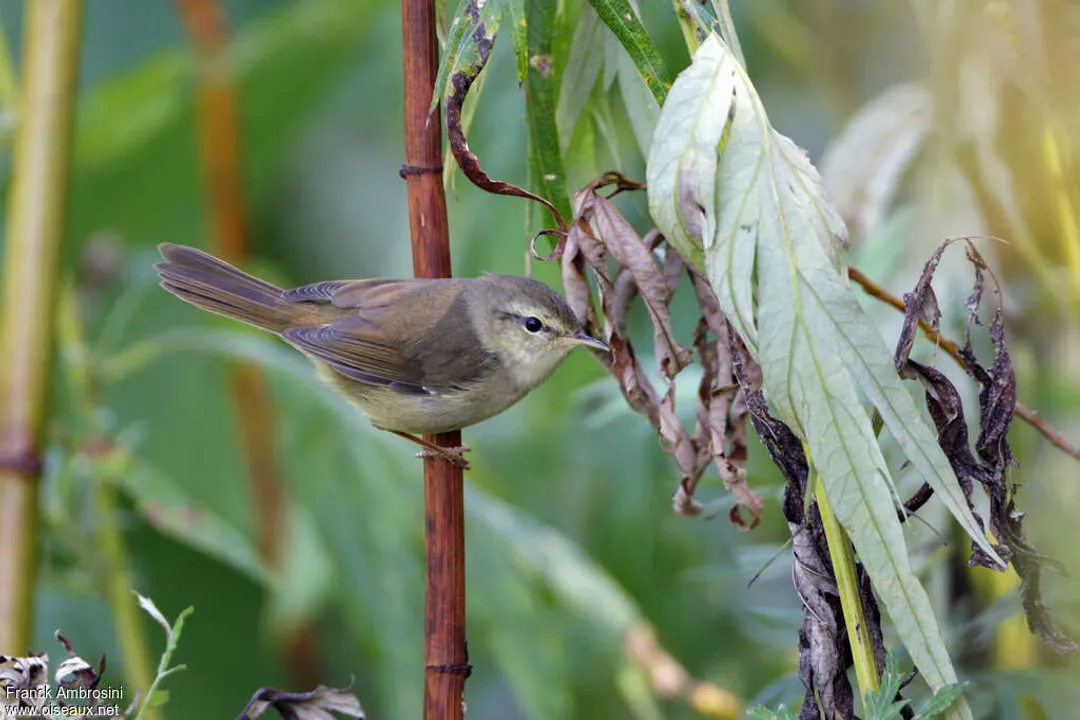
The distribution of H. diphone is not uniform, leading ornithologists to recognize several distinct subspecies, a complexity that slightly muddies the waters of its taxonomy. [5] The species, sometimes categorized under the genus Cettia or Horornis, comprises at least seven recognized subspecies. [5]
For example, C. d. cantans is generally resident across Japan’s main islands (Honshu, Kyushu, Shikoku) and adjacent areas like Jeju Island, South Korea. [5] In contrast, C. d. riukiuensis, found in the Ryukyu Islands, is migratory, breeding in more northern locations like Sakhalin, the southern Kurile Islands, and Hokkaidō, wintering mostly in southern Japan and Taiwan. [5] Then there are the island endemics, such as C. d. diphone, restricted to the subtropical Ogasawara (Bonin) Islands, located about 1,000 km south of the Japanese mainland. [5] Some island populations, like C. d. restrictus formerly of the Daito Islands, have faced extirpation or severe range reduction. [5] This varied movement—from being highly sedentary on some islands to undertaking significant south-to-north migrations—suggests that conservation assessments must consider the health of these localized populations individually, rather than just the species as a whole. [5]
# Song and Breeding Strategy
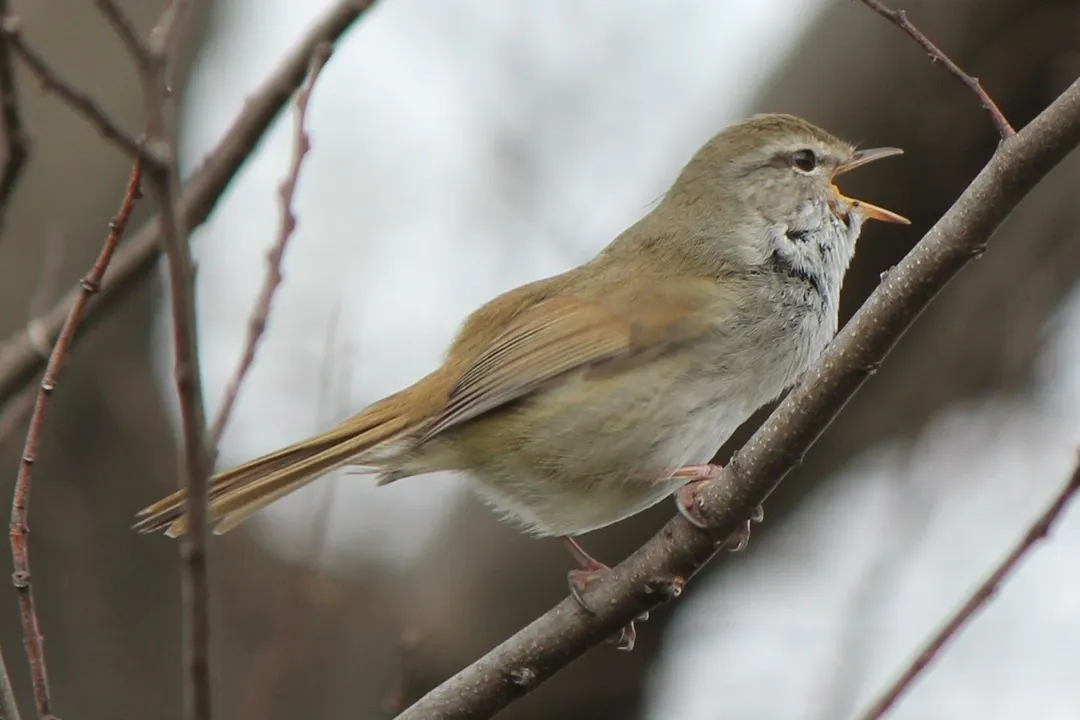
The uguisu is far more famous for what it sings than for what it looks like. Its breeding song, often phonetically rendered as "Hoohokekyo" or "Hooo-hokekyo," is the quintessential sound associated with the beginning of spring in Japan. [2][3] The male begins singing in his wintering grounds and intensifies the performance upon reaching breeding territories in the spring. [5] The song is not innate; young males learn and perfect their vocalizations by imitating others in their vicinity. [2]
Mating rituals involve elaborate song displays from the territorial male. [3] Research suggests songs have different functions: the Type-H song serves as a primary advertisement, while the Type-L song, with its intermittent whistles, functions as a threat display toward rival males who encroach on the owner’s established territory. [5]
The breeding structure in the main Japanese populations is marked by polygyny, where one male mates with two or more females within his defended territory. [5] This strategy is reflected in the division of labor: males remain reproductively active, singing and defending their patch throughout the breeding season, while the female undertakes the demanding tasks of nest building, incubation, and chick-rearing entirely on her own. [5] Her nest is typically a discrete, cup-shaped structure woven from grass and leaves, hidden low down in dense shrubs. [3][5]
This territorial male strategy contrasts sharply with the island subspecies C. d. diphone in the Ogasawara Islands, where records indicate that both the male and female participate in feeding the chicks. [5] This geographical difference in parental care within the same species highlights the fascinating role that isolation and local ecological pressures play in shaping avian behavior.
# Threats to Success
Even for a Least Concern species, the life of a bush warbler is precarious. Natural predators such as birds of prey, cats, and snakes pose a constant threat. [4] A particularly significant biological challenge is brood parasitism, primarily by the Lesser Cuckoo and, in northern areas like Hokkaidō, the Oriental Cuckoo. [5] The cuckoos lay eggs that mimic the host’s brown eggs, and crucially, the Japanese bush warbler typically does not eject the parasitic egg, often leading to breeding failure, especially when the cuckoo arrives later in the season (after June). [5] The resulting fledging success rate in some studies has been noted as low as 27%, largely attributed to this combination of predation and parasitism. [5]
In the native range, the largest overarching threat remains habitat loss and degradation due to human development, deforestation, and agricultural expansion. [3][4] It is noteworthy that studies on island populations, like those in the Ryukyu Islands, suggested that local population declines, evidenced by delayed first singing dates despite overall warmer springs, were plausibly linked to habitat degradation, indicating that local extinctions or population drops can occur even if the overall species range appears stable. [5]
# The Cultural Double-Edged Sword
The uguisu's relationship with humans is perhaps the most unique aspect of its story. Its song is so deeply ingrained in Japanese tradition that it serves as one of the kigo (seasonal words) used in haiku to signify the arrival of early spring, often appearing alongside the ume (plum) blossom. [2] This reverence extends into architecture, with the squeaking ugisubari (nightingale floor) designed to mimic the bird's call, intended as a silent warning system against intruders. [2]
This cultural appreciation, however, historically translated into direct pressure. The bird’s beautiful song led to it being kept widely as a cage bird, sometimes requiring specialized covers to encourage singing. [2][4] A more bizarre, yet persistent, cultural artifact is the use of its droppings, or uguisu powder, historically used by geishas and kabuki actors as a skin whitener and cleanser. [3][4]
It is fascinating to observe how this tradition persists: in modern times, some birds are still farmed specifically for their guano, which is sterilized and sold commercially for luxury skincare. [4] This commercial harvesting, done on caged birds, represents an interesting divergence from directly trapping breeding songsters but still places a human-driven demand on the species, even if the supply is now managed for non-avian consumers. [5]
# An Introduced Species
Beyond its native range, the uguisu is an established exotic species in the Hawaiian Islands. [2] Between 1929 and 1941, a total of approximately 138 individuals were deliberately released on Oʻahu, initially for aesthetic reasons and as a biological control measure against insects. [5] This introduction proved highly successful; the warbler quickly spread to all the main Hawaiian Islands, often becoming one of the most numerous birds in brushy habitats, particularly in areas where native songbirds had suffered severe declines. [1][5]
The ecological impact in Hawaii presents a classic conservation quandary. The uguisu occupies a similar niche—dense undergrowth insectivore—to several endemic Hawaiian species. [5] There are concerns that the introduced warblers compete for food and nesting habitat with native birds like the Puaiohi and the critically endangered Nukupuu. [5] However, studies suggest that for species like the Nukupuu, which were already on the brink of extinction due to factors like malaria and habitat loss from ungulates long before the uguisu arrived, the warbler’s competitive effect is likely minor or even controversial to prove. [5]
When we compare the status of the uguisu across its geography, a pattern emerges: where it is native, its primary stressor is human-driven habitat change, manageable through general conservation of wild areas; where it is introduced, its impact on already fragile endemic ecosystems is the dominant concern. This differentiation in threat profile based on location is key when discussing the conservation of such a widespread species. Furthermore, the successful establishment and spread in Hawaii—despite the initial low numbers—speaks to the bird's general adaptability, which supports its overall Least Concern status across the larger IUCN assessment area.
# Conservation Action for the Familiar Bird
While global conservation bodies do not list the uguisu as threatened, local stewardship remains vital. For those wishing to support this familiar species in its home territories, focusing on maintaining the kind of habitat it requires is the most direct action. This means favoring dense, low-branching native shrubs and thickets in gardens and supporting land protection campaigns that secure woodland and scrub environments. [2]
For birdwatchers, understanding the subtle differences between the vocalizations of subspecies, particularly when comparing the migratory riukiuensis with the resident cantans, can enrich the experience of tracking the spring’s arrival across different Japanese islands. Furthermore, recognizing that the bird's low fledging success is often linked to nest predation and cuckoo parasitism provides context to the seemingly high numbers heard in spring; despite the auditory abundance, successful nesting is clearly a competitive affair.
The Japanese bush warbler, the uguisu, is not endangered. It is a common, resilient species that has successfully adapted to both dense native thickets and disturbed, human-altered landscapes across Asia and the Pacific. Its future security rests less on preventing extinction and more on managing the ecological consequences of its success, both as a beloved cultural icon and as a successful, widespread colonizer.[2][5]
Related Questions
#Citations
Japanese Bush Warbler (Horornis diphone) identification - Birda
Japanese Bush Warbler - Bird Buddy
Japanese Bush Warbler - Horornis diphone - Oiseaux.net
Japanese bush warbler - Wikipedia
Uguisu Bird Facts - Horornis diphone - A-Z Animals
Cettia diphone (Japanese bush-warbler) | CABI Compendium
Japanese Bush-Warbler - birdfinding.info