What is the difference between a Hooded Oriole and an orchard Oriole?
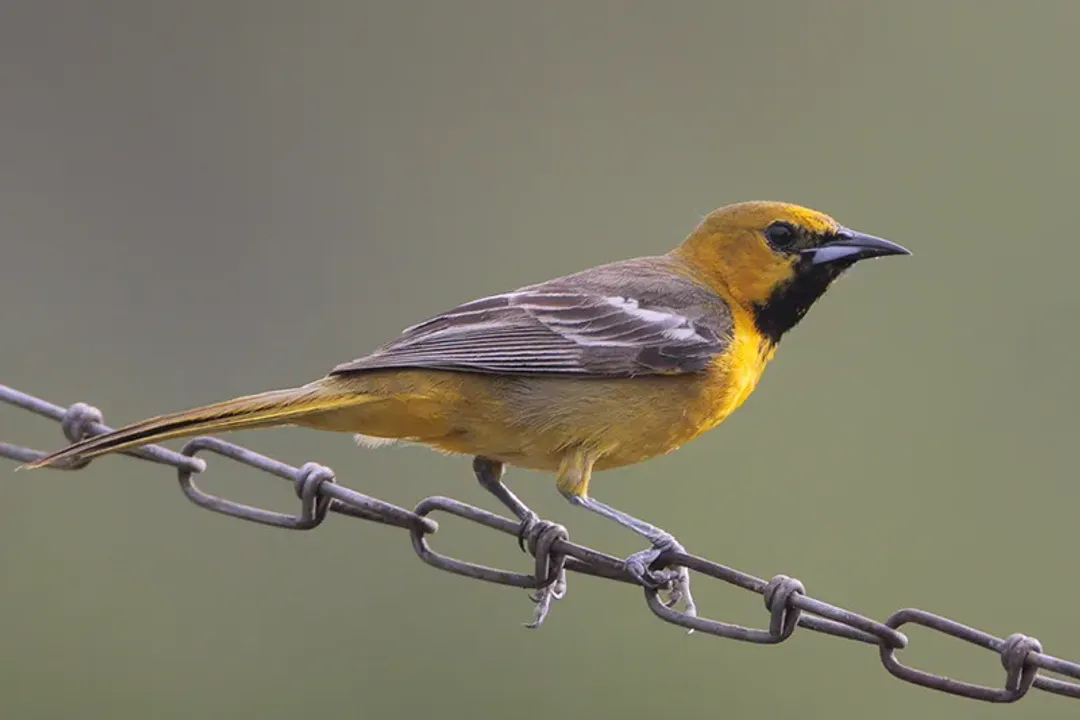
Distinguishing between the Hooded Oriole and the Orchard Oriole can present a fun challenge for bird watchers, particularly because both species share the striking bright orange-yellow hues characteristic of many orioles in North America. [1][7] While they belong to the same family, their specific color patterns, geographic distributions, and even their songs offer clear separation points once you know what to focus on. [4][6] Getting these two correct often hinges on observing the male plumage under good light, as the females require a much subtler eye.
# Plumage Contrast
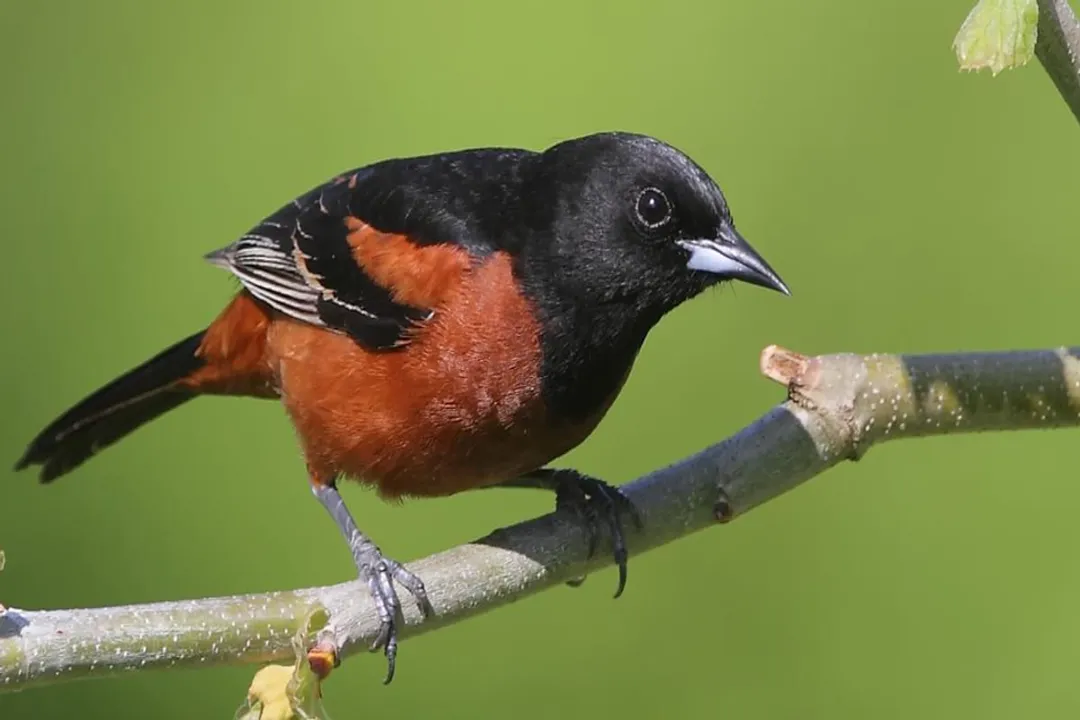
The most definitive feature separating the two species involves the adult male’s coloration, specifically how the black pigment is distributed on the body. [1][5] The Hooded Oriole male is readily identified by its brilliant, clear orange-yellow body contrasting sharply with a prominent, solid black hood that covers the entire head, throat, and upper breast. [1][7] This black is clean and distinct, looking much like a tightly fitted cap or hood sitting atop a bright yellow body. [5] Their backs are also black, and they typically exhibit white wing bars or patches. [1]
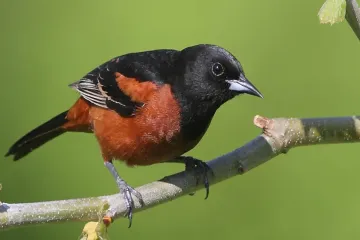
The Orchard Oriole male presents a much richer, deeper palette that leans toward maroon or purplish-black rather than true jet black. [2][6] Instead of a distinct hood, the male Orchard Oriole has a dark hood and back that often merge into a deep purplish-black tone. [2] This dark coloration usually covers the head, back, and upper chest, but it contrasts strongly with a bright orange-red breast and rump patch. [2][7] In some lighting, this deep coloration can appear so dark that the bird looks almost entirely black except for the vivid breast color. [6] If you see a bird whose dark areas look more like chestnut or burgundy rather than stark black against a vibrant orange-yellow, you are almost certainly looking at an Orchard Oriole. [2]
# Female Appearance
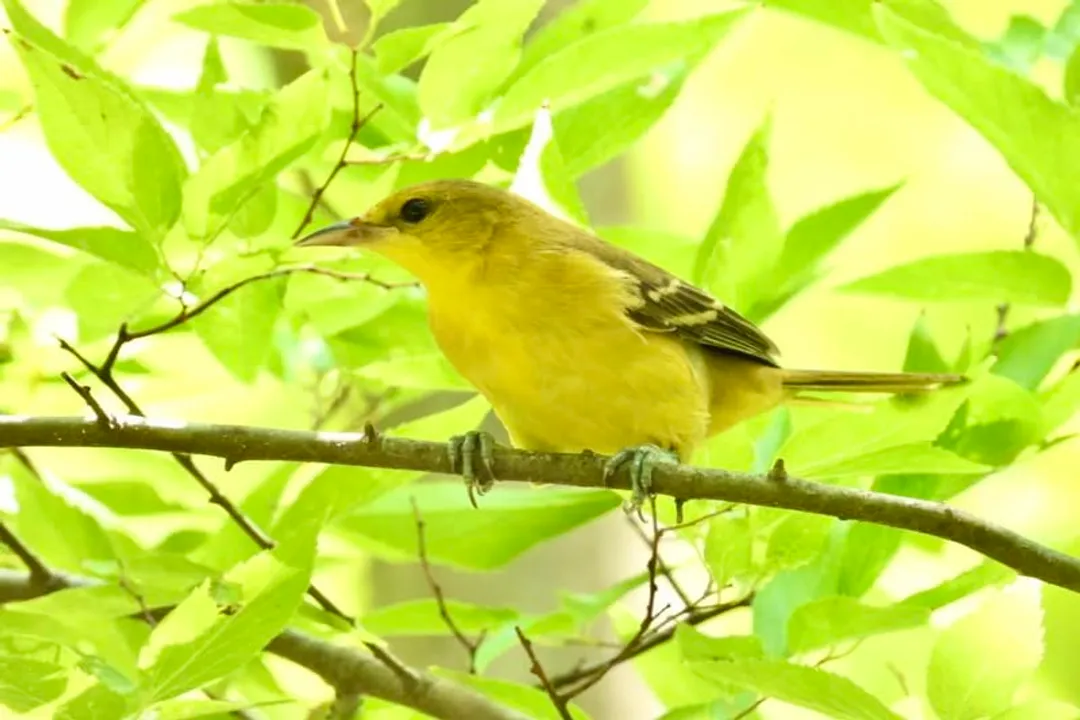
Separating the females is significantly harder, as neither exhibits the bold patterns of their male counterparts. [1] The female Hooded Oriole is generally a duller, yellowish-olive color above, becoming paler on the underside. [1] She might show a hint of a dark throat or a faint dark line on the breast, but the pattern is diffuse compared to the male. [1]
Female Orchard Orioles are also rather plain, often described as a dull olive-yellow overall, sometimes leading to confusion with species like female Yellow Warblers. [2][6] The key differentiation here, if possible, lies in subtle shape and bill structure; Orchard Orioles tend to have a slightly finer bill compared to some of their relatives, though this is a secondary characteristic to habitat and range. [2] In the absence of a male nearby for context, identifying a female requires careful note-taking on the subtle differences in yellowish tones and any faint dark streaking present. [1]
# Range Context
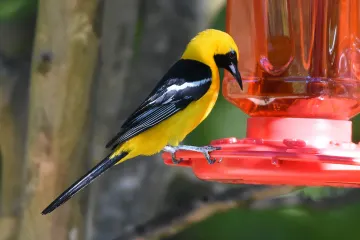
Understanding where these birds are found geographically is often the quickest way to narrow down identification, especially when you are in the field and lighting is poor. [4][6] The Hooded Oriole is primarily a bird of the American West and Southwest, favoring arid or semi-arid regions. [1][7] Look for them near palms, pines, or deciduous trees in areas like California, Arizona, and Texas. [1][7] They are tied to those drier climates.
Conversely, the Orchard Oriole has a much broader breeding range stretching across the central and eastern United States. [6] They are often found in more riparian settings, perhaps near streams, or in scattered trees within open country, rather than the dense desert growth favored by the Hooded Oriole. [6] While their ranges can technically overlap in certain central states, the habitat preference usually provides a strong initial clue: if you are in a desert oasis or a suburban yard with palm trees in the Southwest, lean toward Hooded; if you are in a Midwestern floodplain forest, lean toward Orchard. [4][7] If you see a bright, clear orange-yellow bird with a clean, sharply defined black hood in a desert landscape featuring palm trees, you are likely looking at a Hooded Oriole, regardless of momentary uncertainties about its song. The environmental context frequently confirms the identification before vocalizations can be clearly processed. [1]
# Size and Stature
While both are medium-sized orioles, subtle differences in build can sometimes aid in identification. [6] Orchard Orioles are generally smaller than the more familiar Baltimore or Bullock’s Orioles, but they share a similar overall size impression with the Hooded Oriole. [6] Both species are relatively slender, but noting the overall gestalt—the Hooded often appearing vividly patterned with its bright yellow—versus the Orchard’s richer, darker block of color—can be helpful when size perception is distorted by distance. [1][7]
# Vocalizations Heard
Birdsong provides another useful identifier, though one that requires familiarity with the specific calls. [4] The Hooded Oriole typically sings a series of clear, somewhat simple, relatively fluty notes. [4] The song is often described as somewhat unadorned when compared to the more complex warbling songs of some other oriole species. [1]
The Orchard Oriole, on the other hand, offers a song that is often described as being more buzzy, slightly harsh, or rattling. [2][6] It lacks the smooth, liquid quality sometimes associated with other orioles. Paying attention to whether the sound is a series of clear whistles or a more hurried, slightly rough tune can help separate a Hooded from an Orchard male. [6]
# Identification Aid
To better handle the identification, especially when trying to separate the males quickly, considering the pattern arrangement is key. When viewing an unknown oriole in a transition zone—say, along the edge of the Great Plains where ranges might blur—it is worth noting the shape of the dark area. The Hooded Oriole’s black often looks like a defined 'hood' sitting atop the bright yellow body, a distinct, almost graphic pattern. [5] In contrast, the Orchard male's darker tones, being the deep purplish-black of the back and head, tend to blend more into a single, richer, darker block of color across the upper half of the bird when seen from a distance, broken only by the central orange breast patch. [2]
A quick comparison chart summarizing the most obvious field marks can be extremely helpful for rapid field reference:
| Feature | Hooded Oriole (Male) | Orchard Oriole (Male) |
|---|---|---|
| Primary Color | Bright Orange-Yellow | Rich Orange-Red/Chestnut |
| Dark Pattern | Solid, clean Black Hood covering head/throat | Deep Purplish-Black covering head/back/upper breast |
| Back Color | Solid Black | Purplish-Black, blending with head |
| Habitat Preference | Arid/Semi-arid West, often near Palms | Central/Eastern US, often Riparian areas |
| Song Quality | Clear, somewhat simple, fluty notes | Buzzy, rattling, less fluid |
# Nest Construction
Differences extend even to how and where they build their homes. Both species construct intricate, sock-like hanging nests, a characteristic trait of orioles. [5] However, the materials and specific location can offer further clues. Hooded Orioles often use plant fibers, animal hair, and sometimes even fine strands of man-made materials, weaving them high in trees, particularly palms or large deciduous species prevalent in the Southwest. [1] Orchard Orioles also weave hanging nests, often choosing scattered trees, sometimes low down or in dense foliage, and their materials might incorporate more fine grasses or plant material typical of the more temperate, eastern environments they frequent. [6]
Ultimately, while the female Plumage section often requires the most experience to parse, the combination of the male's color saturation (true black vs. purplish-chestnut) and the bird's geographic location provides the most reliable method for telling the Hooded Oriole apart from its Orchard cousin. [1][4] Mastering these two points—Color and Location—will resolve the vast majority of identification uncertainties in the field. [7]
Related Questions
#Citations
Hooded Oriole vs Orchard Oriole - Birdbuddy WIKI
Identifying Orchard Oriole - BirdWatching Magazine
What type of oriole is this, female hooded or female orchard oriole ...
Types Of Orioles - Kaytee
One is an orchard oriole and one is a hooded oriole. Or are they ...
Breaking Down the Different Types of North American Orioles
Orchard Oriole Similar Species Comparison - All About Birds
Hooded Oriole | Bird Gallery - Houston Audubon Society
Meet 8 Types of Orioles to Look for Across America - Birds and Blooms