Are orchard orioles rare?
The question of whether the Orchard Oriole is rare is best answered with a geographical qualifier, as its status shifts dramatically depending on whether you are looking in a southern breeding ground or along the northern edges of its range. Continentally, this small, handsome bird is generally classified as Least Concern by the IUCN, with an estimated global population approaching 10 million individuals across North America. [7][9] However, relying solely on that broad assessment misses the nuance that birders frequently encounter: they are often uncommon or patchy in certain areas, particularly in the northern reaches of their summer territory. [1] While more famous relatives like the Baltimore Oriole may be common fixtures, the Orchard Oriole presents a subtler, sometimes fleeting, spectacle. [2][8]
# Distinctive Plumage
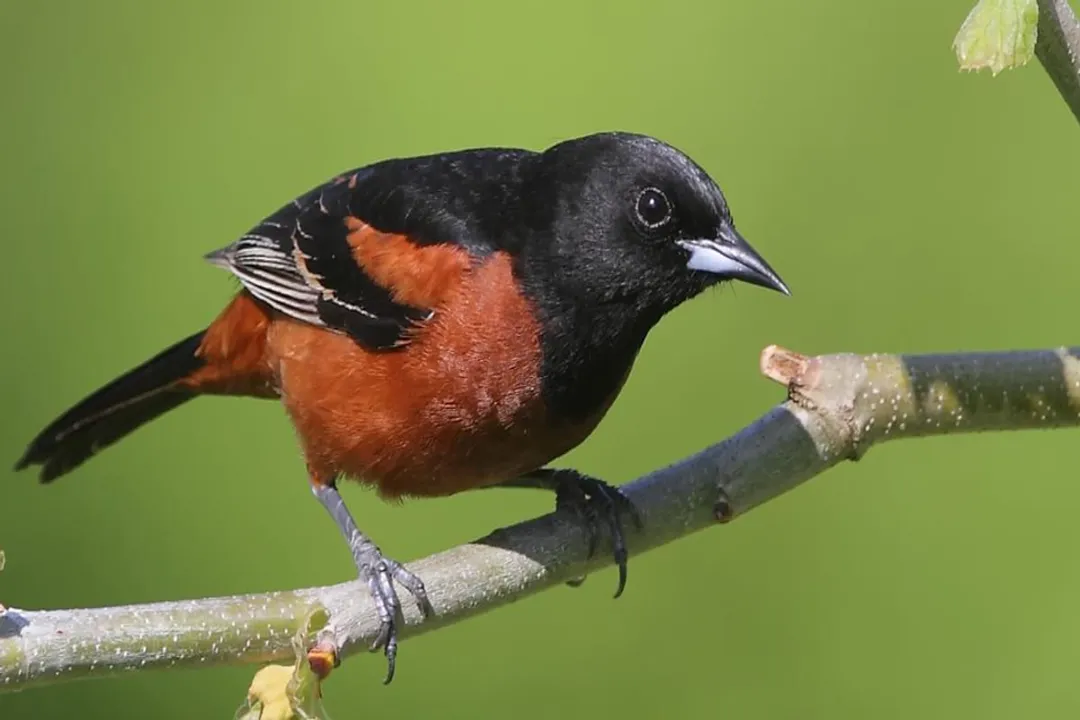
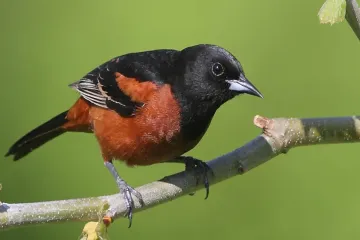
The smallest of North America's orioles, the Orchard Oriole is only about the size of a Bluebird, a key physical distinction from its larger cousins. [2][9] Males avoid the brilliant orange or yellow typical of many orioles, instead sporting a deep, burnished russet or chestnut color that contrasts sharply with their black head, back, and tail. [3][7][8] This unique color pattern makes the adult male unmistakable. [9]
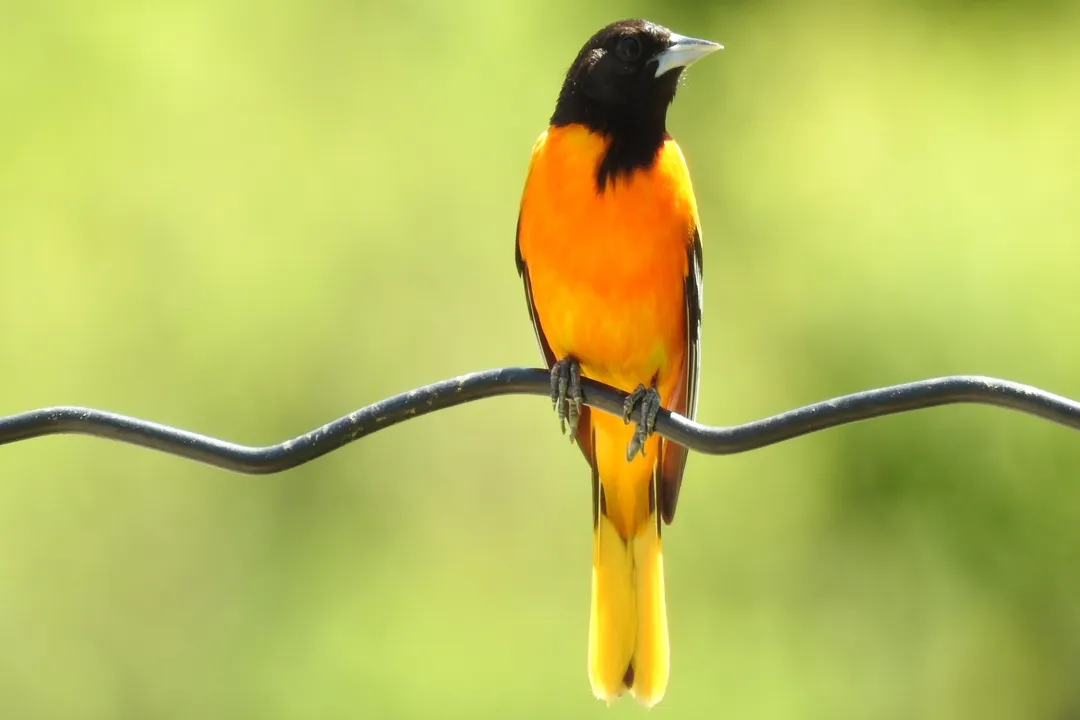
Females and first-year males, however, are responsible for many identification challenges for backyard observers. [2][8] They present a drab yellowish-green coloration, leading them to be occasionally mistaken for warblers if not observed closely. [3][4][9] Young males begin to show their future colors by developing a black throat patch, setting them apart from the otherwise similar females. [4][9] This difference in adult male coloration—chestnut versus flame-orange—is the easiest way to separate the Orchard Oriole from the Baltimore Oriole in the field. [8]
# Habitat Niche
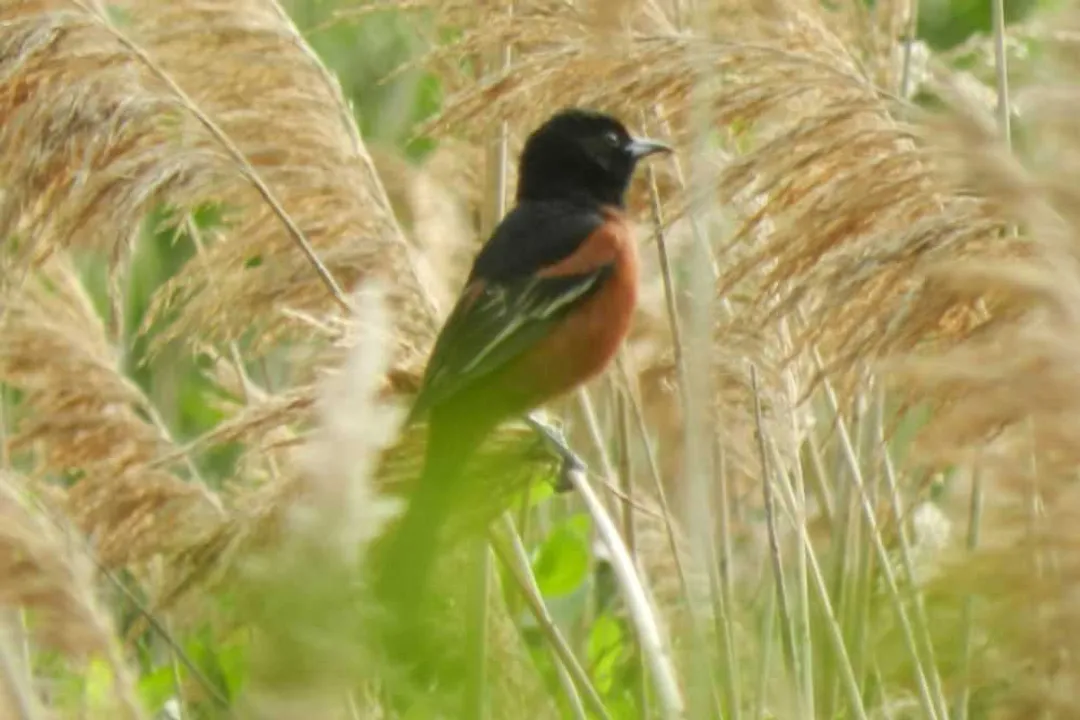
Orchard Orioles have specific habitat requirements that often steer them away from dense woodlands. They prefer semi-open areas with scattered deciduous trees. [3][9] As their name suggests, they are widely associated with fruit orchards, where the small, widely spaced trees provide ideal shelter and foraging grounds. [1][3][9] Beyond orchards, they utilize farm shelterbelts, planted roadsides, and the margins of suburban areas with suitable shade trees. [1][9]
A major commonality across regional studies is the species' affinity for water. In Minnesota, their range is closely tied to major river systems like the Mississippi, Minnesota, and Red Rivers. [1] Similarly, observers in New York and Pennsylvania noted range expansion along riparian corridors, and in the Bedford area, they seem particularly fond of locations near streams and lakes. [1][8] They generally favor trees that are smaller in diameter (around 7.6–15.2 cm) compared to those favored by Baltimore Orioles. [1] This preference for patchy, open landscapes means they often avoid unbroken, dense forest. [6][9]
# Local Status Fluctuations

The perception of rarity hinges heavily on geography and historical context. For instance, in New Hampshire, as recently as the 1980s, the Orchard Oriole was described as rare and of irregular occurrence, documented in only six spots in the extreme southeast during the first Breeding Bird Atlas effort. [4] Yet, since that time, they have become more reliable in the southeast, though their center of abundance remains in a swath from Rochester to Nashua. [4]
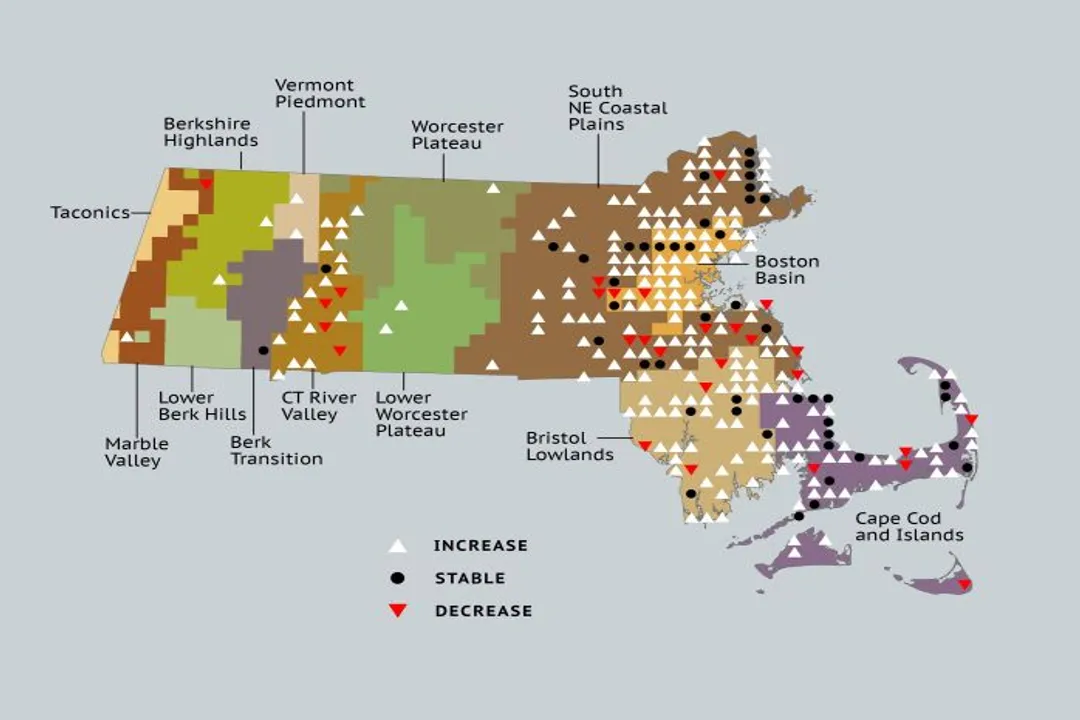
In Massachusetts, the story shows a clear increase in presence. During Atlas 1, they were found in only about 8% of surveyed blocks, but this jumped to 28% in Atlas 2, more than tripling their occupied block count across the Commonwealth. [6] This expansion has been steady, suggesting they have found the fragmented, low-lying areas of modern Massachusetts agreeable. [6]
Minnesota provides a compelling case study of fluctuation. Historically, the species was described as an "uncommon summer resident" in the southern part of the state. [1] Through the 20th century, declines were noted, attributed to the loss of orchards and increasing development, causing the bird to retreat from the northern periphery of its range. [1] However, more recent data shows a shift; while they remain uncommon statewide based on Breeding Bird Survey (BBS) routes, their range has shifted westward, and they have reestablished themselves, becoming more common in the northern reaches of the Red River Valley, suggesting a northward range rebound. [1] In stark contrast, BBS data from the southeastern United States shows averages of 8–13 birds per route, far exceeding the less than one bird per route seen in Minnesota. [1] Thus, while the bird is demonstrably scarce in the central and northern parts of Minnesota compared to the plains states to the west, it is not universally rare across its North American breeding grounds. [1]
This shifting local status, especially the historical decline tied to the disappearance of traditional orchards, underscores how human land use directly dictates local oriole abundance. [1][6] A simple way to gauge if you might encounter them in a northern locale is to look for that specific mosaic of open land interspersed with medium-sized deciduous trees, often near water features that might have supported older farmsteads. [1][8]
# Breeding Rhythm
Orchard Orioles keep a tight schedule during the breeding season, which contributes to their fleeting presence in many northern locations. [3] They are long-distance migrants, spending the winter in Central and South America. [1][3] They arrive relatively late in the spring and, critically, head south quite early. [3] Observers in Cape Cod note that they are here for the shortest nesting period of any summer bird, often disappearing by the end of July. [2] Some research suggests that by mid-July, adults are already beginning their southward migration, making it difficult for researchers to distinguish between late-season breeders and early southbound migrants in any given area. [3][9]
Their breeding behavior is social, though context-dependent. They are known to nest in small colonies, sometimes with multiple nests in a single tree along favored river edges. In less suitable, more solitary habitats, they tend to nest alone. [3] Females are the primary nest builders, constructing a woven, hanging, pouch-like basket from grasses and plant fibers. [1][4][7][9] Orchard Oriole nests are described as more spherical than the deep, pendulous nest of the Baltimore Oriole, and are often open at the top. [4][6] A pair typically raises only one brood per year. [7]
Their diet during the breeding months is heavily focused on insects, where they act as foliage gleaners, consuming caterpillars, grasshoppers, beetles, and plant lice—providing a great benefit to fruit growers by eating pests. [1][2][7] They also sip nectar and eat fruit. [7] Before migration in late summer, they switch to loading up on fruits like mulberries and chokecherries for quick energy. [2][7] While they do not typically visit seed feeders, they may be attracted to hummingbird nectar feeders or slices of oranges and fruit jelly, though providing these sugary items in moderation is advisable, as they lack the nutritional breadth of natural forage. [3][8] It is fascinating to note that in their tropical wintering grounds, they can become important pollinators, though they sometimes bypass the service by piercing the base of the flower to steal nectar. [3][7]
# Population Dynamics
Despite the local increases noted in specific atlas regions like Massachusetts and the northern Great Plains, the Orchard Oriole population overall faces headwinds. Partners in Flight assigns the species a Continental Concern Score of 10/20, reflecting warranted concern over its population trajectory. [1] Since the Breeding Bird Survey began in 1966, the species has shown a statistically significant annual decline of 0.87% across North America, equating to a cumulative loss of about 23%. [1] Much of this loss is concentrated in the southern parts of the breeding range, especially from southern Kansas down to the Texas coast. [1]
The threats are varied. Pesticide use, habitat loss, and degradation of riverine environments in heavily cultivated agricultural zones are frequently cited factors. [1][7] Furthermore, nest parasitism by Brown-headed Cowbirds is considered a major source of mortality, particularly in southern states. [1]
It is worth noting that the species' future under climate change might be complex. Modeling suggests that while their current breeding habitat may contract by 2080, many new areas, larger than the current range, are projected to become climatically suitable. [3] This suggests a potential northward or altitudinal shift in suitable climate zones, mirroring the historical north-south fluctuations observed in states like Ohio and Minnesota. [1]
If you are observing birds in a northern state where they are currently expanding, like Minnesota, be aware that the BBS data is often too infrequent to generate reliable population estimates; they are simply too uncommon to be consistently tallied on those routes. [1] This makes localized, targeted surveys, such as those conducted by Breeding Bird Atlases, much more indicative of true local abundance and change. [1][6] For an amateur observer, this scarcity can translate into a rare treat, or frustrating silence, even in known breeding territories. [2]
# Maximizing Your Observation Window
Understanding their behavior can turn a potential rarity into a reliable sighting. Since the Orchard Oriole’s breeding season is brief and ends early, the best time to seek them out in northern locales is during their arrival in May and their peak activity in early to mid-June. [2][3] Once the young fledge—a rapid process that can take as little as two weeks from egg to flight—the adults begin dispersing, with parents often splitting the brood to travel south separately. [2][7] If you are hoping to catch the male’s distinctive, sweet, whistled, and chattering song used to attract mates, you need to be out before mid-July, as their singing and presence diminish rapidly thereafter. [3][6] For those hoping to attract them, planting native fruiting trees and shrubs, such as mulberries or chokecherries, can provide essential refueling stations during their brief summer stay or fall migration. [3][8] Though not a conservation priority at the federal level, local actions like cleaning up waterways that host the riparian habitat they favor can certainly help stabilize the populations that do settle in your area. [1][7]
Related Questions
#Citations
Orchard Oriole Overview, All About Birds, Cornell Lab of Ornithology
Orchard Orioles Around | Bird Watcher's General Store
Orchard Oriole - NH Audubon
Orchard oriole | Smithsonian's National Zoo and Conservation ...
Orchard Oriole - Minnesota Breeding Bird Atlas
Orchard Oriole - Southern Wisconsin Bird Alliance
Orchard Oriole Icterus spurius - Find a Bird
Orchard Oriole | Audubon Field Guide
Baltimore & Orchard Oriole - Bedford Audubon Society