Are Hooded Orioles rare in California?
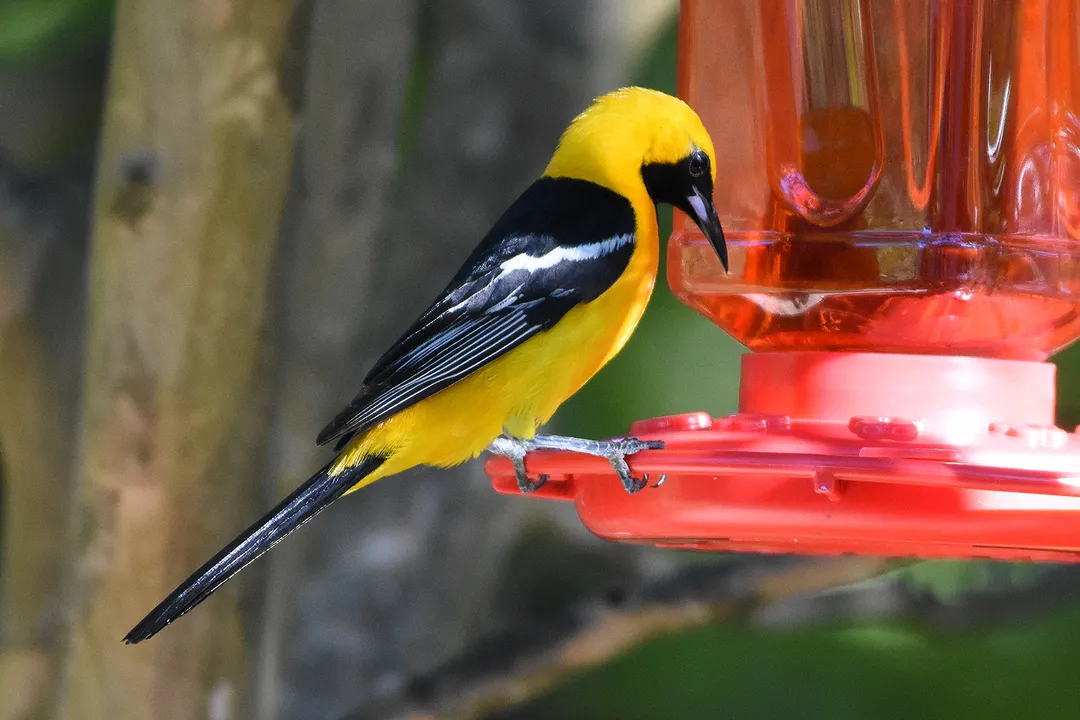
The status of the Hooded Oriole in California is less about simple rarity and more about geography. For many birdwatchers, especially those situated in the northern half of the state, catching sight of this vibrant orange and black bird can indeed feel like a rare event. However, within its preferred southern and central California strongholds, it is a regular, expected seasonal resident. [4][8] To truly answer whether they are rare, one must first define where in California one is looking.
# Geographic Range
The Hooded Oriole (Icterus cucullatus) maintains a specific breeding distribution within the Golden State. Its primary stronghold lies in the southern and central parts of California, where they are typically expected during the breeding season. [4][8] This species favors dry, open woodlands, often near water, and has adapted well to semi-arid environments. [1][2] In contrast, the northern reaches of California, such as the Bay Area or areas around Sonoma County, usually see these birds only as uncommon vagrants or accidental visitors outside the main breeding distribution. [5][3] The presence of a species being common in one ecological zone while being a highly sought-after rarity in another is a hallmark of many western North American birds whose ranges are shaped by microclimates and habitat corridors. [1]
# Status Zones
Understanding the difference between where they breed and where they rarely stray is key to assessing their "rarity." In Southern California, for instance, an observer can anticipate their arrival in the spring. The San Gabriel Valley, a region well within their typical range, sees them return annually. [4] Birders in areas like San Diego County have documented breeding activity, confirming their established presence within the atlas mapping projects for that region. [8]
When we shift focus north, the birding reports change significantly. A sighting in Northern California often generates excitement precisely because it is unusual. Posts in local birding forums discussing a Hooded Oriole sighting in areas like the northern Sacramento Valley suggest the bird is far from common there. [3] This pattern suggests that while the species has successfully established itself across the southern two-thirds of the state, crossing the invisible climatic or geographical barrier into the cooler, moister conditions of the far north makes them an infrequent visitor. [1][2] Therefore, they are not rare statewide, but they are locally rare depending on your latitude.
# Arrival Timing
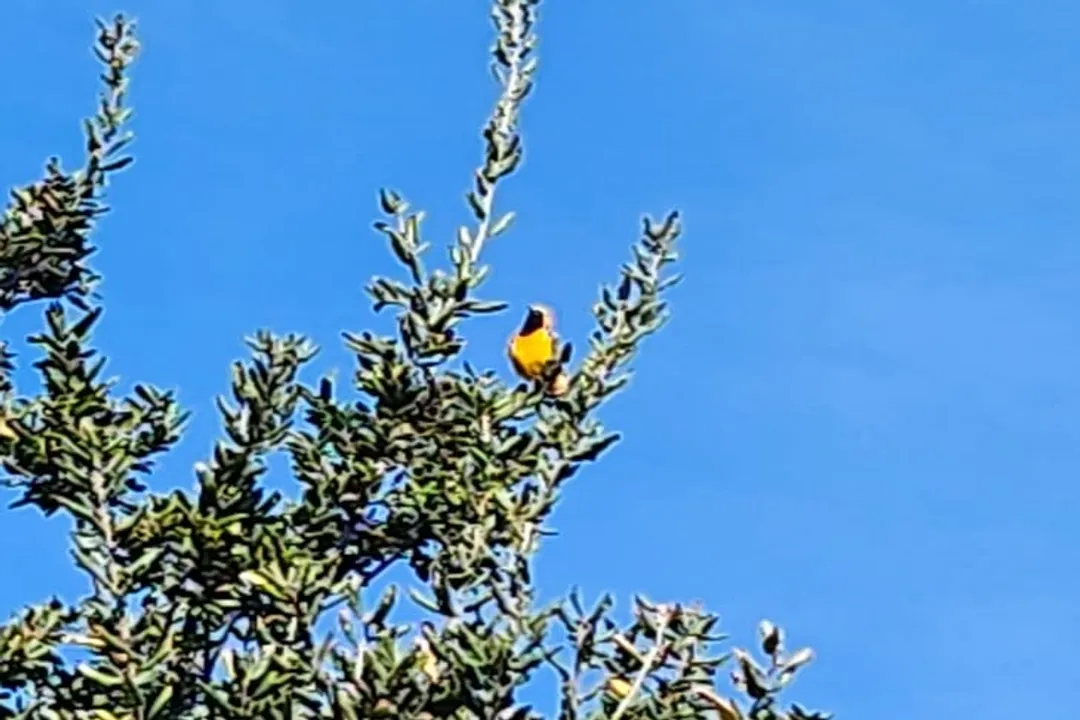
The timing of their appearance also dictates how frequently they are noticed. Hooded Orioles are migratory, generally spending winters further south in Mexico. [2] Their arrival in California typically begins in March or early April. [7] This spring arrival is a significant event for birders in their established range, signaling the start of the nesting season. Knowing this arrival window is crucial; looking for them in late fall or winter in California will likely prove fruitless, as they will have already departed for their wintering grounds. [2] A localized roosting situation noted near the Los Angeles area indicated a concerted arrival and establishment phase in early spring. [7]
# Visual Distinction
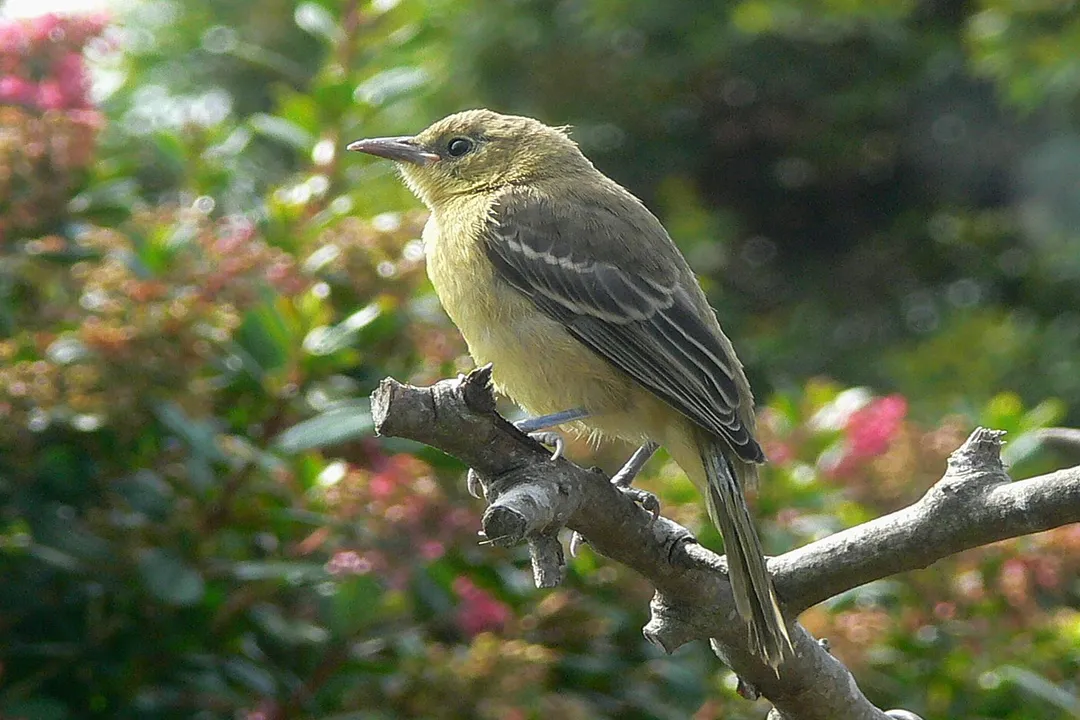
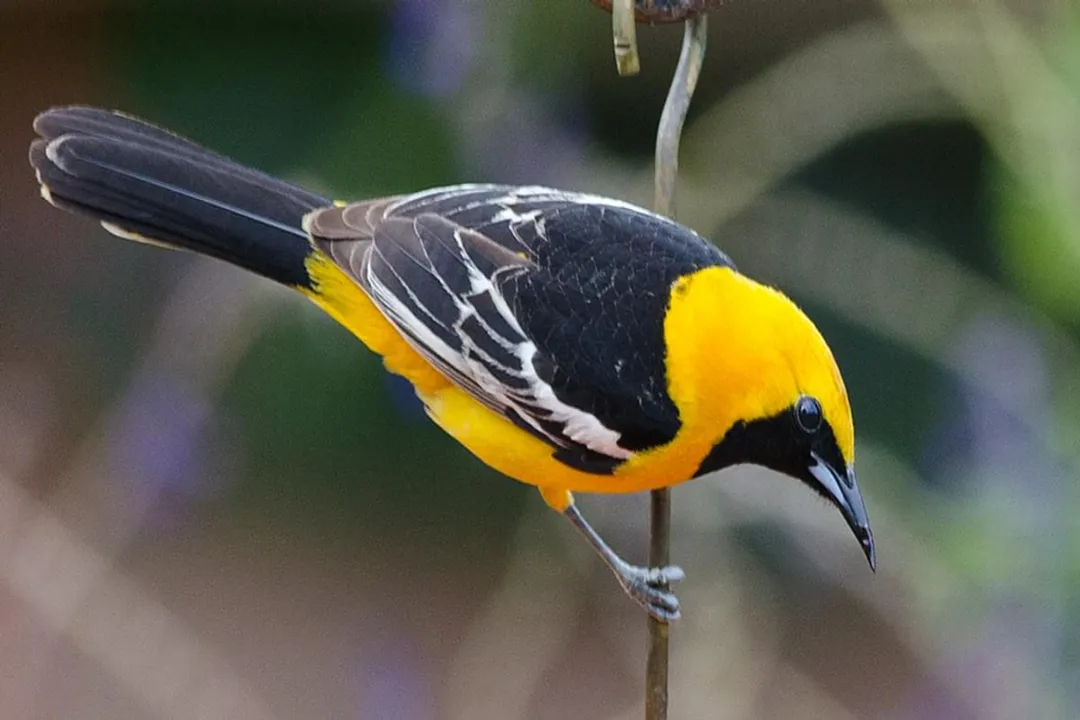
Differentiating the Hooded Oriole from its close relative, the Bullock's Oriole, is often necessary, particularly in Central California where their ranges might overlap slightly during migration. [9] The mature male Hooded Oriole is unmistakable: a brilliant, fiery orange body contrasting sharply with solid black on the head, back, wings, and tail. [1][2] The extent of the black on the head is a key feature; the Hooded Oriole has a solid black hood extending down the back, unlike the Bullock's Oriole, which has more white on the face and orange plumage on the back interspersed with black markings. [9] Females and immatures are much duller, presenting yellowish-olive coloration, which makes identification more challenging and sometimes leads to confusion with other species if observers aren't paying close attention to the subtle field marks. [1]
# Nesting Structure
The nest building habits of the Hooded Oriole present a fascinating aspect of their adaptation to human environments. They often choose trees with drooping foliage, such as palms, sycamores, or pepper trees, to suspend their intricately woven, sock-like nests. [1][4] The location of the nest is critical, often placed high up and near the ends of branches, providing both camouflage and protection from some terrestrial predators. [4] The female does the bulk of the weaving, using plant fibers, animal hair, and even human materials like string or yarn if available. [1] Observing where a bird chooses to build—especially around mature trees in suburban settings—can be a better predictor of finding them than simply waiting at a feeder. If you live in their core range, actively encouraging the growth of suitable nesting trees, particularly native ones that offer dense cover, can help secure their presence year after year.
# Feeding Preferences
What these birds choose to eat heavily influences where you might spot them, and this preference provides an opportunity for local habitat management. While they consume insects and spiders, nectar and fruit are vital components of their diet, especially during breeding season. [2] They show a strong preference for sweet liquids. [4] This dietary need means that if you want to encourage a visit, especially in suburban or semi-arid landscapes, providing sugar water is often more effective than seeds. [4]
Here is a quick guide on what to put out if you are in their established territory:
| Food Type | Recommended Source | Notes |
|---|---|---|
| Nectar | Sugar Water (4:1 ratio) | Must be changed frequently (every 1-2 days) to prevent spoilage. [4] |
| Fruit | Halved oranges or grapes | A favorite treat; place on a flat surface or feeder. [4] |
| Insects | Aphids or small caterpillars | Natural forage, but may be attracted to feeders if other insects are present. |
A key insight for homeowners in Southern or Central California attempting to attract them is to look beyond standard bird feeders. Because they feed heavily on nectar, planting red or orange tubular flowers—such as Penstemon or certain types of honeysuckle—can attract them for natural feeding before they even notice a feeder. This strategy capitalizes on their evolutionary preference for flower shapes that match their bill structure, often bringing them into your yard before other, seed-eating species arrive.
# Sightings and Human Interaction
The presence of Hooded Orioles is often noted by active backyard birders who utilize feeders. Their preference for sugar water makes them responsive to hummingbird feeders, although they are not hummers and should not be in direct competition with them for a scarce resource if resources are limited. [4] Their relative boldness when approaching feeders in established areas contrasts with their elusive nature in marginal habitats. For example, records from feeder-watching projects in Sonoma County show instances of their presence, confirming that some individuals do push into the northern periphery, though such sightings remain noteworthy enough to be documented separately from more common species like the Bullock's Oriole. [5] These occasional northern visitors underscore that while the core breeding range is defined, the species retains enough flexibility to probe outside it, especially if conditions are unusually warm or if local food sources are unusually abundant near the urban edge. [3]
Ultimately, whether the Hooded Oriole is "rare" in California depends entirely on the observer's address. If you live near the coast or inland valleys south of the Tehachapi Mountains, they are a magnificent, expected spring and summer resident. If you are north of San Francisco or deep in the Sierra Nevada, a confirmed sighting is a special, rare occurrence worth celebrating.
Related Questions
#Citations
Hooded oriole - Wikipedia
Hooded Oriole Overview, All About Birds, Cornell Lab of Ornithology
Hooded Oriole Northern CA : r/birding - Reddit
Hooded Oriole - Santa Clara Valley Bird Alliance
Hooded Orioles in Sonoma, CA - Project FeederWatch
Hooded Oriole Sighting in Southern California During Spring
Hooded Orioles - Coming Home to Roost - Buena Vista Audubon
[PDF] Hooded Oriole Icterus cucullatus The southern California lifestyle ...
[PDF] Urban Bird Talk - Hooded Oriole (Icterus cucullatus nelsoni ssp.)