What is unique about Hooded Orioles?
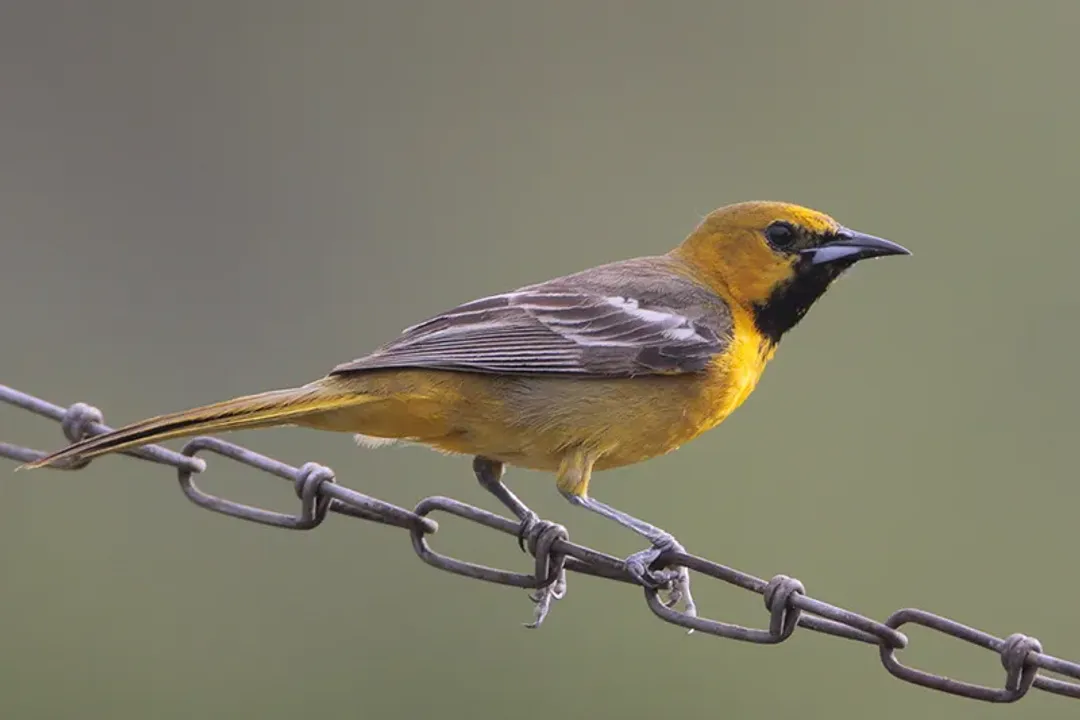
The arrival of a Hooded Oriole is often heralded not just by a flash of brilliant color, but by a specific, almost architectural marker—the presence of its intricately built nest hanging where few other species dare to build. This medium-sized New World oriole, scientifically known as Icterus cucullatus, distinguishes itself from its relatives through a striking combination of high-contrast plumage, a preference for arid landscapes featuring palm trees, and a truly unique construction technique for its home. [3][4][7] Seeing one of these birds is always a treat, particularly in the American Southwest, but what makes this species stand out among the colorful Icteridae family are the subtle yet significant adaptations they display across their life cycle. [5][6]
# Plumage Contrast

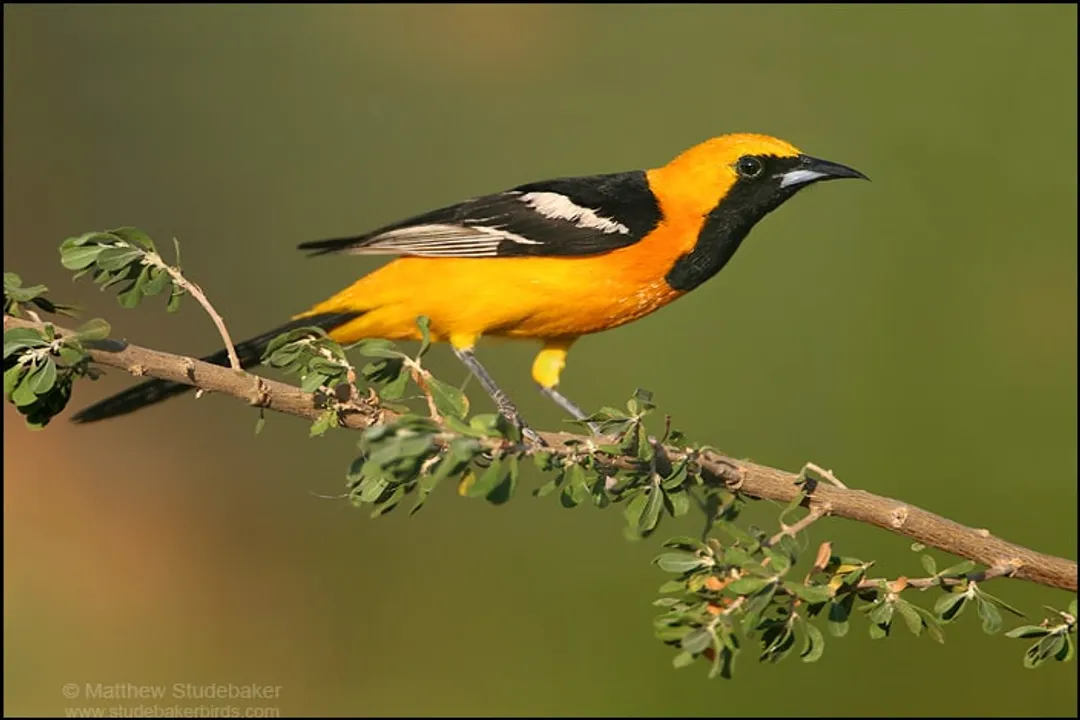
The visual signature of the Hooded Oriole rests heavily on its stark sexual dimorphism. The adult male is instantly recognizable, displaying an intense contrast between a solid black hood that covers the face and throat, and a body that shines in hues ranging from a vibrant flame orange to a paler, rich yellow. [3][8] This dark hood is bordered by white on the wings, often appearing as two distinct white wing bars, which are a key identifier. [5][8] Conversely, the adult female presents a much more subdued palette, appearing generally olive-green on her upper parts with a yellowish wash across the breast and belly. [3][8]
A particularly fascinating aspect of their appearance is the regional shift in their primary color. Males found in northwestern Mexico and the southwestern United States generally exhibit a brighter yellow tone, whereas those inhabiting south Texas and eastern Mexico lean toward a more intense, orange coloration. [6][8] This difference, reflecting subspecies variation, means that spotting a very orange male in Arizona is actually less common than seeing a bright yellow one there, making the plumage a subtle clue to geographical origin. [7][8] Furthermore, the bill itself is a useful feature: it is long, pointed, and curves slightly downward, more so than in some other oriole species, aiding its specialized feeding habits. [6][8]
# Palm Habitat
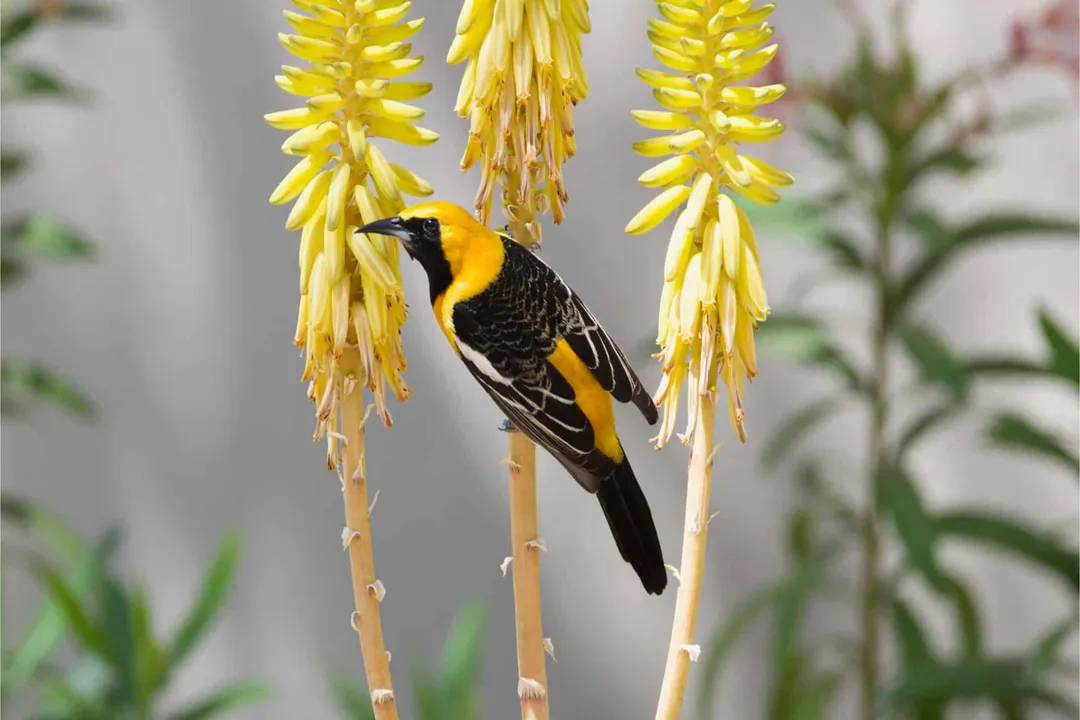
While many orioles frequent open woodlands or riparian areas, the Hooded Oriole has developed a strong association with tall trees, most notably palm trees. [4][7] This preference has earned them the nickname "palm-leaf oriole" in some regions, like California. [6] Their breeding range is firmly rooted in the arid lowlands of the Southwestern United States and northern Mexico, though they also utilize cottonwoods, sycamores, and willows found along streams. [3][4][7]
It is noteworthy that human landscaping decisions directly influence their distribution. The northward expansion of the Hooded Oriole’s range, even casually into northern California, appears directly correlated with the increased planting of ornamental palm trees around suburban homes. [1][7][8] This suggests that the availability of the right vertical structure, perhaps more than the underlying climate, dictates where they can successfully establish a breeding territory. While many individuals migrate south to Mexico for the winter, some residents in areas with consistent backyard feeding stations may choose to remain year-round. [2][4]
# Sewn Nests
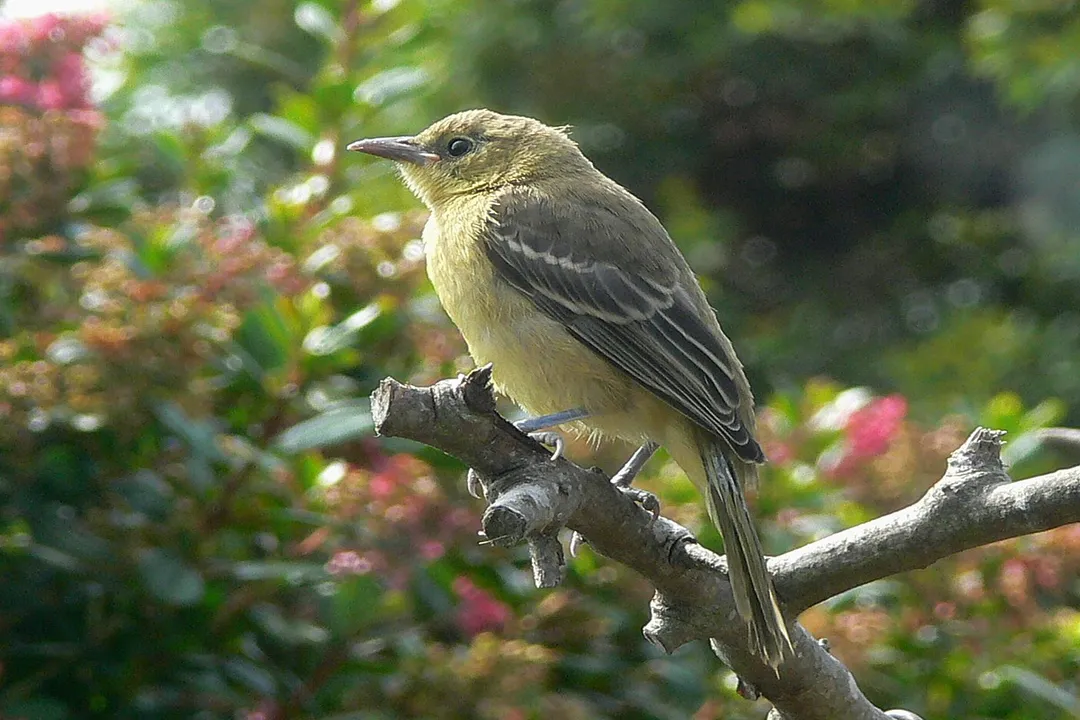
Perhaps the most distinctive feature of the Hooded Oriole is its remarkable nest construction. While other orioles create hanging, woven baskets, the female Hooded Oriole often suspends hers from the underside of an overhanging leaf or palm frond. [3][4] The nest itself is a deep, tightly woven pouch constructed from grass and various plant fibers, often lined with softer materials like down or hair. [3][6] The female does the lion’s share of the building, though the male may help gather materials. [6]
The true uniqueness lies in how the nest is secured. In the case of palm leaves, the female uses her bill to actively stitch the nest material directly to the leaf tissue by poking holes and weaving fibers through them. [1][6] This technique creates an exceptionally secure anchor against wind and movement, which is a vital adaptation in exposed desert environments where strong gusts are common. An observer in the arid Southwest might notice that nests are often tucked high up, sometimes between 10 to 50 feet above the ground, maximizing both the protective shade provided by the leaf canopy and distance from ground-based predators. [4][7] This architectural choice provides an intrinsic benefit for thermoregulation in hot lowlands, shielding the clutch from the harshest direct sun—a specific advantage over nests built in the open canopy of a deciduous tree. [1][4]
# Foraging Style
The dietary habits of the Hooded Oriole explain both their bill shape and their sometimes sluggish foraging behavior. [3][5][8] Their diet centers on insects—especially caterpillars, wasps, beetles, and ants—along with wild berries and, importantly, flower nectar. [4][6] They exhibit an acrobatic feeding style, frequently seen hanging upside down beneath branches or leaves to reach food sources. [3][5]
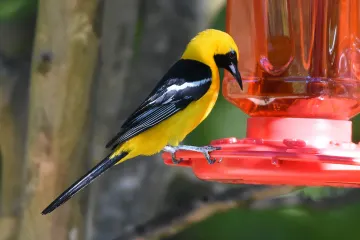
When it comes to nectar, they have a reputation for being nectar robbers because they often pierce the base of a flower to sip the sweet fluid, bypassing the pollen-gathering mechanism and thus not aiding in pollination. [1][3] This behavior makes them common visitors to hummingbird feeders, and this sweet tooth can be exploited by birders wishing to attract them. [4][6] An interesting observation for backyard enthusiasts is that while they will visit hummingbird feeders, they benefit from sugar water with slightly larger feeding ports, or they are happy to take offerings of sliced oranges or grape jelly placed on open platforms rather than inside tiny ports. [1][6] They tend to forage slowly and deliberately, gleaning insects from foliage, which can sometimes make these brightly colored birds surprisingly difficult to spot high in the canopy. [4][7]
# Vocal Variety
The soundscape of the Hooded Oriole also offers distinct characteristics worth noting, particularly when trying to differentiate them from similar species like the Bullock's or Orchard Orioles. [5] While many orioles possess a clear, whistled song, the Hooded Oriole's typical song is often described as a short, abrupt series of rapid notes that sound nasal and somewhat whiny. [3][8]
Beyond the standard song, they are known for their incredible vocal flexibility. Each male sings many different types of songs, and in certain locales, they incorporate mimicry into their repertoire. [3] For instance, individuals observed in Arizona have been documented weaving in the calls of the Gila Woodpecker and the Ash-throated Flycatcher. [3][7] Common calls include a whistled “wheet” or “sweet,” used for general communication, while an alarm call manifests as a quicker chatter, resulting in a shriller sound compared to that of other orioles. [3][5] This capacity for mimicry and the nasal quality of their primary song are reliable auditory identifiers in their preferred, often scrubby, habitat. [7]
While the species overall is listed as Least Concern and, surprisingly for a songbird, its population trend is noted as increasing in many areas, it faces local challenges. The primary threat cited across its range is brood parasitism by the Brown-headed Cowbird and the Bronzed Cowbird, which can lead to population declines in localized areas like the Lower Rio Grande Valley. [5][6][7] The unique, covered nest structure, however, seems to be an excellent defense against these nest invaders, suggesting a continuing evolutionary arms race between the oriole and its parasites. [5][6]
Related Questions
#Citations
Hooded oriole - Wikipedia
Hooded Oriole | Audubon Field Guide
Hooded Oriole Facts - Perky-Pet
Hooded Oriole - Alianza de Conservación de Punta Banda
Hooded Oriole | Bird Gallery - Houston Audubon Society
Hooded Oriole Bird Facts - Icterus cucullatus - A-Z Animals
Hooded Oriole - Tucson Bird Alliance
Hooded Oriole | National Geographic
Hooded Oriole Identification - All About Birds