What is the critical habitat of the San Francisco garter snake?
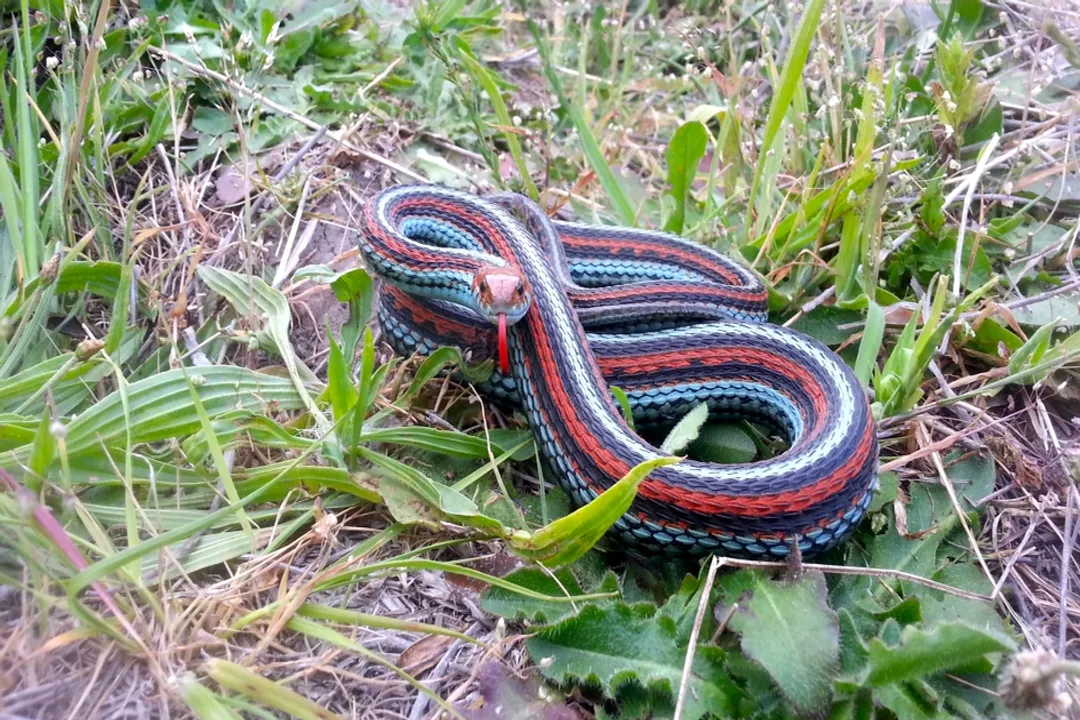
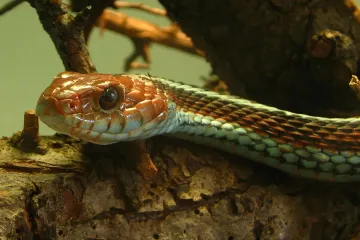
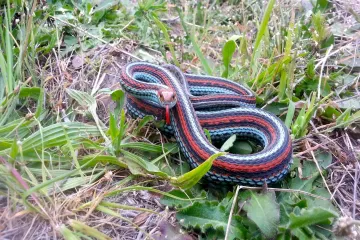
The San Francisco garter snake, Thamnophis sirtalis tetrataenia, is renowned among herpetologists and conservationists, often cited as one of the rarest snakes in North America due to its extremely limited range and specific environmental demands. [3][7] Understanding where this brightly colored reptile lives—its critical habitat—is the foundation of all conservation efforts aimed at protecting it from the threats that have reduced its numbers. [5] This habitat is not a single, uniform type of landscape; rather, it is a delicate mosaic requiring a specific blend of water features and dense terrestrial cover within a very small geographic region. [1][6]
# Geographic Restriction
The known distribution of the San Francisco garter snake is exceptionally small, creating an immediate conservation challenge because the species relies on a handful of interconnected local ecosystems. [4] Its range is essentially restricted to the coastal areas of the San Francisco Bay region. [3]
Specifically, the snake is found in a narrow band running through San Mateo County, with some populations extending into the northernmost parts of Santa Cruz County in California. [1][4] This geographic constraint means that any local development or environmental alteration in this sliver of land can have an outsized impact on the entire species population. [9] When considering habitat, it is crucial to remember that the snake's presence is determined not just by geography, but by the persistence of suitable microclimates and prey sources within that geography. [5]
# Habitat Components
The life cycle of the San Francisco garter snake necessitates two distinct, yet adjacent, types of terrain: aquatic areas for breeding and terrestrial areas for foraging, basking, and shelter. [1][3] The quality and proximity of these two elements dictate whether a site can support a viable population.
# Aquatic Needs
The relationship between the snake and water is fundamental. They are strongly associated with slow-moving or still water bodies. [3] These aquatic features include ponds, creeks, marshes, and associated riparian zones. [1] These water sources are essential because they host the snake's primary, almost exclusive, food source: the California red-legged frog (Rana draytonii). [1][6]
The critical nature of these aquatic sites means that the presence of healthy, reproducing populations of red-legged frogs is often a prerequisite for snake habitat suitability. [8] If the water body dries up seasonally or becomes polluted, or if the frog population crashes, the snake population relying on it will also decline. [3] This prey dependency creates a complex conservation challenge, as protecting the snake requires simultaneously protecting the habitat of its specialized food source. [6]
# Terrestrial Cover
While water is necessary for reproduction and sustenance, the snakes spend most of their time on land, seeking cover, basking in the sun to regulate body temperature, and moving between feeding areas. [3][6] The terrestrial habitat must offer dense, low-lying vegetation that provides secure concealment from predators like raptors. [1][4]
Sources frequently point to the importance of dense thickets of native and non-native plants in providing this necessary structure. [9] Gorse and poison oak are often noted as common components of the preferred terrestrial structure, providing excellent hiding places and cover, even though poison oak presents a direct hazard to human surveyors. [4][9] It is important to recognize that the vegetation doesn't need to be pristine or entirely native to be functional; rather, the structure—the density and height of the cover—is the key functional attribute for the snake. [1] Furthermore, basking opportunities, often on exposed banks or rocks near the water, are critical for digestion and thermoregulation, necessitating areas where the dense cover opens up slightly to sunlight. [6]
A useful way to visualize the ideal terrestrial component is not as a vast expanse, but as a buffer zone around the water. Researchers often look for an area extending several hundred feet outward from the water’s edge that maintains this dense cover, allowing the snakes to move safely to forage and escape terrestrial dangers. [2] If the surrounding land is converted to manicured lawns or cleared aggressively, the habitat fragmentation isolates the aquatic core, making it unusable even if the pond itself remains intact. [1]
# Critical Habitat Designation
Under the U.S. Endangered Species Act (ESA), the designation of critical habitat formally identifies the specific geographic areas that contain the physical or biological features essential to the conservation of the species and which may require special management considerations or protection. [1][3] For the San Francisco garter snake, this designation aims to safeguard the interconnectedness of the required aquatic and terrestrial elements. [1]
The official designation covers areas that are currently, or were historically, occupied by the snake, provided those areas still contain the necessary habitat components. [3] The primary purpose of this designation is to prevent federal actions—such as those involving federal permits, funding, or land management on federal property—from resulting in the destruction or adverse modification of this essential environment. [1]
It is important to note a key distinction often made in conservation: occupied habitat versus critical habitat. [2] While the snake might only be found in a few specific ponds today (occupied habitat), the critical habitat designation often encompasses a larger surrounding area deemed necessary for the species' long-term survival, dispersal, and recovery, even if snakes are not physically present there year-round. [1] This broader view acknowledges that a snake needs room to move between foraging grounds and breeding sites, and that conservation planning requires a landscape-scale approach, not just parcel-by-parcel protection. [6] The designated areas must include both the pond/creek system and the adjacent terrestrial structure required for successful use. [2]
# Habitat Fragmentation and Threats
The restricted geography and the species' dependence on specific features make the San Francisco garter snake acutely vulnerable to habitat loss and fragmentation. [4] Urbanization, infrastructure development, and changes in land use within San Mateo and Santa Cruz counties present the most significant direct threats to the designated critical habitat. [9]
One subtle but important aspect of this vulnerability relates to connectivity. Snakes do not simply live in a pond; they live within a network of ponds and associated cover. [1] When roads or dense housing developments sever the travel corridors between these patches, smaller, isolated populations can become genetically weaker and more susceptible to localized extinction from natural fluctuations or disease. [4]
To give a sense of scale, imagine a series of five excellent ponds in a row, connected by grassy, overgrown drainage ditches—this is a functional habitat unit. If a highway is built through the middle, splitting that unit into two pairs and one singleton, the snakes in the singleton pond might persist for a time, but their inability to mix with the others severely limits their long-term viability. [7] This highlights an analytical point: the quality of the links between habitat patches is often as important as the quality of the patches themselves when assessing the conservation value of a specific critical habitat parcel. [9] Effective habitat protection must therefore include easements or protections for the movement corridors, not just the water bodies. [6]
# Management and Conservation Focus
Effective management of the critical habitat centers on maintaining the structural and biological integrity of the mosaic. [1][3] This involves several actionable areas:
- Water Quality Maintenance: Ensuring that the ponds and streams remain suitable for California red-legged frogs, which usually means controlling runoff, minimizing chemical use (like pesticides which are a concern in this urban-proximate area [8]), and managing water levels appropriately. [3]
- Vegetation Management: Balancing the need for dense cover (gorse, poison oak, etc.) with the need for adequate basking areas. [4][9] This may involve selective removal of invasive species that choke out preferred cover, or careful, prescribed thinning to open up basking spots without creating barren ground vulnerable to erosion or predation. [1]
- Invasive Species Control: Managing invasive predators, such as non-native crayfish or introduced fish that compete with or prey upon the red-legged frogs, indirectly supports the snake population. [8]
Another often-overlooked aspect in habitat management, especially in parks or private lands adjacent to conservation areas, is the indirect impact of human activity. For instance, the widespread use of certain rodenticides on properties bordering critical habitat can lead to secondary poisoning when the snakes consume rodents or birds that have ingested the toxins, even if the snake itself never directly encounters the poison bait. [2] Therefore, effective stewardship of critical habitat often requires collaboration with adjacent landowners to manage land use practices that extend far beyond the official boundary markers. [9] This cross-boundary stewardship is essential for a species with such a small, fragmented home range.
# Distinguishing Habitat Needs
While the San Francisco garter snake is a subspecies of the common garter snake (Thamnophis sirtalis), its habitat requirements are far more stringent than its widespread relatives. [5] Most garter snakes can thrive in a wide variety of environments, including agricultural fields, suburban ponds, and stream banks across many states. [5] However, T. s. tetrataenia has become an extreme specialist in the mild, foggy climate of the central California coast, tying its survival directly to the fragile remaining riparian and wetland systems there. [4][7]
If we were to create a simple comparison table based on general needs versus the specialist needs of the San Francisco garter snake:
| Feature | General Garter Snake Habitat | San Francisco Garter Snake Critical Habitat |
|---|---|---|
| Water Body Type | Variable: Ponds, ditches, streams, roadside puddles [5] | Slow-moving or still water, high-quality ponds, marshes [1][3] |
| Primary Prey | Worms, amphibians, small fish, insects [5] | Almost exclusively California red-legged frogs [6][8] |
| Terrestrial Cover | Grasses, open areas, general ground litter [5] | Dense, low cover, often including Gorse and Poison Oak [4][9] |
| Geographic Scope | Continental distribution [5] | Restricted to coastal San Mateo and northern Santa Cruz Counties [1][4] |
This specialization underscores why the designation of critical habitat is so important; protecting an average patch of wet land is insufficient. The designated areas must specifically meet the strict requirements for Rana draytonii support and provide the specific cover structure needed for T. s. tetrataenia's thermoregulation and predator evasion. [1][6] The conservation focus is therefore highly targeted, demanding precise management of micro-environmental factors within a defined, narrow corridor of land. [3]
Related Questions
#Citations
San Francisco garter snake (Thamnophis sirtalis tetrataenia) - ECOS
[PDF] San Francisco Garter Snake - Endangered Species Facts - EPA
San Francisco Garter Snake (Thamnophis sirtalis tetrataenia)
[PDF] status of the san francisco garter snake
Thamnophis sirtalis tetrataenia - NatureServe Explorer
[PDF] 2025 San Francisco Gartersnake 5-Year Review - AWS
Saving the Most Beautiful Snake in the World
[PDF] San Francisco Garter Snake (Thamnophis sirtalis tetrataenia)
Keeping up with: the San Francisco garter snake